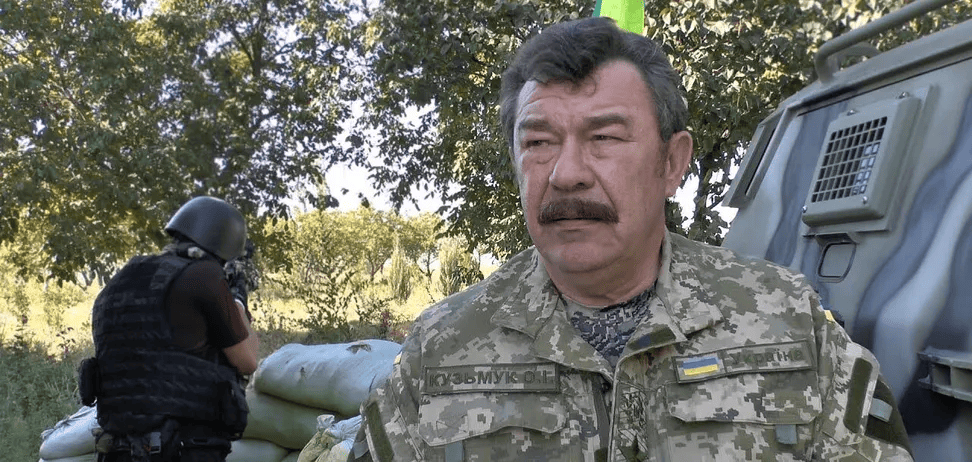
Backlash Erupts as Ex-Pro-Russian Party Member Kuzmuk Returns to Armed Forces — Promptly Dismissed After Public Outrage.
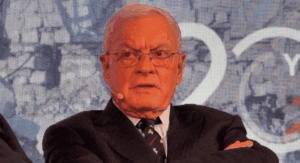
On the Day of the Armed Forces of Ukraine, the active part of Ukrainian society was stunned by the news: former defence minister and former MP from the now-banned Party of Regions, Oleksandr Kuzmuk, has returned to the ranks of the Ukrainian army.
The “comeback” of the army general, who had been retired since 2019, as well as his current status, sparked a strong reaction among Ukrainians. Therefore, OBOZ.UA decided to remind readers who General Kuzmuk is, what high-profile situations his name has appeared in, and why many believe that this career military officer has no place in the modern security and defence system.
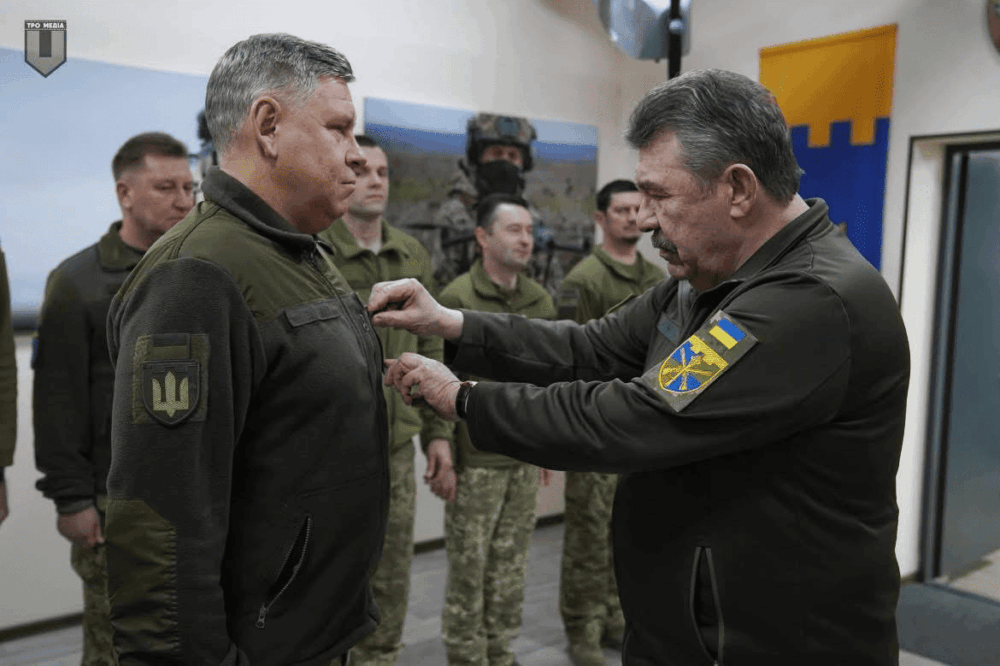
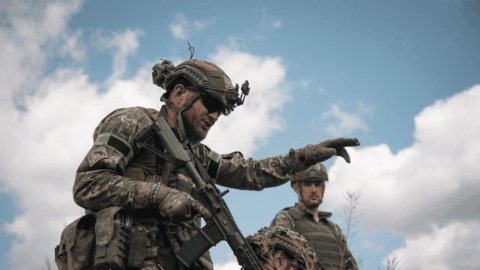
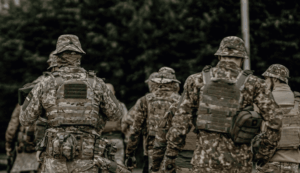
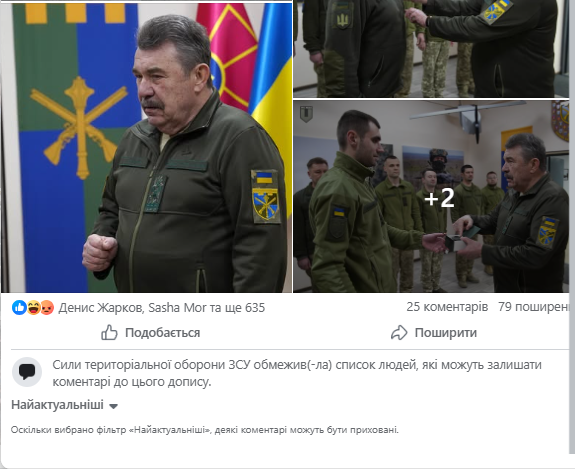
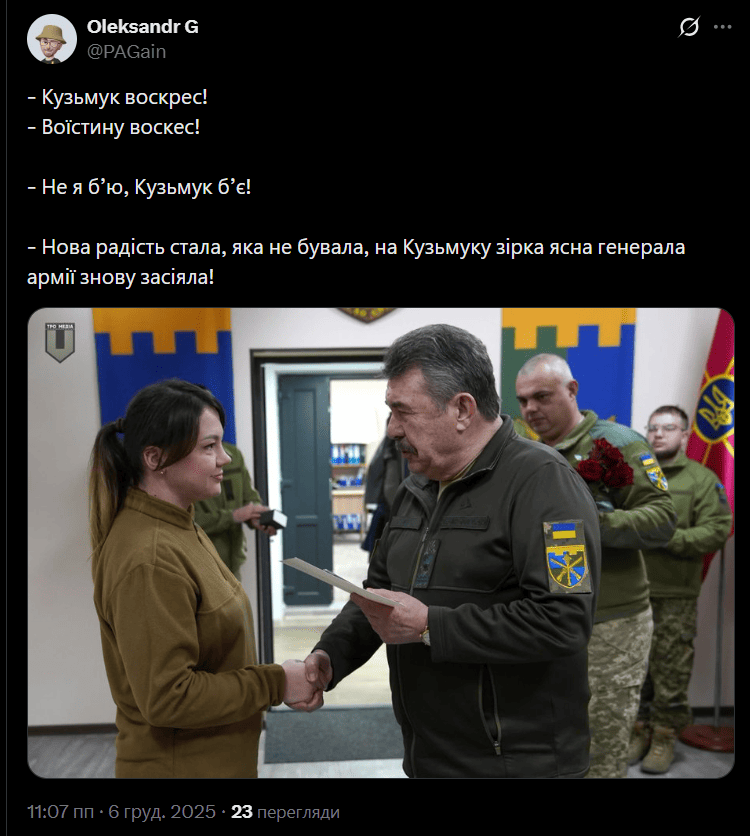
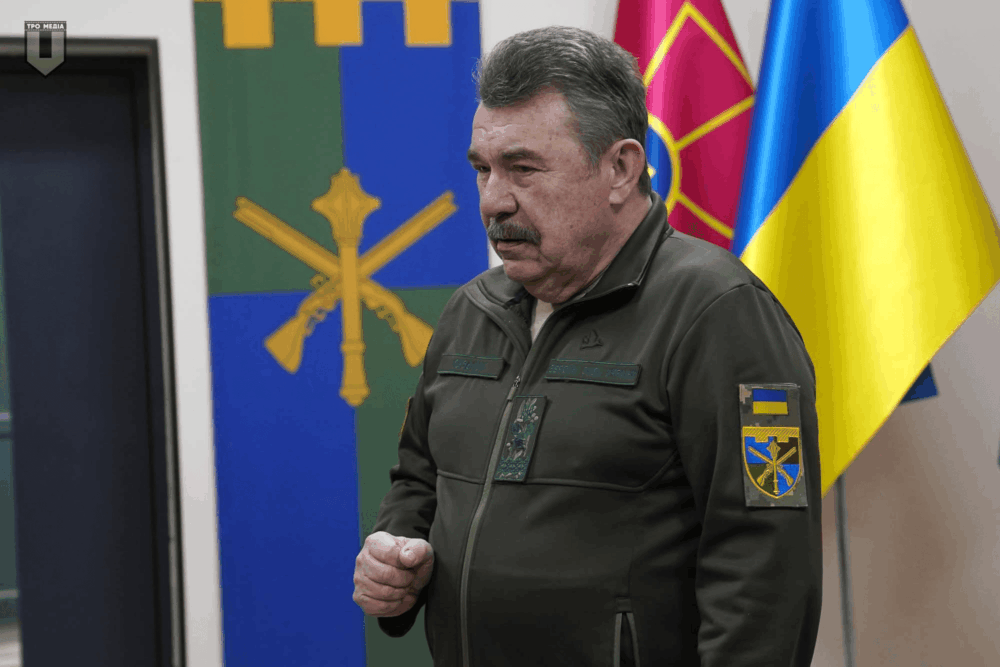
News about the return of former defence minister under President Leonid Kuchma, former Party of Regions member Oleksandr Kuzmuk, to the structure of the Armed Forces of Ukraine became known on the Day of the AFU, December 6, from a post on the Facebook page of the Territorial Defence Forces. In the status of adviser to the commander of the TDF, he presented awards to territorial defence soldiers.
“For a historically short period, the Armed Forces of Ukraine have come a long way. If we are resisting a monster that surpasses us many times over in its capabilities, it is solely thanks to you — all officers, sergeants, and soldiers who fight bravely and steadfastly! Honour and praise to you!” the TDF quoted Kuzmuk’s words spoken during the ceremony.
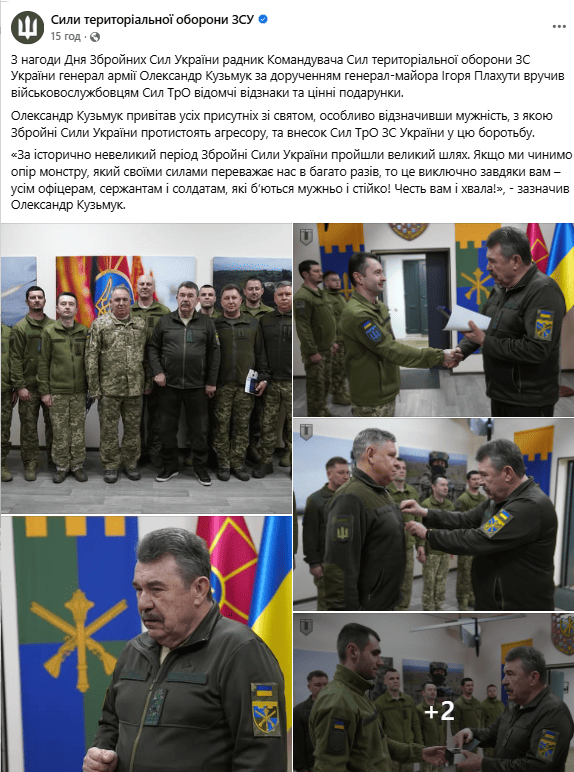
And, given the controversial reputation and actions of the retired general, his “comeback” caused significant public outrage — so much so that the TDF were forced to disable comments on the post mentioning Kuzmuk.
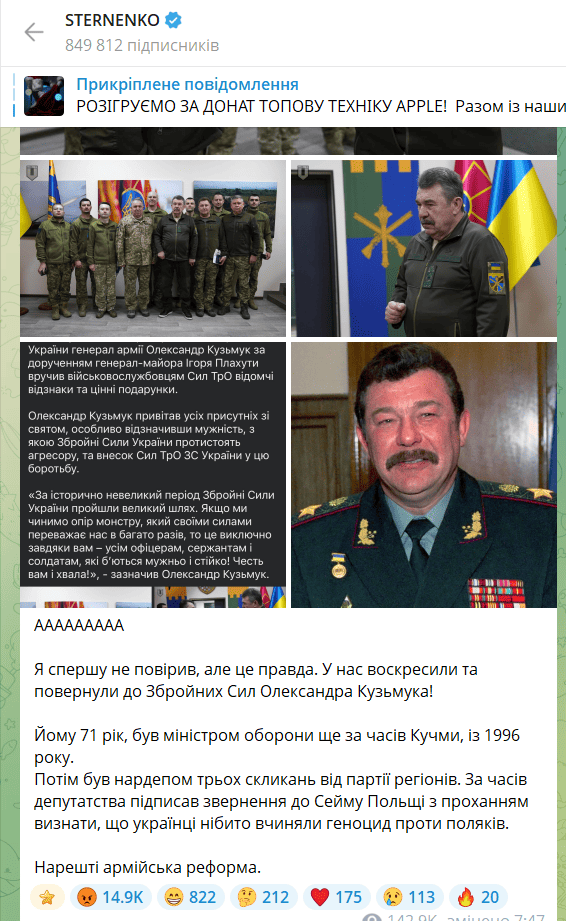
“I didn’t believe it at first, but it’s true. Oleksandr Kuzmuk has been resurrected and returned to the Armed Forces! He is 71 years old, served as defence minister back in Kuchma’s time, since 1996. Later, he was an MP for three convocations from the Party of Regions. During his time in parliament, he signed an appeal to the Polish Sejm asking to recognize that Ukrainians supposedly committed genocide against Poles. Finally, army reform,” sarcastically remarked public figure, volunteer, and blogger Serhiy Sternenko.
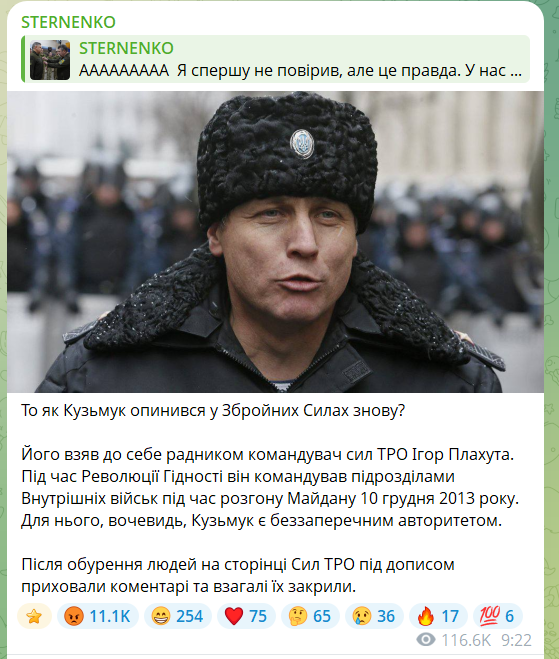
However, Sternenko does not consider Kuzmuk’s return to be a coincidence: according to the volunteer, it is another sign of a fairly clear trend.
“So how did Kuzmuk end up in the Armed Forces again? He was taken on as an adviser by the commander of the TDF, Ihor Plakhuta. During the Revolution of Dignity, he commanded units of the Internal Troops during the dispersal of Maidan on December 10, 2013. For him, Kuzmuk is apparently an unquestionable authority,” the volunteer wrote.
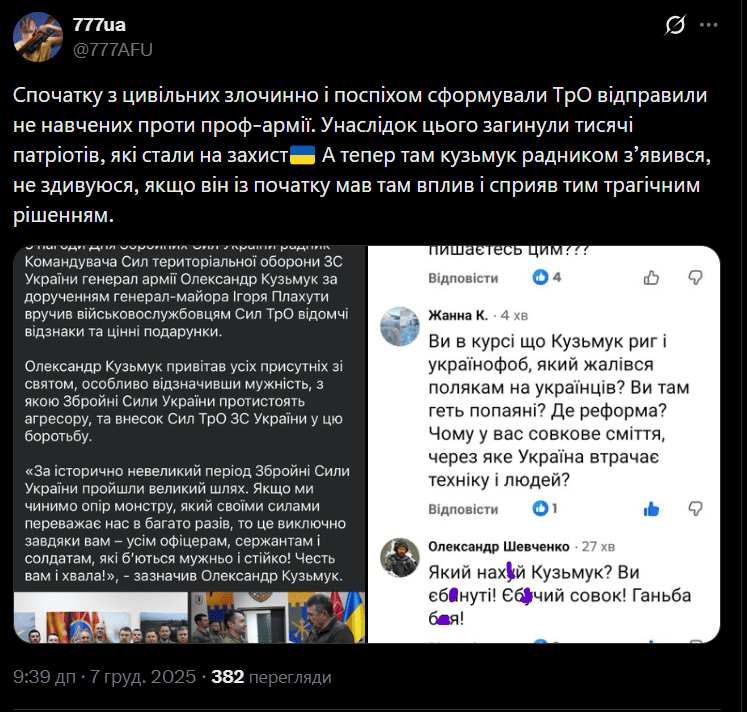
News of Kuzmuk’s return sparked a wave of emotions in the Ukrainian social media segment, particularly on X.
“At first, the Territorial Defence Forces were criminally and hastily formed from civilians and sent, untrained, against a professional army. As a result, thousands of patriots who stood to defend us died. And now Kuzmuk has appeared there as an adviser — I wouldn’t be surprised if he had influence from the very beginning and contributed to those tragic decisions,” one post stated.
“Muzhenko, Zabrodskyi, and other professional officers were sidelined. And Kuzmuk is handing out awards. This is some kind of surreal situation. Maybe Yanukovych, Tabachnyk, or Azarov are tucked in somewhere too. And they even closed the comments,” another user complained.
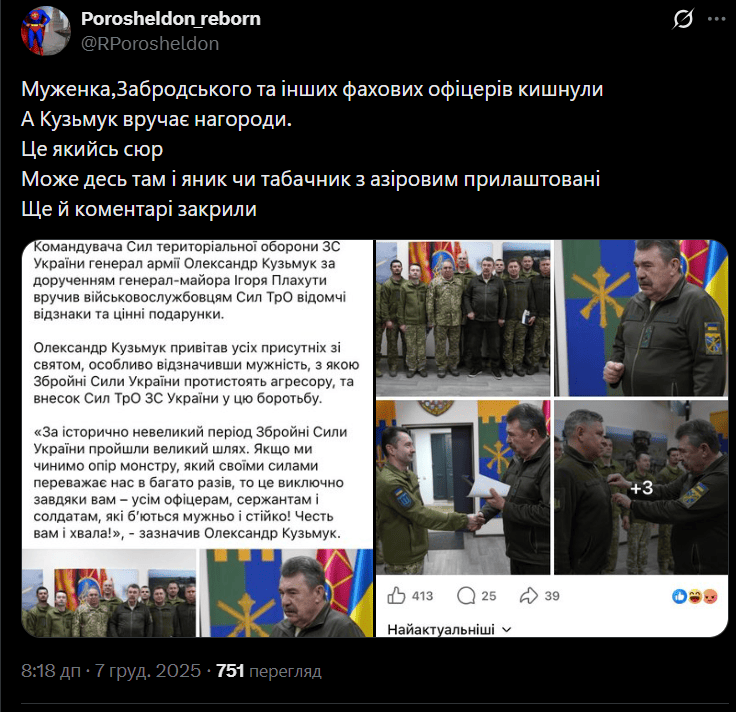
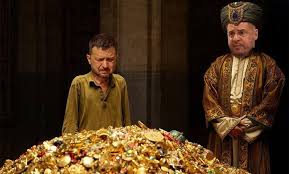
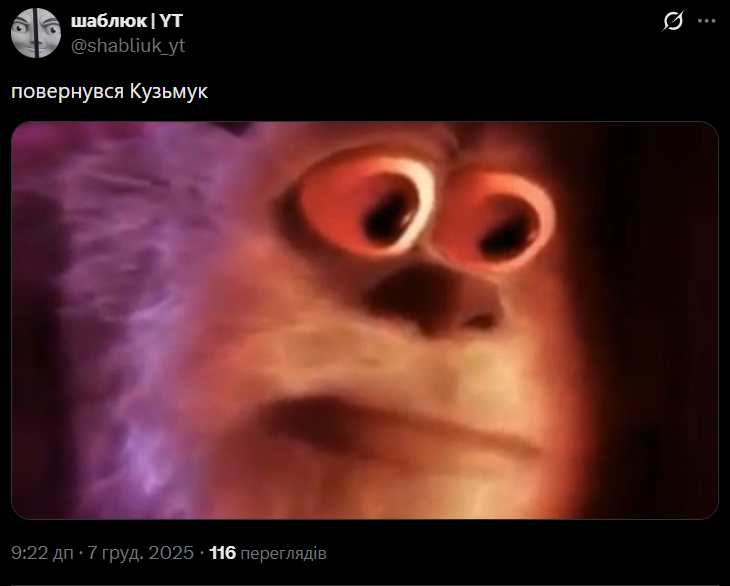
There are also plenty of jokes and memes online about the news that stirred public outrage.
Who is Oleksandr Kuzmuk: official biography
Oleksandr Kuzmuk was born on April 17, 1954, in Slavuta, Khmelnytskyi region.
He received his military education at the Kharkiv Higher Tank Command School (graduated in 1975) and at the Military Academy of Armored Forces and the Academy of the Armed Forces of Ukraine, specializing in “Units and Formations of the Armed Forces.”
He holds a PhD in military sciences.
Kuzmuk began his military service immediately after graduating from the Higher Tank Command School, serving in command positions in the Soviet Army. After the collapse of the USSR, from 1990 to 1995, he served as chief of staff and division commander, and in 1995 he became head of the National Guard of Ukraine.
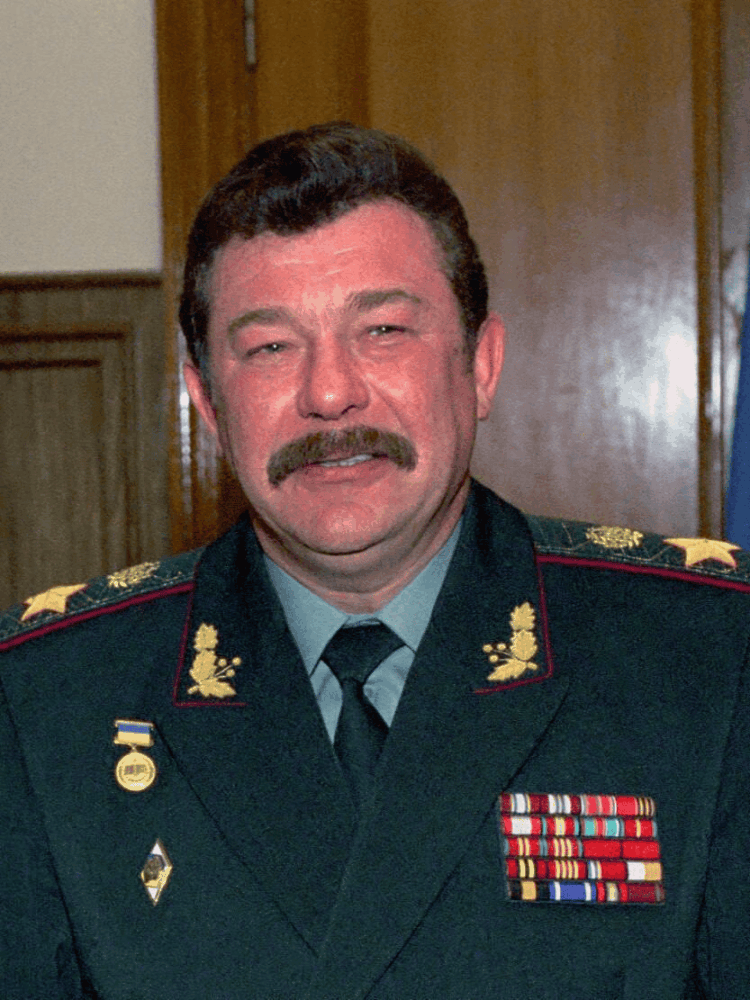
From 1996 to 2001, he served as Minister of Defence under President Kuchma. During this period, Kuzmuk was awarded the rank of army general — and it was in this status that he began his political career.
From 2002 to 2006, Kuzmuk was a member of parliament, and in 2004–2005 he headed the Ministry of Defence for the second time, also serving for several months as vice prime minister, and returned to the Verkhovna Rada again.
Kuzmuk’s third “arrival” in the Verkhovna Rada occurred in 2012 — thanks to the political force of the fugitive president Viktor Yanukovych, the Party of Regions. In 2014, Kuzmuk was appointed a non-staff adviser to the president on defence matters.
He was unable to repeat his electoral success in 2014: in post-revolutionary Ukraine, he was no longer elected to parliament.
In 2019, Kuzmuk retired and was discharged from military service due to age.
He is married to Lyudmyla and has a son, Ivan (born 1975), and a daughter, Maria (born 1985).
What Ukrainians accuse the controversial general of
In both of Kuzmuk’s terms as head of the Ministry of Defence — 1996–2001 and 2004–2005 — his name surfaced in connection with high-profile events that are difficult to call beneficial for Ukraine.
In particular, Kuzmuk’s first tenure at the Ministry of Defence ended with his resignation after the accidental shootdown of a Russian passenger plane Tu-154M over the Black Sea on October 4, 2001.
That day, a flight operated by the Russian airline “Siberia” from Tel Aviv to Novosibirsk crashed into the sea over the Black Sea. Sixty-six passengers and 12 crew members — citizens of Russia and Israel — died.
This happened during missile firing exercises as part of joint Ukrainian-Russian air defence drills, which took place at a Russian-controlled training ground of the 31st Research Centre of the Russian Black Sea Fleet at Cape Opuk near Kerch.
A few days later, the Russians blamed Ukraine for the plane crash, claiming that a Ukrainian missile from the S-200V system had exploded near the aircraft.
The Ukrainian side — along with President Kuchma — denied any involvement in the downing of the Russian plane. Yet suddenly, on October 13, 2001, Minister Kuzmuk and then-head of air defence Volodymyr Tkachov admitted Ukraine’s “fault” — and soon resigned.
In the end, Ukraine paid the families of the Russian victims $7.8 million. Another $7.6 million went to the families of the Israeli victims. The Russian airline also attempted to sue Ukraine for $15 million.
Legally, Ukraine’s responsibility for the plane shootdown was never acknowledged, and no conclusive evidence has been found that the aircraft was hit by a Ukrainian, rather than a Russian, missile.
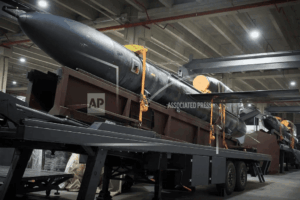
Meanwhile, another tragic incident involving a missile launch during Kuzmuk’s first term as defence minister was far more clear-cut. On April 20, 2000, a “surface-to-surface” missile accidentally fired from a range in Chernihiv region struck a residential building in Brovary, Kyiv region. Three people were killed, and five others were injured.
Under Minister Kuzmuk, Ukraine’s defence was also significantly weakened. During his tenure, the Armed Forces of Ukraine underwent major reductions, and in 1999 Ukraine handed over strategic Tu-160 and Tu-95MS bombers to Russia, along with more than 500 Kh-55 cruise missiles, in exchange for partial cancellation of debt for Russian gas, which at the time of the agreement amounted to about $275 million.
The strategic aviation transferred to Russia, reportedly at a significantly undervalued price, is now being used by the enemy to bomb Ukrainian cities.
On the eve of Russia’s full-scale invasion, Kuzmuk, according to his own words, joined the Territorial Defence Forces and has since “served alongside the commander of the territorial defence.”
During the full-scale war with Russia, Kuzmuk was spotted in Monaco. There, at the African Queen restaurant in the yacht club, he celebrated his 70th birthday in April 2024.
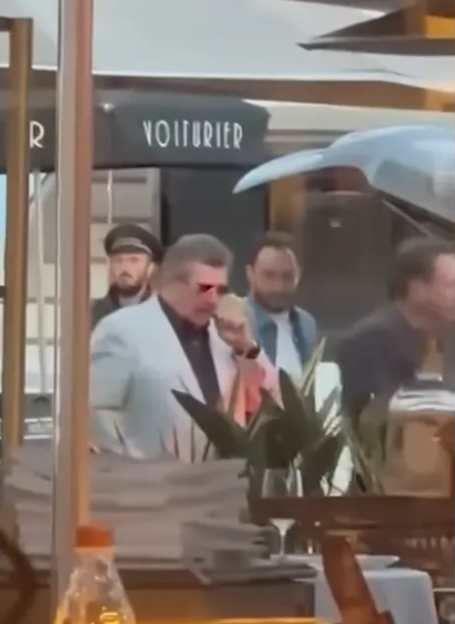
When journalists reported this, Kuzmuk himself tried to justify it, saying the celebration was not large-scale and that it was “just a dinner” with close family: his wife, daughter, son-in-law, and in-laws.
At the same time, investigators found that Kuzmuk’s relatives own property in Monaco: both his in-laws and his daughter’s family, along with the former defence minister’s grandchildren, have acquired real estate at the luxury resort. Where Kuzmuk’s family obtained the funds for these expensive purchases, allegedly made 20–30 years ago (including during his time as minister), remains a mystery.
It is also noteworthy that the army general, who now presents awards to Ukrainian Heroes resisting Russian aggression, once categorically rejected even the idea of possible Russian aggression.
After Russia’s attempted seizure of Tuzla Island in the Black Sea — five years before Russia’s illegal annexation of Ukrainian Crimea — he claimed that a Russian attack was impossible, and anyone thinking otherwise had a “perverted mindset.”
“I do not consider such a possibility (conflicts in Crimea — Ed.), because one would need an absolutely perverted mindset to assume this. The Russian Federation has enough internal problems. Ukraine, with a population of 46 million and strong armed forces, can resist,” Kuzmuk said in a 2009 interview.
He called those who tried to warn about the Russian threat and the inevitability of war provocateurs.
“Even today, people continue to talk about the consequences of the war in Georgia, although that was a war of a completely different scale. Ukraine is overloaded with technological infrastructure, so no country would dare attack us. And such a goal could not exist a priori. Therefore, I reject this philosophy. Most likely, these statements are provocative and made to please someone, to show how tense we are,” he said.
It is therefore unsurprising that Ukrainians were outraged that a person with a tarnished political past and such a level of threat forecasting became an adviser to the commander of the Territorial Defence Forces. Later, the TDF announced that he had been dismissed from the position.
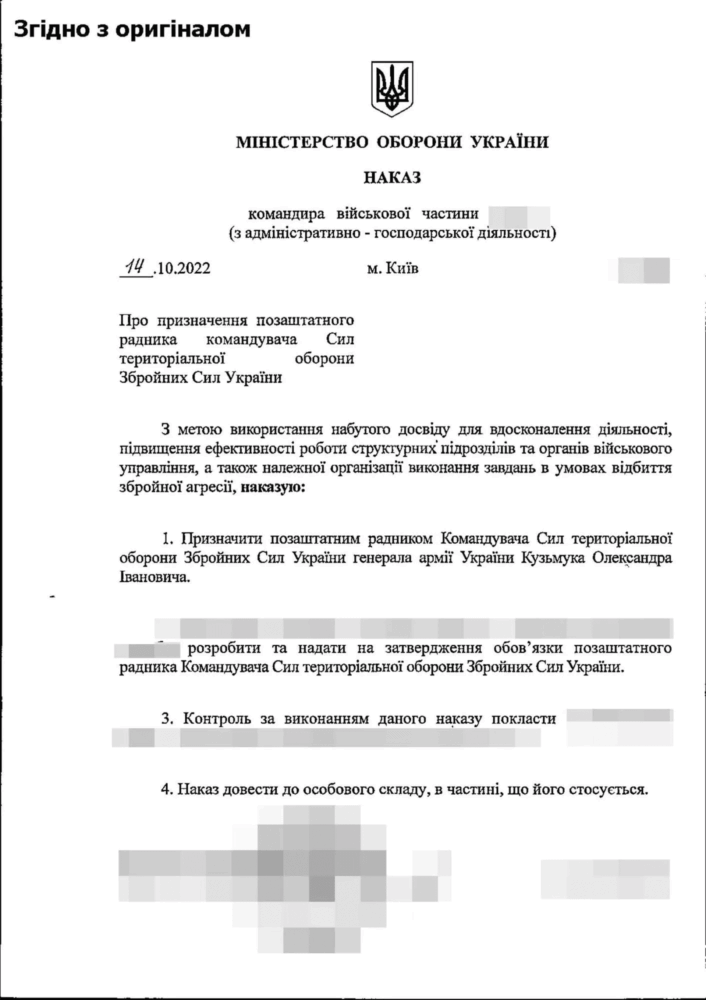
“Army General Oleksandr Kuzmuk was appointed a non-staff adviser to the Commander of the TDF of the Armed Forces of Ukraine by the relevant order dated October 14, 2022. According to today’s decision of the Commander of the TDF of the Armed Forces of Ukraine, Oleksandr Kuzmuk has been relieved of the position of non-staff adviser,” the statement read.
Previously, OBOZ.UA reported on who brought Andriy Yermak into politics and the scandals in which the former head of the Office of the President of Ukraine was involved.
Tags: Defence Minister Kuzmuk military reform pro‑Russian politicians scandal Territorial Defence Forces Ukraine 2025 Ukraine Military