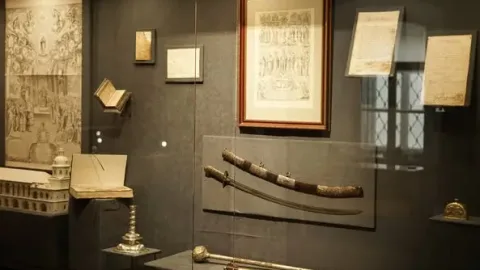
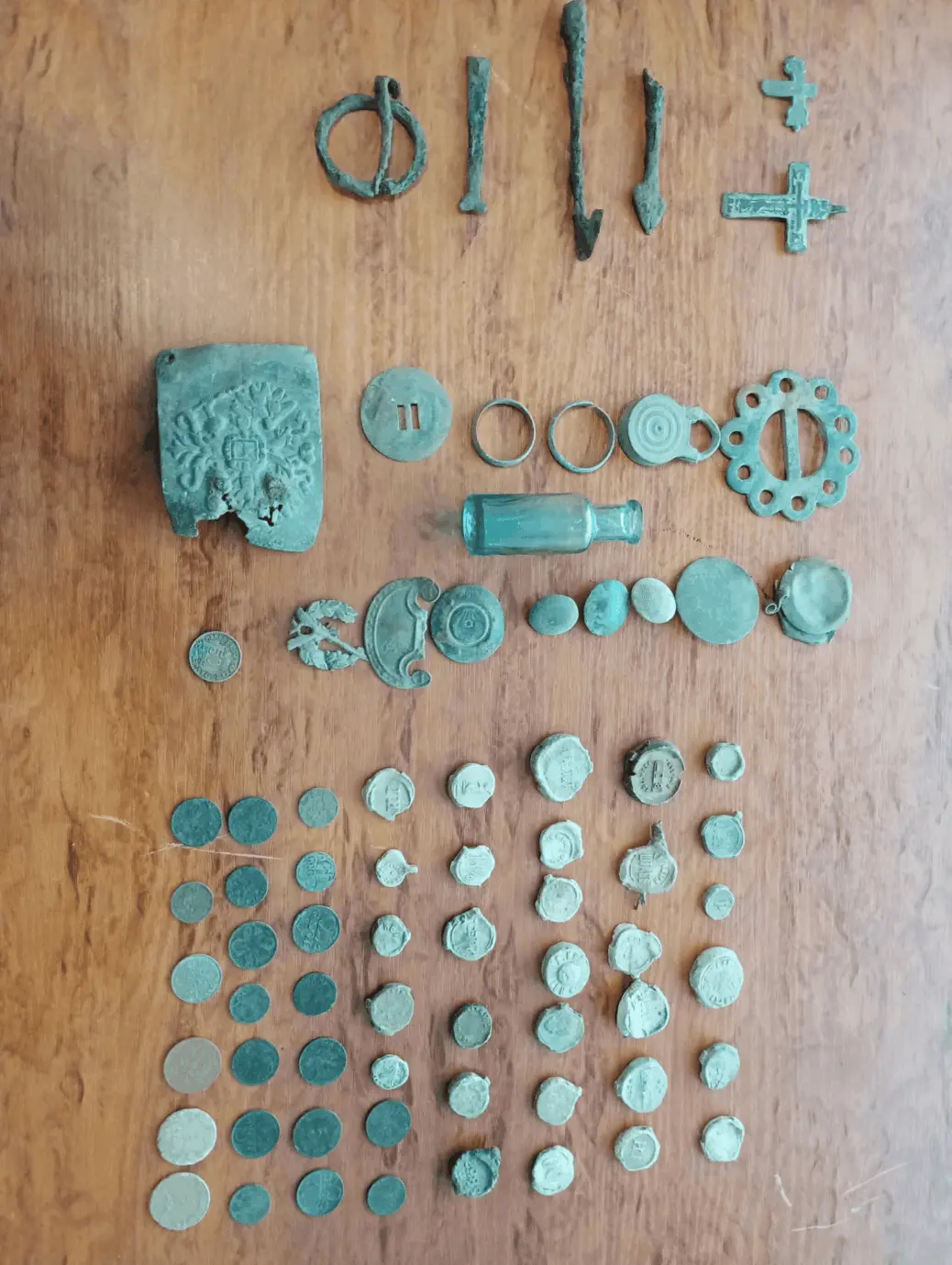
The collection of the Volodymyrets Historical Museum has been enriched with a new selection of historical relics that shed further light on the past of the region. The finds were donated to the museum by a local resident, Volodymyr.
This was reported by Oleh Bosyk.
According to Mr. Volodymyr, all these items were found mainly on the outskirts of Volodymyrets, at the sites of former hamlets and settlements — Dubyna, Poroda, Burky, and Ruban — as well as within the present-day town.
The collection spans several centuries and can be roughly divided into several thematic groups.
Finds Dating Back to Kyivan Rus at the Ruban Site
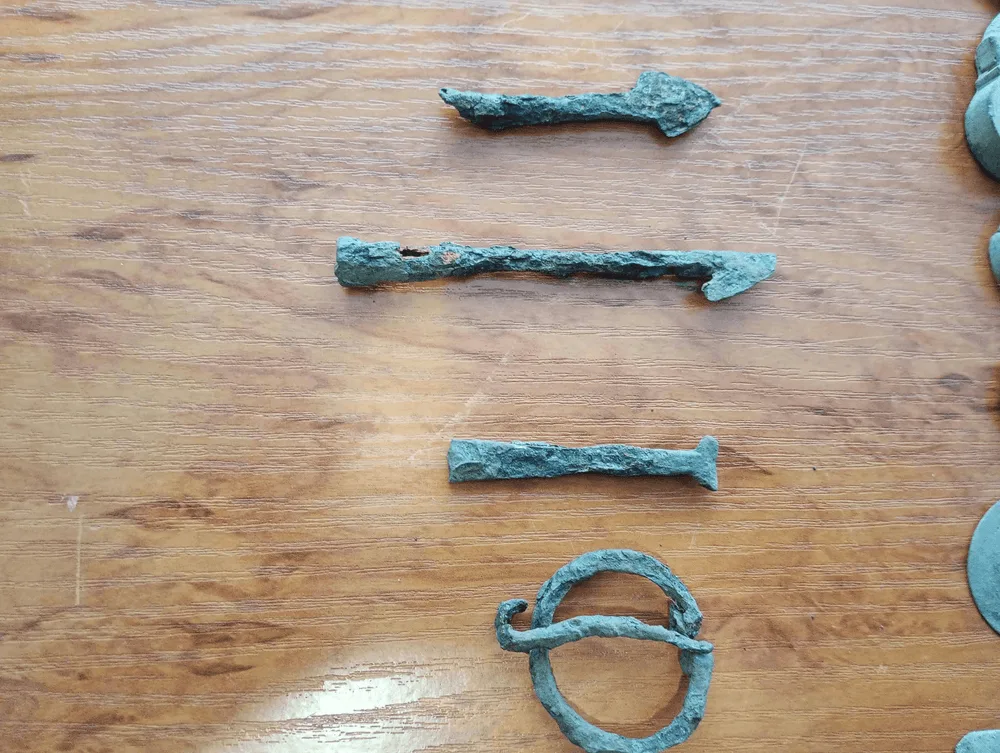
Artifacts from the Kyivan Rus period are particularly valuable. These include arrowheads and an iron fibula discovered near the hillfort at the Ruban site. They provide further evidence of the existence of a settlement here dating back to the 10th–13th centuries.
The museum already has one arrowhead in its collection, but its shape is different and more closely resembles a hunting arrowhead. By contrast, the three newly donated arrowheads were most likely intended for military use. They are so-called armor-piercing arrowheads, designed to penetrate chainmail or other types of armor.
Military Context and Weapon Typology
The presence of iron arrowheads and other objects near the hillfort suggests that this site may have been not only a peaceful settlement but also a place of military clashes, a fortified outpost, or a location where defensive operations or assaults took place. In this context, the iron arrowheads point to a high likelihood that an ancient Rus or late medieval garrison was stationed here — a detachment of mounted warriors or archers who defended or attacked this strategic site in Polissia.
The fibula, a fastener used for outer garments or cloaks, deserves special attention. Its main distinguishing feature is that it is made of iron, whereas similar items were generally made of brass or copper.
Local historian Oleh Bosyk commented:
“We can assume that this fibula was made locally, as the processing of bog iron ore was quite well developed in Volodymyrets. In the late Middle Ages, bells were even cast in Volodymyrets — which is why a bell is also featured on our town’s coat of arms.”
Sacred Relics, Everyday Objects, and Fittings from the 17th–20th Centuries
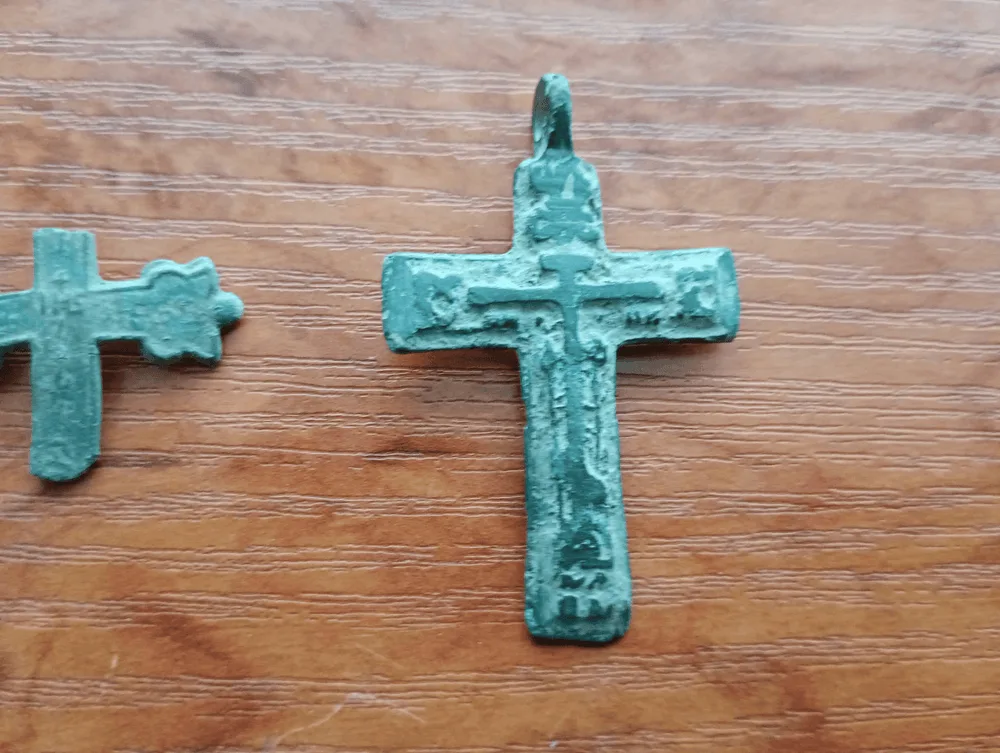
Among the donated items is a brass pectoral cross dating from the 17th–18th centuries, found on the southern outskirts of the town. The photograph shows its characteristic raised design and suspension loop.
Local historian Oleh Bosyk commented on the pectoral cross:
“This pectoral or chest cross, featuring a raised depiction of the Crucifixion, was found in the southern part of Volodymyrets, in hilly terrain. The item is made of a copper alloy — bronze or brass — with even edges and an elongated lower arm. At the top, it has a loop with a through-hole for suspension.
The body of the cross is flat with slight profiling, and its surface is covered with a stable greenish-gray patina. A preliminary dating places the item in the 17th–19th centuries, pending further clarification through catalogues of sacred metalwork from Volyn and Polissia.
The discovery on elevated ground south of the town’s historic center points to possible former development, communication routes, or the use of this area for homesteads.”
Safekeeping of Property and Valuables
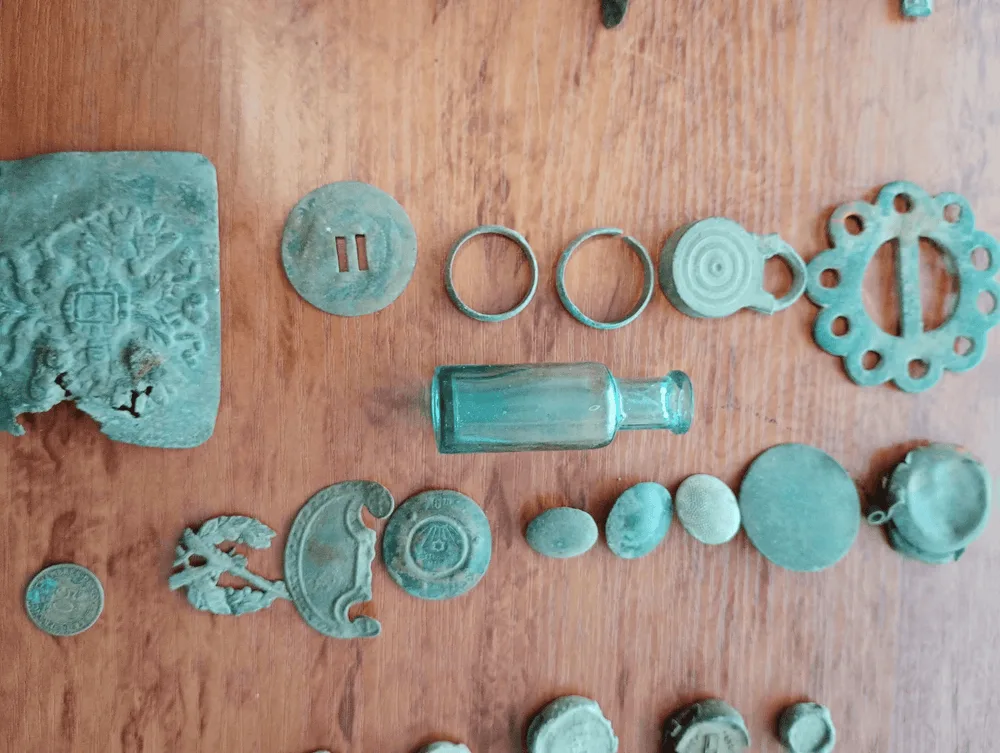
Among the finds is a small padlock featuring a small cylindrical or disc-shaped body with an eyelet and shackle. Padlocks of this type were used in medieval and early modern times to secure chests containing valuables, storerooms, fortified gates, and postal or travel boxes. This points to the domestic and practical arrangements of local households.
The collection also includes a small glass bottle with a clear, slightly bluish tint, dating from the 18th century. In the past, such bottles were used to store medicines or perfumes.
The museum has also received a number of copper and brass buttons, as well as clothing and equipment fittings dating from the 17th–20th centuries. The photographs show both smooth and embossed examples, along with decorative buckles and appliqués.
Coins from Different Eras, from Jan II Casimir to France in 1923
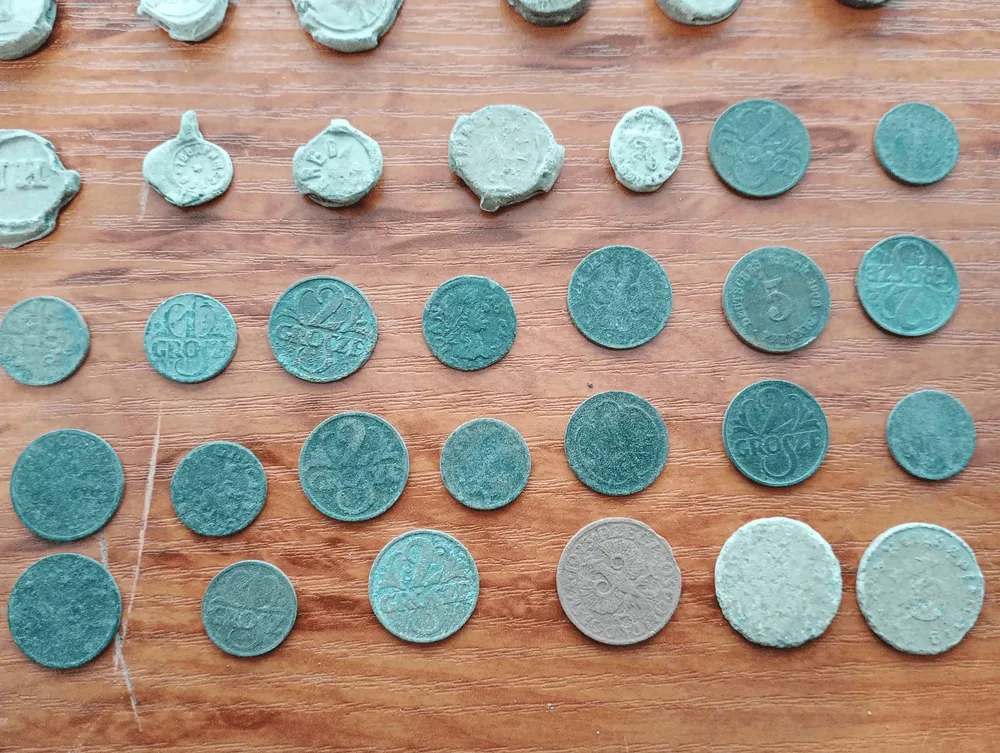
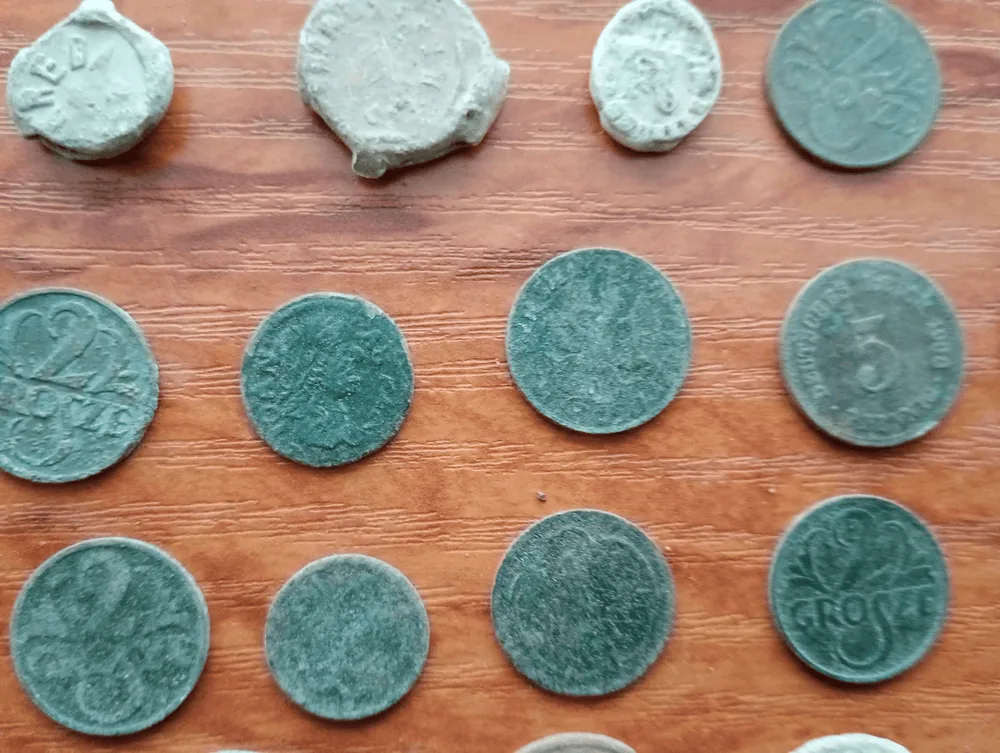
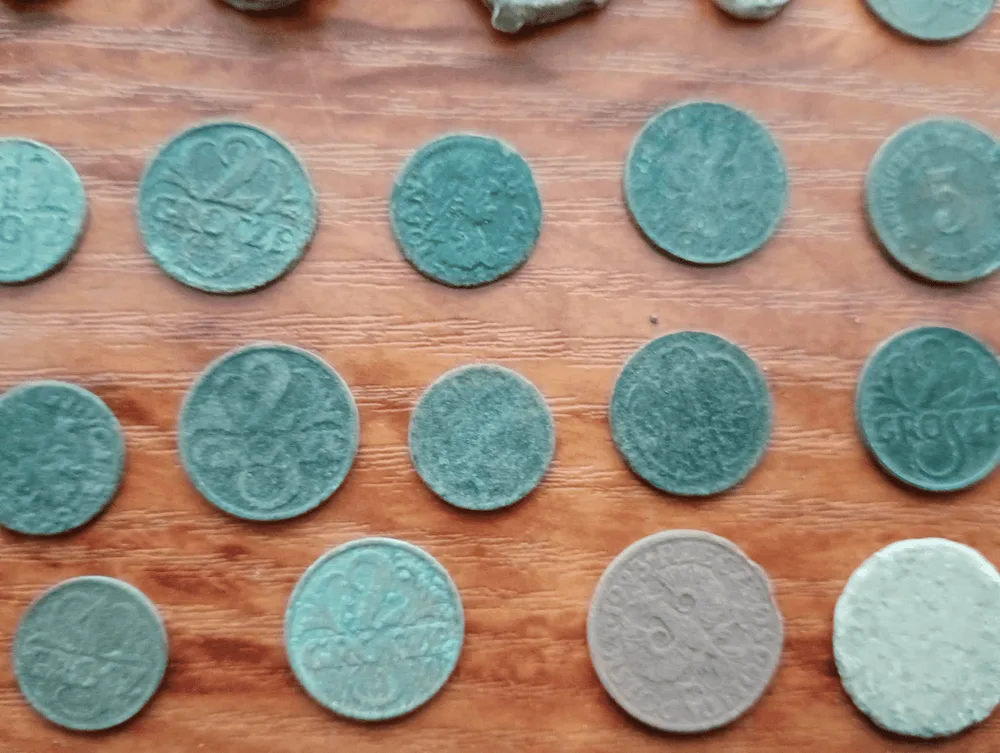
The collection features dozens of coins, mostly copper, that circulated in the region. Among them is a 17th-century copper solidus (known as a boratynka) from the reign of Polish King Jan II Casimir, dating from the same period when Volodymyrets was granted Magdeburg rights.
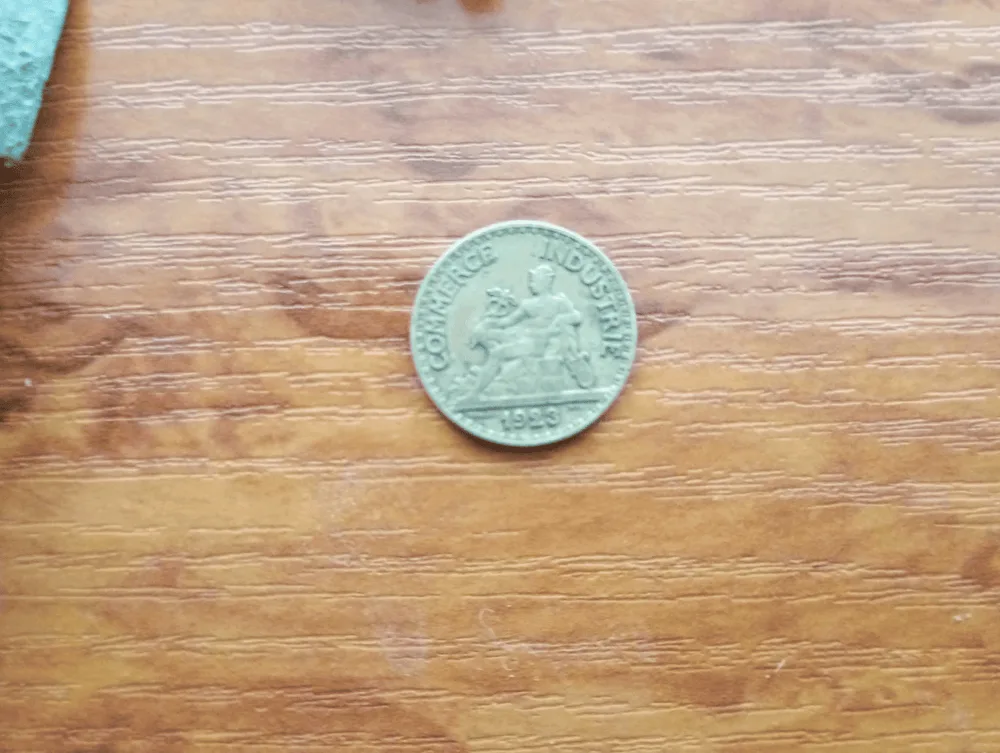
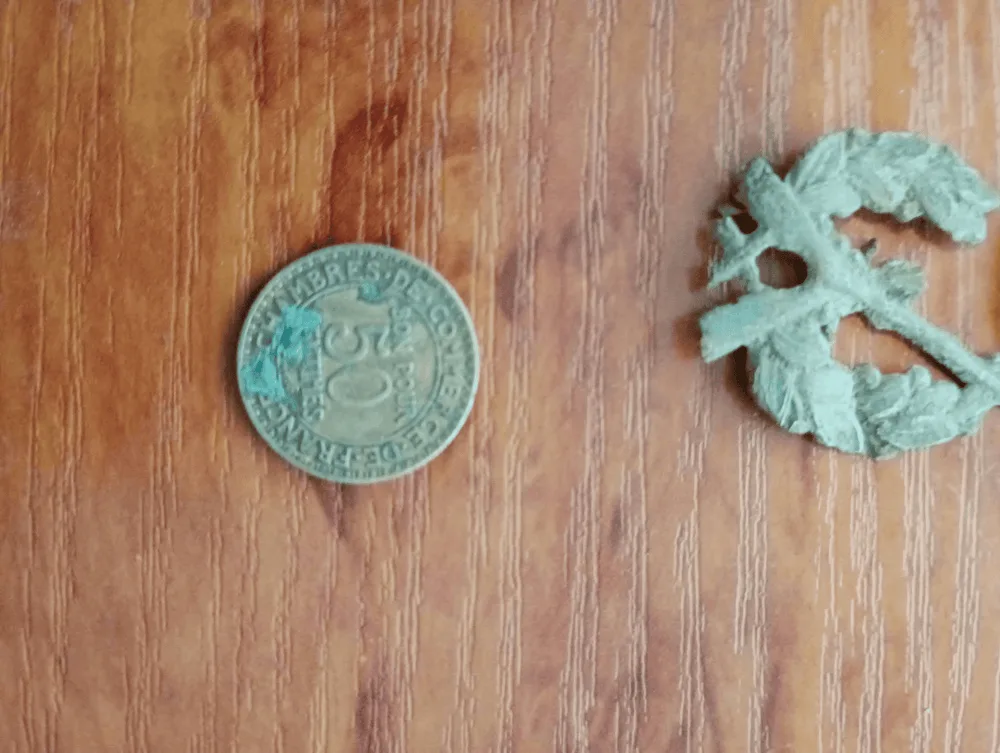
A French coin dating from 1923 is another notable item.
Local historian Oleh Bosyk commented on the French coin:
“What we have here is a French circulation coin — a 50-centime token issued by the Chambers of Commerce of France in 1923. Such coins were minted in France between 1920 and 1929 as a substitute for small-denomination currency following World War I (known as ‘Chamber of Commerce tokens’ — Bon pour…).
The obverse depicts a seated allegorical figure of Mercury holding a caduceus, alongside symbols of industry and trade. It bears the inscription ‘COMMERCE • INDUSTRIE’ and the date ‘1923’. On the reverse, the denomination ’50’ appears in the center, with ‘BON POUR’ above it and ‘CENTIMES’ below, surrounded by the inscription ‘CHAMBRES • DE • COMMERCE • DE • FRANCE’.
The coin is made of aluminum bronze, which gives the metal its characteristic color and has helped preserve it well.”
“The appearance of this coin in Polissia is a striking example of how local and European history intertwine. During the interwar period, when Volodymyrets was part of the Second Polish Republic, residents of Volyn and Polissia actively travelled to France for seasonal and other work, returning home or sending letters and belongings containing small-denomination coins.
Furthermore, France was an ally of Poland during the interwar period, and coins of this type remained in circulation until the early 1940s. Therefore, it could have reached this area later as well, during the events of World War II.
This is a valuable museum exhibit for telling the story of life in interwar Volodymyrets, labor migration, and the region’s international connections.”
A Collection of Seals: Witnesses to Trade and Institutions
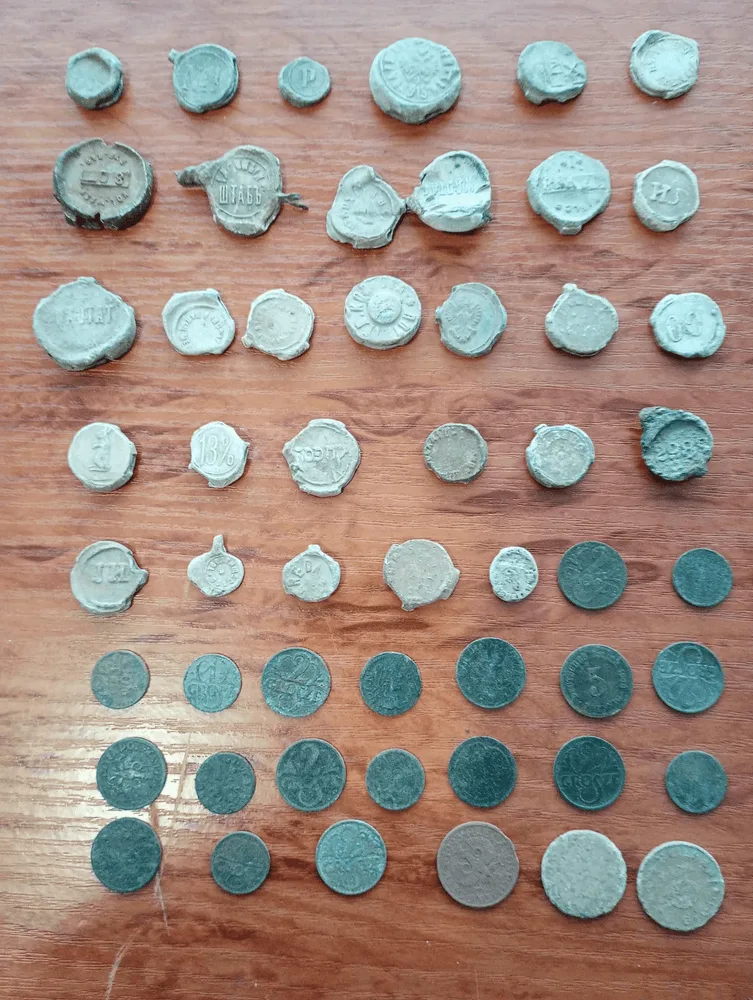
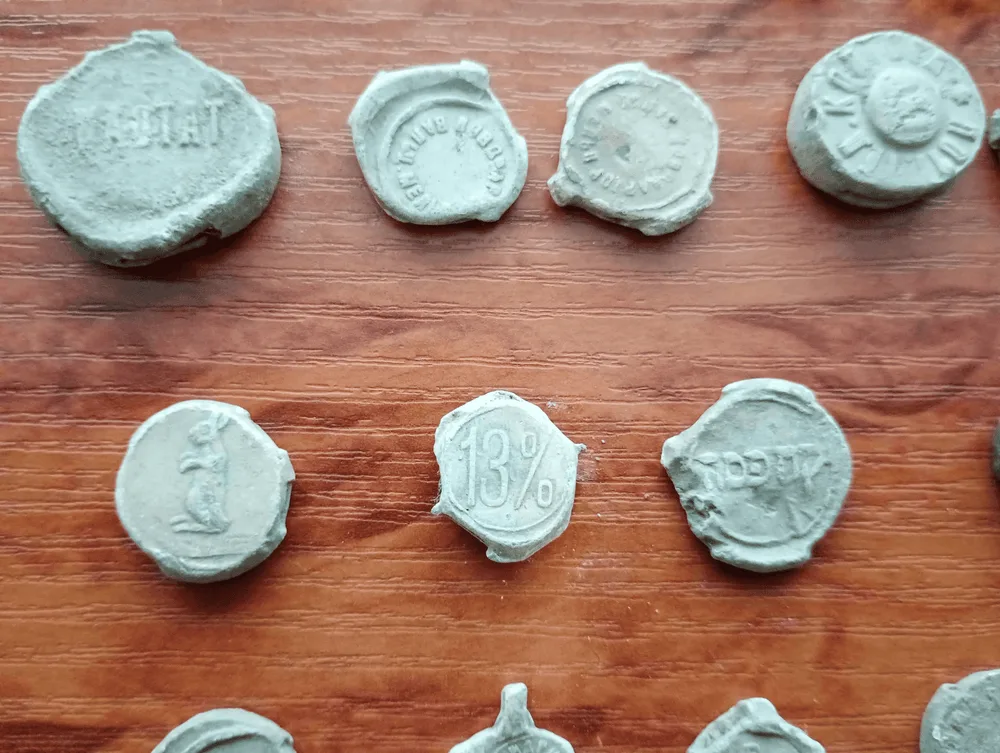
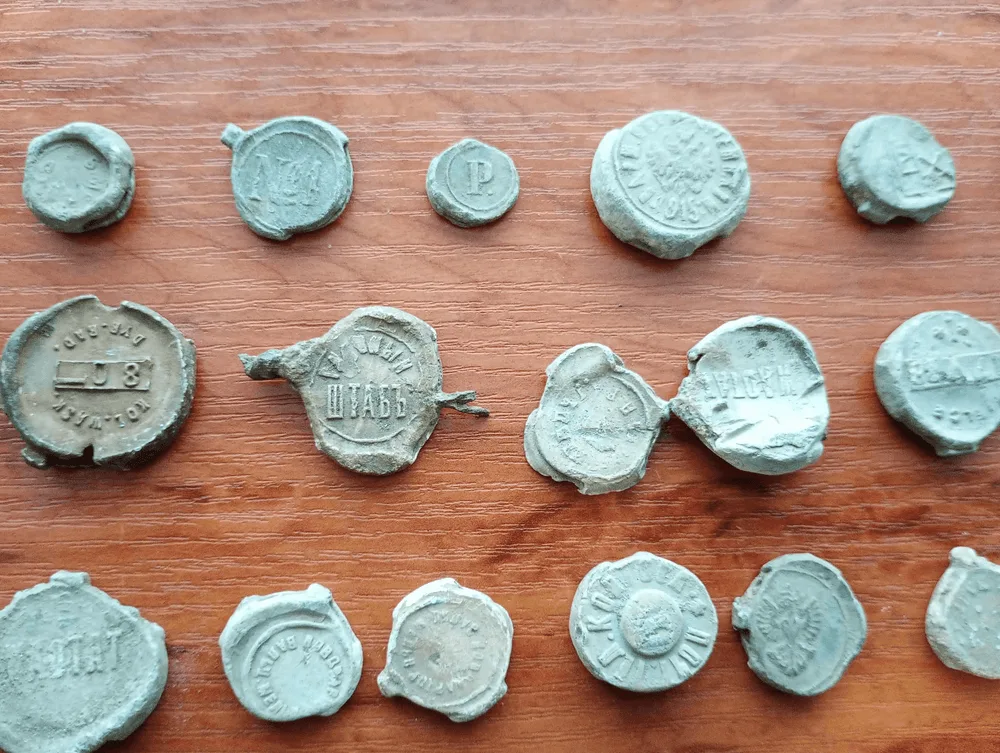
The museum has also received a large collection of lead seals of various sizes and periods. They bear a wide range of imprints and inscriptions in Polish, Russian, and Yiddish.
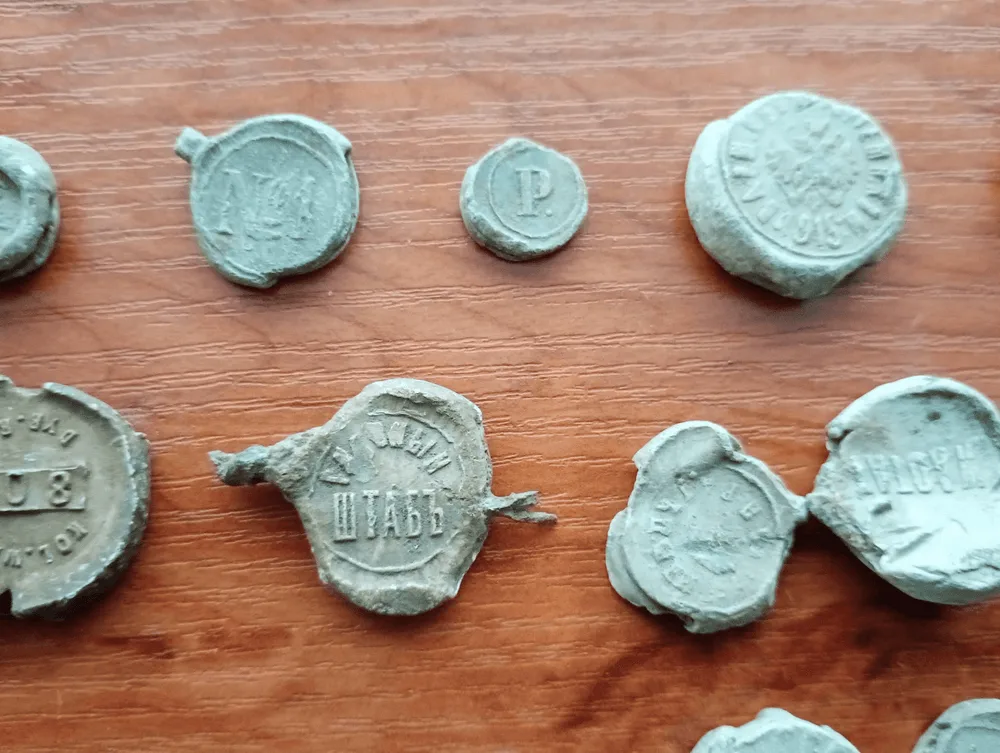
The photographs clearly show the diversity of the collection: it includes both larger, rounded seals and miniature examples bearing compression marks and remnants of wire or cord. Some of the items feature clearly visible letter and number markings, including the imprints “№”, “Р”, and “13%”, as well as individual numbers and fragments of circular inscriptions.
Particular attention is drawn to seals featuring figurative and heraldic elements. The photographs show an imprint of a double-headed eagle surrounded by a circular inscription, a clearly embossed image of an animal resembling a hare or rabbit, as well as round and oval dies with concentric lines and ornamental details.
The region’s multilingual character and its trade and economic ties are illustrated by seals bearing Cyrillic inscriptions (including a distinct imprint reading “ШТАБЪ” and other letter combinations), Latin letters and Polish inscriptions, as well as inscriptions in Yiddish. Taken together, this collection provides valuable material for studying trade, crafts, postal and administrative shipments, and everyday life in different periods in the Volodymyrets region.
Each such object is more than just a metal or glass find — it is a living thread connecting the present generation with those who lived, worked, traded, and defended this land hundreds of years ago. Thanks to caring community members like Volodymyr, the museum’s collection continues to grow, making the history of the Volodymyrets region more complete and accessible to everyone.