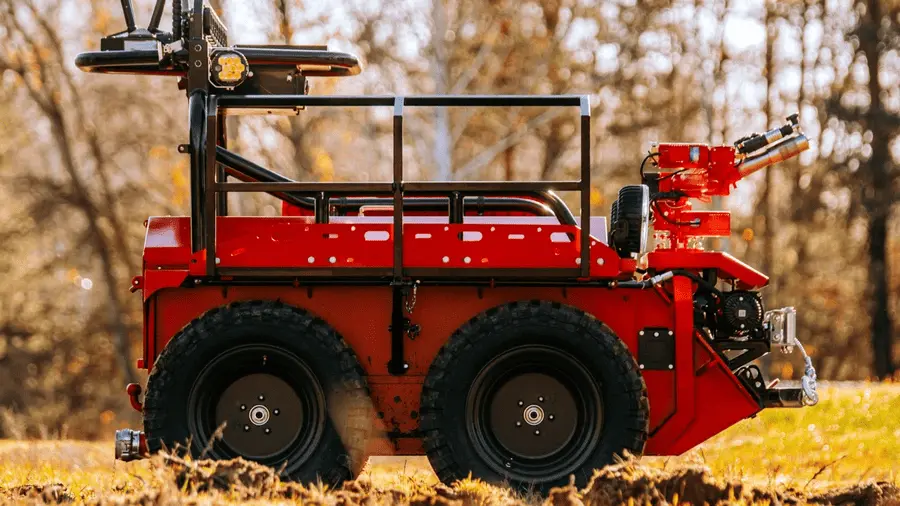
Ukrainian company Rovertech, which manufactures unmanned ground vehicles (UGVs), has developed a new version of its firefighting UGV, the “ZMIY Firefighter 2.0,” designed in cooperation with the State Emergency Service of Ukraine (SES).
The company’s representatives told a journalist from Oboronka about the vehicle during its first field tests.
“We saw the first firefighting robot as a solution to a simple problem: delivering a fire hose and water and directing a targeted water jet. This version already takes into account the needs of SES personnel: operating in dangerous conditions, without communications or electricity, and evacuating casualties,” Valerii Savarin, Rovertech’s Partnerships Manager, told Oboronka.
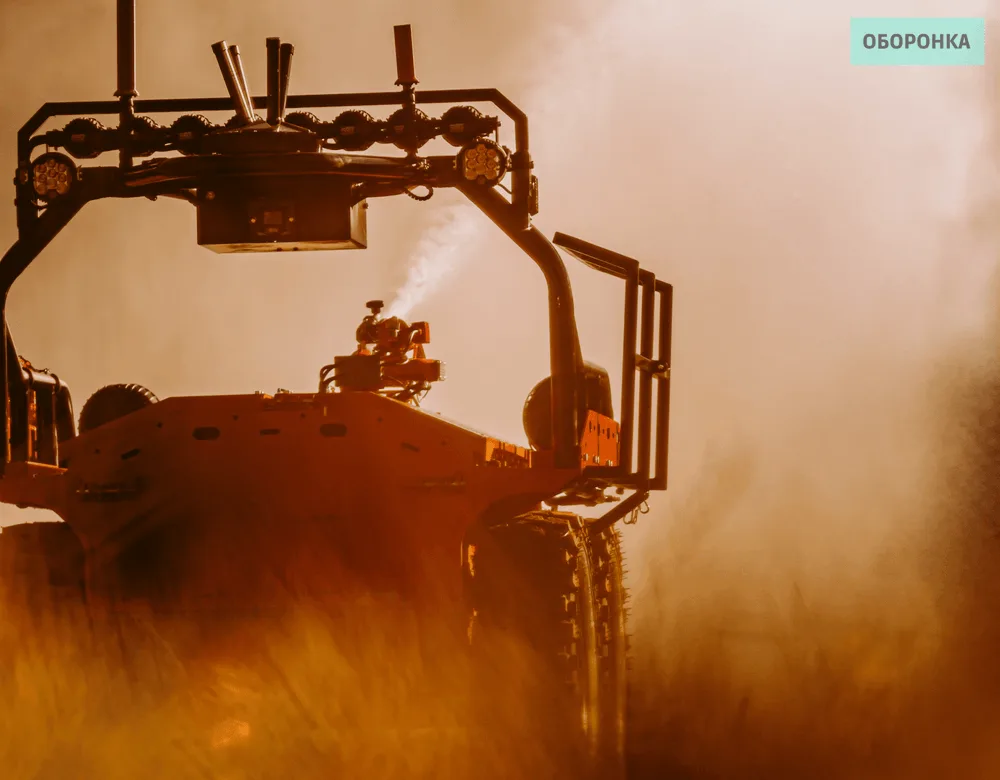
The platform weighs 1,300 kg, reaches a top speed of 8 km/h, and has an operating range of 20–40 km, depending on the load from the lighting system and winch. The UGV also has a payload capacity of 500 kg, although the manufacturer says it withstood loads of up to 1.5 tonnes during testing. The drone’s own tractive force is 1,000 kg, while its winch can generate 1,500–2,000 kg of pulling force when the platform is secured.
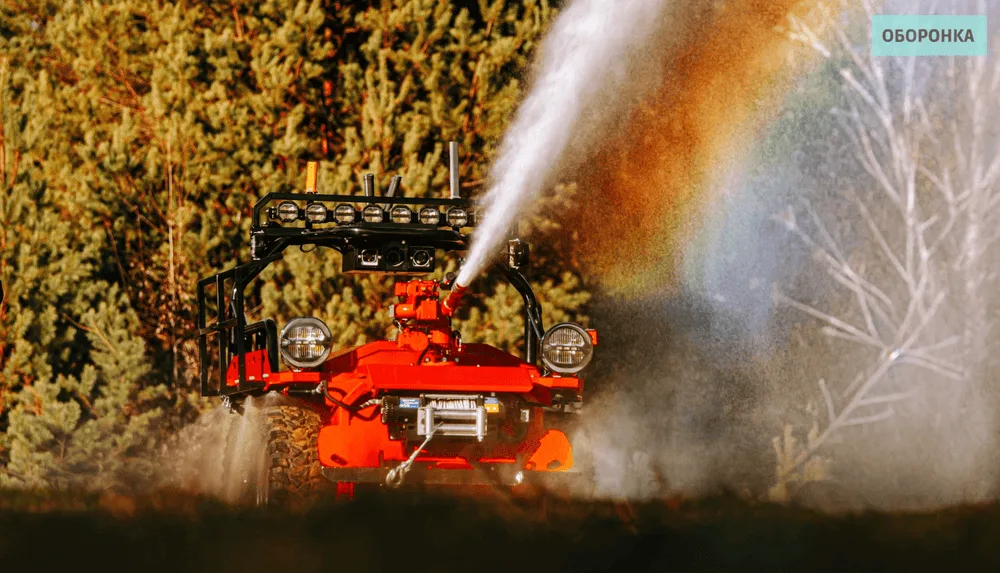
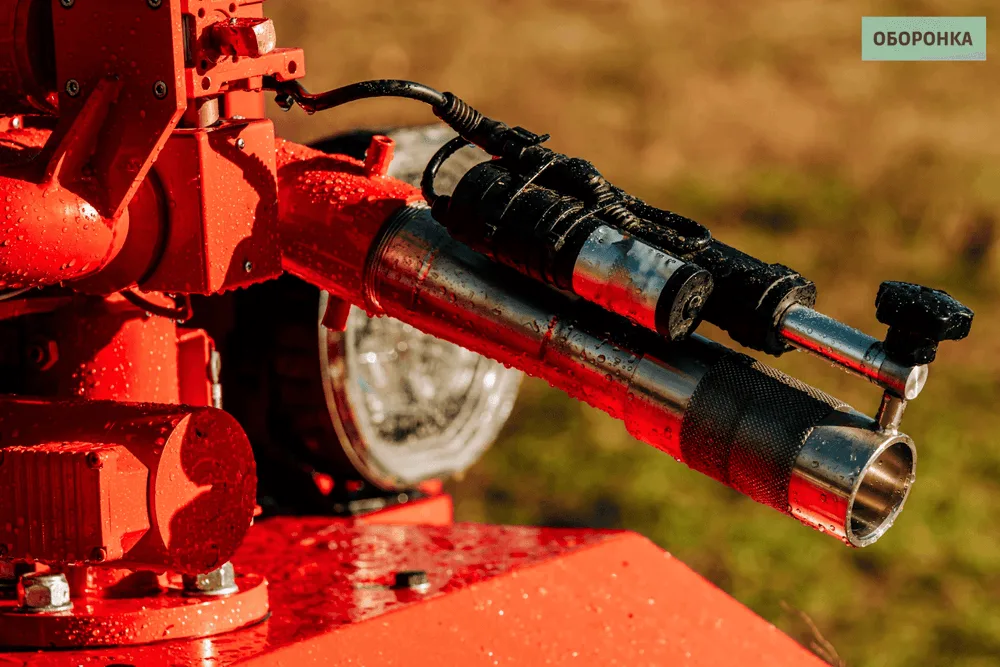
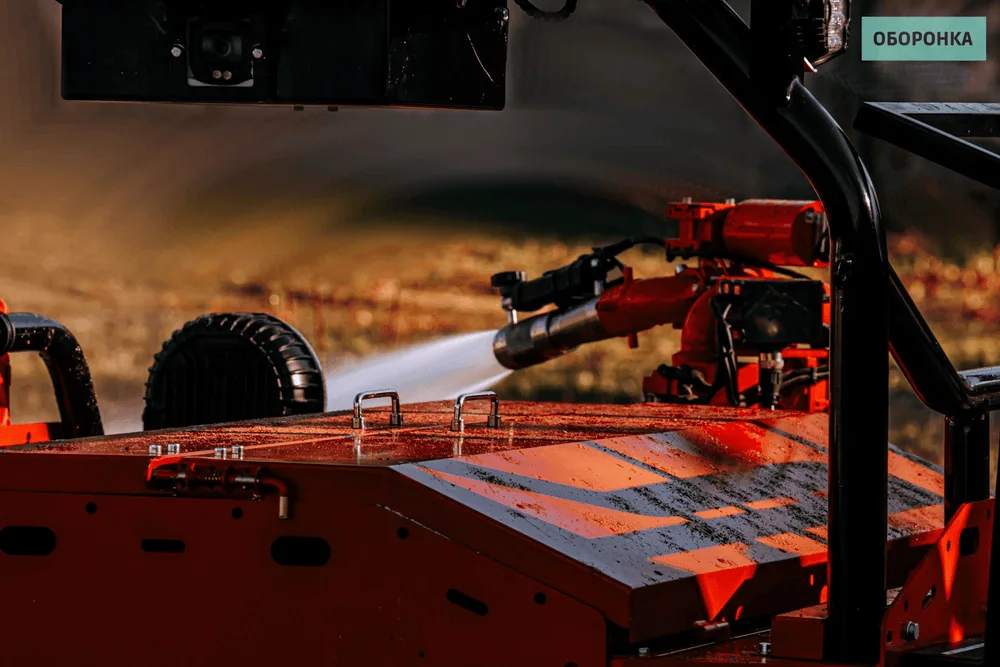
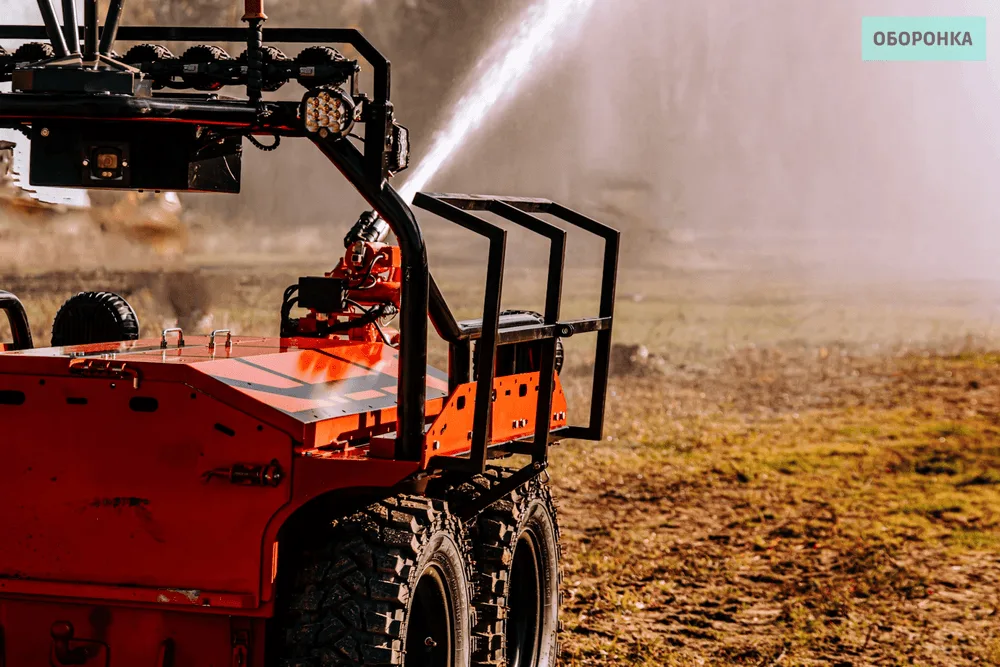
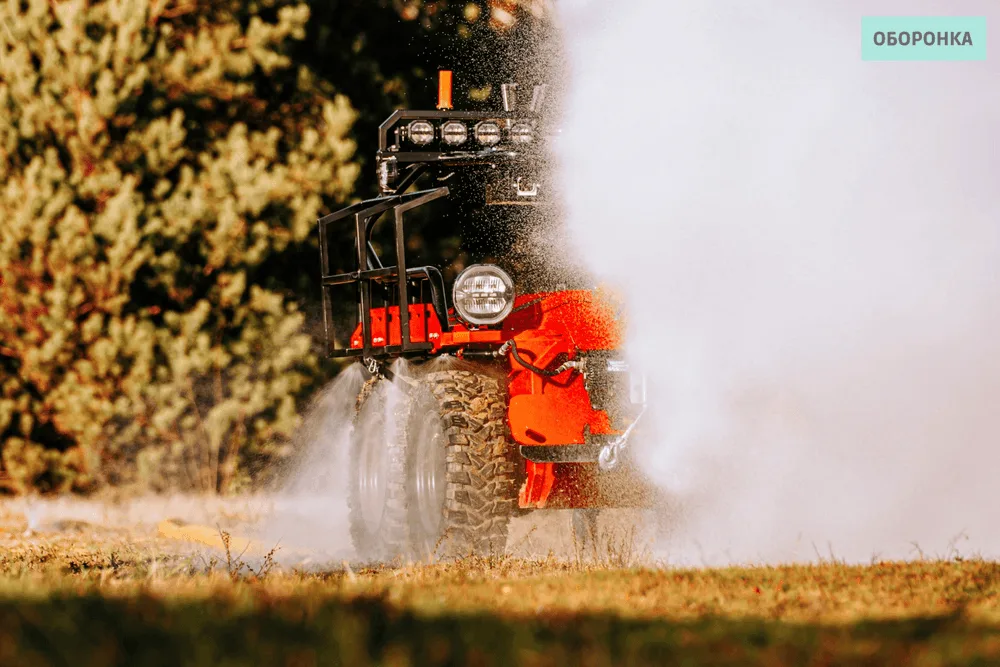
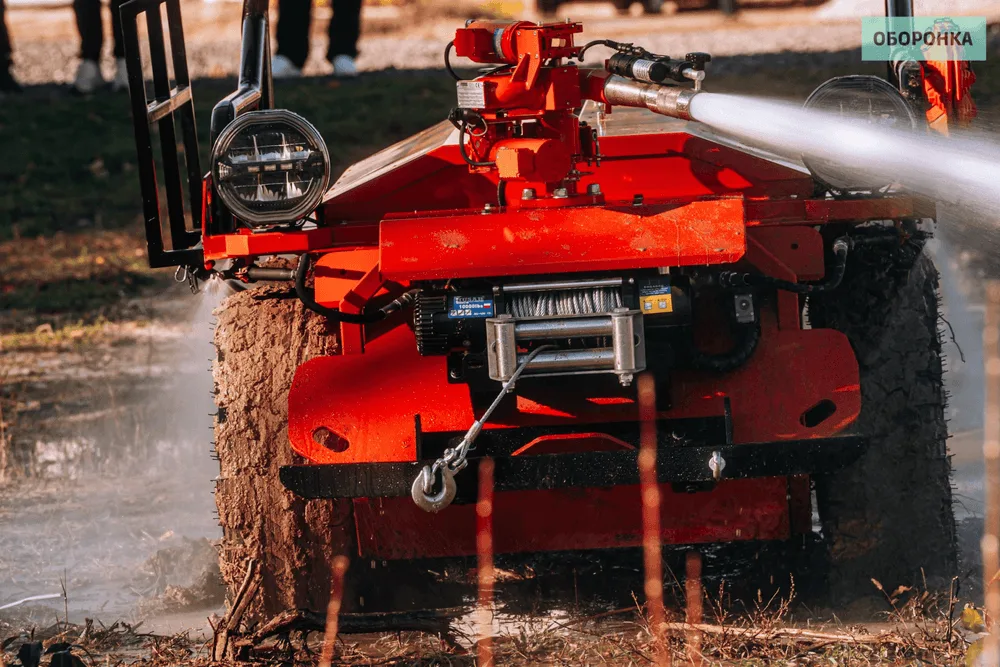
The “ZMIY Firefighter 2.0” is equipped with a fire monitor nozzle with elevation and horizontal rotation angles of 110 degrees and 130 degrees, respectively. At an operating pressure of 11 bar (with a design pressure of 16 bar) and a water flow rate of 50 liters per second, the robot can project a water jet up to 50 meters in windless conditions. Six sprinklers protect the platform from overheating, with three water spray nozzles on each side and a combined flow rate of 30 liters per minute.
The firefighting UGV’s fire monitor also serves as a communications hub and has an antenna mounted on it.
To prevent the vehicle from getting stuck while operating in rubble and mud, it has been equipped with a battering-ram bumper and two auxiliary ramps to help it get out of muddy terrain.
The fire hose connections have been moved to the rear and middle sections of the body, improving the UGV’s mobility when operating under water pressure.
The platform has also been fitted with an enclosed body with doors, a fold-out stretcher for evacuating casualties, all-round lighting with a 140° spotlight, and three cameras: a thermal imaging camera, a wide-angle camera, and a narrow-angle camera.
The vehicle’s control system is built around a hybrid multi-channel communications architecture with automatic signal quality monitoring. It allows the system to seamlessly switch to backup data transmission channels, ensuring stable control at short, medium, and ultra-long ranges.
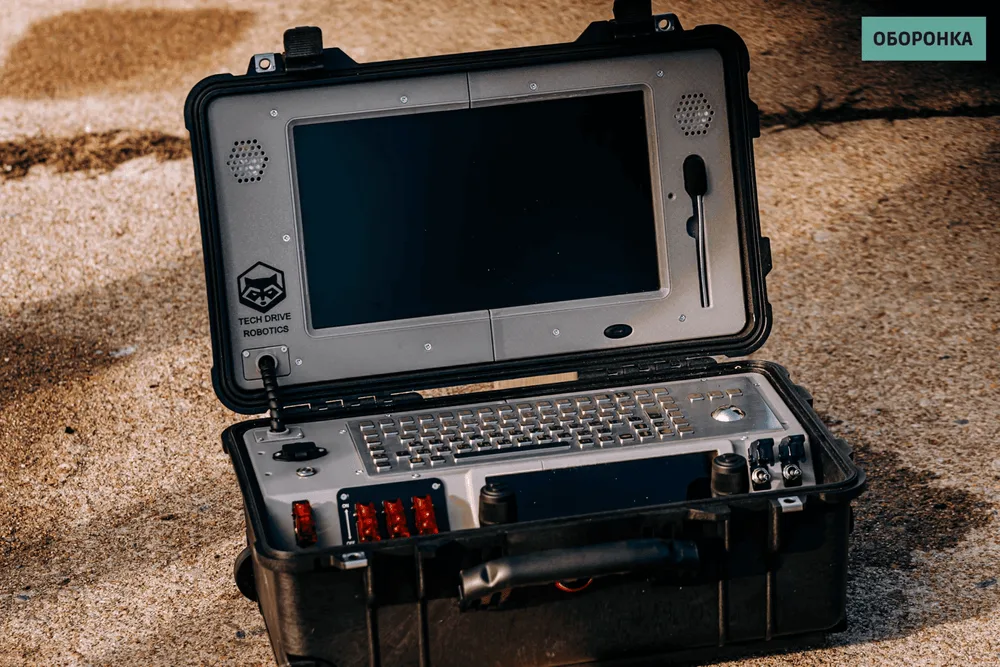
The vehicle is operated via a portable ground control station that can be deployed on a plug-and-play basis.
“All it takes is raising the antenna, connecting the cable and power supply, and the robot can be up and running in as little as two minutes,” the company said.
According to the developers, almost nothing remains of the first-generation firefighting robot in the new version. The original model was built on a standard logistics UGV platform and fitted with a servo drive that rotated the fire monitor nozzle up and down and from side to side to position the hose. The “ZMIY Firefighter 2.0” was redesigned from scratch based on blueprints and technical specifications approved by emergency responders.
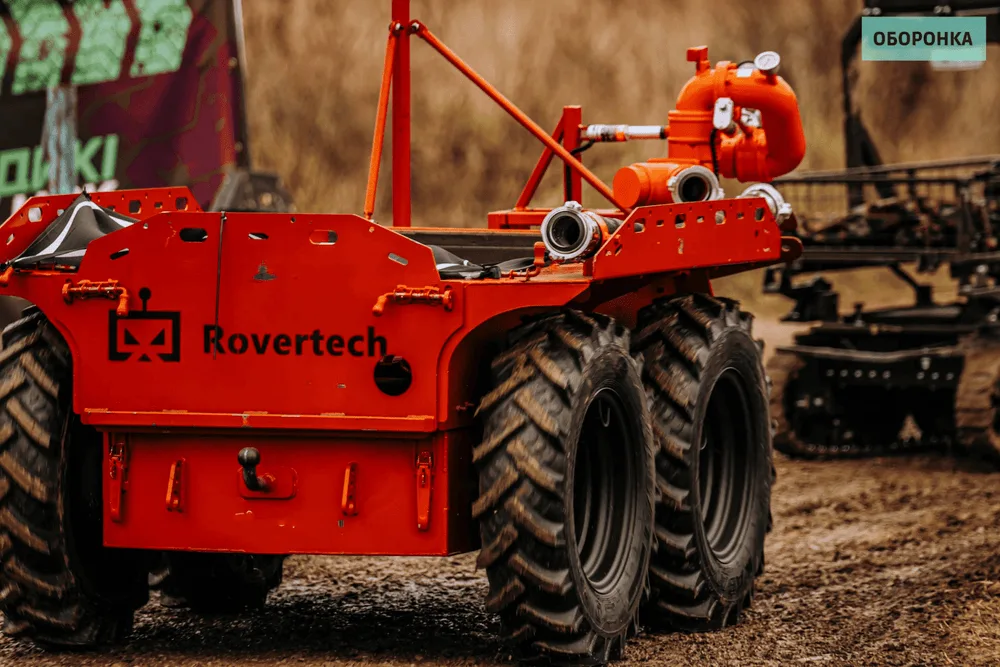
The changes primarily affected the electronics and software. According to the developers, the old platform lacked sufficient output channels for the new equipment. The engineers designed a separate control unit with approximately 30 relays, allowing operators to switch between two water circuits, activate the sprinkler system, and control the lighting, fire monitor, winches, and towing systems. The company also plans to install this universal unit on its other platforms.
The control panel was also redesigned so that operators would not have to waste time adapting to it in stressful situations.
“In critical situations, everything must be so intuitive that you don’t have to think – you simply do your job. It doesn’t feel like something complicated or something that requires lengthy training: there are industrial joysticks resistant to water and impacts, clearly labeled buttons, and video feeds,” the developers said.
Another feature added by the team to support different rescue scenarios is a loudspeaker with two-way audio communication. The operator at the ground control station can hear everything happening near the robot and communicate directly with people in the affected area.
“Imagine a situation where someone is injured or needs to be located. When they are being evacuated, it’s important to tell them that everything will be all right, that they are not alone, and that they are being taken to safety. Or to give them clear instructions,” Rovertech engineers explained.
Rovertech is now planning to develop the third generation of the system and is preparing specialized modifications.
In particular, the developers are working on a separate version of the firefighting UGV for the European market, as well as a simpler, more rugged, and more affordable version for the military.
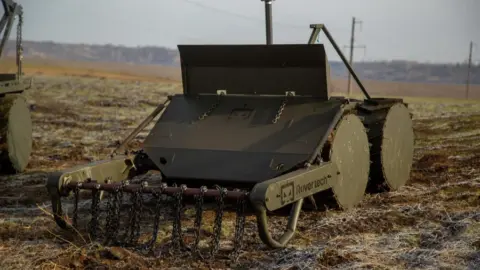
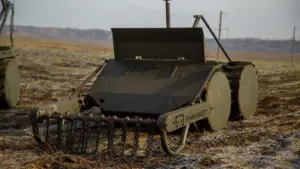
It will be recalled that Ukrainian company Rovertech recently upgraded its ZMIY demining system and told Oboronka that it was preparing to launch mass production.