There are no prerequisites for ending active hostilities in the near future, as Russia has not lost its offensive capabilities and its strategic goals remain unchanged.
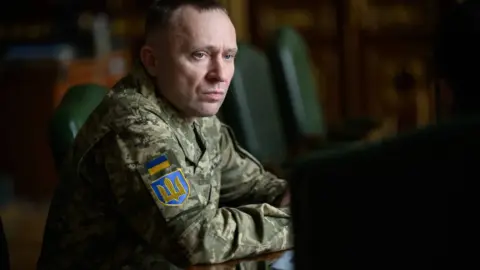
This was stated on the “Apostrophe” TV channel by Yuriy Fedorenko, commander of the 429th Separate Unmanned Systems Regiment “Achilles.”
He emphasized that Russia’s strategic goal has remained the same since 2014 — the complete occupation of Ukraine and the destruction of its statehood and the Ukrainian people as a nation.
“Russia seeks to fully occupy the Ukrainian state, destroy its statehood, and eliminate those who uphold it — that is, the Ukrainians. Russia is not aiming for or doing anything new,” Fedorenko stressed.
The commander explained that hostilities only end in two cases: when one side loses the ability to defend itself or when the aggressor loses the capacity to launch an offensive. Currently, neither scenario has occurred.
“Has Ukraine lost its ability to defend itself? Frankly, no […] Since Ukraine has not lost its defensive capabilities, and the enemy has not lost its offensive capabilities, where, then, would the seed arise that could make it possible to stop active fire and combat operations?” Fedorenko noted.
He added that despite Russia’s significant advantage in manpower, artillery, aviation, and the number of drones, Ukrainian forces continue to hold the line. In the Pokrovsk sector, the enemy has concentrated major resources, yet for nearly a year has been unable to achieve its objectives, suffering losses from the Defense Forces’ actions.
Fedorenko believes that a turning point in the war is possible only through systemic pressure on Russia: economic sanctions, strikes on the military‑industrial complex, depots and tankers carrying petroleum products, as well as providing Ukraine with long‑range missile systems, including Tomahawks.
“This includes strikes carried out by unknown patriots on the shadow Russian fleet and their tankers […] Strikes on factories serving the military‑industrial complex […] We achieve part of this through our deep strikes, but we critically need missile weaponry,” he said.
The commander noted that the nature of the war has changed significantly compared to 2022. Today, unmanned systems — aerial, ground, and maritime — as well as electronic intelligence tools, play a key role. Russia is actively expanding its technological capabilities, in part through cooperation with China.
“China provides more advanced weaponry from a technological standpoint — technologies for producing drones and electronic intelligence equipment […] including fiber‑optic drones,” Fedorenko said.
He added that Ukraine is also increasing its domestic drone production in cooperation with EU countries, including interceptor drones to protect its airspace. According to him, army reform and the development of modern technologies require significant resources and time, while people remain the main capital in the war.
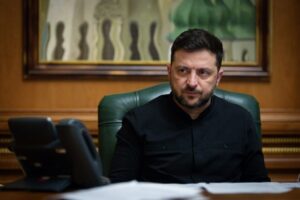
Earlier, December 6, Ukrainian President Volodymyr Zelenskyy held a two-hour phone call with American representatives Steve Witkoff and Jared Kushner. They discussed issues of Ukraine’s territorial integrity and security guarantees.
Following the talks, the parties agreed on the next steps and formats for Ukraine – U.S. discussions. Zelenskyy emphasized that “not everything can be discussed over the phone,” and he awaits a detailed report from Umerov and General Hnatov.
Bloomberg reported that Europe supports President Zelenskyy in refusing to withdraw troops from Donbas.
During a speech at the 11th Kyiv Security Forum for youth, titled GEN W²: PROGRAM THE FUTURE, Yuriy Fedorenko, commander of the 429th Separate Unmanned Systems Regiment “Achilles,” stated that NATO countries, acting only as observers of the war in Ukraine, will not be able to effectively intervene in a potential local conflict, as they do not gain real combat experience. NATO is losing the opportunity to acquire vital experience, which North Korea, involved in hostilities by Russia, is instead gaining.
Tags: conflict outlook Drone Warfare military forecast russia - ukraine war Russia capabilities Russia offensive ukraine war war 2025