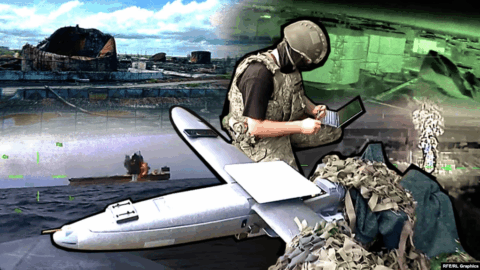
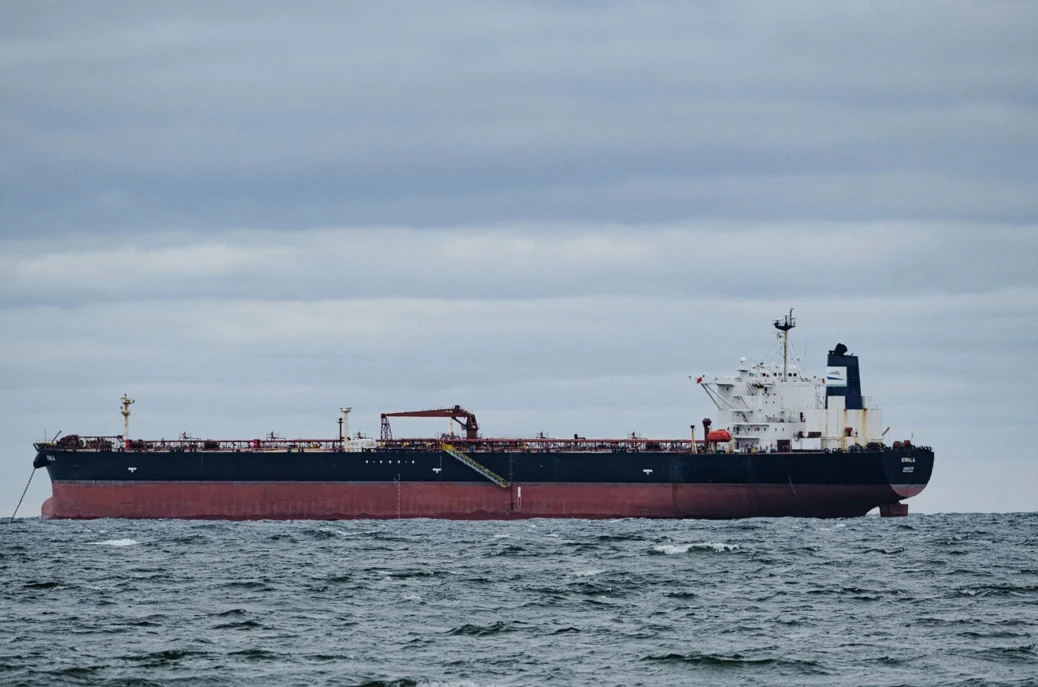
There is a growing perception that the so-called Russian “shadow fleet” is being successfully countered. This perception is absolutely false.
According to Andrii Klymenko‘s verified data for January 2026, Russia has set another all-time record for maritime exports of crude oil from Baltic Sea ports – 12.7 million tons. The previous record was in October 2025, at 11.8 million tons.
Another record is even more telling: 47.7% of this volume was transported by tankers that are officially under EU, U.S., UK, and Canadian sanctions.
There is also a third record. In January 2026, the number of crude oil tanker voyages reached 106.
For comparison:
- October 2025 (previous record): 99 tankers
- November 2025: 87 tankers
- December 2025: 88 tankers
Monthly export volumes since the October 2025 record
- October 2025: 11,886,005 tons
- November 2025: 9,988,078 tons
- December 2025: 10,027,240 tons
- January 2026: 12,739,831 tons
These figures clearly show that the initial shock from Trump-era sanctions against Rosneft and Lukoil was noticeable only in November 2025, when those sanctions came into force.
By December, buyers had adapted and began catching up. And by January 2026, the fear had fully disappeared.
Of course, one can try to comfort oneself with claims that Russian oil prices have allegedly “collapsed.” We know the sources of these claims – a single international marketing agency that for nearly 20 years has maintained formal and informal ties with Russia’s ministries of economy and finance. These ties are so close that the agency’s figures were officially used by the Russian government for years in budget calculations.
Even more absurd is the widespread repetition of claims – allegedly based on data from Russia’s own Ministry of Finance – that Russian budget revenues from oil exports have “collapsed.” This is simply obscene.
Especially when one understands that export revenues either:
- remain in foreign accounts and are used to purchase sanctioned equipment and microchips for missile production, or
- are converted into cryptocurrency, which is not reflected in any official budget statistics at all.
A Deliberate Information Operation
What we are witnessing is a large-scale Russian information operation. Its objectives are clear:
- to prevent the EU from imposing direct sanctions on Russian oil (which, contrary to popular belief, have never existed and still do not exist),
- to stop the EU from taking practical measures to block even sanctioned tankers before they enter the Baltic Sea via maritime straits,
- and to ensure that tankers owned 40% by Greek companies and another 5% by companies from other EU states are never banned from participating in Russian oil transport.
The EU – and even the Baltic states – are still afraid.
Everyone knows exactly what needs to be done. Ukraine has spent more than a year – at all levels, including the President personally – providing its European, British, and Baltic partners with a clear, lawful algorithm of actions.
The Monitoring Group of the Black Sea Institute for Strategic Studies publishes concrete recommendations almost daily.
But Europe still fears Russia — and fears “escalation.”
Which means that, in reality, the fight has not even begun yet.
Tags: Baltic Sea EMPR.media EU sanctions Russia oil exports Russian economy Sanctions evasion shadow fleet ukraine war