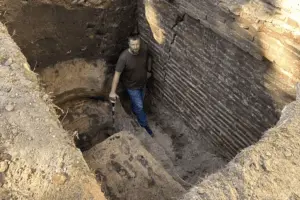

Andrii Osipov allegedly used SBU connections, covert credentials, and protection from senior generals to wield unchecked power, demand bribes, and operate above the law.
Oleksandr Bryhynets reveals.
The SBU’s freelance generalissimo Osipov
The phrase “freelance employee” has long carried an ominous connotation in the context of Ukrainian law enforcement agencies. But the arrest of Andrii Osipov by detectives from the National Anti-Corruption Bureau of Ukraine (NABU) and prosecutors from the Specialized Anti-Corruption Prosecutor’s Office (SAPO) took this concept to an entirely new level, giving the country the phenomenon of a “freelance generalissimo.”
Formally, Osipov had not undergone a military medical examination, taken an oath, worn official insignia, or been given an office on Volodymyrska Street. Yet he had a full set of privileges that regular operatives could only envy: undercover operational phone numbers, special ID cards, special permits, and the green light from top security service officials.
Influence Without Accountability
What is the phenomenon of “Osipov, the freelance generalissimo”? He embodies the ultimate stage of mutation within the security apparatus, where a civilian fixer with a criminal background becomes a fully-fledged operator and manager of the state’s coercive machinery.
Commercial Monopoly: While ordinary operatives investigate cases, the “freelance generalissimo” demands $1 million from a Russian national in exchange for canceling his extradition. He openly trades on the names of senior SBU officials and “distributes” hundreds of thousands of dollars to make problems go away, building his own financial hierarchy.
Systemic Continuity: The service’s leadership changes and generals reshuffle (from Malyuk’s inner circle to Duka, Kravchuk, and Poklad), but the “freelance generalissimo” remains in place. He is a convenient, indispensable link between shadow cash and the official offices of senior generals.
Coercive Vendetta: A man with no official position has been driving around for years with SBU undercover license plates, enjoying a sense of absolute impunity. This is because his “protectors,” wearing genuine general’s insignia, are simultaneously overseeing forceful actions and special operations targeting anti-corruption agencies and journalists.
Carthage Is Burning, but the System Is Fighting for Its Life
When NABU and SAPO seized on this thread of a deeply troubling web of corruption and raided the homes and offices of top generals (including Serhii Duka, deputy head of the Department for the Protection of National Statehood, and Anton Kravchuk, head of the Main Internal Security Directorate), it became clear that the era of untouchable “unofficial commanders” was facing real threats.
But the system of “commercial epaulettes” is not going down without a fight. According to observers, the investigative actions triggered a full-blown confrontation: SBU Deputy Head Oleksandr Poklad was reportedly mobilizing special forces to physically obstruct NABU detectives, who were acting under a court order, while the general himself allegedly threatened investigators with a firearm.
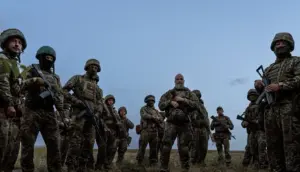
At the same time, the traditional mechanisms of information cover are being activated. While attempts are being made to flood the media space with questionable information and psychological operations (IPSO) targeting combat units, seeking to “drag the names of Azov and Khartiia through the mud” to divert public attention, the main point is becoming clear to everyone.
This is not just another bribery scandal. It is a direct, open confrontation between the new anti-corruption infrastructure and the old criminal-clan system of governance, which has turned the state’s shield and sword into a commercial cooperative.
The title “The SBU’s Freelance Generalissimo Osipov” is a verdict on an era in which real power, security protection, and access to “problem-solving” belonged not to the law or official regulations, but to shadowy fixers operating under the cover of generals’ epaulettes. And now the question is a stark one: will the state withstand this test, and will it root out this rot down to its very foundations?