In an exclusive interview, war veteran Oleg Symoroz says Ukraine’s Defense Forces achieved local southern successes through planned operations, while the front remains wide, unstable, and under enemy probing.
Recently, the Defense Forces of Ukraine have achieved successes in certain sectors of the front, particularly in the south. The city of Orikhiv has effectively been saved from the threat of partial encirclement. There is also a prospect of moving combat operations out of the Dnipropetrovsk region. Importantly, these successes should not be attributed to the enemy’s disconnection from Starlink — they were the result of planned operations and successful offensive actions.
In some areas of the front, the enemy is “contained” thanks to strong defense. At the same time, the front line is very extensive, and there are sectors where defense is not as strong. These weak points are still being sought out by the enemy. Therefore, it is too early to talk about thwarting the spring offensive of the occupying army. The war in Iran also creates additional problems for Ukraine. That is why the primary focus should be on stabilizing the front and preventing negative scenarios from developing.
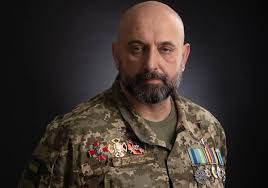
This opinion was expressed in an exclusive interview with OBOZ.UA by war veteran, civic activist, and lawyer Oleg Symoroz.
– The Institute for the Study of War believes that Ukrainian forces are conducting counterattacks capable of disrupting Russia’s spring–summer offensive. Do you agree that this is actually possible, especially under the current circumstances, with the war in Iran drawing some forces and attention there?
– I think it is far too early to say. Yes, we have achieved certain successes in specific directions on the front. In particular, the situation in the Dnipropetrovsk region, where active combat took place, has improved. There, the Armed Forces have indeed managed to make significant progress. In fact, there is a prospect of moving combat operations out of the Dnipropetrovsk region as part of the advance of the Air Assault Forces and other Defense Forces units. This is possible.
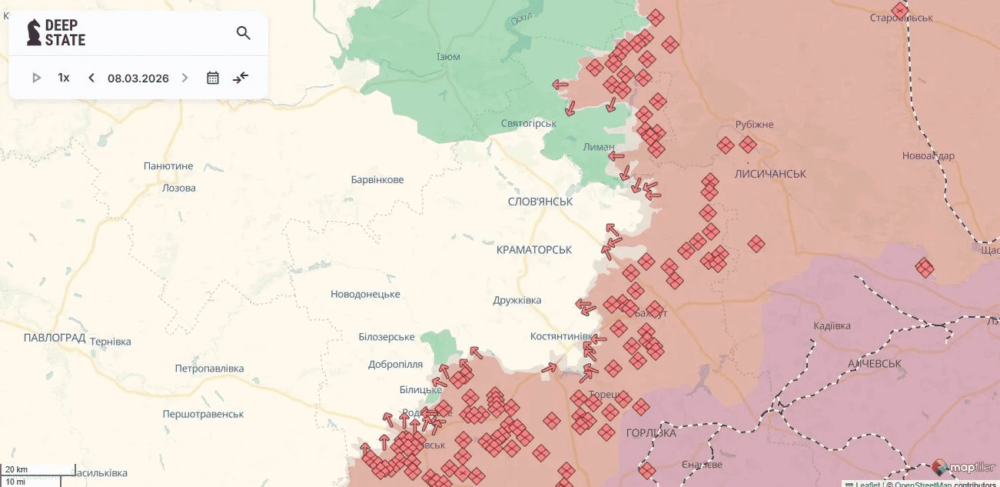
But we have many more directions to consider. If we start with the northern part of the front, around Lyman and Kupiansk, the situation there is, to put it mildly, not very stable. The same applies to Chasiv Yar and the outskirts of Kramatorsk, which are beginning to come under fire from tube artillery, as well as Kostyantynivka. The situation in eastern Ukraine, particularly around Pokrovsk, is far from stable. Therefore, it is far too early to talk about the enemy’s plans being disrupted.
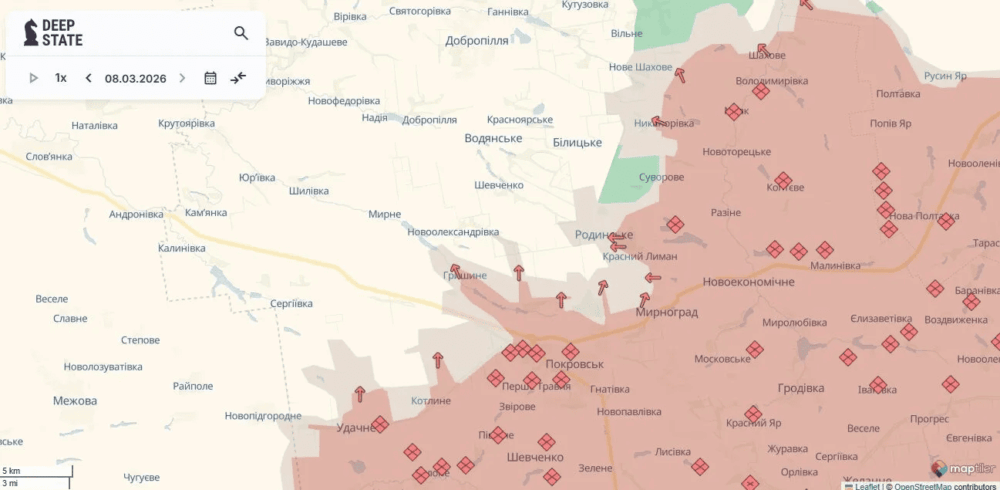
It is good that there is a sector of the front where we see a positive trend, but at the same time, many difficult sections of the front remain. The enemy is advancing in the east toward the strategically important Kramatorsk–Sloviansk area. It is too early to say that the enemy’s plans have been completely thwarted. To make such a claim, the situation in the main sectors of the front would need to be stabilized, and it has not yet been stabilized.
Regarding Iran and the overall combat situation in the Middle East, I do not see signs that Russia is significantly diverting attention there or sending any units or military assets to its allies. On the contrary, events in Venezuela and Iran have shown that, primarily due to the war in Ukraine, they are not ready to fulfill their allied obligations to these countries. All they can do is simply observe.
In the end, this is beneficial for the American side, which has conducted corresponding military operations against these countries, since Russia has not provided additional resources to their opponents. For Ukraine, there is little direct benefit from this situation, except that it is indeed positive that military operations are being carried out against the Iranian authorities, who supplied Russia with Shahed drones and technical developments. However, ultimately, our allies have used a large amount of expensive weaponry that we also rely on, including missiles for the Patriot systems, which creates a shortage of these missiles for us, since U.S. production does not cover the needs of Ukraine and the Middle East. Additionally, rising oil prices work in favor of our enemy, Russia.
Events in the Middle East have probably created more problems for us than benefits. There is a significant risk that the rising prices of oil and fuel and lubricants will remain at this level, which poses an even greater shortage risk for our military.
It is also important to understand that the situation could worsen if the war in the Middle East drags on. And it has the potential to do so, considering that Iran is not Venezuela, even in terms of territory. Iran has already taken very serious strikes from the world’s most powerful army, but without a ground operation, it cannot be said that the situation is fully resolved.
Therefore, I do not think our society or our command should focus on this. We have a war in our own country, facing a well-resourced enemy, and here we need to implement the appropriate strategies for what to do here and now.
– Information about the situation in the south of our country, on the Zaporizhzhia front, is quite mixed. On one hand, the Defense Forces have managed to liberate many territories, including cutting off the “pincers” around Orikhiv that the enemy tried to create. At the same time, recent reports indicate that the enemy has become active again on the Huliaipole direction, in particular attempting to attack our positions near Myrne and Huliaipole. We understand that our successes there were largely connected to the occupying army being disconnected from Starlink. Could this renewed enemy activity indicate that they have found alternative communication methods?
– I definitely would not link our successes to the enemy’s Starlink problems. That is not among the top five causal factors. Since 2022, the enemy has been fighting effectively without Starlink, and now they have found alternatives. In principle, it is possible to operate along the front line without Starlink. They have communication means for coordinating actions, transmitting intelligence data, and so on. So, this is definitely not the main reason.
The situation on the Huliaipole direction is generally quite unstable and does indeed fluctuate. The situation around Orikhiv has somewhat improved. There was a threat of operational encirclement when the enemy was in Charivne. But overall, the enemy is actively advancing there, achieving certain tactical successes, and the situation in this sector remains unstable. Unfortunately, it is far too early to talk about active defense that would stop the enemy’s advance in this area.
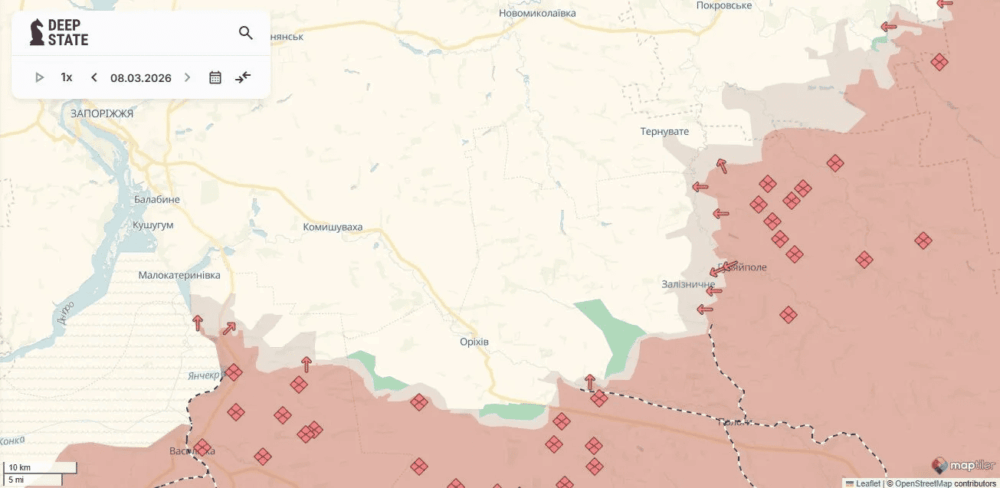
If we speak about Starlink in general, this issue was probably most relevant during the first week when it happened. Of course, the enemy faced serious problems, but we also experienced corresponding difficulties due to uncoordinated actions. There were cases when, for a week, most of our units were also without communication and were occupied with verifying their equipment. This has now been resolved, but we could have acted more aggressively during that first week if we had not faced these problems.
Therefore, I would not say that we significantly exploited this advantage, let alone advanced in this direction because of Starlink. No, our progress was achieved through planned operations and offensive actions, particularly by the Air Assault Forces. This is the main reason for our successes — planned operations executed as part of our infantry’s advance.
– Do you think the southern direction could become one of the enemy’s priorities?
– The combat map is quite extensive. In certain sectors, the enemy is contained and the situation there is stabilized. We can see this even from enemy activity. For example, although the situation on the Kupiansk direction is difficult and the Armed Forces of Ukraine were not able to fully clear the city until recently, the enemy has clearly reduced the intensity of combat in this sector, where there was a high concentration of forces, and redeployed them to other directions. This is what is known as military maneuvering.
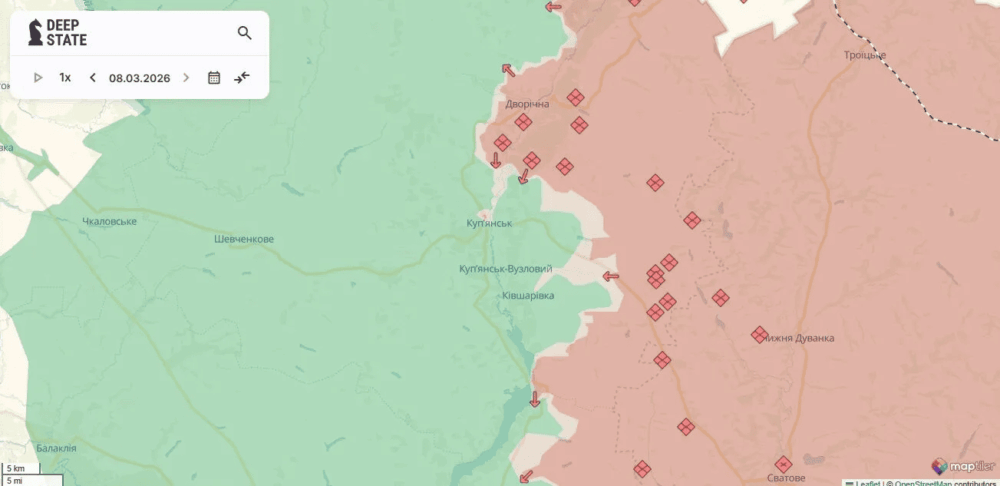
The enemy engages in such actions — redeploying troops and trying to find weak points in the Defense Forces’ lines, testing our positions from south to north, and conducting reconnaissance in force. Unfortunately, such weak points do exist, as the front is quite extensive.
Tags: EMPR.media frontline interview global security crisis military strategy analysis russia ukraine war southern front fighting Ukraine counteroffensive








![Visitors at the “Thank You With All My Heart” Ukrainian exhibition at the Council of Europe, featuring the Great Amber Heart and powerful war art. :contentReference[oaicite:2]{index=2}](https://empr.media/wp-content/uploads/2026/02/heart-300x171.png)