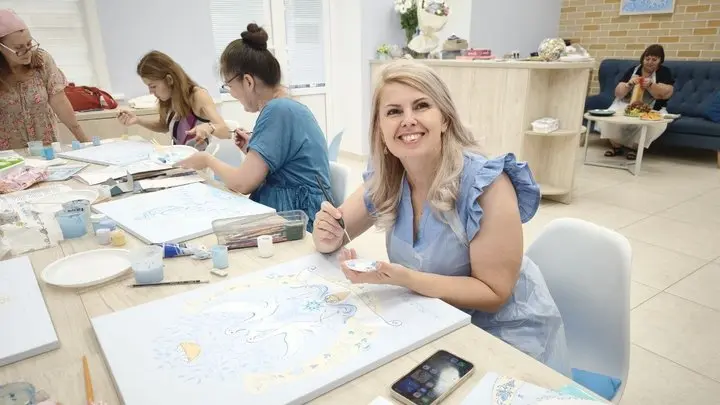
Mykolaiv craftswomen will create 109 exhibits featuring Tavrian painting for a museum exhibition showcasing the region’s cultural heritage, artistic traditions and identity through ceramics, wood, textiles and multimedia.
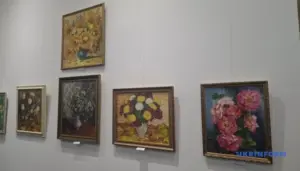
109 new exhibits created by craftswomen from Mykolaiv and the surrounding region will be donated to the Regional Museum of Local History as part of the project “Tavrian Painting: A Living Tradition Connecting the Past, Present and Future.” The exhibits will be made from various materials, including ceramics, wood and textiles. Six female artists will work on them.
Ruslana Sikalenko, project manager at the NGO Center for Adult Learning and Education, said this in an interview with Ukrainian Radio Mykolaiv, Suspilne reports.
According to Ruslana Sikalenko, the project’s goal is to present Tavrian painting as a living tradition that connects past, present and future generations, as well as to highlight the cultural identity of the Mykolaiv region. The participants will create a mobile interactive exhibition featuring exhibits specially made for the collections of the Mykolaiv Regional Museum of Local History.
“The project is unique because, personally, I have not found any information about anyone ever carrying out a similar project, not only in Ukraine but anywhere in the world, in the context of preserving intangible cultural heritage and art in general.”
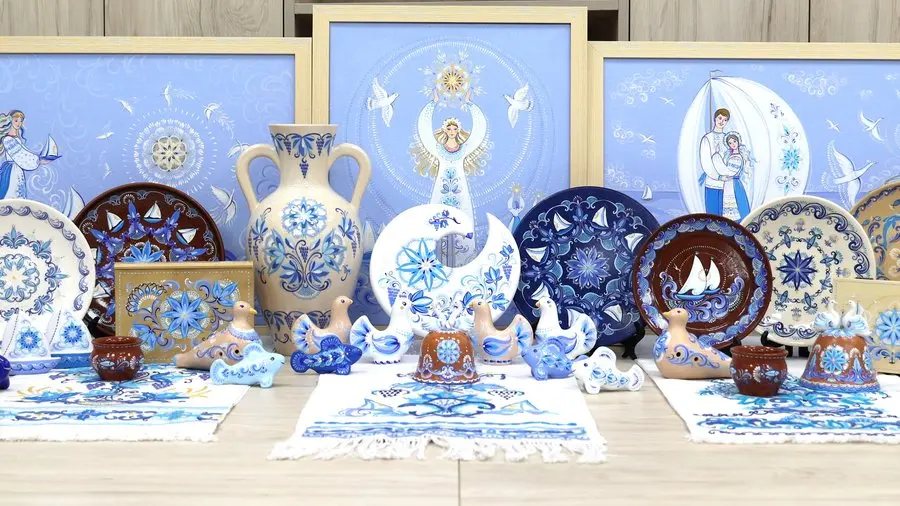
“Six craftswomen will officially take part in the project. They are leading artists from Mykolaiv, including Liubov Paraniuk, Tetiana Uliankina, our renowned pysanka artist, Lesia Saikovska, Svitlana Boikova-Kaliuzhna, Oleksandra Udovytska, and Anna Salnyk, who specializes in contemporary embroidery inspired by Tavrian painting. I think I will join them as the seventh participant and create some works of my own as well,” the project manager said.
All the works are being created specifically for the Regional Museum of Local History and will be donated to its collections.
“We hope the exhibition will attract a great deal of public attention and that our Tavrian painting will fly far and wide, just as swallows once flew across the walls of traditional Ukrainian clay houses. We want Tavrian painting to spread far and wide. We plan to showcase the exhibition not only in Mykolaiv but also at the Pervomaisk Museum of Local History and the Bashtanka Museum of Local History. We will therefore make arrangements to introduce more residents of the Mykolaiv region to this form of decorative painting,” said Svitlana Romanenko, Deputy Director for Research at the Mykolaiv Regional Museum of Local History.
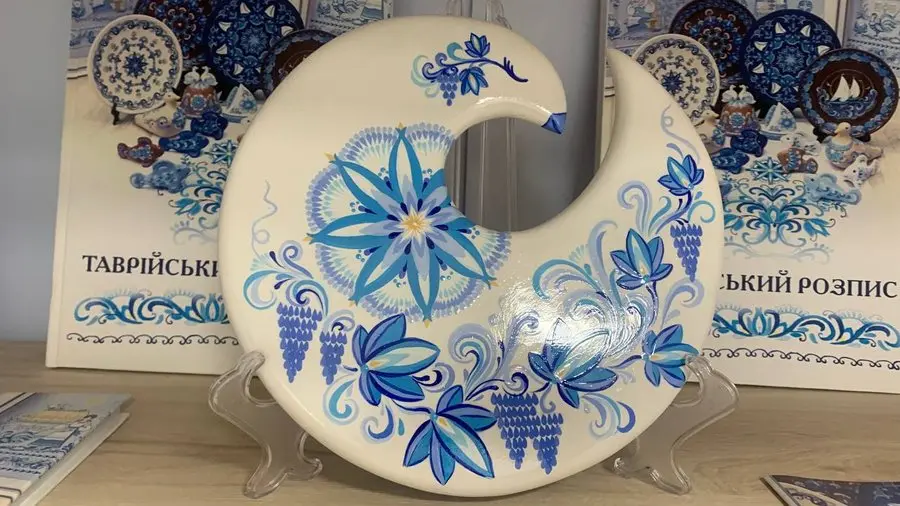
According to Svitlana Romanenko, the museum plans to develop various guided tour options for children and adults. The exhibits will be made from different materials, including ceramics, wood and textiles. The craftswomen will also present several paintings depicting images of Tavriika from the past to the present day.
The production of the exhibits will be coordinated by Liubov Paraniuk, an expert in Tavrian painting and a leading craftswoman.
“I would like the craftswomen presenting their works to pay attention to ensuring that the paintings adhere more closely to the traditional style, preserving the colour palette and symbolism, so that their philosophical meaning is also conveyed in full and their uniqueness and differences from other painting traditions are clearly demonstrated,” Liubov Paraniuk said.
The craftswoman herself will contribute ceramic pieces. According to her, this is a fairly complex technique that is difficult to master.
“I have been working with this technique for quite a long time, so I took on the role of demonstrating Tavrian painting on ceramics.”
“This project will make it possible to visually showcase the full beauty of our painting to a large number of people. And that is simply wonderful, because our small workshop cannot currently accommodate everyone who wants to see it, get involved and learn. So today, I feel at peace and happy as a craftswoman, as an artist and simply as a person who loves our Mykolaiv region, our land and our sea beyond measure,” Paraniuk said.
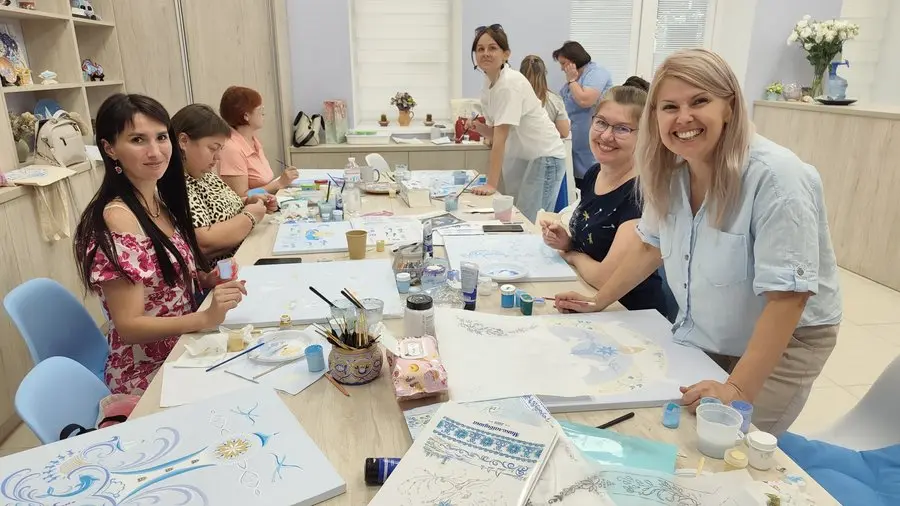
Ruslana Sikalenko says that Tavriika is valuable not only for its unique decorative painting but also for its profound philosophical meanings and family values, which resonate particularly strongly during wartime.
“It represents a profound connection not only between people and nature, the sea and the steppe, but also between mothers and children, wives and husbands, and entire generations of parents and children. Indeed, each of us has become a guardian who waits for her loved ones to return from the storm, from the war. At the same time, she is the guardian of the family hearth and the warmth and comfort of home,” the project manager said.
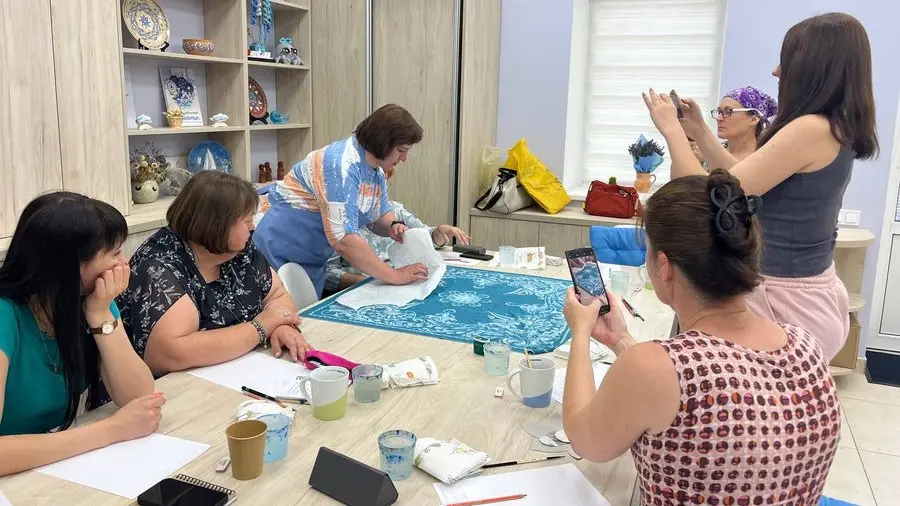
The project has a budget of UAH 1.5 million and includes events, presentations and creative workshops. It is scheduled to conclude in May 2027 with the donation of the exhibits and the launch of the mobile interactive exhibition, “Tavrian Painting: A Living Tradition Connecting the Past, Present and Future,” where video testimonials about the exhibition will be recorded. The project will also provide the Regional Museum of Local History with new equipment.
“No museum in Mykolaiv has this kind of equipment, and few museums in Ukraine can boast of having it. It will include interactive panels and multimedia tables loaded with information, various interactive exercises and techniques to help visitors learn more about Tavriika. The interactive smartboards will contain information about the painting tradition that cannot be presented in print. This will include, for example, video recollections of Yevheniia Bondarenko, the first researcher of Tavriika, as well as films and multimedia projects produced over the past five years,” Sikalenko said.
The project also plans to attract sponsorship funding. In particular, the organizers want to develop themed postage stamps, envelopes and postcards and present them as a separate collection.
“I know that people really love these kinds of gifts. And, surprisingly, postcards are coming back into fashion. But, once again, this requires funding. We will find it and indeed issue special cancellations for stamps featuring paintings created specifically by our six craftswomen, each of whom is responsible for her own work. There will be lighthouses by Udovytska, profound philosophical themes by Paraniuk, and illustrations for Bondarenko’s novellas by Svitlana Boiko-Kaliuzhna,” the project manager explained.
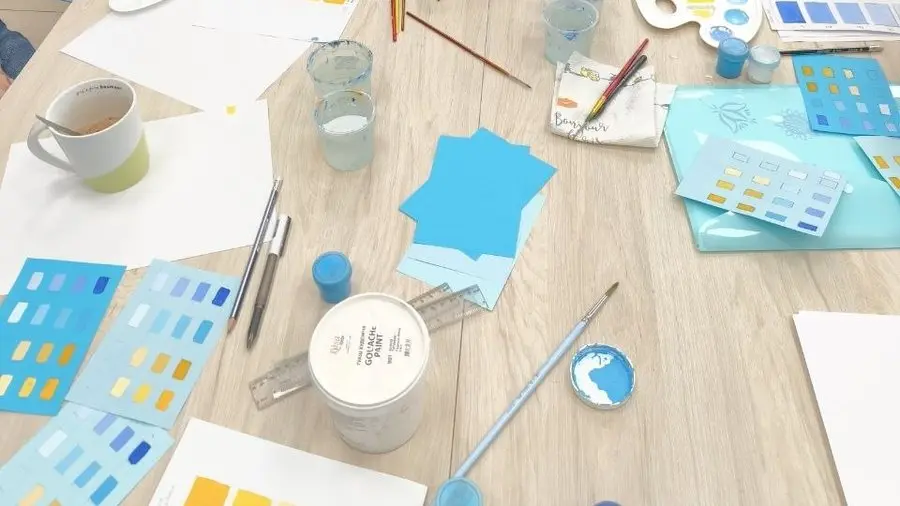
The project is being implemented by the NGO Center for Adult Learning and Education “South”, with the support of the IZOLYATSIA Foundation and backing from the international development company Chemonics International and Chemonics UK, as part of the Partnership Fund for a Resilient Ukraine programme and the Heritage 3.0 project.