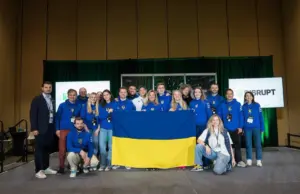
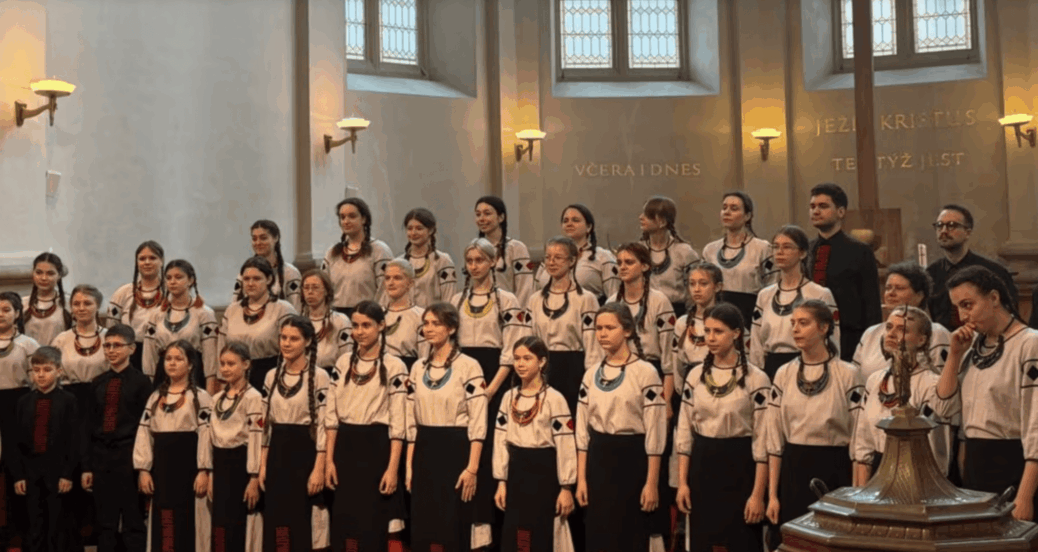
The Kyiv children’s and youth choir “Shchedryk” performs in Prague, showcasing Ukrainian music, cultural diplomacy, and resilience as young singers present works by Lysenko and other composers.
In the very heart of Prague, in the Church of St. Salvator, Mykola Lysenko’s composition “Prayer for Ukraine” is performed. It is sung by 51 choristers of the Kyiv Children’s and Youth Choir “Shchedryk,” whose concert was organized with the support of the Embassy of Ukraine in the Czech Republic. From the very first words of the song, the audience rises; all listeners — diplomats, Czechs, and Ukrainians — bow their heads. The Ukrainian song demonstrates that it is an effective instrument of cultural diplomacy.
Radio Svoboda spoke with the young choristers, their teachers, audience members, and the organizers of the event.
The “Shchedryk” choir has existed for 55 years. It was founded by the Ukrainian choral master Iryna Sablina, and now the leadership has been taken over by her daughter, Marianna.
The ensemble has performed on the stage of Carnegie Hall in New York, the Musikverein in Vienna, and the Berlin Philharmonic.
The choir came to Prague from Paris, where it had a concert at the Saint-Merri Church.
They prepared for the performance for two months under extremely difficult conditions, Radio Svoboda reports the choir’s leader Marianna Sablina:
“The preparation had to be organized in a short time. We were invited at the end of January. At that time, our rehearsal space had no heating, it was very cold, and it was impossible to rehearse in such conditions. Due to constant power outages, it was dark outside, and since rehearsals were in the evening, not all parents were willing to let their children go. But we managed to prepare.”
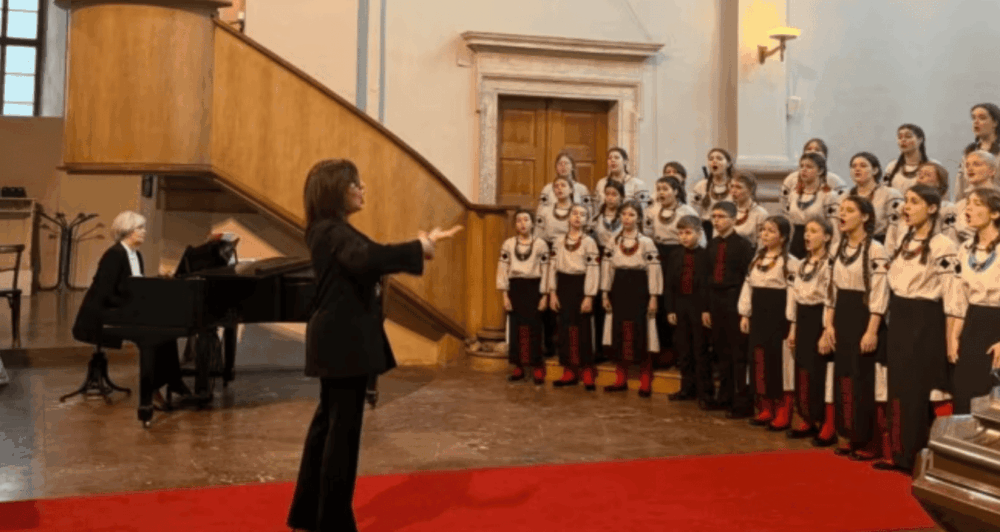
“Few people can work in such conditions, but Ukrainians can,” adds Tetiana Kalyta, head of the International Institute of Cultural Diplomacy.
She helped organize the event in Prague.
“Unfortunately, for four years now, teachers have been forced to repeatedly interrupt rehearsals due to air raid alerts and take children to bomb shelters. Another major issue is that many Ukrainian children are scattered around the world as refugees. Therefore, even forming the choir has become a challenge. The ensemble performs complex adult repertoire with many vocal parts,” Tetiana Kalyta said.
For the concert in Prague, the choir’s leader, Marianna Sablina, carefully selected the repertoire. She aimed to maintain a balance between Ukrainian, international, classical, and contemporary music. Works by Lysenko, Leontovych, Shamo, Debussy, Mozart, and other composers were performed.
“We always mix styles. It is very important to me that during their time in the ensemble, the children are introduced to the widest possible range of music,” Marianna Sablina said.
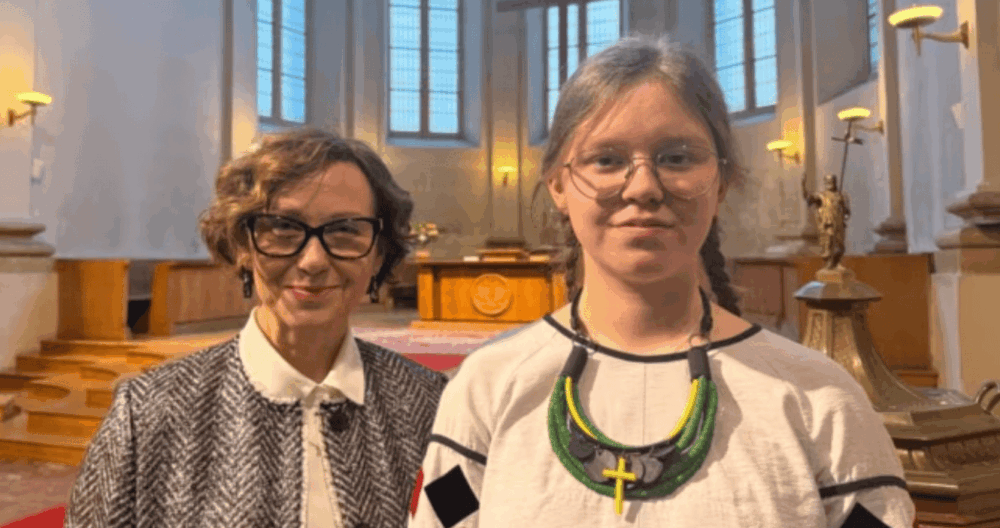
“I like Ukrainian songs the most: ‘Kupalska,’ ‘Doshchyk,’ ‘Krokove Koleso’— it’s very long, and while performing it we can use our bodies: arms, legs — I like that. We rehearse three times a week, twice for two hours and on weekends for four hours. It’s difficult, but it’s worth it,” said one of the choristers, Anna.
The girl has been singing in the senior choir for three years and has been with the ensemble for seven years in total.
Singing that unites
Often, entire generations of families become members of the “Shchedryk” choir, Marianna Sablina told Radio Svoboda. She herself grew up in this choir, founded by her mother. Now former choristers bring their own children — and sometimes even their grandchildren — to classes.
Sixteen-year-old Kateryna sings in “Shchedryk” together with her two younger sisters.
“A person came to my music class at school, listened to us, and advised who could join the choir, who could play the violin, for example. That’s when I and my middle sister Olya, who is now 14, joined the choir. Later, my younger sister, who is now 11, also started singing. Our performances abroad are usually met with a strong response from the audience. But today was a special moment for me, when during the performance of ‘Prayer for Ukraine’ everyone stood up,” chorister Kateryna shares.
“The choir’s singing evoked very warm feelings; it reminded me of childhood in Ukraine and Ukrainian culture,” said Nadiya.
The woman was born in Ukraine but has lived in the United States for 19 years. She came to visit a friend in Prague and decided to attend a concert by a Ukrainian choir.
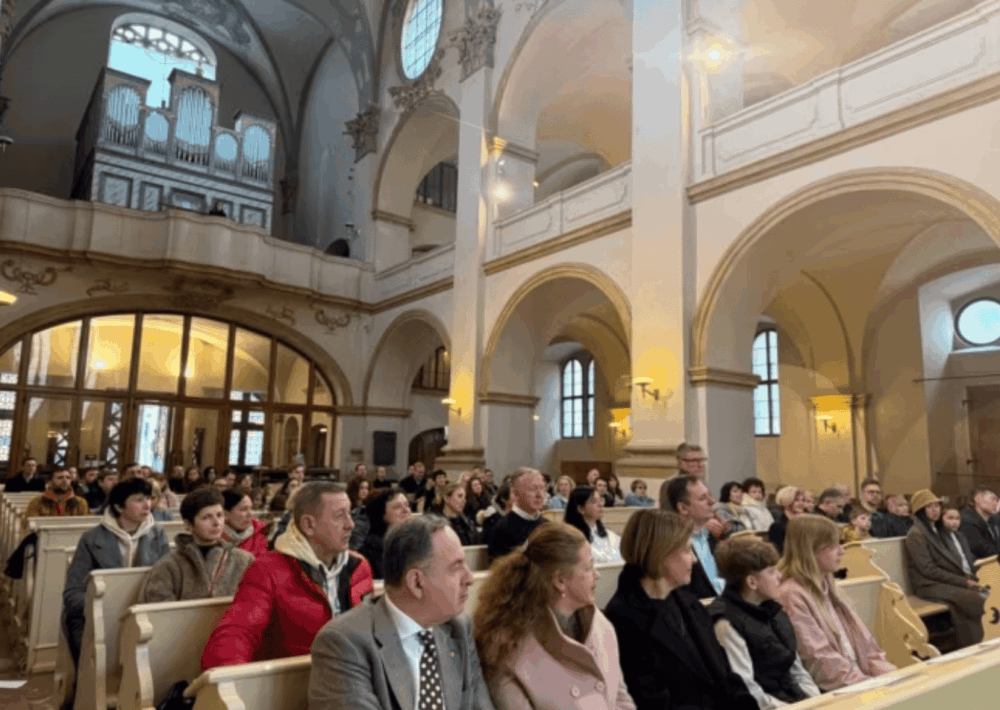
Ruslana herself sings in three choirs and tries to attend concerts and musical events every month.
“It’s nice that Leontovych was performed today. These melodies truly awaken memories of childhood. I have lived in the Czech Republic for almost 30 years, but I was born in the Ivano-Frankivsk region, and this music moves me so deeply — it brings me to tears,” Ruslana said.
“Shchedryk” — a powerful instrument of diplomacy
The Church of St. Salvator, where the concert took place, has repeatedly collected humanitarian aid for Ukrainians during the full-scale war.
The parish priest, Tomas Trusina, spoke at the beginning of the event. He said that a prayer for Ukraine is always heard within the walls of the church, and that it is symbolic for him to host a Ukrainian choir on the eve of Easter.
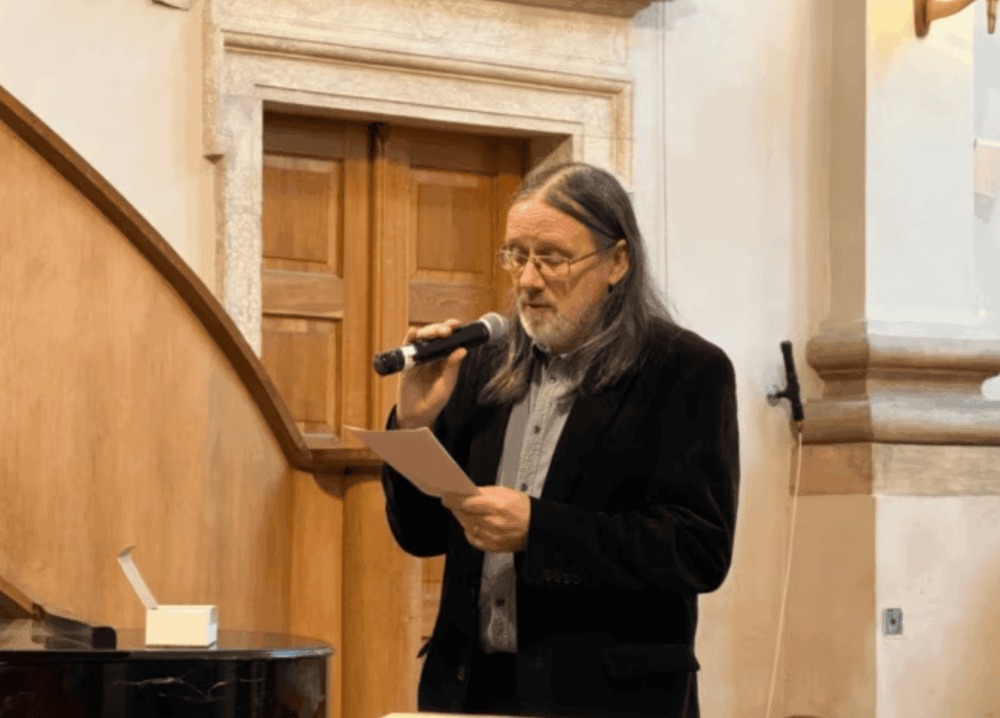
The Ambassador of Ukraine to the Czech Republic, Vasyl Zvarych, also joined the event. He emphasized that no child should have to spend their childhood during a war.
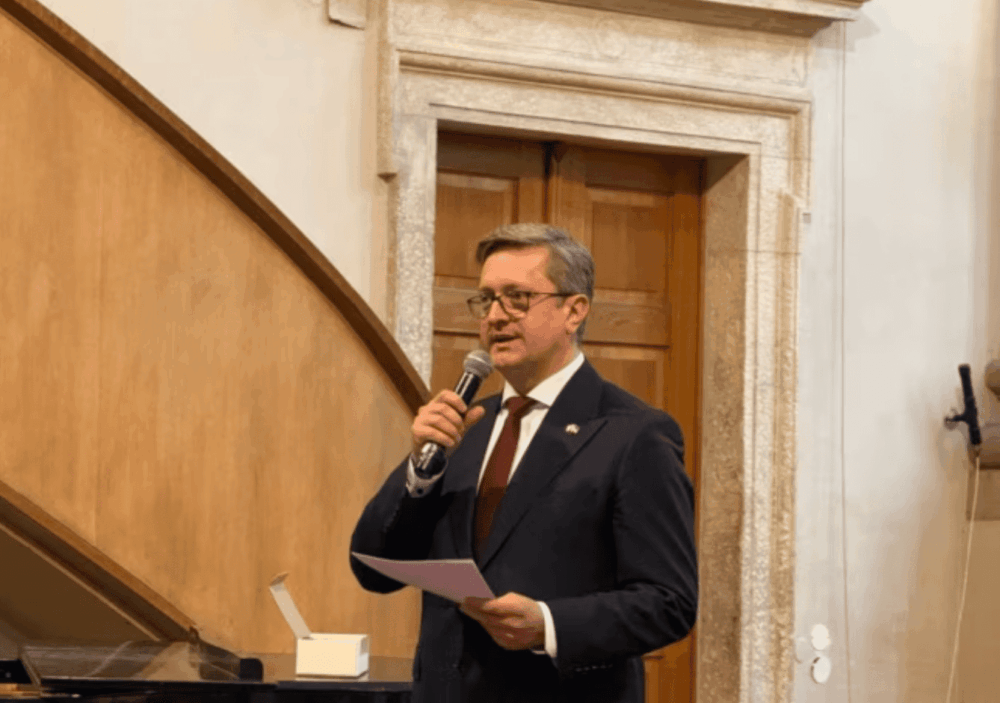
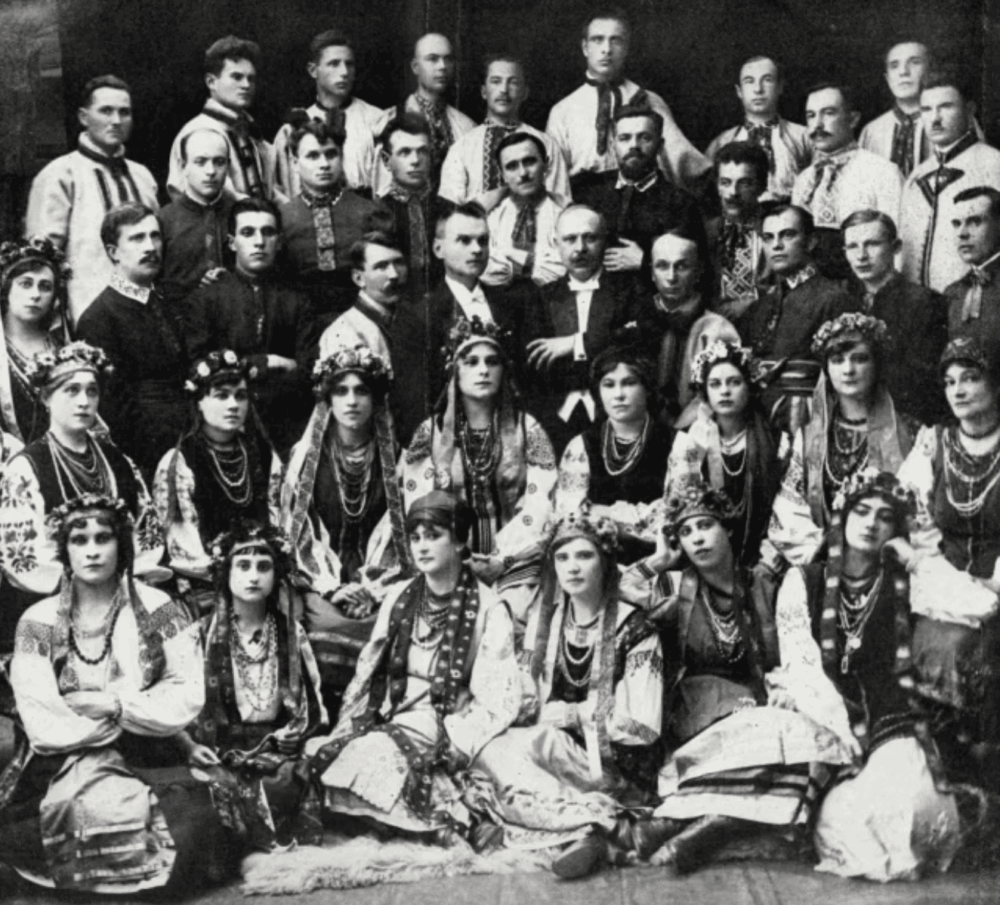
“These young performers demonstrate not only their musical skill but also their strength. They are growing up in Ukraine during a time of war, constant Russian attacks, and blackouts, rehearsing in cold concert halls.” This is an experience no child should have to endure. But despite everything, they continue to create and represent Ukraine on the international stage. Children like these are Ukraine’s future. The name “Shchedryk” is special for Ukraine; it symbolizes hope and joy. It is one of the most famous Ukrainian compositions, written by Leontovych. The work gained worldwide popularity thanks to the performances of the Ukrainian Republican Capella under the direction of Oleksandr Koshyts, which toured Europe, including performing in Prague in the 1920s. These tours marked the beginning of “Shchedryk”’s international recognition and turned it into a powerful instrument of Ukrainian cultural diplomacy,” said Ambassador Zvarych.