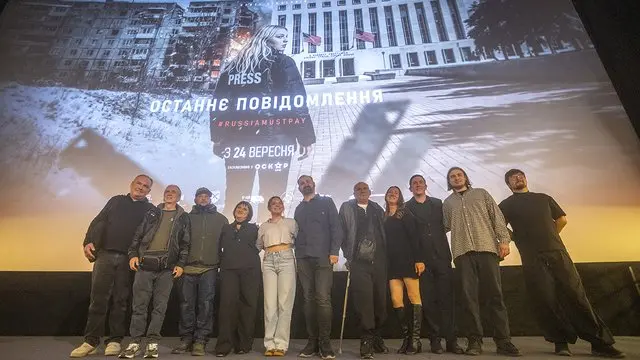
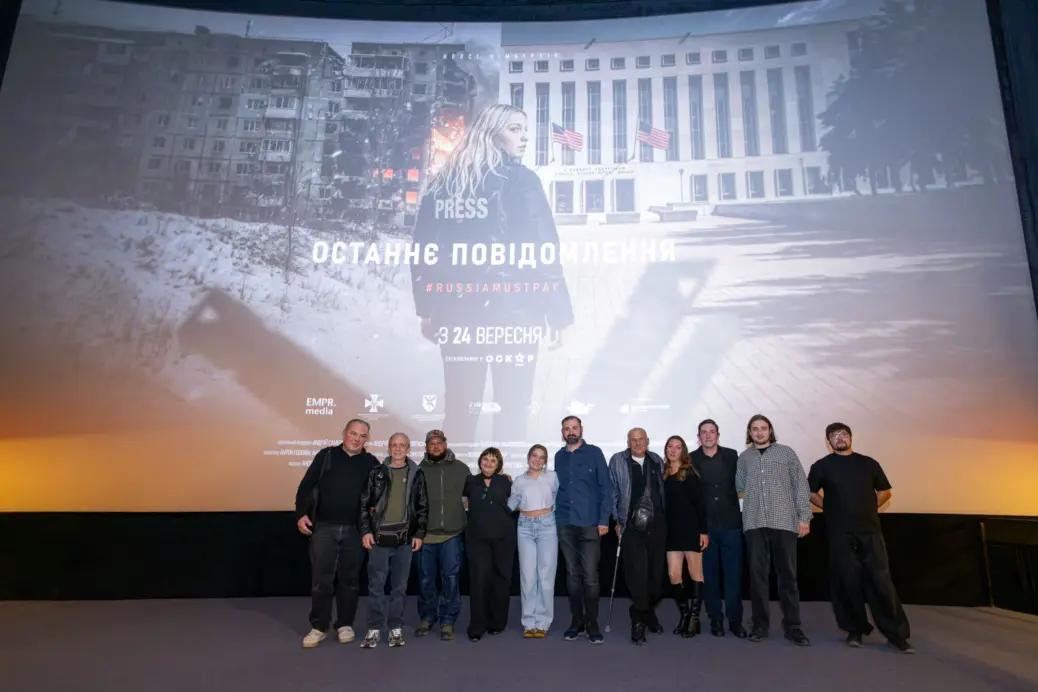
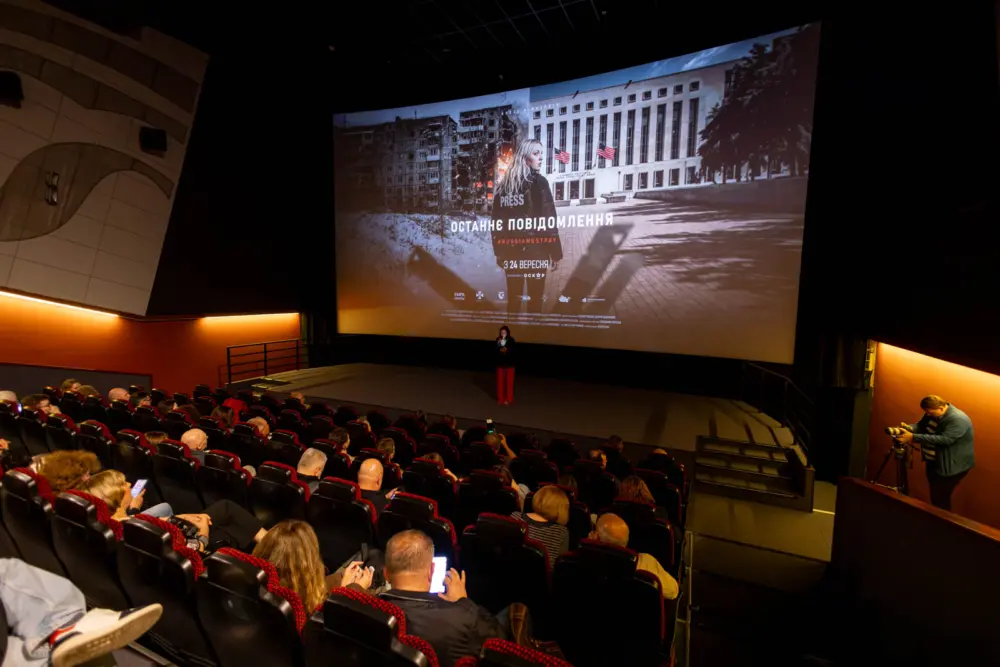
The Ukrainian documentary The Last Message (Останнє повідомлення) has begun its theatrical run in Kyiv after a private screening at Oscar Cinema on 23 September 2026 and an official release starting 24 September across the Oscar cinema chain.
Early coverage and comments from the team suggest the film is landing as a personal, unvarnished journey rather than a conventional war chronicle.
Directed by Andrii Voloshyn and Oleksii Liebiediev, the 87-minute film follows American-Ukrainian singer and activist Kelsie Kimberlin as she travels across wartime Ukraine after the death of her cousin, volunteer soldier Andrii Rachok, who was killed in early 2024 during the fighting for Avdiivka.
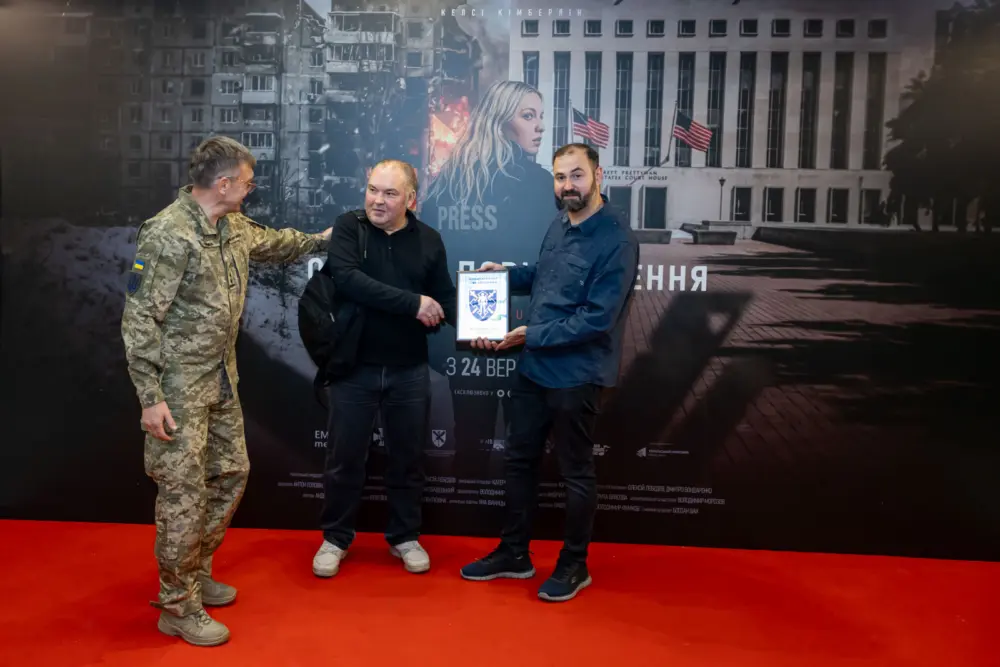
Shortly before his death the two were unable to speak; that missed conversation gives the film its title. Kimberlin is accompanied by her father and friends as they deliver aid and speak with people living under the daily reality of war.
One of the first detailed descriptions of the film’s style came from Interfax after the closed screening. The report noted that the documentary is shot in a direct-observation manner and can at times resemble a sequence of monologues and interviews. In those moments, however, the directors “skillfully break television templates and present situations in an unusual light.”
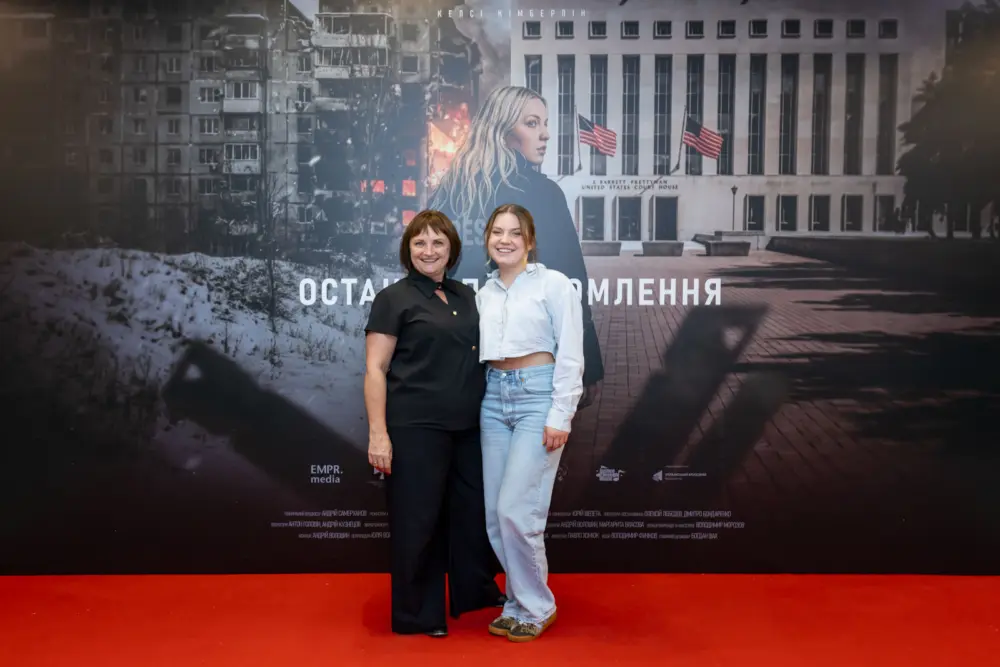
The same coverage highlighted the soundtrack, composed by jazz pianist Yurii Shepeta and recorded at the Ukrainian Radio Recording House in Kyiv, as one of the film’s strongest elements.
The score has already drawn festival recognition and is part of the film’s Oscar-related submissions.
At a press conference ahead of the premiere, the filmmakers framed the work as more than a record of loss.
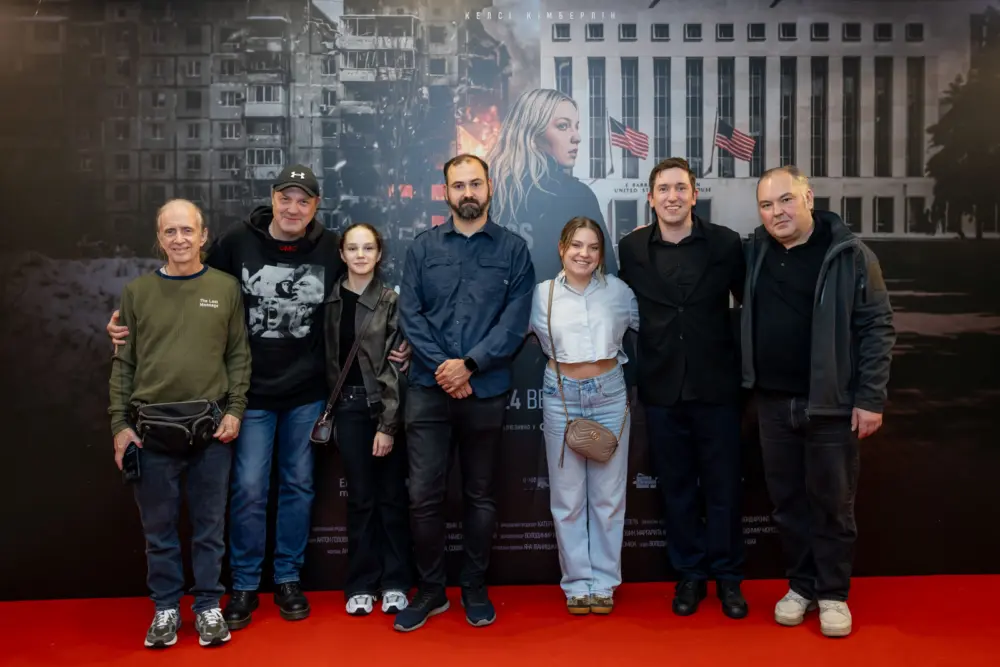
They described it as a conversation about personal responsibility, the gap between how the war is perceived abroad and how it is lived in Ukraine, and what it means to stand with those who continue to fight.
Director Andrii Voloshyn has said he “hopes viewers leave with a simple idea: that everyone can take their own step, and that looking honestly at the situation still matters.”
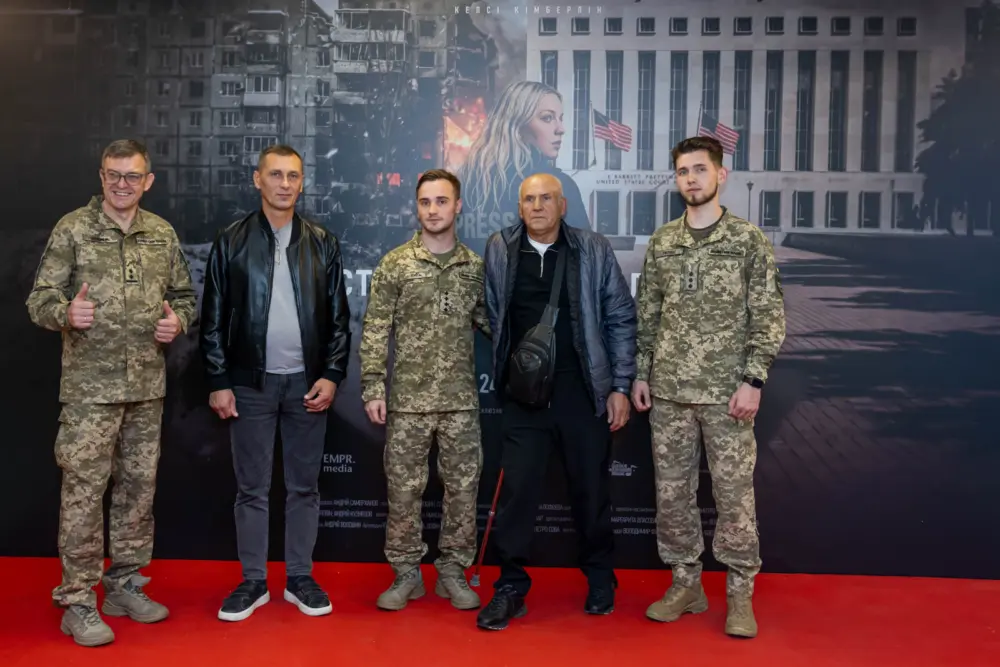
The premiere itself took place against the backdrop of continued attacks on Kyiv. The team later noted that the private screening went ahead without interruption from missiles or drones that day, even as the city faced strikes around the same period.
That context has only sharpened the film’s urgency for those who attended.
Andrii Samerkhanov, film producer says: “We were all incredibly lucky that not a single missile or drone attack took place during the pre-premiere screening of the documentary The Last Documentary / «Останнє повідомлення» yesterday. Otherwise, our premiere would have been cancelled and completely disrupted. All day we were under attack from jet-powered drones, and that night, after the screening, russia launched a massive ballistic strike on Kyiv. Thank you to all the brave people who joined us for the premiere, to the Defense Forces of Ukraine, and to all our guardian angels. Theatrical screening begins today in Kyiv. We welcome you.”
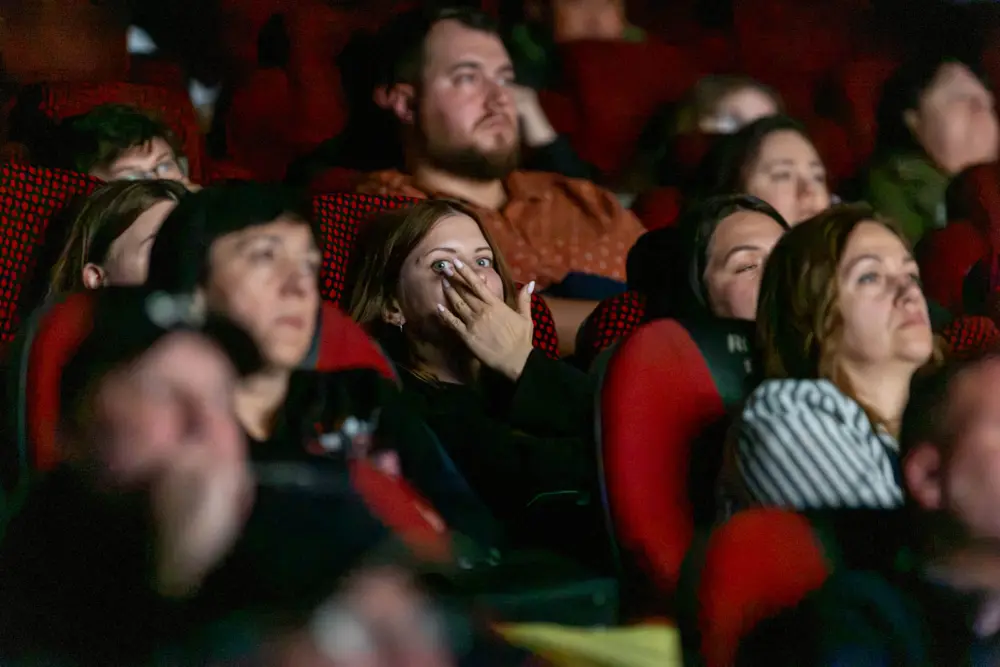
Guests of the premiere also share their first felling after the screening.
Uliana Feshchuk “Caution. This film may touch the most delicate strings of your soul. Some moments are so moving that you won’t be able to hold back the tears.”
Olena Krasko wrote: “No one wanted to join me for the advance screening of the film The Last Message. The reasons different people gave were roughly the same: “I can’t watch films like this right now,” “I don’t want to cry.”
The film tells the story of an American woman of Ukrainian descent (I’ll try not to give away any spoilers). She comes to Ukraine with a number of important and noble goals. But, in my view, above all, she comes to make peace with the death of her cousin.
He volunteered to fight at the age of 21. A year later, he was gone. He was killed in Avdiivka in 2024.
The Last Message is primarily aimed at an international, peacetime audience. Its messages are carefully crafted and reiterated, with a precise rhythm and structure.
The film was made with a sincere desire to bring the truth to the American people: the filmmakers are trying to break through the “smokescreen” of the ubiquitous, multibillion-dollar, cynical and insidious Russian propaganda — centuries-old and modern at the same time.
The film seeks to show WHAT EXACTLY is happening in Ukraine. What threats the world faces if Ukraine does not prevail. And the heroine also shows through her own example what each and every person can do.
I hope the filmmakers achieve their goal.
I hope the Academy (the film is competing for an Oscar in three categories) will not disregard this latest Ukrainian message to the world — a little naive, perhaps, but very much the right one.
The film is also being released in Ukrainian cinemas — starting today. And yes, it may seem naive to Ukrainian audiences. After all, it shows only a microscopic fraction of the horrors that Ukrainians have been living through every day for the fifth year now — horrors they read about daily in their social media feeds and hear and see in the streets and outside their windows.
But the film is sincere and dynamic, and it is definitely worth watching.
And yes — the audience cried.
They cried because they saw our country through the eyes of this child — the main character. I suspect it was the inner child of Ukrainians that was crying. It finally allowed itself to remember that none of this is normal. It cried so that the “adult” could remember that, too.
I used to consider it essential to watch every Ukrainian film, even those that were not particularly good, just to support Ukrainian filmmakers in whatever small way I could. Now, I admit, I don’t want to cry either. Because I don’t know how to stop once I start. And I can’t afford that. Now is not the time for tears.
“Moscow Does Not Believe in Tears” — those who remember the classics will certainly recall the 1980s Soviet film, which, incidentally, won an Oscar. (In fact, the failure to understand the dangers of flirting with the Kremlin, even in the realm of art, began much earlier.)
So, Moscow not only does not believe in tears — in reality, Moscow will swallow the weak and the naive first. And before doing so, it will say that this is how they are “saving” the very people they are killing, whose cities they are burning, and whose children they are raping.
The Kremlin is, by its very nature, a vast, ravenous, cannibalistic vortex, as history has shown. But who cares about history when the war is somewhere in faraway Ukraine, while Russian ballet and Dostoevsky are readily available here, thanks to Kremlin propaganda aimed at intellectuals?
So, tears are not constructive. And in the film, we see this transformation in the heroine: from shock, tears and even panic to an understanding and acceptance of reality — and, ultimately, concrete action.
The filmmakers are my friends and fellow activists from our days at “Euromaidan PR” (now EMPR.media), and Andrii Samerkhanov is the producer of the film. So there was no way I could miss it.
Thank you for the invitation, and congratulations on a worthy and important piece of work. And a difficult one, too: achieving the goals you have set while making the film understandable and engaging for such completely different audiences and worlds is a task that would challenge even the most accomplished professionals.
Thank you sincerely for the experience. I highly recommend it to everyone.
And yes: #russiaMustPay”
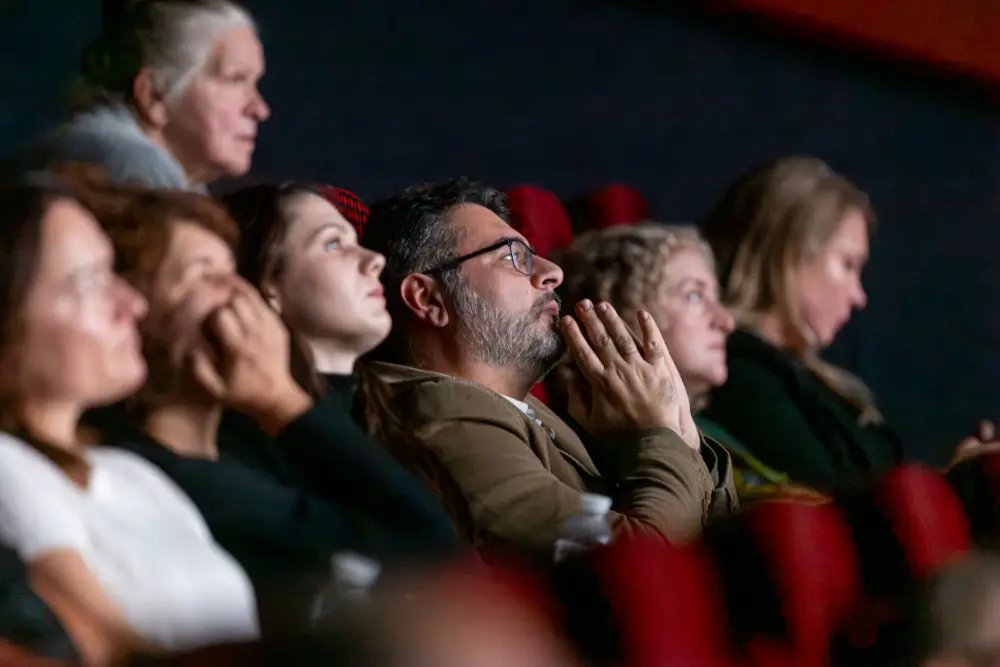
The Last Message arrives in Ukrainian cinemas already carrying substantial international recognition – almost 50 festival awards and selections, including Best Documentary honors in Cannes and New York.
Originally filmed in English for a global audience, it now returns home in a Ukrainian-language version. Early press descriptions treat it less as a finished verdict than as a film that asks viewers to sit with a family story that quickly becomes a larger one: why people choose to fight, what justice might look like after loss, and whether the rest of the world is still paying attention.
Screenings continue this weekend in Kyiv at Oscar locations, including Oscar Smart Plaza and Oscar Gulliver. A special screening is also planned at America House Lviv on 29 September.
Tags: documentary film EMPR.media Kelsie Kimberlin Kyiv premiere the last message The Last Message Documentary Ukrainian cinema wartime Ukraine
![Aftermath of the Dnipro missile tragedy: wrecked apartment ruins, rescue teams at work and shattered urban landscape from a Russian strike. :contentReference[oaicite:1]{index=1}](https://empr.media/wp-content/uploads/2023/01/ufl_dnipro-updates-480x270.jpg)
![Visitors exploring a free‑entry museum in Kyiv on International Museum Day with exhibits, architecture and cultural displays. :contentReference[oaicite:2]{index=2}](https://empr.media/wp-content/uploads/2025/05/museum-480x270.webp)

![President Volodymyr Zelenskyy and First Lady Olena Zelenska present the “National Legend of Ukraine” awards to 11 outstanding figures in culture, sport & service. :contentReference[oaicite:0]{index=0}](https://empr.media/wp-content/uploads/2024/08/12-480x270.png)