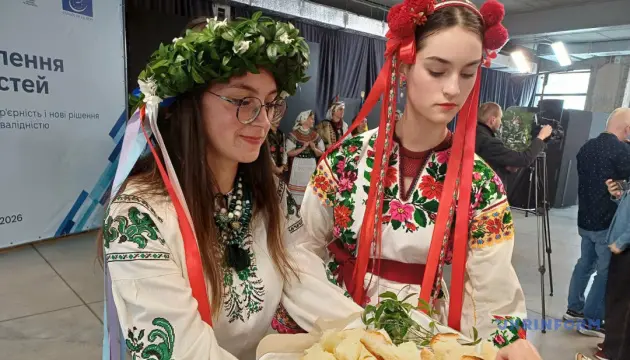
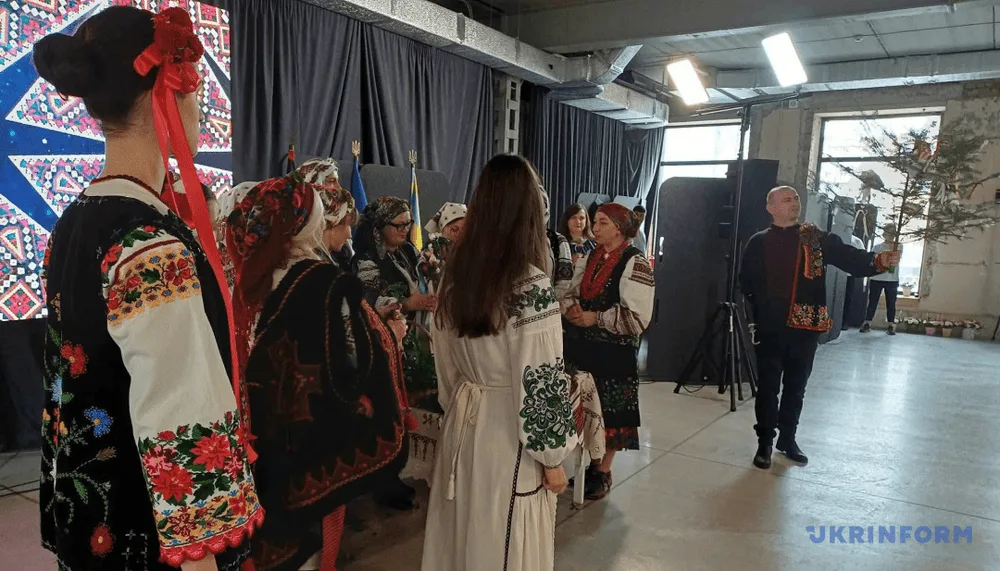
Representatives of the Druzhyna Voina (Warrior’s Wife) NGO staged a performance fashion show titled “The Living Thread of Tradition” in Ivano-Frankivsk, wearing traditional Ukrainian clothing.
The show was opened by veteran Yurii Nykoliuk, who presented a replica of Stepan Bandera’s embroidered shirt, Ukrinform’s correspondent reports.
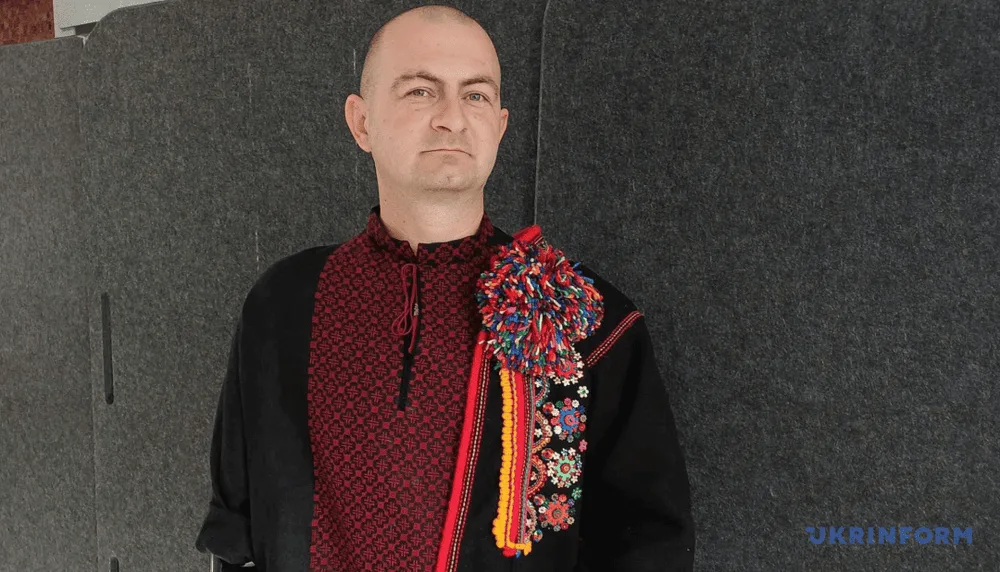
“No one else has a shirt like this. It was an item put up for auction by volunteers. I fought to get it because it is unique — an exact replica, thread for thread, of the shirt worn by Stepan Bandera. Wearing it today makes me feel uplifted; I’ve even straightened my shoulders with pride,” Nykoliuk said.
He said he had fought in the Mykolaiv, Kherson, and Donetsk regions. In 2024, Yurii lost his arm after a Russian drone dropped an explosive on him in the Serebrianskyi Forest. After rehabilitation, he became a volunteer and joined Bartka, an amputee football team.
Alongside Nykoliuk, 15 representatives of the Druzhyna Voina NGO took part in the “Living Thread of Tradition” performance fashion show. Among them was Valentyna Borulnyk. Her husband, Viktor, volunteered to fight in 2022, while Valentyna and her children moved to Ivano-Frankivsk from Selydove, which has been under occupation for the second year.
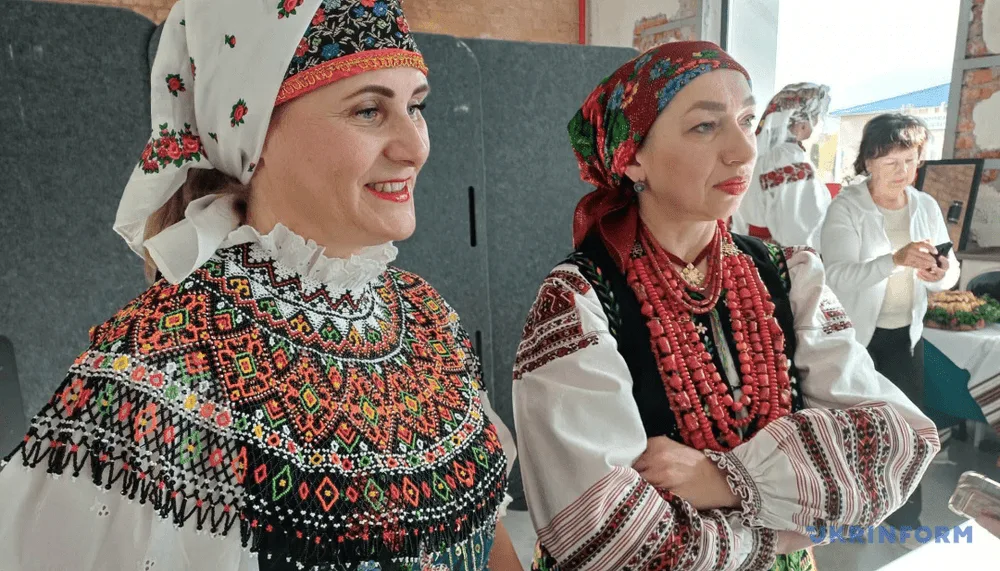
“I am happy because my dream of wearing authentic Ukrainian clothing has come true. Today, I am representing a Lemko traditional costume… What did I bring with me from the Donetsk region? The Ukrainian flag and a necklace I bought in Sloviansk,” Borulnyk said.
The outfit for the show was provided by Olha Fabryka-Protska, the wife of a veteran, while the kryza (a traditional chest ornament) was also made by a serviceman’s wife.
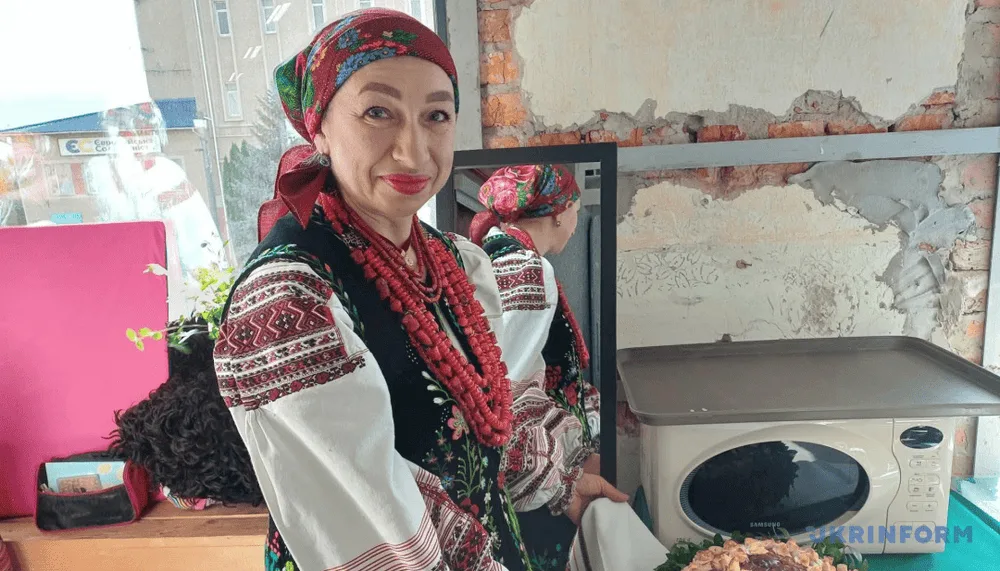
The authentic Ukrainian clothing belonging to the family of the fallen Volodymyr Katamai, call sign Bozhe, was presented by veteran’s wife Mariana Protska, whose husband is serving in the Donetsk direction. “These are an ancient zapaska, a keptar, and a shirt that belonged to their great-grandmother. The century-old shirt features fine embroidery and is adorned with the grandmother’s coral beads,” Protska said.
Lesia Markovetska presented a shirt and a zapaska from the Donetsk region. “These clothes were left to us by people who fled the war in the Donetsk region. They had inherited them from their great-grandmother, who kept the zapaska and shirt safe during the famine of the 1930s,” she said.
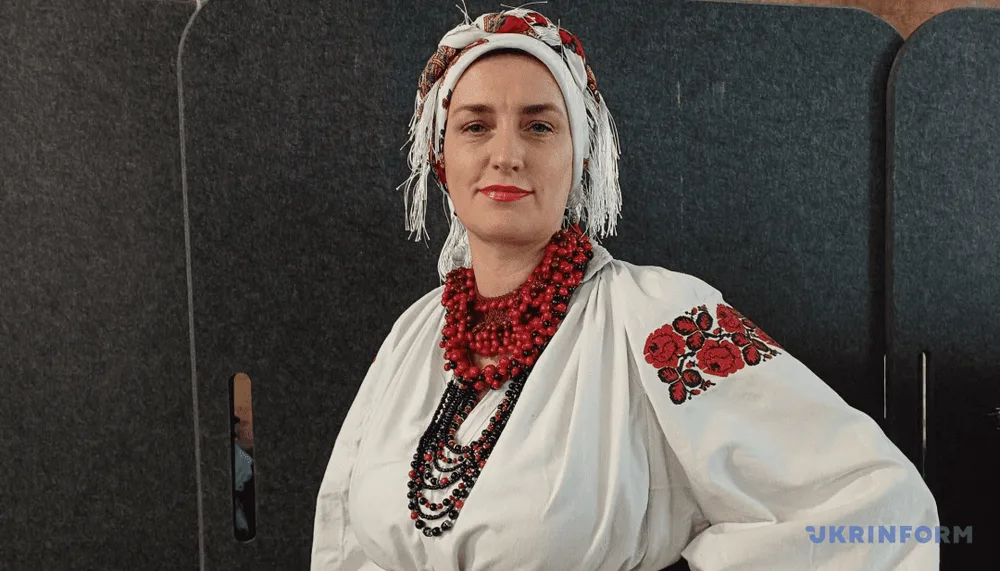
Olha Bobrykovych, head of the Druzhyna Voina NGO, said that the clothing for the fashion show had been collected from across Ukraine.
“We used these outfits to present a performance featuring the traditional ‘Prosyny’ ceremony, which precedes a wedding in the Prykarpattia region. Our performance symbolizes hospitality, acceptance, the creation of a community, and a shared space. We show that eastern and western Ukraine stand together, and that our culture and love are invincible,” Bobrykovych emphasized.
The “Living Thread of Tradition” performance fashion show was presented as part of the two-day Recovery and Opportunities Forum, dedicated to support, accessibility, and the integration of internally displaced persons (IDPs) into the Prykarpattia community, among other issues.
At the end of the event, guests were treated to a traditional Ukrainian wedding korovai and honey, symbolizing unity and support.
As previously reported, a Lviv-based designer has collected more than 500 unique antique Ukrainian shirts.

![World map highlighting Donbas, Crimea and other occupied Ukrainian territories, symbolizing the hardest issue in Russia‑Ukraine peace negotiations. :contentReference[oaicite:3]{index=3}](https://empr.media/wp-content/uploads/2025/03/zelensky-480x270.webp)
![Ukrainian President Volodymyr Zelenskyy, UK Prime Minister Keir Starmer and French President Emmanuel Macron at a summit table in Paris discussing Ukraine’s future. :contentReference[oaicite:3]{index=3}](https://empr.media/wp-content/uploads/2025/03/paris-480x270.webp)