Evacuation from Druzhkivka under constant shelling shows civilians living amid ruins, guided bombs, and water shortages while White Angels rescue those still refusing to leave.
Thousands of people remain living near the front line, unwilling to evacuate with the “White Angels.”
Constant guided bomb strikes, no electricity, and only one pharmacy for the entire city. Druzhkivka in Donetsk region is under enemy attack, yet thousands still refuse to leave.
RBC-Ukraine set out with a “White Angels” crew to see how evacuations take place under fire and why it is so difficult to decide to leave one’s home.
City Under Fire: Around 12,000 people remain in Druzhkivka, including more than 30 children. The main threat now is destructive guided aerial bombs (KABs).
Life in Ruins: Gas supply has been restored, but there is no electricity or water. Only one pharmacy is operating, and ambulances often cannot respond to calls.
Working Under Fire: The occupiers deliberately target evacuation vehicles. Over the past three months, Russian forces have destroyed or damaged five emergency service vehicles.
Psychology of Survival: Many elderly people refuse to leave due to fear of the unknown, choosing to stay in half-destroyed homes and live on the edge of human endurance.
Point of No Return: For most, the decision to leave becomes real only when their home turns into ruins. Evacuations usually take place via Kramatorsk, where temporary accommodation centers have been set up.
Russia continues its attempts to fully seize the Donetsk region. On the diplomatic front, the Kremlin claims it would end the war if Ukraine were to hand over Donetsk and Luhansk regions itself. Meanwhile, along the line of contact, Russia’s notorious “creeping” offensive continues.
Russian forces are capturing meters of land with great difficulty. Each occupied village costs thousands of Russian casualties. And since the Kremlin can afford to expend vast human resources without consequences, the front line is slowly but steadily moving through populated areas.
Sooner or later, a Ukrainian living near the front faces a dilemma — to leave their hometown or stay and hope the occupiers are stopped.
Fighting on the outskirts of towns and villages can last for months. During this time, the few residents who remain gradually lose everything. In small towns and villages, it becomes increasingly difficult to buy food and medicine. Gas, water, heating, and electricity gradually disappear.
This is how, among others, the small city of Druzhkivka in Donetsk region lives today. The front line runs just 13 kilometers from the first city streets, so residents are under constant shelling. Various services have come here several times to evacuate people, and each time it becomes harder to persuade locals to leave.

The closer the fighting gets, the fewer people remain in the city. Yet those who stay cling to their homes until the very end — until there is nothing left to hold on to. Correspondents from RBC-Ukraine traveled to Druzhkivka with the National Police special evacuation unit “White Angels” to see how evacuations are carried out.
12 thousand
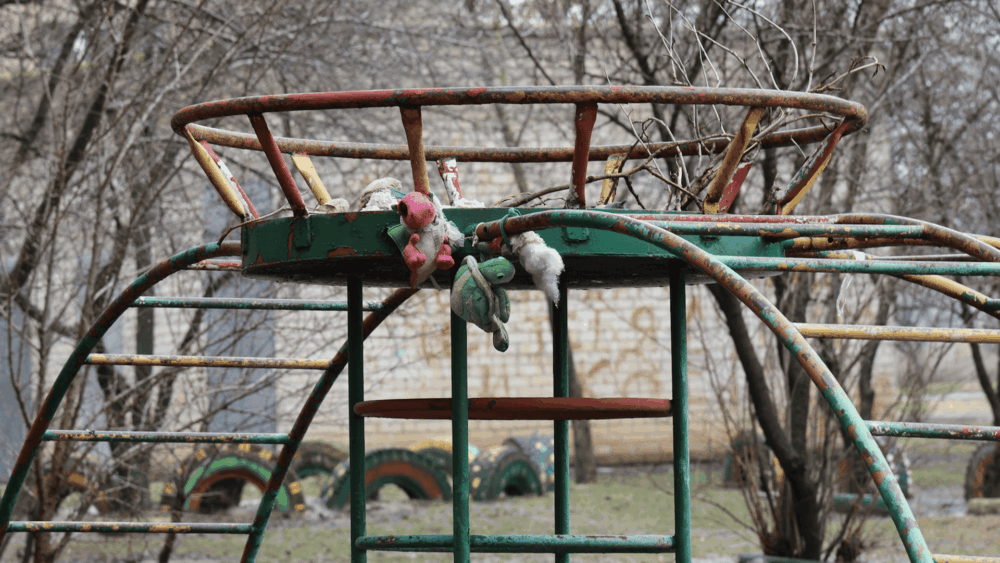
Druzhkivka looks bleak and gray. Military equipment hums in the background — a familiar sound for locals — while volleys can be heard not far away. Residents have long learned to distinguish between incoming and outgoing fire.
Here, as in other settlements near the front line, air raid alerts sound after shelling has already begun, not before. Those who remain move quickly through the city, heads tucked into their shoulders. The route is simple — the pharmacy, the only one left in the city, a grocery store, and then back home.
About 12,000 people still live in Druzhkivka today, including around 30 children. The “White Angels,” like other evacuation units, primarily search for families with children — getting them out is the top priority. Recently, Russian forces have increasingly targeted Druzhkivka with aerial bombs. They are not precise, but their explosions are powerful and destructive — exactly what the occupiers need.
“Recently, Druzhkivka has been coming under enemy air attacks. The enemy is striking the city, civilian homes, and infrastructure with guided aerial bombs. Gas supply has now been restored in the city, but there is no electricity or water,” says Hennadii Yudin, head of the evacuation coordination unit of the National Police in the Donetsk region.
In addition to targeting residents and their homes, Russian forces are also striking evacuation vehicles. Over three months — from October to December — five vehicles were “taken out.” Some have been restored, today we are driving around the city in one of them, picking up people.
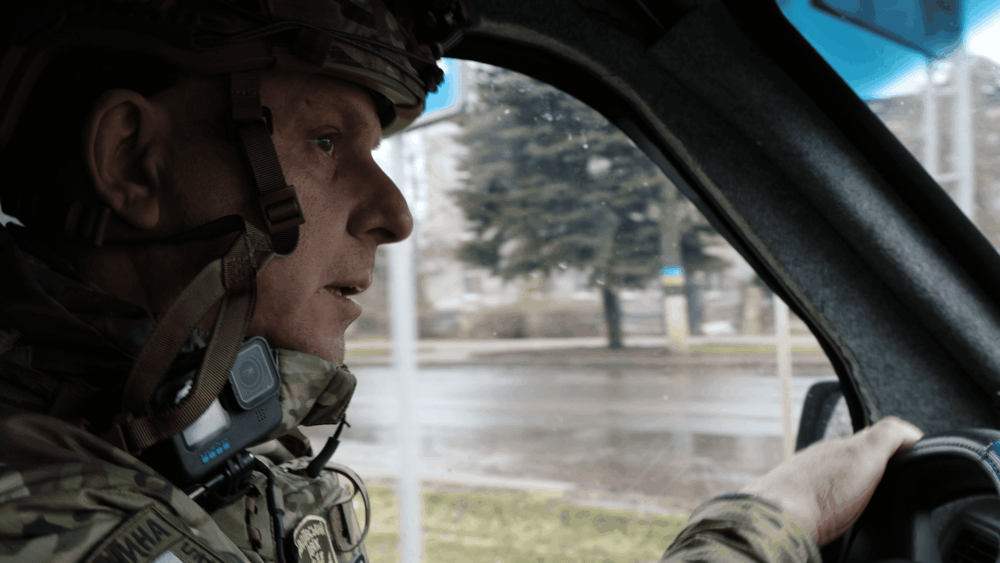
From the car window, Druzhkivka passes by quickly, but some scenes stand out. For example, a completely destroyed street with the telling name “Friendship Street.” Not a single intact house remains — only piles of bricks, glass, and wooden beams. The Russians shelled “Friendship” with artillery and then finished it off with guided bombs. On the asphalt, where any remains, there are scattered shrapnel marks in the shape of rays. Beyond them — craters.
The first people we picked up had lost their home the day before. A middle-aged couple sits in a distribution center, surrounded by their belongings. Everything they own fits into a few large bags — blankets, jackets, winter sweaters, some dishes — all they managed to save from a house that literally collapsed before their eyes.
While the woman tries to figure out who came for them and why it was specifically the “White Angels,” the man silently stares at the wall. Later, we are told he is in shock.
— “We’ll take you today, why wait?”
— “Really?”
— “Yes, the car is already here — what difference does it make?”
— “I don’t know, we already arranged with others.”
— “Let’s go! You don’t know what will happen here next.”
In the evacuation vehicle, the woman points out the window and says that a guided bomb hit the city center in the morning. We look out and see ruins — old ones. The strike there happened a few weeks earlier. Ruins like these are everywhere.
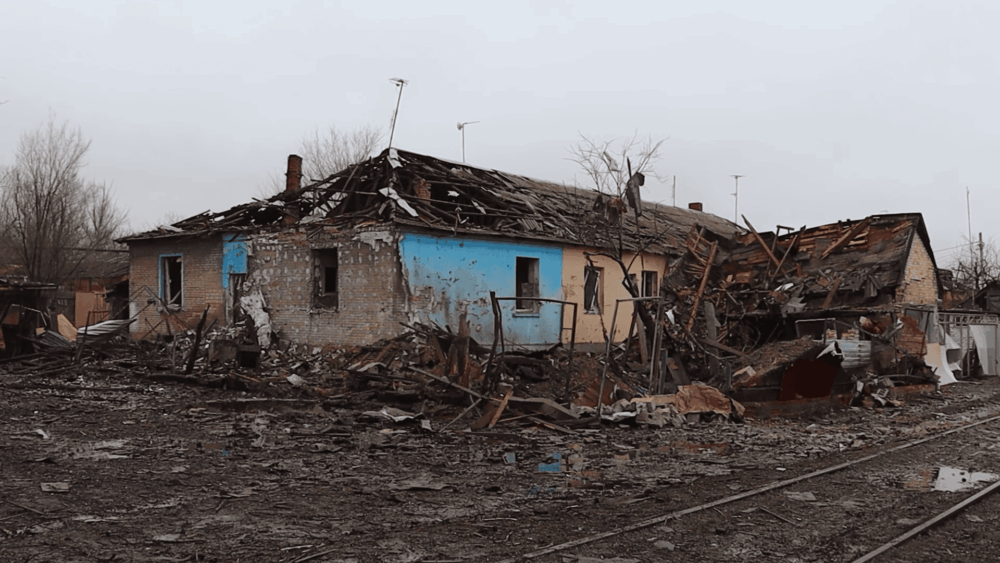
– Did it hit the center of Druzhkivka?
– There, across from the factory.
– They say a guided bomb hit across from the factory. People were killed. Just now.
The next stop is a private house made of red brick. People are already standing in the yard with bags. When they see the car, they wave at us. While their belongings are being loaded, a woman who lives there agrees to speak with us. She answers calmly, almost phlegmatically. She seems to have already made her decision and come to terms with it.
– Do you know where you’re going?
– Yes, to Ivano-Frankivsk. Since the New Year, the situation has worsened.
– I was told there’s only one pharmacy working here.
– It seems there’s only one left now, on the square. And ambulances are no longer operating.
We drive on and notice that people continue living in their homes even after strikes. As long as at least a few walls remain, they board them up with plywood and cover them with drywall. Some refuse to leave altogether, and their reasons vary. Some have sick relatives who cannot be transported. Others are convinced they won’t notice the occupation, and some are even waiting for it.
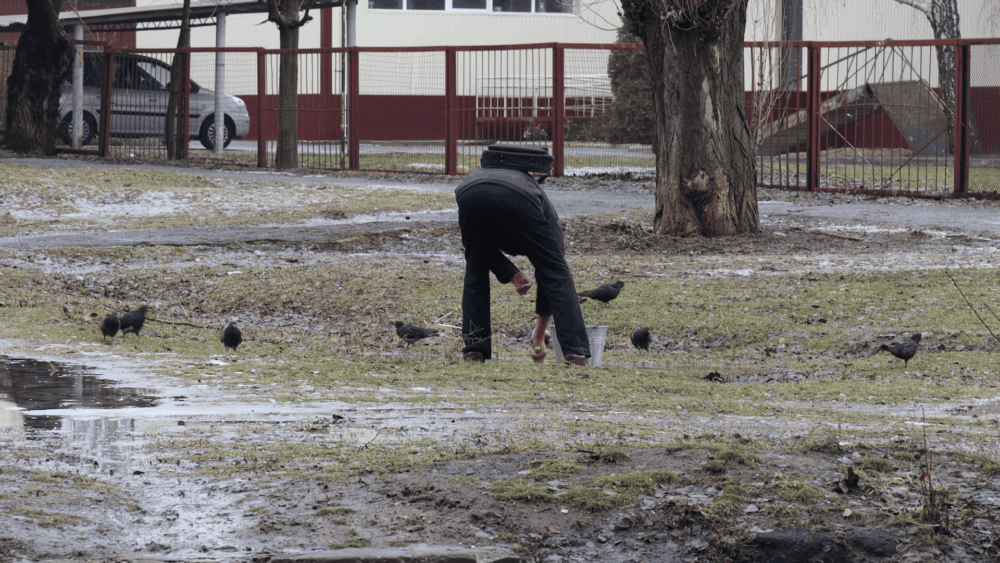
We stop for coffee and get out of the car. Around us is a typical panel housing district. What is unusual here is that the actual “panel buildings” are almost gone. Some are completely destroyed, others are full of holes, with shattered windows and black burn marks from fires.
An elderly man comes out of one of these buildings carrying a bucket and a scoop, walks up to a puddle, and draws water from it. The most disturbing part of this scene is that he will most likely refuse evacuation. For him — as for many here — living like this is not as frightening as going into uncertainty.
Point of no return
People evacuated from Druzhkivka are first taken to Kramatorsk. There is an “Evacuation Point” there — a place where people are temporarily housed while their further route is determined. Inside, there are spacious halls with beds, places to charge devices, tables with chairs, and a mobile kitchen.
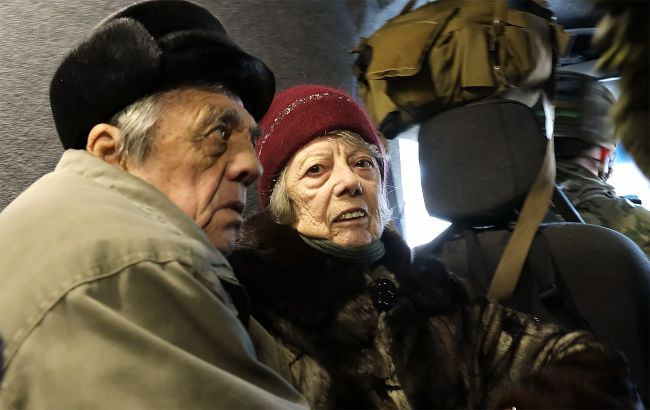
We enter the hall; it is almost empty — a group of people was taken away a few days earlier. In the center of the room, an elderly woman sits on a bed. She is clearly cold, although the hall is warm — she is wearing several sweaters, a green jacket, and a bright red scarf. Her hair is styled into two braids, tied with identical green and pink hair ties. There is something almost childlike and touching in her appearance.
“I got hit in my house. I was sitting in the kitchen when suddenly I was thrown back, everything in the kitchen started flying, I was covered in blood immediately. It was cut here, here too — it has already healed, you see? And exactly one minute later there was a second strike from the other side, and I ended up as if I were trapped between two sides of the explosion.”
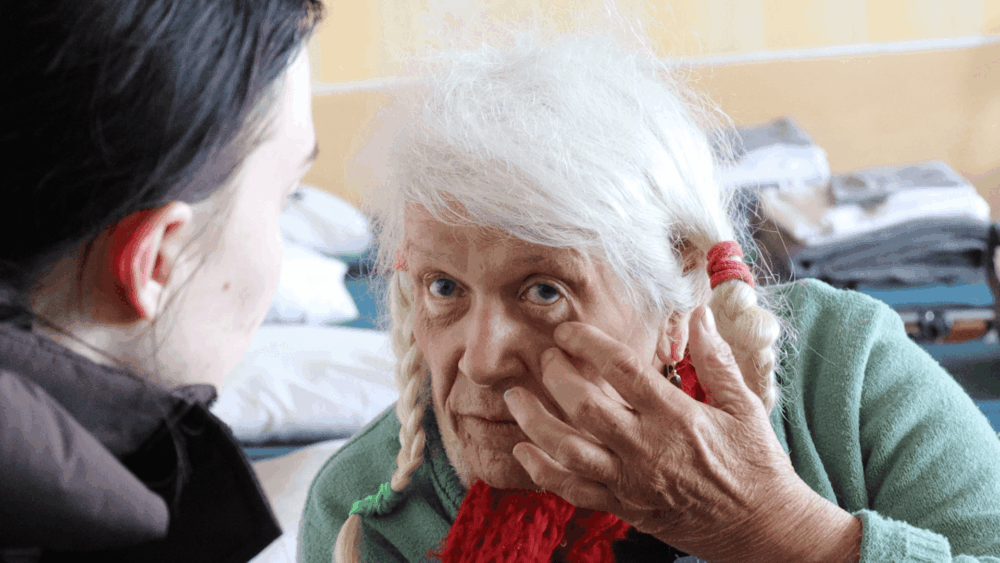
While speaking, the woman touches her face, showing where she had blood and where shrapnel cut her skin. She wants to talk, looking from us to the people occasionally entering the hall, as if drawing everyone into her story. She has been left without a home, and wherever she is taken now, the loss is irreversible.
– Right now they temporarily brought me here. During this time, they want to board up the broken windows in my apartment, buy a heater, and put me in a small room inside my three-room flat. And then they will organize evacuation somewhere else. I’m determined to leave. But the thing is, I read that my building, because the load-bearing structures are damaged, cannot be restored.
There were hundreds of people like this here. They held on to their walls until the very end, but when those walls collapsed under the weight of an aerial bomb or missile, there was nothing left to hold on to. From the way the woman describes her home and gestures with her hands, it seems as if she is still sensing her walls, feeling them, seeing them in front of her. It is like phantom pain, and in this situation the hardest part is realizing that nothing can really help her anymore. Her home has been taken away, and the occupiers are moving further on.
The only thing that can be done is to save lives.
– We receive applications. They are submitted to military administrations and the regional hotline. Then they are assigned to each crew. Right now, six crews are operating in Druzhkivka — two from the patrol police, two “White Angels,” and two from the State Emergency Service — the “Phoenix” units,” says Hennadii Yudin.
Druzhkivka, unfortunately, is not much different from other cities where the war has come very close. People’s behavior here is similar to what evacuation teams see across settlements along the front line. Many locals stay in half-destroyed cities until the very end, not even wanting to talk about evacuation. But in the end, it all ends the same way.
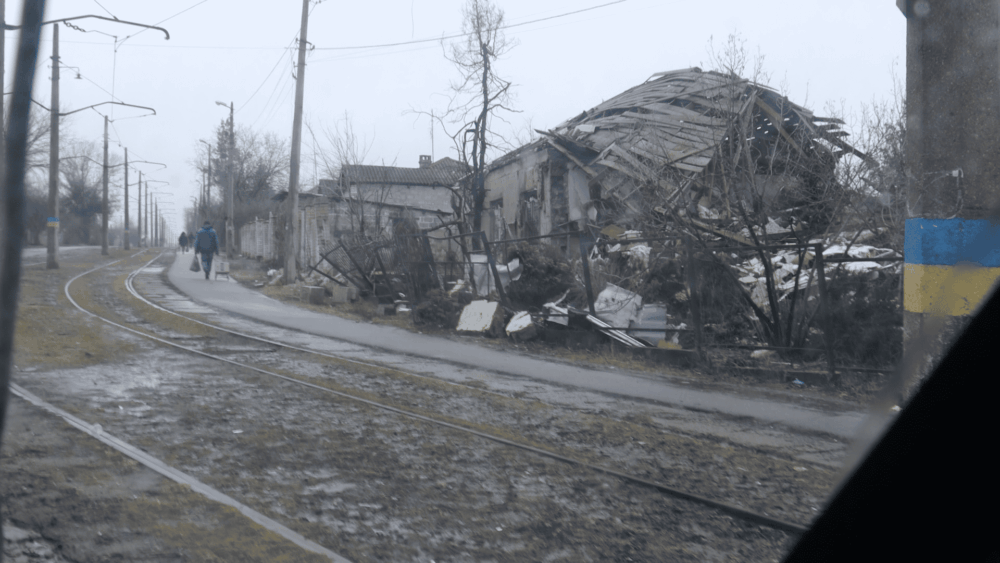
– I remember Avdiivka. We evacuated about 30 people from there in a single day. Sometimes we transported people in the same vehicle both standing and sitting; the injured were laid on the floor. We got them out. At first, it was difficult to persuade them, but then February 2024 happened, and the enemy was already pressing Avdiivka hard, with parts of the streets occupied. We kept going anyway. And only then did people start coming out onto the streets and asking to be evacuated from there,” Yudin notes.
Local authorities always urge people to leave before Russian forces are able to reach the city. Once they do, evacuation is no longer possible, as they often use the population as human shields. But no matter how often this is said, each person comes to the decision in their own time. The main thing is that, by that moment, they can still be evacuated.
Tags: breaking news civilian crisis donetsk region frontline Humanitarian Crisis russia ukraine war ukraine war