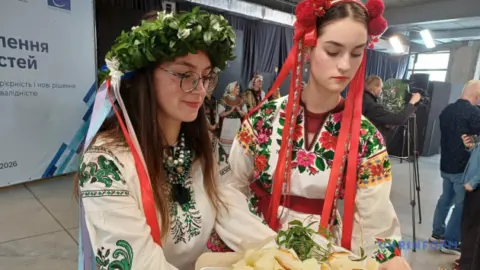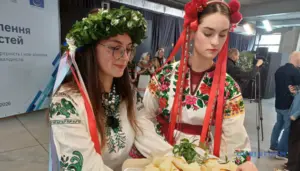
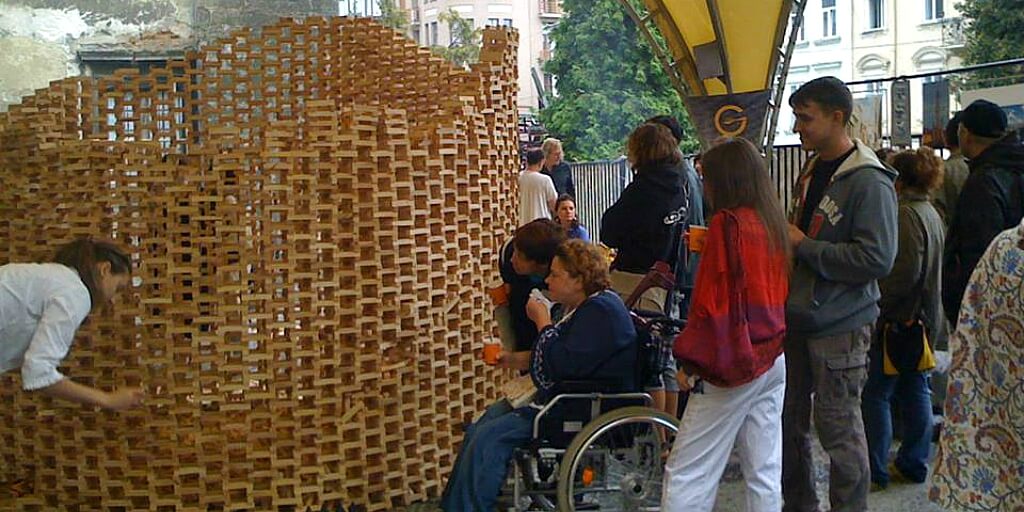
On September 5, artisans from across Ukraine—internally displaced persons from Crimea and eastern regions alongside Lviv locals—gathered to showcase their work in a small courtyard in the heart of Lviv. What began as a simple craft market quickly became something deeper: a space where culture, loss, and resilience met face to face.
Originally planned as an open-air event on Lesya Ukrainka Street near the iconic Dzyga art hub, the festival had to relocate due to bad weather. The new venue, a tent-covered courtyard on Valova Street near the Arsenal, created an unexpectedly intimate setting. Visitors didn’t just browse—they engaged, listened, and connected.
The first thing that caught attention wasn’t a product for sale, but a powerful installation in progress.
Dozens of black paper tulips, carefully folded in origami style, stood in rows on wooden stems. The piece, titled “Black Tulip,” carried heavy symbolism. It shares its name with a volunteer mission that retrieves the bodies of fallen Ukrainian soldiers from the war zone in eastern Ukraine. Each black flower represents loss.
But there was another layer. When the tulips open, a white interior becomes visible—an intentional symbol of hope. Even in grief, the message was clear: something endures.
From there, the courtyard unfolded into a circle of small artisan stalls, each telling its own story.
At one table, a Crimean Tatar craftswoman presented intricate embroidery created using Tatarishleme, a traditional technique that uses two needles to produce patterns resembling gold thread. Her work wasn’t just decorative—it was cultural preservation under pressure, a continuation of identity despite displacement.
Nearby, visitors found hand-made wool puppets—soft, detailed, and unmistakably personal. Another corner offered henna body art, drawing people into the creative process itself rather than keeping them as observers.
The festival wasn’t just visual—it engaged every sense.
A local coffee spot, Alternatyvna Kava, brewed drinks using unconventional methods like siphon and cold brew, turning coffee-making into a small performance. The aroma filled the courtyard, blending with the sound of live music from Olenky, a local female duo performing on a modest improvised stage.
The result was not a polished, large-scale event—but something more authentic. A shared space where people could pause, talk, and understand each other through art.
And that, according to organizer Halil Halilov, is the point.
“This is the eighth year we organize the festival,” he said. “Events like this help people integrate. Cultural bridges work best—we unite through culture.”
In a country still shaped by war and displacement, integration is not just about housing or jobs—it’s about connection. For many internally displaced persons, platforms like this are rare opportunities to present their work, share their stories, and feel seen.
Equally important is the response from the host city. Halilov noted that Lviv residents have shown a consistently positive attitude toward newcomers from Crimea and eastern Ukraine. That openness has helped turn difficult transitions into something more hopeful.
The festival, though small in scale, reflected a larger reality. Ukraine today is not only a place of conflict—it is also a place of adaptation, creativity, and cultural resilience.
In a rain-sheltered courtyard, surrounded by handmade art and quiet conversations, visitors witnessed more than a market. They saw how culture can rebuild connections—and how even in the shadow of loss, something human and enduring continues to grow.
Tags: art festival crimean tatars cultural integration displaced Ukrainians EMPR.media IDPs Lviv Ukraine culture