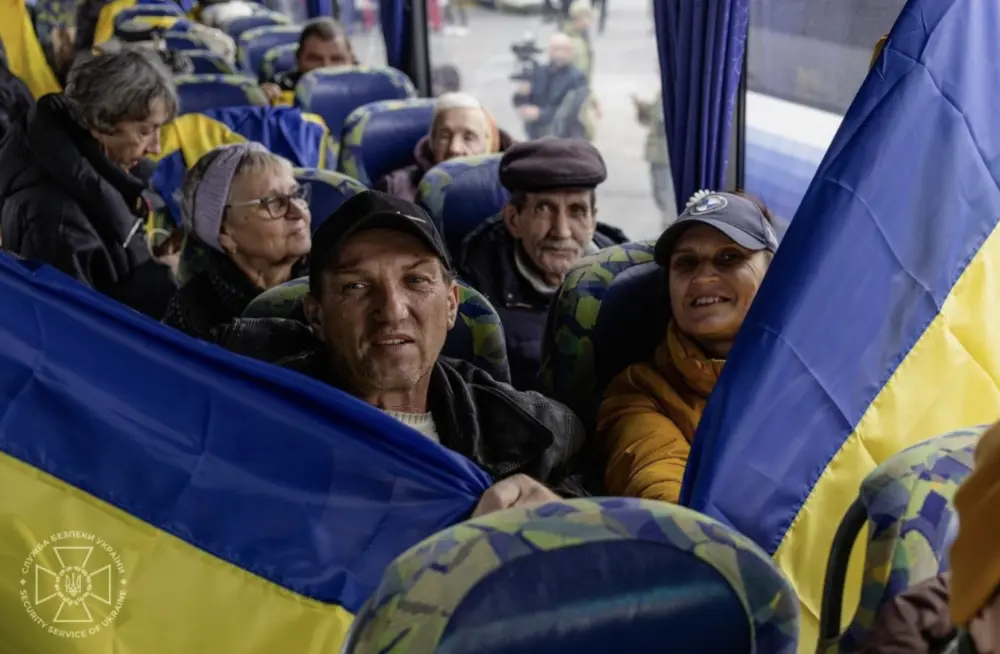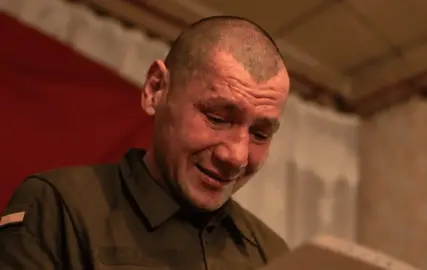
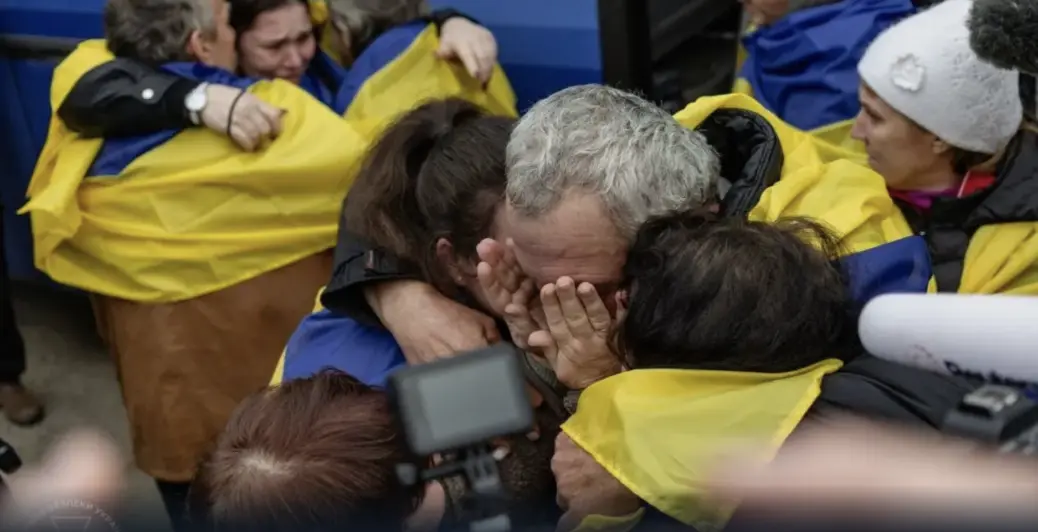
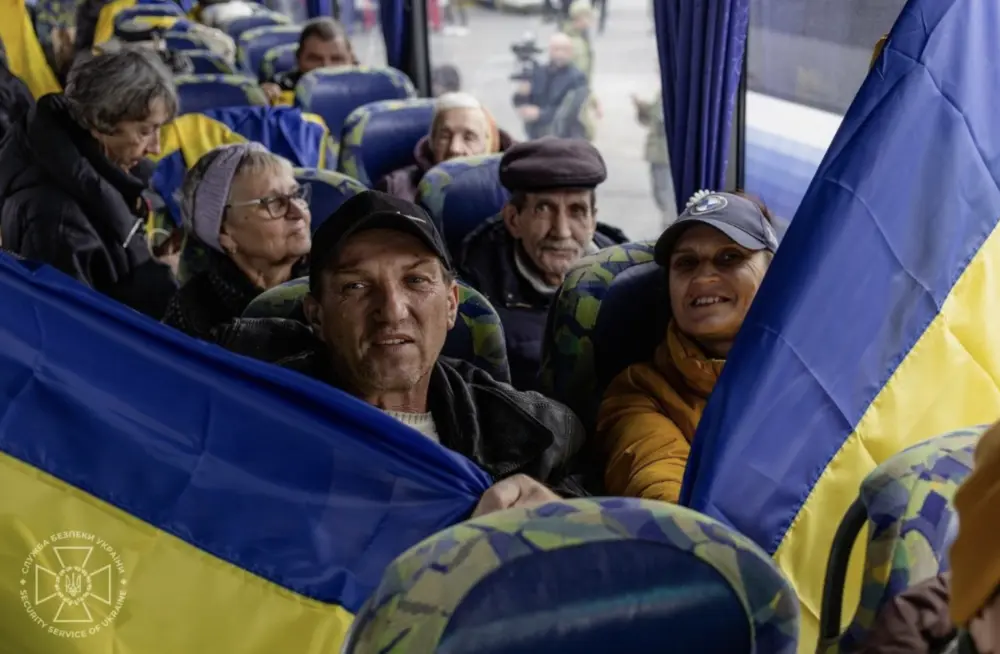
Ukrainians successfully evacuated from the temporarily Russian-occupied town of Oleshky in the Kherson region have finally returned to Ukrainian-controlled territory. In emotional reveal they describe the place as a “dead city” with virtually no shops, hospitals, medicines, or specialists.
The humanitarian operation rescued about 750 people of all ages – from a 94-year-old woman to a one-year-old baby – along with their pets.
“Ukrainians cannot hold back their emotions. After everything they have been through, they can finally breathe a sigh of relief. Further assistance, medical care and everything they need await them here. They have waited so long for this moment. Thank you to everyone who made today possible,” Dmytro Lubinets share liberated citizens’ emotions on X.
“I cried. I wished Ukraine would come to Oleshky, rather than Oleshky having to come to Ukraine. Very much so. There are so many people there who want Ukraine to come to them, rather than people having to flee to Ukraine. Oleshky is Ukraine, isn’t it? So why should we all have to flee?
When people cannot hold back their tears, they start dancing. When they cannot dance, they start singing. We should have sung some beautiful songs. We all sang on the bus, quietly, but we sang the Ukrainian national anthem. We didn’t have the courage to sing loudly because we had grown accustomed to doing everything very quietly while living in Oleshky. The most important thing is that we haven’t forgotten the Ukrainian national anthem. That was what mattered most to us. So, Glory to Ukraine!”
Zhanna wore two wedding rings on her finger for two years – her own and her husband’s, who remained in Russian-occupied Oleshky. On October 31, he returned to Ukraine during a humanitarian mission. Listen to Zhanna recount how she persuaded her husband to leave and what life was like under occupation. Radio Svoboda reports.
Zhanna: “This is the ring I brought with me when I left in 2024. Since then, I have been wearing two rings: his and mine. Today, if it fits, I will put this ring on his finger. He will wear his, and I will wear mine. He would shout: ‘Do you understand that they tell you one thing in Kyiv, but I see a completely different picture here?’ There was also a lot of propaganda: ‘They won’t let anyone into Ukraine. They’ll blow up the plane.’ Thanks to my intelligence, I managed to convince him. He finds it very hard to resist the children’s pleas and tears because he loves them so much.”
Zhanna and her daughters managed to leave Oleshky back in 2024. After spending two years under occupation, they shared their story, at the time on condition of anonymity.
Zhanna: “During the last six months we were under occupation, I didn’t even go out onto the neighbouring street. My mission as a mother was to protect my children. First, I would check how poorly dressed my children were before allowing them to go to the shop. When civilians started disappearing, it was very difficult to understand what was happening to them. There was no freedom – that’s for sure.”
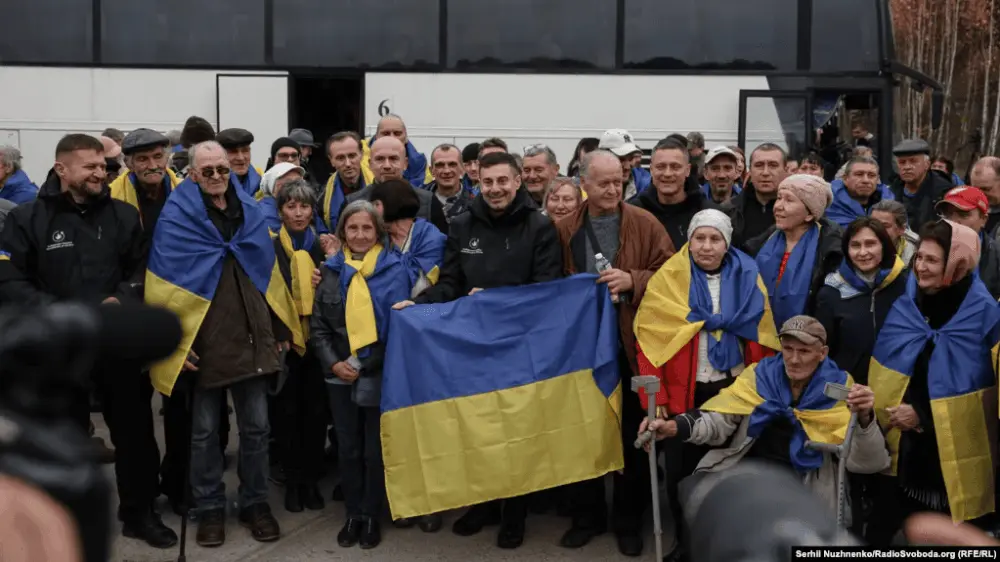
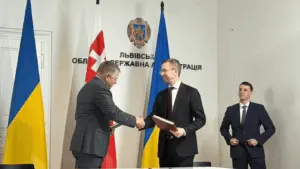
A humanitarian mission began in Oleshky on October 30. Twenty-five buses and ambulances were prepared for the operation. A local ceasefire between Ukraine and Russia has been in effect since October 27. Ukraine and Russia managed to reach an agreement on the humanitarian mission from Oleshky with the mediation of US First Lady Melania Trump.
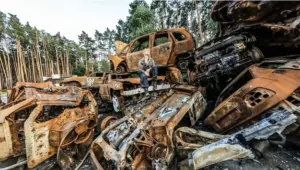
“It’s a dead city. There is absolutely nothing there,” says one of the women who left the occupied city of Oleshky.
According to Anna Leonidivna, leaving was extremely difficult. Her daughter and grandchildren had insisted that she leave. The Hromadske video reveals.
Anna Leonidivna: “They kept begging me to leave. They were crying — both my grandson and my daughter. They wanted us to get out. It was me, my husband, and my daughter’s brother. It was very difficult to escape. My daughter called us and said that the ceasefire had already been violated and that that a car had been bombed. Four people were lying at an intersection on some street. I don’t even remember which one because we were all so emotional. I couldn’t think straight anymore. People were lying there, injured.
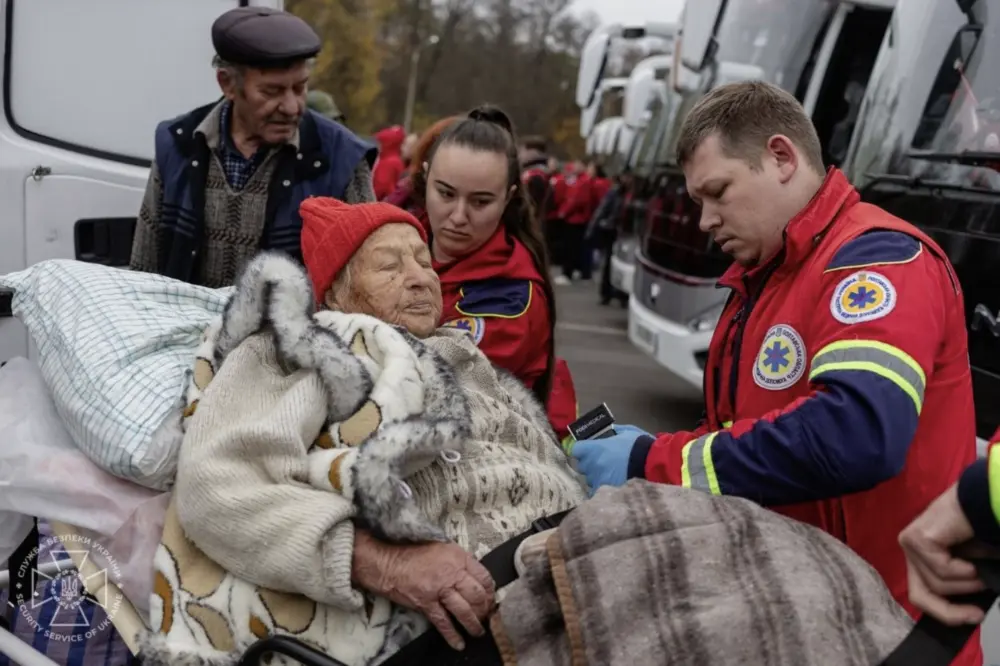
“It’s a dead city. There is absolutely nothing there. No shops, no hospitals, no medicines, no specialists.”
Anna Leonidivna: “We are grateful to our Armed Forces of Ukraine. They saved us and dropped food supplies for us. They have dropped so much food for me that I should be getting ready to go back to Ukraine, but they keep bringing more. I carried it around and distributed it to everyone. I found out who was in need and gave it to those people.”
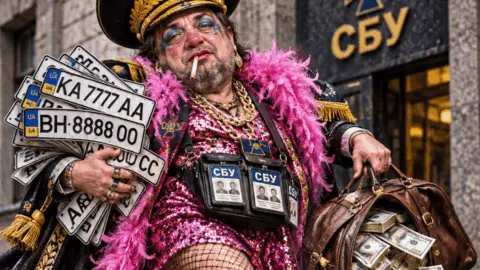
An evacuee said that no one in Oleshky watched “Marafet” — not because they had no access to it, but because the people of Oleshky are smart. You couldn’t come up with better publicity for the Espreso and Pryamyi TV channels! Serhii Pohrebetskyi wrote on X.
Journalist: “Did you watch Channel 24 as well?”
Evacuee: “Send my regards to Kateryna Soliar.”
Journalist: “I certainly will.”
Evacuee: “I have so much respect for her.”
Journalist: “I think she’ll send her regards back. And how did you watch TV in Oleshky?”
Evacuee: “How? We have antennas and satellite dishes. We only watch Channel 24, Espreso and Pryamyi. Nobody watches Marafet. Our people are smart.”
Journalist: “How was the journey?”
Evacuee: “Fine, no problems. Even the Russians behaved tolerantly. There were no incidents. We arrived safely. We left yesterday at half past two.”
Journalist: “Weren’t you worried before the evacuation?”
Evacuee: “Well, of course I was nervous.”
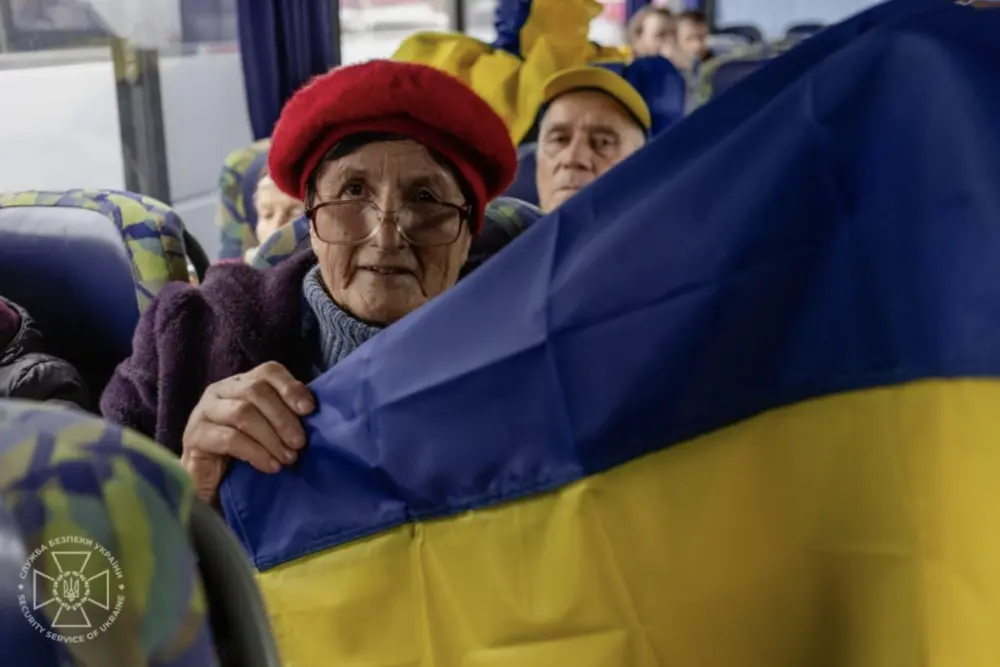
Lesia Ukrainka shared another video of Ukrainians who were evacuated from Oleshky on X.
Evacuee: “If it hadn’t been for the publicity, we wouldn’t have been able to leave. That’s for sure. Otherwise, we would have faced filtration and terrible things. But thank God we were allowed through very quickly and brought here.”
Journalist: “And who told you about this opportunity, that there was a chance to leave?”
Evacuee: “First and foremost, the radio. We listened to Ukrainian radio. We listened to Ukrainian radio in Oleshky.”
Journalist: “Which stations exactly?”
Evacuee: “Well, Suspilne Radio, Ukrainian Radio, NV, and Radio Kultura.”
Journalist: “Wasn’t it dangerous for you to listen to them?”
Evacuee: “No, no. Thank God. We would turn it on at home, you know, at night.
There was fighting, and the Russians were afraid too.
At night, they were afraid to go around, of course, because drones were flying overhead. When our apartment was completely burned down…”
Journalist: “In Oleshky?”
Evacuee: “Yes, in Oleshky. We moved in with some acquaintances. Thank God we survived until then. We had been pinning all our hopes on the Red Cross and publicity, hoping that someone would officially evacuate us somehow. Because if we tried to leave on our own, we would simply ‘get lost in the vast expanses of Russia.’ We were just afraid.”
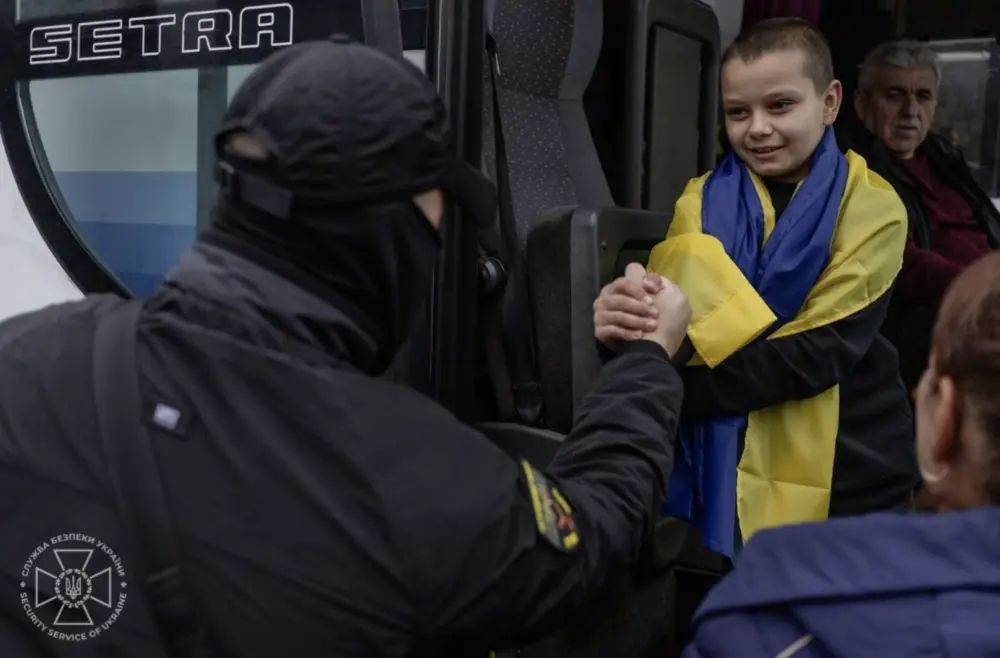
Meanwhile, President Volodymyr Zelenskyy also commented on the operation in Oleshky.
“The humanitarian mission in Oleshky has shown that Russia can agree to de-escalation when forced to do so,” Zelenskyy said.
The president made the statement during his visit to Istanbul. The Ukrainian president also said that Ukraine was preparing for trilateral talks and proposed holding them in Türkiye with Europe’s participation.
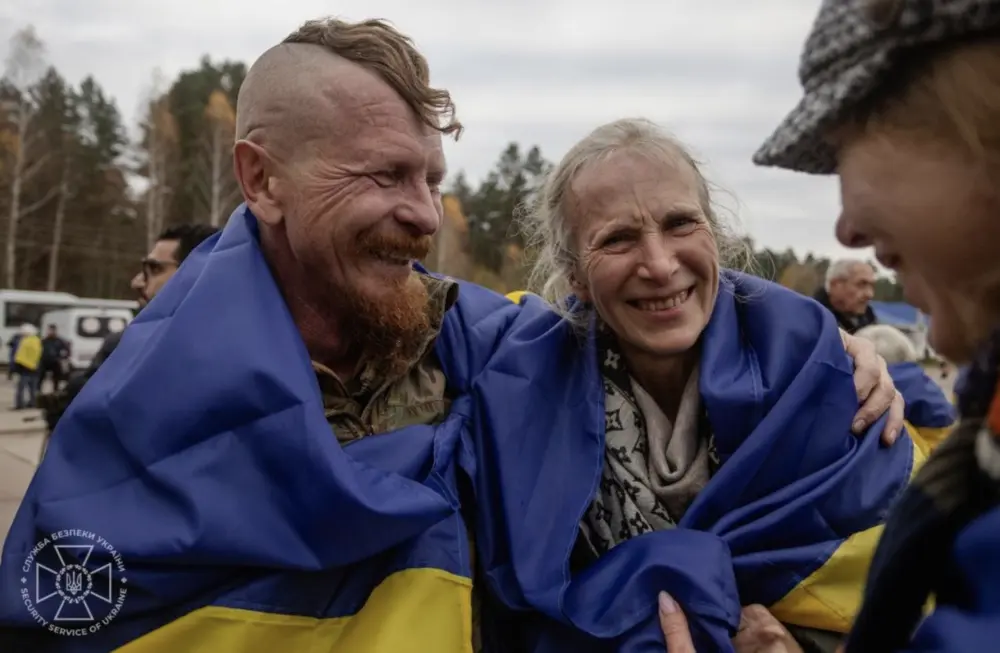
At the late night, Dozens of ambulances with residents of the occupied Oleshky were spotted moving through Kyiv to hospitals.
Among them are people who need medical supervision, as well as those with injuries or wounds, and people with limited mobility.
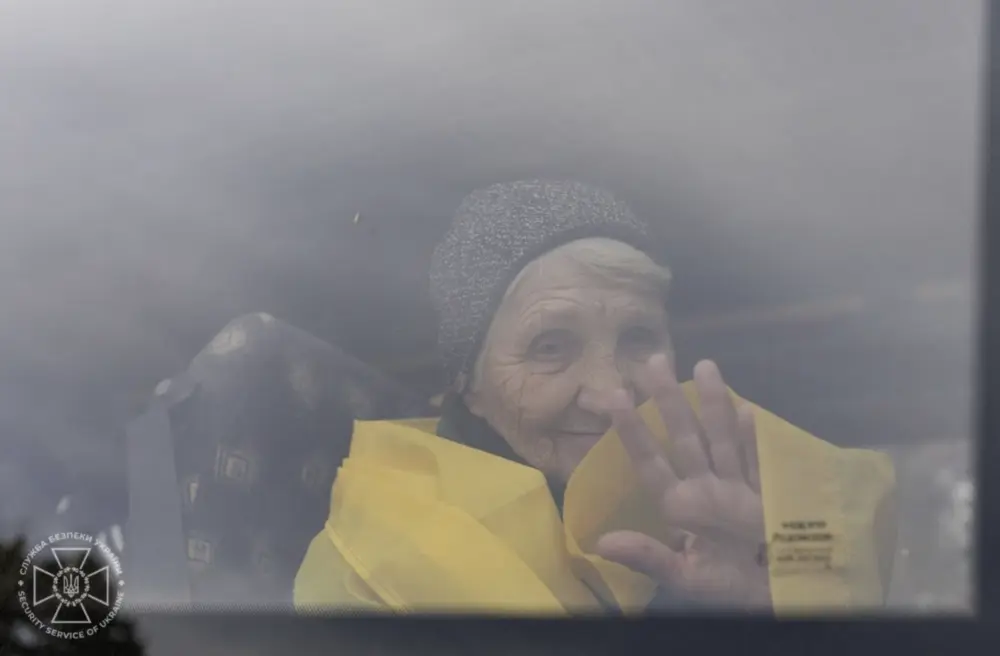
To remind, according to official data, the population of the city of Oleshky in Kherson region has changed dramatically. Before the full-scale invasion at the beginning of 2022 approximately 24,124 people lived in the city.
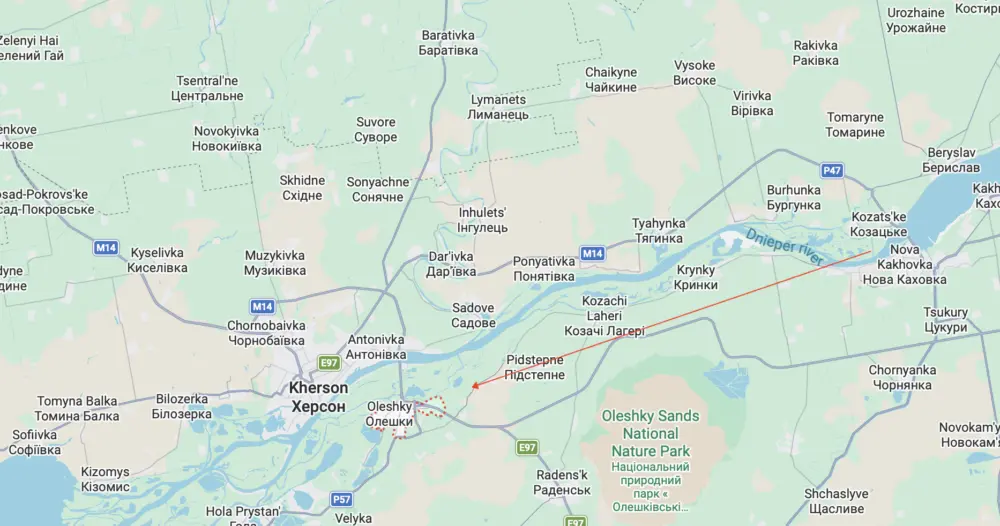
As of the end of October 2026 due to the Russian occupation, the destruction caused by the explosion of the Kakhovka Hydroelectric Power Plant, and the prolonged humanitarian crisis, approximately 1,700 – 2,000 people remained in the city (mostly elderly people with limited mobility and those who care for them). The city’s infrastructure was fully destroyed in 2022–2023. The city is on the verge of a humanitarian catastrophe because, since January 2026, it has suffered from a shortage of food and medicines. Today approximately 750 Ukrainians have been successfully evacuated to Ukraine controlled territory.
There have been many reports and comments on the Oleshky evacuation operation by now, but the view of Oleksandra Matviichuk, Ukrainian human rights lawyer, the head of the Center for Civil Liberties and Nobel Peace Prize Laureate, says it all:
“After months of relentless horror, Russia finally allowed them to be evacuated. It took the intervention of the Pope, the First Lady of the United States, persistent appeals from the UN, a hunger strike by the Vice-President of the European Parliament, and a months-long campaign by Ukrainian volunteers. And now these exhausted people are leaving their homes, the graves of their loved ones, and their entire lives behind, traveling by bus into the unknown. These people leave the land of their ancestors. And before long, Russia will settle the occupied territories with Russians, who will gladly move into other people’s homes from which their owners were driven out. This is a policy of artificially changing the demographic composition of the population, which Russia has pursued throughout all the years of the war, starting with the occupation of Crimea. Russian propaganda portrays this evacuation as a display of the Russians’ lofty humanism. But it is nothing but cynicism. The case of Oleshky shows exactly what Russian occupation is. And it also demonstrates that Russia can commit the most horrific crimes in the occupied territories right before the eyes of the entire world.”