
Ukraine’s strikes on Russian military logistics in Crimea and occupied southern regions are weakening Russia’s supply chains through attacks on maritime, energy, and land infrastructure.
How Ukraine is dismantling Russia’s military logistics in occupied Crimea and southern Ukraine, by sea and on land, is reflected in the different stages of the Ukrainian Defense Forces’ operation. What has enabled Ukraine to launch large-scale strikes on Russian military logistics? Why has Russia been unable to protect its ships in the Black and Azov seas? And how is Moscow trying to sustain supply routes to the Crimean Peninsula via Chongar and Henichesk?
These questions are explored by Krym.Realii.
The maritime phase of Ukraine’s operation to dismantle Russia’s military logistics has already produced tangible results. According to the commander of Ukraine’s Unmanned Systems Forces, Robert Brovdi (“Madyar”), more than 200 vessels have been hit. Ukraine’s Unmanned Systems Forces, together with the Security Service of Ukraine (SBU), have been disabling tankers and cargo ships belonging to Russia’s “shadow fleet,” as well as other Russian vessels in both the Sea of Azov and the Black Sea.
Operations at Sea “Have Already Entered the History of Naval Warfare”
Since the maritime operation began on July 6, Ukraine’s Unmanned Systems Forces and the Security Service of Ukraine (SBU) say they have struck hundreds of vessels belonging to Russia’s shadow fleet. According to the commander of the Unmanned Systems Forces, Robert Brovdi (“Madyar”), the operation has paralyzed the so-called small and medium shuttle tankers. They are no longer able to transport petroleum products from Russian bases and terminals via the Volga–Don Canal and the Sea of Azov to larger tankers. As a result, deliveries of scarce gasoline to occupied Crimea through the Sea of Azov’s narrow bottleneck have also been restricted.
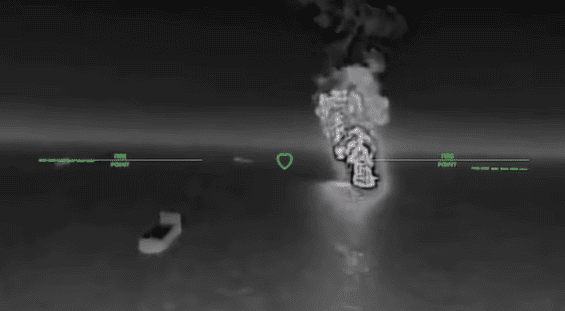
“We are ‘taking care’ of every aspect of their logistics that enables them to move personnel, deliver ammunition, and transport military equipment, assets, and forces used against us in the south or launched from the Crimean Peninsula against Ukraine. For the first time in history, we are doing this without a ground operation. We are creating conditions that make their presence impossible without losing a single Ukrainian servicemember,” Robert Brovdi said.

The actions of Ukraine’s Defense Forces in the waters of the Sea of Azov and the Black Sea have already become part of global military history, according to Andrii Klymenko, co-founder of the Black Sea Institute of Strategic Studies and editor-in-chief of BlackSeaNews. He made the remarks in an interview with Krym.Realii.
“The operations in the Sea of Azov and the Black Sea, where around a hundred vessels — tankers and cargo ships — have been destroyed, have already entered the history of naval warfare. One of the primary purposes of any navy is to protect its own shipping. What we are demonstrating to the world is that Russia’s Black Sea Fleet is incapable of protecting its vessels — they are defenseless. According to our statistics, over the past two and a half years, nearly 40 vessels from Russia’s ‘shadow fleet’ have been damaged or sunk, primarily in the Black Sea, but also in the Mediterranean and the Baltic,” Andrii Klymenko said.

Andrii Klymenko points out that the strikes on the vessels are intended to disable them rather than sink them.
“In every case, either the bridge, together with all its equipment, or, in professional terms, the propulsion and steering system — that is, the rudder and propellers — is taken out, leaving the tanker unable to move. Why is this approach used? Because we understand that we will continue to live on the shores of these seas — the Black Sea and the Sea of Azov. We are fully aware of the enormous environmental damage already inflicted on our waters: dolphins are dying, marine ecosystems are changing, and water quality is deteriorating. It will take decades to recover. That is why this tactic was chosen — to minimize environmental damage to our own seas,” the expert said.
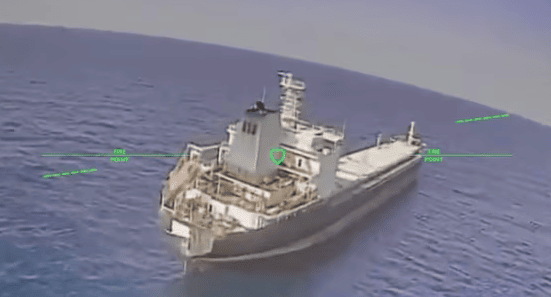
Stopping Russia’s maritime logistics is the number one objective, Pavlo Laktionov, deputy commander of the 414th Nemesis Brigade, said in an interview with Krym.Realii.
“The systems we use to strike maritime targets allow us to block maritime logistics. And that is our primary objective. Russia’s maritime logistics must be stopped. We do not need to sink every tanker and cargo ship carrying petroleum products or other cargo in the Sea of Azov. Our task is to block transshipment. So let me repeat this for the enemy: we know everything — what is where, who is where, and what types of vessels are involved. We know where to strike. Our operators are fully informed, and the tactics for employing all available systems have been refined. We know exactly where to strike, and we hit our targets with precision,” Pavlo Laktionov said.

Not only the number but also the quality of the strike systems now available to Ukraine has made these attacks on Russian military logistics so effective in recent months, according to Ivan Kyrychevskyi, a defense analyst with Defense Express. The unique feature of the Hornet loitering munition is that it does not rely on GPS or satellite signals. Instead, it uses a visual guidance system based on specialized cameras, making it resistant to electronic warfare (EW) systems.
“Last summer, for example, the same Hornet drones, as far as we can tell from open sources, were not yet in service. The Hornets offer fairly high speed, long operational range, and guidance system features that made it possible to strike these moving trucks. In addition, as surprising as it may sound, we have acquired long-range Firepoint drones, which are relatively inexpensive — even at the stated price of $55,000 per unit. And, of course, the diversification of capabilities has also played a role, making it possible to obtain intelligence from multiple sources. You need satellite imagery and, possibly, human intelligence as well. You have to verify the effectiveness of a strike and repeat it if necessary. Judging by everything we have seen, it is this combination of factors that has made the difference,” Ivan Kyrychevskyi said.

Strikes on Energy Facilities and Oil Refineries
Over the past two months, Ukraine has carried out more than 120 strikes on electricity infrastructure facilities in occupied territories. Nearly 50% of these strikes have targeted occupied Crimea. These figures were provided by French OSINT analyst Clément Molin.
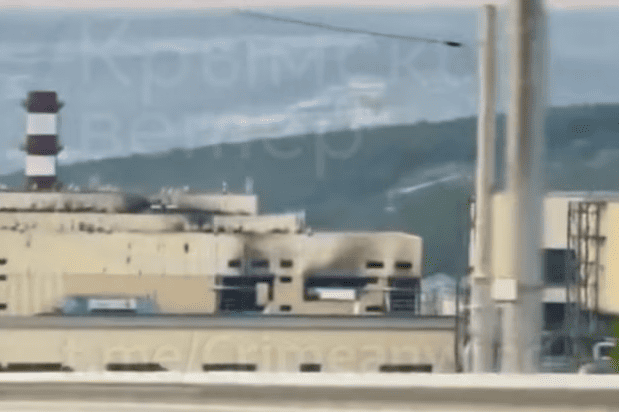
The strikes target both electricity substations and energy hubs in Crimea, as well as major power plants. The Balaklava Thermal Power Plant is the second-largest of Crimea’s two major power stations. Ukraine’s Special Operations Forces claim that the plant’s turbine cooling system was damaged. Based on an analysis of nighttime satellite imagery, the publication Meduza found that overall nighttime illumination across Crimea had fallen fivefold compared with normal levels by the end of June.
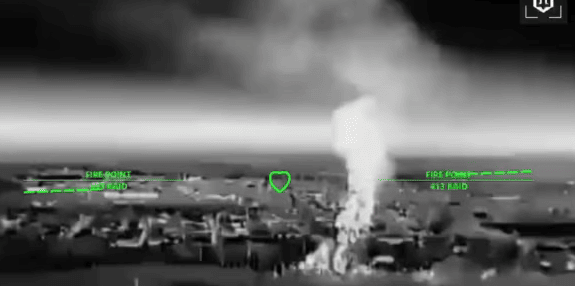
One of the most active units striking energy infrastructure is the 412th Nemesis Brigade. The brigade’s deputy commander says their task is to deprive Russia of the ability to supply its military grouping.
“In reality, the energy sector — power generation, electricity distribution, gas generation, and gas storage facilities — are key components of the enemy’s logistics. We have to cut off its supply lines. The enemy must not be able to support its forces and facilities, including with electricity. When military units lose the power needed to operate command posts, workshops, and battery charging stations, they are forced to switch to backup power. But that means using generators, which require fuel. And fuel supplies are also becoming a problem — one that we are creating for them by disrupting their logistics. Residents of the occupied territories should understand that during wartime they will face certain restrictions,” said Pavlo Laktionov, deputy commander of the 412th Nemesis Brigade of Ukraine’s Unmanned Systems Forces.

Ukraine’s Defense Forces have disabled up to 50% of Russia’s oil refining capacity, according to Andrii Klymenko, co-founder of the Black Sea Institute of Strategic Studies. He says this direction of attacks should be intensified while simultaneously blocking Russian logistics capabilities in ports.
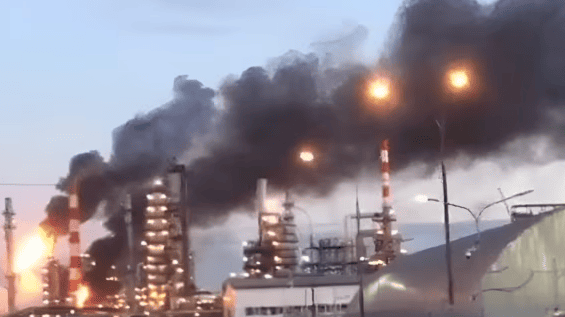
“Indeed, around 50 percent. But we should not assume that this is permanent. Russia is, of course, trying to fix all of this, because we can see the gasoline crisis that has erupted across the country. It is clear that under sanctions conditions this is complex equipment. If units that process crude oil at different stages into various products and chemical components are damaged, we are talking about imported machinery — primarily American or European — with complex computer systems. China is also unlikely to be of much help here. Of course, industries like this always have some reserve equipment kept ‘just in case,’ but these reserves are not unlimited. So they will continue trying to repair everything, while we will continue our work. It is not by chance that some Russian oil refineries have been hit five, seven, or even ten times over the past six months to a year,” Andrii Klymenko said.
Strikes on the “Land Corridor” to Crimea
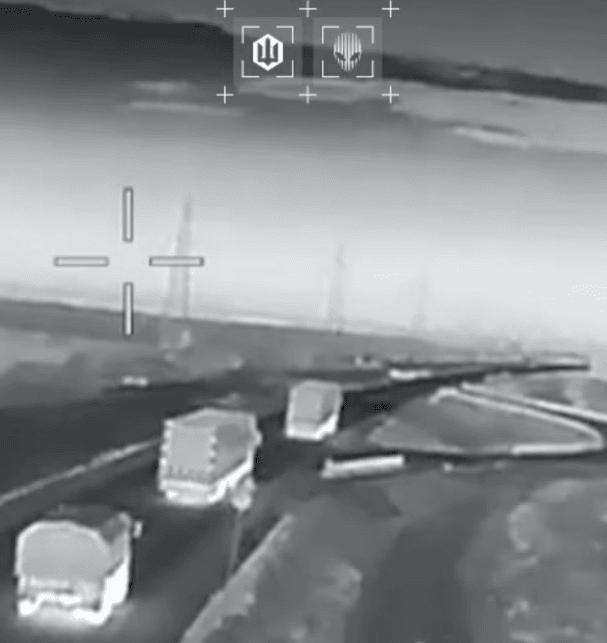
The “land corridor” to Crimea is currently paralyzed for the Russian military. The Atesh partisan movement claims that Russia’s command has ordered military convoys to be mixed with civilian traffic on the roads of the land corridor in order to reduce the risk of drone strikes.
Analysts from Oko Hora geolocated 132 strikes on Russian military logistics along this corridor in May–June. French OSINT researcher Clément Molin counted 270 video recordings of attacks posted on the pages of Ukrainian brigades, corps, and units since May.
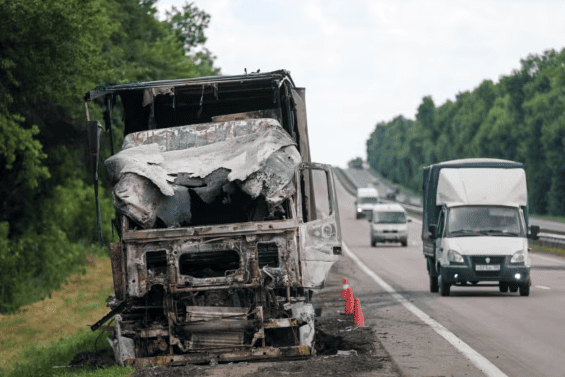
“Given the situation our unit and brigade found themselves in, we decided to disrupt logistics along the main highway in order to complicate the supply of the enemy’s southern grouping. We are talking about the main artery — the Mariupol–Berdiansk–Melitopol highway, known as ‘Novorossiya.’ Using the available means — mid-range strike systems — we began free-hunting operations against logistics convoys, and this quickly affected their supplies. The enemy command even issued an order banning the movement of military vehicles and the use of alternative routes. This was only the first stage—the land logistics phase,” Pavlo Laktionov, deputy commander of the 414th Nemesis Brigade of Ukraine’s Unmanned Systems Forces, recalled, describing the beginning of the operation in May.
Critical Nodes – Chongar and the Henichesk Strait
The roads connecting occupied parts of the Kherson region with annexed Crimea and back remain important logistics routes for delivering Russian military supplies. The critical nodes are the Chongar Bridge and the Henichesk crossing.
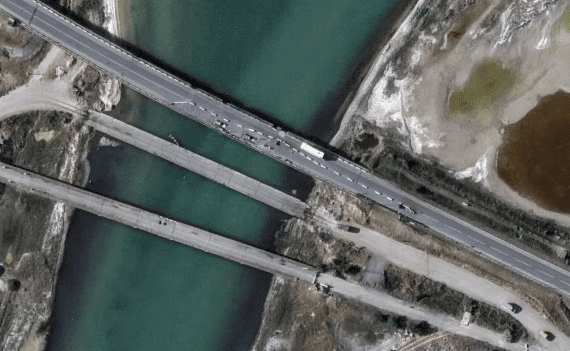
Investigative journalist Kyrylo Ovsyanyi from the Schemes project (Radio Svoboda) has been analyzing satellite imagery of the Crimean Peninsula since 2022 and has drawn attention to how Russia is strengthening roads along the administrative border with Crimea. In the Henichesk area, he notes, an additional road leading to the piers has been under construction for the past two years.
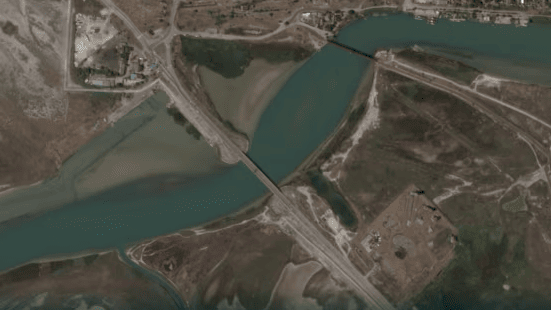
“It appears that it has not been fully completed yet, as it does not currently connect to the main roadway. It is also not entirely clear what it is being built for, but it bypasses the local checkpoint. We can also see that asphalt pavement has appeared in this area — where previously there was an unpaved road running over an additional bridge. It looks like another road is being extended here as well, and construction is ongoing. Perhaps the plan was to create a larger transport interchange, but for now only additional access roads are visible. It is difficult to say exactly what is being planned, but the modernization of transport and logistics infrastructure in this area is clearly underway,” Kyrylo Ovsyanyi said.
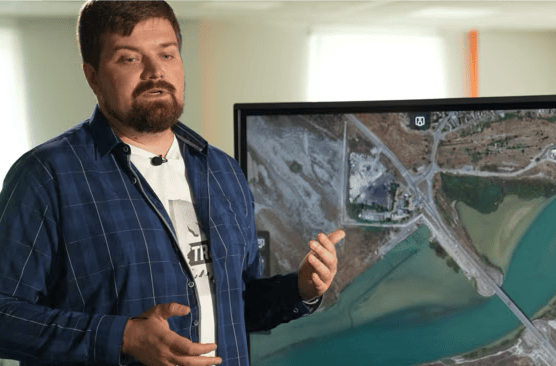
In the Chongar area, the Russian military is constructing two pontoon crossings and an access road for a third one, while also developing an extensive logistics infrastructure. Earlier, the bridges in this area were severely damaged — even down to their supports — which forced Russian forces to deploy alternative pontoon crossings.
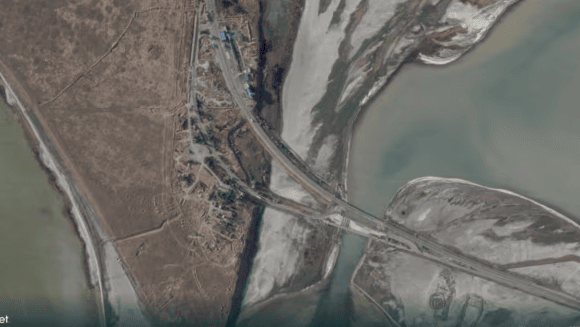
“Some dirt roads have been transformed into fully paved roads, alternative routes and access roads to the main highways where these bridges are located have appeared. We can see that in the Henichesk area, such a newly created crossing is already being paved. A similar situation is developing in the Chongar area: a new embankment crossing is being built across the strait to replace the bridge. Visually, it appears that destroying it with missile strikes would not be as easy as destroying the conventional bridge that previously stood there,” said investigative journalist Kyrylo Ovsyanyi from the Schemes project.
Earlier, Kherson Regional Council deputy Serhii Khlan told Radio Krym.Realii how Russian forces are attempting to restore transport connections disrupted by attacks on bridges in Chongar and the Arabat Spit.
“The Chongar Bridge is now heavily guarded, and additional air defense systems have been brought in. As for the bridges to the Arabat Spit, they are using construction debris from sanatoriums that they had turned into military bases and which have recently been hit very accurately by our drones, literally destroying them. They are using this debris to fill in the strait between the Arabat Spit and Henichesk, where our Unmanned Systems Forces struck the bridges. In other words, they are creating a kind of embankment road. On the other side, closer to the sea, they have deployed a pontoon bridge covered with anti-drone netting,” Serhii Khlan said.

The Russian military has fairly strong engineering units capable of finding unconventional and rapid solutions, says military expert Ivan Kyrychevskyi.
“In my view, they have already done something similar near the Kakhovka Hydroelectric Power Plant: they dug a pit, placed railcars filled with crushed stone inside, and used them as a foundation for an embankment. It became a kind of multilayered ‘matryoshka’ structure that is difficult to destroy. As a result, it was necessary to strike directly at the vehicles. Despite the degradation of certain sectors over the past four years, the engineering component remains one of Russia’s strengths. They know how to build all these crossings,” the expert said.
Ivan Kyrychevskyi believes that strengthening logistics infrastructure in Chongar and the Arabat Spit makes the task of Ukraine’s Defense Forces more difficult, but there are still means to strike it. As an example, he cites Firepoint drones and the new Ukrainian Behemoth strike UAV with a range of up to 300 kilometers, which has already carried out strikes on the Chongar Bridge.
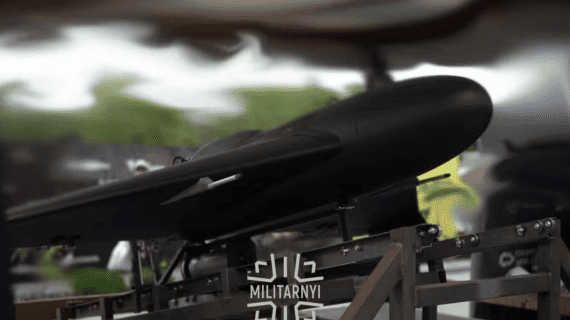
“For example, the Middle Strike version of Firepoint (FP2) is equipped with a 100-kilogram warhead — more powerful than that of a HIMARS missile, while its modified version has a warhead reaching 200 kilograms. Or the new Behemoth kamikaze drone, which is designed with a dual warhead: 40 kilograms in the nose and 35 kilograms in the tail. In terms of penetration capability, it is comparable to a Storm Shadow missile. We will not discuss missiles for now, but I think there are surprises prepared there as well. The point is that the Defense Forces have the means that could theoretically be used against these bridge crossings,” Ivan Kyrychevskyi said.
However, the expert believes it is impossible to say with certainty whether these logistics crossings will become the main targets during future operations aimed at cutting off Russian military supplies. During operational planning, command may choose other, higher-priority targets.
How Do Strikes on Logistics Affect the Potential of the Russian Military?
The operation to cut Crimea off from Russian logistics is exhausting the military potential of the Russian army, says military expert Ivan Kyrychevskyi. He notes that preparations for the results we are seeing today began as early as last autumn.
“This creates an attrition factor for Russian forces, which has helped Ukraine liberate 650 square kilometers of its territory in the south over the past six months. More has not been possible so far because enemy drones prevent the advance of mechanized columns, and infantry alone cannot achieve much. But the fact that Russian forces in the Zaporizhzhia direction — and in the south in general — have begun to be systematically targeted by drones at great depth has produced results. This work began back in November–December, before the situation with the Starlink shutdown. The fact that the enemy cannot conduct full-scale offensive operations there is the result of at least nine months of effort. But, as I always emphasize, there is no simple direct link here, as if Crimea should be targeted solely for the sake of effects in the Zaporizhzhia area. As long as the Russians remain in Crimea, their facilities there will have to be struck,” Ivan Kyrychevskyi said.
In 2026, the Russian army began losing eight times more personnel than Ukraine’s Armed Forces, according to analysts at the Washington-based Center for Strategic and International Studies (CSIS).
At the same time, the average lifespan of a Russian assault soldier on the battlefield in Ukraine is currently only 20–30 minutes, the CIA director said recently.

“The average lifespan of a Russian recruit who is currently sent onto the battlefield in Ukraine is estimated at 20–30 minutes. Twenty to thirty minutes! And all because AI-powered drones have become effective, specialized, and relatively inexpensive machines of destruction,” said CIA Director John Ratcliffe.
The CIA director noted that Ukraine’s adoption of innovative technologies has become a “powerful equalizing factor” and has significantly slowed the pace of the Russian army’s advance.
Tags: black sea crimea EMPR media russia ukraine war Russia-Ukraine War Russian military logistics shadow fleet Ukraine Maritime Campaign