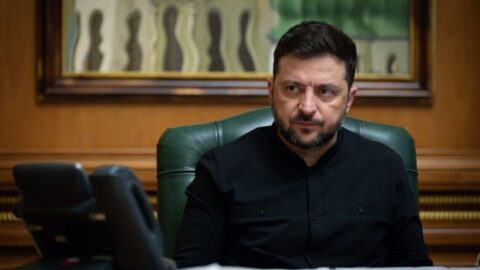

Ukrainian government’s anti-corruption strategy is being reshaped amid political resistance, removing key reforms on prosecutors, police, customs, and courts before parliamentary review and approval.
Zelenskyy’s government has decided to remove from the Anti-Corruption Strategy the provision on holding an open competition for the position of Prosecutor General. This was reported by Anti-Corruption Action Center.
This is despite the EU’s demands to change the procedure for appointing the Prosecutor General (through an open competition) and to reduce the powers that, under Kravchenko, have become extraordinary.
But the authorities urgently need a controllable Prosecutor General.
Therefore, as @zn_ua writes, the draft Anti-Corruption Strategy, which the government is expected to adopt soon, has had provisions removed regarding competitions for the positions of Prosecutor General, Director of the SBI, and Head of the National Police.
Claims that these provisions are included in the “Kachka–Kos plan” should not be misleading, as the Ukrainian authorities are sabotaging their implementation.
We have already reported that the implementation rate of this 10-point plan stands at just 9%. This is the real assessment of the Ukrainian authorities’ intentions.
That is also why Zelenskyy’s Office has blocked the registration of a petition calling for the dismissal of Prosecutor General Kravchenko six times.
And that is why Zelenskyy’s team has not even drafted a bill on rebooting the SBI.
More details from zn.ua:
In the near future, the government is expected to adopt the Anti-Corruption Strategy for 2026–2030 (hereinafter — the Strategy) and submit it to parliament. The question is — in what form. Will it be the version developed by the NACP team together with expert groups across 16 sectors most vulnerable to corruption, or one amended by the government in ways that significantly weaken it?
The government committee preparing the Strategy for approval and which held a public meeting on Tuesday is headed by Deputy Prime Minister for European Integration Taras Kachka. During the coordination process, according to our information, there were at least four key sticking points where ministries strongly resisted: competitive selection procedures for the Prosecutor General and the heads of the SBI and the National Police, as well as provisions related to tax policy, customs, and land privatization in communities. In other words — everything that is politically most sensitive for Bankova.
And while in all the listed areas it was possible to preserve a significant portion of the provisions, this was not the case for competitions for the Prosecutor General and the heads of the SBI and the National Police.
Moreover, at the parliamentary stage, both these already key issues and others may become subject to debate — in particular, the reform of the legal profession, as well as approaches to regulating the construction and energy sectors and national defense.
Why does this matter? In essence, this is a document that has gone far beyond anti-corruption policy and effectively outlines a development strategy for a country at war. A government that is operating not only without a strategy, but even without a program approved by parliament.
Fragmented European roadmaps and requirements, which until now had not been consolidated into a single internal course of action, have here for the first time been brought together into a coherent framework — one that has already faced its first pushback within the government. Although Kachka managed to “hold the line” on key provisions of the Strategy opposed by the Ministry of Finance, the Ministry of Justice, and some other state bodies, he clearly proved unprepared to enter into conflict with the president, who relies on unreformed law enforcement agencies.
To understand how the situation may unfold in parliament, it is important to know exactly where the system is resisting — even while formally “allowing through” key initiatives embedded by the team that developed the Anti-Corruption Strategy.
The Finance Ministry’s Tax Offensive
In its official letter, the Ministry of Finance proposed removing the entire tax section from the Strategy. Why was this critical for both the Strategy and the state? Because this section contains systemic initiatives. First and foremost, it aims to limit discretion, particularly in the procedure for suspending tax invoices. Formally, this procedure is designed as automatic, and when reading the regulation, it creates the impression that there is no subjective factor involved. However, there is one exception — Criterion No. 8, “availability of tax information,” which effectively changes the entire logic: if certain grounds exist, decisions can be made manually.
According to statistics, 93–94% of audit procedures take place precisely through the Ministry of Finance. ZN.UA has repeatedly written about this corruption loophole, and anti-corruption bodies, while investigating violations in the regions, have confirmed that “unblocking is the most rigid vertical, leading to the center.” Names such as Arakhamia, Hetmantsev, and Sokur are mentioned in this context. The Anti-Corruption Strategy proposes clearly defining the grounds for applying this provision.
Next is documentary audits during VAT refunds — another area prone to abuse. There is a so-called threshold, set back in 2010, of UAH 100,000. If a refund claim exceeds this amount, the tax authorities have the right to conduct a verification of its validity. This threshold has not been revised for 16 years. Due to inflation and economic growth, its real value has effectively decreased by about tenfold. As a result, the scope of audits has expanded significantly, giving tax authorities much greater room for intervention. The Strategy proposes increasing this threshold and linking it to a macroeconomic indicator — the minimum or average wage. This would allow it to adjust automatically in line with the economy, preserving the logic behind the distribution of audits.
The same applies to the formation of the audit plan. Currently, it is essentially done manually. The proposal from the Strategy’s developers is to introduce a full-fledged risk-based system with a clear risk model and processing algorithms. In that case, high-risk transactions would automatically become subject to audits.
It is also important to note that the Ministry of Finance effectively “cut out” a number of initiatives from the Strategy, particularly those related to anti-corruption infrastructure. It completely removed everything concerning salaries, positions, and regional offices — and not only for the Bureau of Economic Security (for which this is critically important in the context of its reboot), but also for all institutions, including NABU, SAPO, the High Anti-Corruption Court, and the NACP. According to our sources in the ministries who participated in a series of coordination meetings, the Strategy’s developers were presented with an ultimatum: either remove all these provisions, or the document would not move forward.
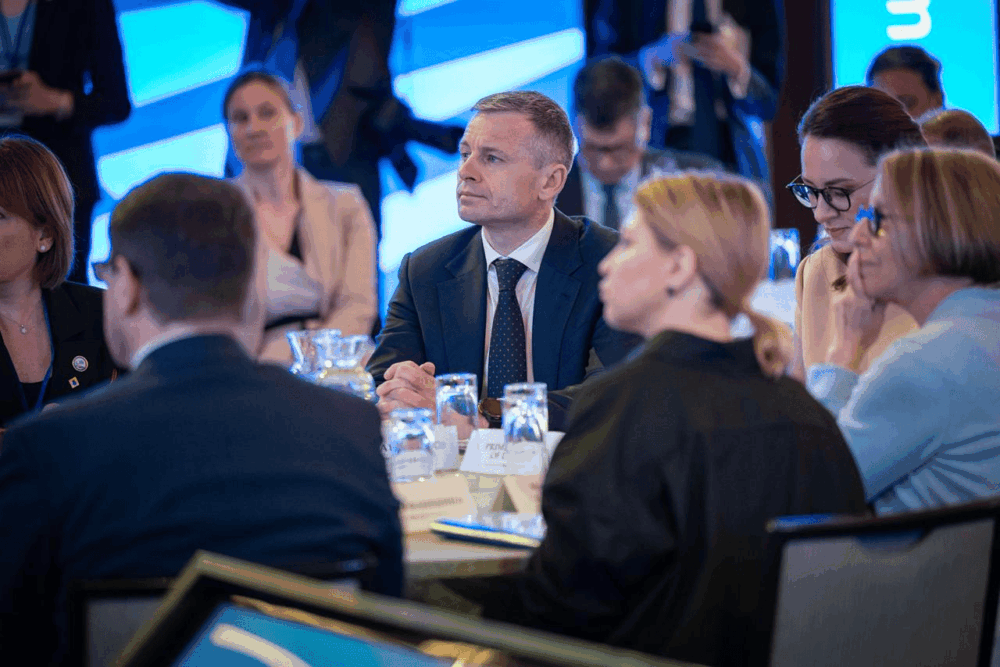
But the issue here is not only about saving money during wartime, as it might seem. It is about a broader vision of the state’s function: to maximize revenues and minimize expenditures. Within this logic, everything related to institutional capacity — salaries, personnel, infrastructure — is treated as secondary. And this is, in fact, part of a systemic problem: when even in strategic documents the state is unable to acknowledge that institutional capacity is not a cost, but a fundamental condition for effectiveness.
Customs Reform Reset
The same logic has also manifested itself in relation to customs. From the outset, the customs service entered the dialogue together with the Ministry of Finance. At the same time, it is difficult to say for certain who was coordinating whom in this situation — the Ministry of Finance the customs service, or vice versa. In the official letter from the Ministry of Finance, which also included a letter from the State Customs Service, numerous comments were expressed (83 pages in total). The logic behind all these remarks boiled down to one thing: essentially, to remove everything. The argument was that the system is functioning, there are no problems, and there is no corruption. Seriously?
As for changing the system itself, the draft Strategy includes a number of important initiatives. One of the key ones is the introduction of a system of clear indicators that would signal the quality of the customs service’s performance — not only in terms of duties collected, but also the quality of decisions and business satisfaction.
“Of course, customs — like the tax service — will never be popular. That is normal. But it must be predictable, the same for everyone, and operate within the law. Because businesses will always try to reduce the tax base or customs value — that is natural. The state’s task is not to ‘extract the maximum at any cost,’ but to create clear rules of the game,” says one of the experts involved in drafting the Strategy.
But that is theory. Because an immediate question arises: who is supposed to oversee these indicators? The Ministry of Finance, which blocked the Strategy? It is indeed hard to believe that indicators alone will reduce corruption at customs, where flows of smuggling sustain parts of the political system itself. Yet the people building institutions and state systems believe in this approach: “Because the main source of corruption is human involvement and discretionary power. Therefore, the first step is to automate procedures as much as possible and remove the human factor wherever possible.”
How was agreement reached? The team developing this part of the Strategy took a different approach. For each problem, a large amount of statistics and evidence was collected. For example, one KPI is the results of court appeals against customs decisions. In 2024 alone, around 6,000 customs decisions were challenged in court, and roughly 90% of them were overturned as unlawful.
So either all judges are corrupt, or the problem lies in the customs decisions themselves or in the legislation. If the same rules are interpreted differently, then either someone is violating them, or they are so vague that they allow for different interpretations. In that case, the state’s task is to change the rules so that these norms are applied uniformly.
It seems that the main assumption was that the NACP would not go deep into the process. However, people were involved who had worked inside the system and knew all its pitfalls. As a result, around 80% of the content was defended at this stage.
There were compromises, but not on substance. For example, government officials proposed removing the KPI for the head of the service. This is critical. Although there is also a misconception that it is enough to find a “perfect leader” — we also wrote about this when former NABU detective Orest Mandzii won the competition for the position of head of customs. Without systemic change, it does not work. And conversely, the system itself does not function without a values-driven leader. Customs is a large, complex structure. Changing the head in Kyiv is not enough: they must be able to build a team across the entire vertical, down to specific customs offices. If they lack tools or personnel, they cannot do anything. Therefore, it is always a combination of systemic reform and individuals capable of implementing it.

“By the way, Kachka acted constructively — both on tax and customs issues, he generally supported the logic of not allowing the substance to be hollowed out. The key elements have been preserved. But parliament is still ahead,” notes a government source.
On Land Privatization
It appears that the team drafting this section of the Strategy seriously aimed to remove land from the control of local authorities. However, the Ministry of Justice unexpectedly took the position that such an initiative allegedly violates citizens’ rights and is unfair. Although the logic of the Strategy — both previous and current — is based on analysis. It shows that in reality this institution of land privatization almost does not function as a fair redistribution mechanism. Except for narrow categories, in most cases land is allocated either to “insiders” or through corruption.
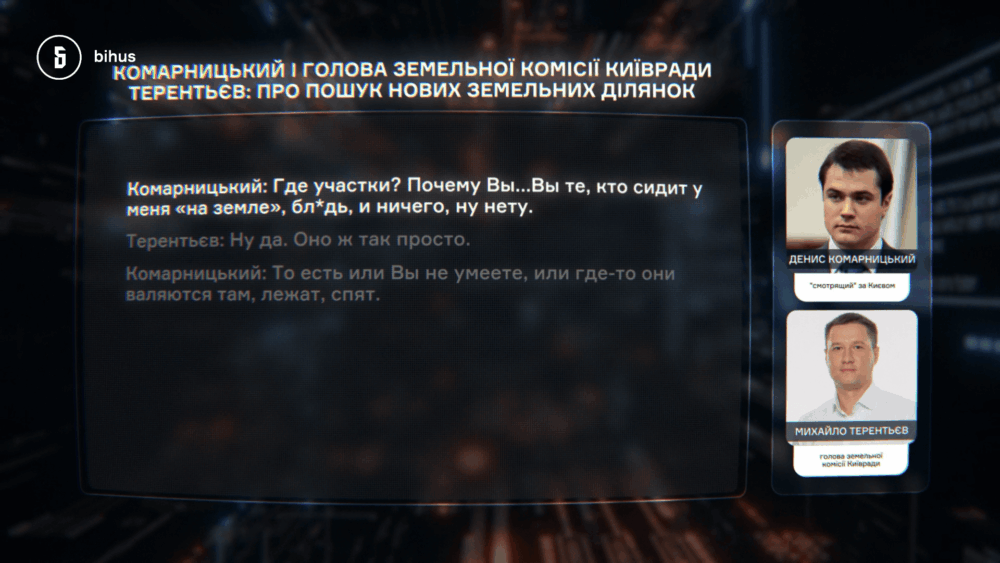
As a result, people effectively buy this land — but not from the state or communities, rather from intermediaries. And billions end up not in budgets, but in private pockets. Formally, this is “free privatization,” but in practice it is a closed system of resource distribution. NABU’s “Clean City” operation involving the so-called “toilet schemes” of Komarnytskyi and others confirms this.
There is also another problem: there is almost no resource left — land that could actually be privatized. Therefore, all new initiatives — for example, for veterans — risk reproducing the same model: access will not be granted to everyone, but to those who can “enter” the system, as happened after 2014–2015, when participants of the ATO were often used in such schemes.
Therefore, the proposal is simple: land should be sold through transparent auctions. This would create equal rules for everyone. And if the state wants to support specific categories, it should do so through direct instruments: compensation, preferential loans, and targeted programs. In other words, provide real resources, not a formal right that in practice turns into corruption.
In its legal review, the Ministry of Justice insists that the provisions of the Strategy allegedly violate the Constitution, and that the proposed approach is unfair because it includes two exceptions. However, it is important to emphasize that these are two entirely fair and objective exceptions. The first concerns people who already have real estate on this land. The second concerns those who were granted permanent use rights before 2002, i.e., on the basis of state decisions.
In the coordination protocol, the NACP clearly explained that this is not about banning anything, but about dismantling a corrupt mechanism. On the other hand, an ordinary person may perceive the idea of “abolishing free land privatization” as the removal of a right. This is an argument that can easily be exploited both in parliament and in public debate. In the end, a compromise was proposed: not to change the substance, but the form — a gradual replacement of the free privatization system with alternative support tools, including for veterans. It remains to be seen what parliament will say about this.
On the competition for the Prosecutor General, Head of the SBI, and National Police
At its core, this concerns whether political control of the authorities over the law enforcement system will remain. During a meeting with civil society on Tuesday, Taras Kachka stated that the removal of provisions on competitive selection from the Strategy was his personal decision. Why? Because these provisions are included in the “Kachka–Kos Plan,” and that is supposedly sufficient. In other words, the Deputy Prime Minister has personally taken political responsibility for this decision.
Kachka promised to do everything possible to ensure that the Prosecutor General’s Office, the State Bureau of Investigation, and the National Police are depoliticized in line with European commitments, and noted that the absence of these provisions in the Strategy would help secure votes to pass everything else that has been preserved in the document. One way or another, the fact remains: the Strategy will go to parliament without key anti-corruption provisions.
It is important to separately emphasize the issue of competitions. In the law enforcement system, even properly designed competitive selection processes will not work if the system itself remains unchanged. And this is one of the most serious challenges the state will face in the near future.
Because the main problem is “on the ground”: in communities where, on the one hand, mayors and business figures make arrangements with the police, prosecutors, and judges, while on the other hand the central authorities tighten the leash when they need to apply political pressure on the same mayor. And no matter how many layers of NABU are created at the top, people at the local level still see corruption, bribery, and a lack of justice. In other words, the National Police remains the most unreformed basic layer, and without changing it, nothing else will work.
“There is logic in removing the National Police from the Ministry of Internal Affairs in order to break this dependency, and only after that to introduce separate competitive selection models. Otherwise, we are again treating symptomatically what is a systemic problem,” say experts.
But even this is only part of the answer, because we are talking about a system of hundreds of thousands of people operating in every community. No single leader is capable of changing it alone. Therefore, the key lies in changing the rules. “At first, the system always resists and tries to formalize new rules, but over time, through changes in personnel, they begin to work. This can be seen in the civil service: at first, competitions were a formality, but gradually they started to produce results. And therefore, even if today there are attempts to neutralize them, it does not mean the instrument does not work — the question is giving it time,” experts believe.
A positive signal is that the block concerning the legal profession was not touched by the Cabinet of Ministers. Formally, it appears to be agreed: during the drafting and coordination stage, the NACP secured support from the Ministry of Justice, with only technical amendments made. But this remains a “quiet zone” only on paper. Next comes parliament, and this could become one of the most difficult blocks — no easier than the Prosecutor General issue.
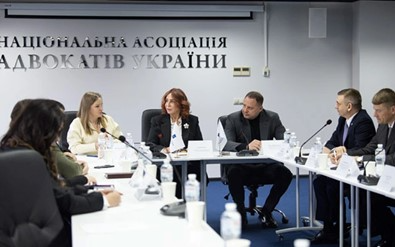
Pressure on the leadership of the Ministry of Justice is already increasing — from part of the legal community and MPs. And the problem here is not only positions, but also the ability to maintain institutional independence. An attempt to dilute responsibility through a working group under the Ministry of Justice had the opposite effect. It was initially created as reform-oriented, but under pressure its composition was expanded, including representatives of the National Bar Association of Ukraine. According to available information, former Head of the Presidential Office Andriy Yermak is reportedly seeking a position within the NAAU, replacing Izovitova, and is clearly not interested in any reforms in this area.
Conclusions
First, despite the fact that competitive selection procedures for the Prosecutor General, as well as for the heads of the SBI and the National Police, were removed from the Strategy, the government preserved its core structure.
Second, the NACP missed the deadline for submitting the document to parliament, and now the Verkhovna Rada will have less time — and greater responsibility will fall on the MPs.
Third, the Strategy still contains objectively sensitive and contentious issues. In particular, forensic expertise for NABU: the Strategy does not provide for the creation of a separate independent institution, but instead vaguely states the need to create conditions for independent expertise. It is clear that no Ministry of Justice will create such conditions, and this provision is likely to be “killed” already at the level of the parliamentary anti-corruption committee chaired by Anastasiia Radina.
In addition, during the drafting of the document, the block concerning the Security Service of Ukraine (SBU) was effectively left out, although it requires systemic reform in order to stop functioning as a political instrument of pressure for those in power.
And the key question remains: what is the point of a new Strategy if the old one has been implemented only at around 50%?
“One needs to understand how politics works: the focus is always on a limited number of issues — roughly 10–15 pressure points where the attention and resources of the authorities are concentrated. But the system is much broader. There is a large set of areas where there is no direct political interest, and it is precisely there that change is possible — through changing rules and procedures that gradually push corruption out everywhere. So this is not only about political will,” says Deputy Head of the NACP Dmytro Kalmykov, who has repeatedly summarised this approach at various events and who oversaw the development of both the current and the new Anti-Corruption Strategy.
But it is precisely parliament that will show whether this Strategy becomes an instrument of change — or merely records the limits of President Zelenskyy’s political will, who has concentrated full power in the country. This will look especially telling against the backdrop of corruption investigations involving his closest circle and members of parliament.
Tags: Anti-Corruption EMPR media EU integration governance reform nabu political analysis rule of law SAPO Ukraine Ukraine Politics