Ukrainian military traumatologist Yurii Yarmoliuk discusses treating severe combat injuries, limb reconstruction, modern medical technologies, international cooperation, and the challenges facing military medicine.
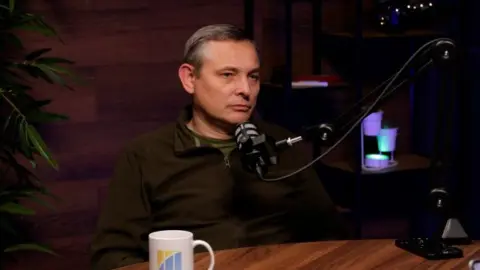
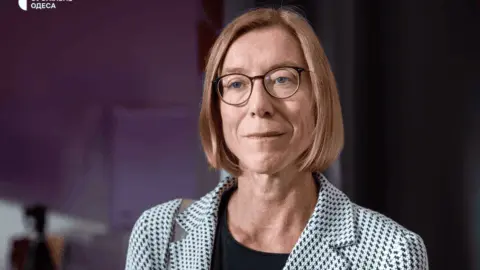
Individual implants, 3D-printed titanium structures, and complex limb reconstruction surgeries – these technologies are already being used at the Main Military Clinical Hospital. How do doctors find solutions for treating severe combat injuries, and what experience do Ukrainian physicians share with their foreign colleagues? In an interview with ArmyInform, Yurii Yarmoliuk, Head of the Injury Clinic at the Main Military Clinical Hospital of the National Military Medical Clinical Center, Chief Traumatologist of the Armed Forces of Ukraine, Honored Doctor of Ukraine, and Colonel of the Medical Service, discusses these issues. This was reported by Gazeta.ua.
Yurii Oleksandrovych is not only the Head of the Injury Clinic and Chief of the Armed Forces of Ukraine’s Traumatology Service, but also an active researcher. He is a professor at the Department of Orthopedics and Traumatology of the O.O. Bohomolets National Medical University, holds a Doctor of Medical Sciences degree, and is a recipient of the State Prize of Ukraine in Science and Technology. He has authored 42 articles, 12 methodological guidelines, three innovation proposals, three monographs, and nine patents.
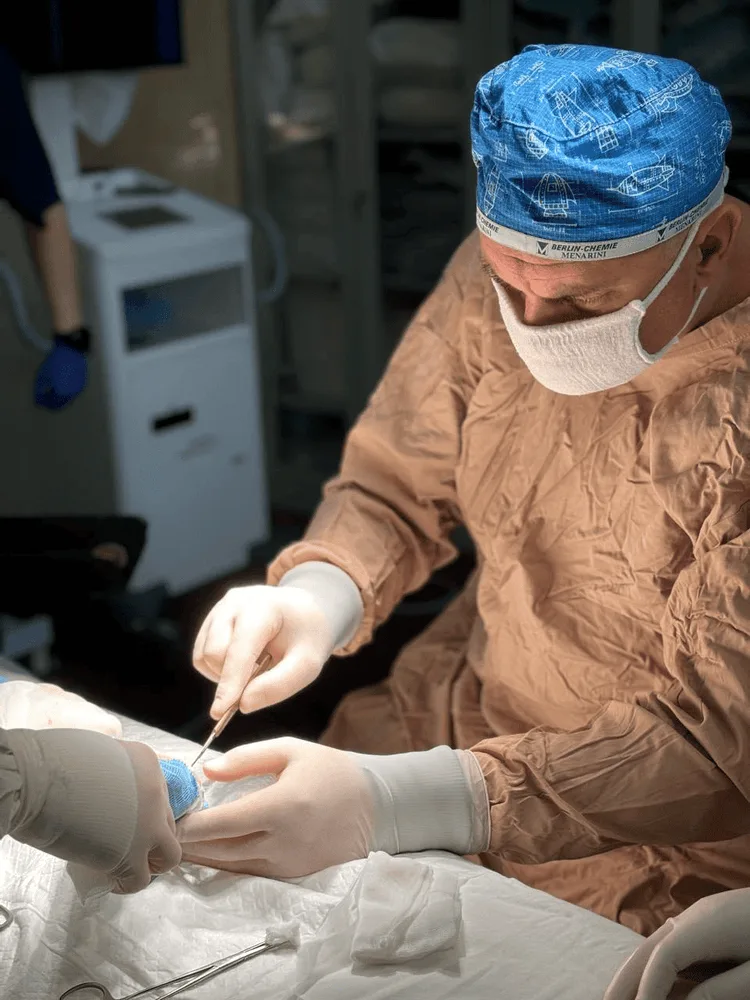
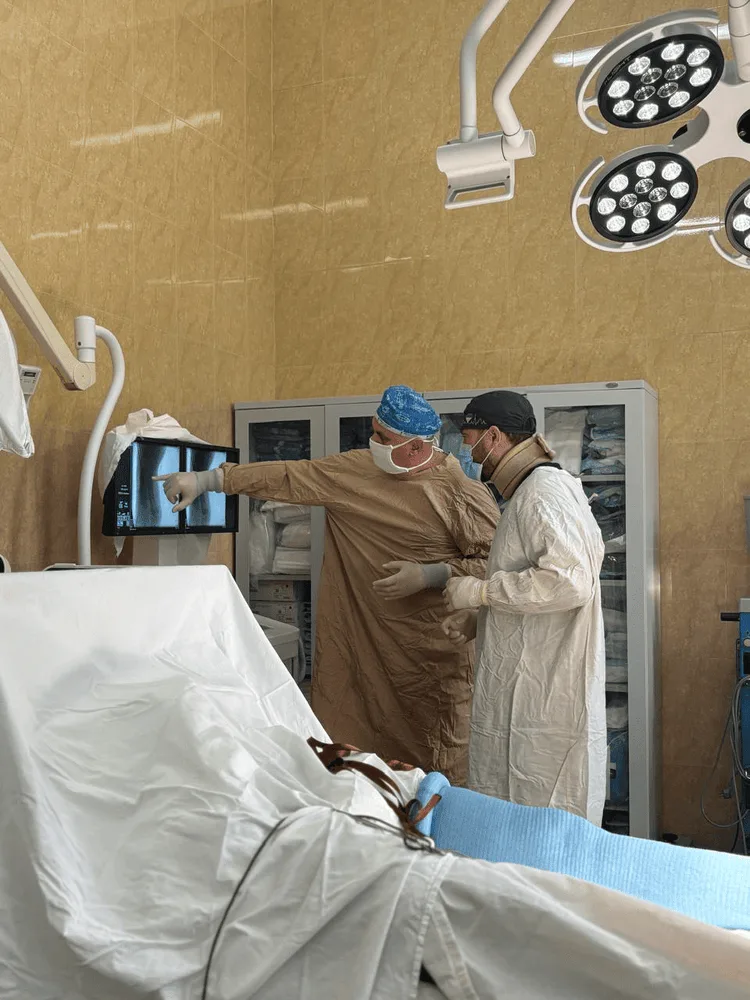
You took over the Injury Clinic in February 2022, shortly before Russia’s full-scale invasion. What was that like?
War is always an enormous challenge and a source of intense stress for everyone. At that time, we had to quickly reassess the new tasks and requirements facing the head of the clinic and the traumatology service. We also needed to coordinate with leading traumatologists in different regions to ensure smooth cooperation and a unified approach to treating wounded personnel.
Everyone understood that the challenges facing the traumatology service during the full-scale war required new solutions. At the same time, to be frank, since 2014, traumatologists in the Armed Forces of Ukraine had already gained considerable experience in treating combat-related limb injuries. Back then, during the Anti-Terrorist Operation (ATO), many of our patients had sustained combat injuries similar to those we see in today’s war.
Nevertheless, the scale of our work changed dramatically in 2022. The number of wounded and injured service members increased sharply, and the injuries themselves became much more severe.
Wounded service members accounted for approximately 55–60 percent of patients, so we had to involve not only traumatologists but also specialists from other surgical fields and physicians specializing in internal medicine.
Another important development was that the treatment of wounded personnel, including patients with injuries within our specialty, began to involve not only military but also civilian healthcare facilities. The effective coordination of this process by the Medical Forces Command made it possible to bring together the capabilities of military and civilian medicine.
This led to the establishment of a Unified Medical Space, in which medical care is provided by both military and civilian traumatologists, with specialized institutes also actively involved according to their respective areas of expertise and specialization.
This made it possible to develop a common approach to organizing medical evacuation, making rational use of personnel and resources, and providing specialized treatment for extremely complex conditions that we refer to as combat-related limb injuries.
What is the main difference between the full-scale war and the ATO period for you personally as a traumatologist?
Without a doubt, not only has the number of patients increased significantly, but so has the severity of their injuries. We are dealing with high-energy trauma that causes extensive destruction of limbs and results in major bone and soft-tissue defects. Naturally, the number of complications has also increased.
While gunshot and shrapnel wounds were predominant between 2014 and 2022, combined injuries have now become more common, particularly those caused by FPV drones. Such injuries often involve extensive shrapnel damage, a blast component, and thermal trauma.
Essentially, we are dealing with gunshot polytrauma, in which skeletal injuries or even limb loss are among the components.
Mine-blast, combined, and multiple injuries have unfortunately become part of our daily work.
Providing specialized care to such patients is only possible through the efforts of a multidisciplinary team. Today, a tiered medical care system is in place, with the level of care determined by the nature of the injuries and the treatment required.
The National Military Medical Clinical Center currently provides Level IV medical care – specialized treatment. At the same time, in certain clinical situations, evacuations are targeted to ensure that patients receive the necessary level of care as soon as possible after being wounded.
As a result, the number of elective surgical procedures, such as arthroscopic surgery and joint replacement, has decreased significantly. However, we continue to perform these operations; there are simply fewer of them than there were before the war.
You mentioned the first months of the full-scale war.
The first months of Russia’s full-scale invasion were extremely difficult. I remember that for several months, not only traumatologists but also most other doctors practically never left the hospital grounds: the influx of wounded defenders of the Kyiv region was enormous.
For a certain period, our access to the usual evacuation routes was partially restricted, and we had to operate in an “all-in-one” mode. This meant providing a complete cycle of care, from stabilizing wounded personnel brought directly from the battlefield to our military medical facility to performing the necessary surgical procedures.
After the liberation of the Kyiv region, we gradually began restoring and establishing systematic processes: cooperation between medical facilities, the principles of the Unified Medical Space, the specialization of patient care according to the nature of injuries, as well as pathways for further treatment and rehabilitation.
This allowed us to move from working under extreme pressure to a more systematic model of care, in which each stage of treatment has its clearly defined place.
Amputations are something that many military doctors find particularly difficult to come to terms with. How many patients arrive at your clinic with limbs already amputated?
I can say that the number of patients with amputations has unfortunately increased. Such injuries occur for various reasons.
The first is traumatic limb amputation as a result of combat injuries. The second is the so-called tourniquet syndrome: if a hemostatic bandage or tourniquet is applied for an extended period, irreversible tissue damage may occur, which can subsequently become an indication for amputation.
The decision on the level of amputation is made individually, based on the condition of the tissues and the specific clinical situation. The assessment and surgical treatment of such patients involve leading specialists, including surgeons, traumatologists, and vascular surgeons. These decisions are generally made collectively, during a medical consultation.
There are also other complex situations in which a limb is technically preserved but has lost a significant part of its functional potential. This may involve a lack of nerve activity, anatomical damage to blood vessels, extensive soft-tissue injuries, or major bone defects.
In such cases, preserving the limb may not be advisable, as it can complicate the course of traumatic illness without providing adequate function.
Another condition worth mentioning is crush syndrome, which develops after a person has been trapped under rubble for an extended period. Other complications include sepsis and osteomyelitis. In these situations, amputation sometimes becomes a necessary stage of treatment because the affected limb may pose a threat to the patient’s life.
How do you personally cope with such decisions – both as a person and as a doctor – when it comes to amputation?
Any traumatologist probably derives the greatest professional satisfaction from elective work: orthopedic procedures and treating the consequences of injuries, when you restore function and give people the opportunity to live full lives again.
This is truly the creative side of our profession: you are not simply treating an injury but restoring a person’s lost functional abilities.
However, war confronts us with entirely different and extremely difficult challenges. The decision to amputate is never an easy one – neither for the doctor nor for the patient. It carries enormous responsibility and is a profound moral ordeal.
When making such decisions, of course, we assess all the circumstances, risks, and threats to the patient’s health and life. The main priority is no longer simply to preserve a limb at any cost, but to save the person’s life.
In such situations, the choice is often clear: when faced with a choice between a limb and a patient’s life, we choose life.
But it is important to understand that amputation is not the end of a patient’s story. Today, medicine offers far more opportunities for people to return to active and fulfilling lives.
This is not just the work of a surgeon. It is a comprehensive process in which rehabilitation physicians, physical therapists, prosthetics specialists, and the entire multidisciplinary team play an important role. Each patient needs an individual rehabilitation programme that takes into account their injury, functional abilities, and personal life goals.
Modern prosthetic technologies are also developing rapidly. Today, we are talking not only about conventional prostheses but also about biotechnological solutions, including osseointegrated prosthetics, which are already being introduced in Ukraine. This is a promising field, but it requires a very careful approach: proper patient selection, comprehensive follow-up care, and continued accumulation of practical experience.
As a senior colleague, you stay in touch with traumatologists working in different regions. Is professional burnout a pressing issue today?
Professional burnout is undoubtedly a pressing issue. It is widespread everywhere: in Kyiv, Vinnytsia, and Lviv, and particularly among colleagues working closer to the line of contact.
We try to support one another. At the same time, psychological support groups are now available, and doctors can seek help from specialists in this field whenever they need it.
In coordination with the Medical Forces Command, leading traumatologists from different regions meet once a quarter to discuss current issues related to the treatment and assessment of combat-related limb injuries.
These meetings take the form of professional training events, including mini-conferences, workshops, discussions of complex clinical cases, analysis of errors and complications, and demonstrations of the latest technologies and opportunities for introducing them into clinical practice.
These meetings result not only in methodological guidelines but also in academic publications, articles, monographs, and the implementation of new technologies.
If I personally notice signs of burnout in one of my colleagues, I try to speak with them one-on-one, listen to them, and understand what exactly is troubling them. Sometimes, a simple conversation and the feeling that someone is there to support you can make a tremendous difference.
Another major challenge is the limited opportunities for professional development among medical staff who are constantly working on the medical front line.
This is indeed a real problem. Doctors who work continuously in combat zones or very close to the front line have fewer opportunities for structured training, attending conferences, or participating in internships. At the same time, they are the ones gaining invaluable experience in treating combat injuries, which is unique today.
I am convinced that, with determination and a genuine desire to develop professionally, any doctor can find opportunities to advance their skills, introduce modern technologies, and put new ideas into practice.
At the same time, we cannot deny that doctors working in specialized medical facilities have greater opportunities for research, analysis of treatment outcomes, and the development and implementation of new practice-oriented projects, as these facilities have the necessary conditions and resources.
At the Injury Clinic, I try to create conditions in which both doctors and patients can feel confident that surgical treatment is provided to modern standards and in line with international approaches.
We are introducing modern techniques for using external fixation devices combined with limb-lengthening technologies (performing several osteotomies) and deformity correction, as well as various bone transport techniques. In addition, we are implementing modern approaches to treating chronic post-traumatic osteomyelitis caused by gunshot wounds, using intramedullary scaffold spacers.
Our clinic has also introduced advanced approaches to bone grafting using domestically produced and international antibiotic-impregnated allografts to treat and prevent bone infections.
We systematically document all these developments, publish them in methodological guidelines and monographs, and present them at professional conferences.
How does our traumatology service compare with international standards?
I can say that today, Ukraine’s traumatology service is operating at a very high level. Colleagues from the United States, Israel, Germany, Austria, Poland, England, and other countries where I have had the opportunity to present our experience in treating modern combat injuries have praised the quality and standard of care we provide. We have also received an invitation to present our experience at the Congress of Scandinavian Countries, which will take place in the autumn of 2026.
In my opinion, we are not simply trying to meet international standards – in certain areas, we are already developing new approaches and contributing our own experience. Colleagues come to Ukraine to learn about our methods and approaches to treatment.
Recently, I had the opportunity to visit the United States, where I gave presentations in Boston and Cambridge, including at a leading hospital in Massachusetts, as well as to doctors, postgraduate students, and residents at a university in Providence, Rhode Island.
Overall, during my visit to the United States, I delivered eight presentations on modern combat injuries. Each lecture was followed by in-depth professional discussions.
Our American colleagues showed great interest in this experience. Of course, they also treat gunshot wounds, but the nature of these injuries generally differs from the high-energy trauma with extensive tissue defects that we deal with every day in wartime conditions.
I also had the opportunity to visit a rehabilitation centre in Florida, where many of our service members had undergone rehabilitation and prosthetic fitting following amputations. We saw the entire recovery process, from rehabilitation to advanced prosthetics.
I would also like to highlight a meeting in Texas with our compatriot Andrii Bachynskyi, who heads a research institute and works on developing new medical approaches and technologies for treating polytrauma and its complications. Naturally, I also presented our own research and practical experience in treating complications of combat-related limb injuries.
Today, the Injury Clinic of the National Military Medical Clinical Center (NMMCC) “Main Military Clinical Hospital” is a team of like-minded professionals engaged not only in clinical practice but also in active research. Some of the clinic’s doctors are postgraduate students at the Department of Traumatology and Orthopedics of the O.O. Bohomolets National Medical University and conduct their own research, the results of which are published in academic journals.
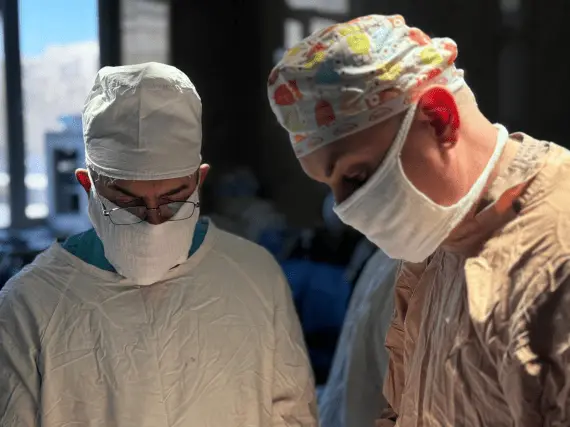
We are introducing 3D modelling technologies and custom-made implants, as well as developing and applying modern bone grafting techniques and technologies. Together with microsurgeon Yevhen Symulyk from the O.O. Shalimov National Institute of Surgery and Transplantology, we participate in complex microsurgical procedures, including the transfer of the fibula with a soft-tissue flap on a vascular pedicle to reconstruct extensive defects of the upper arm.
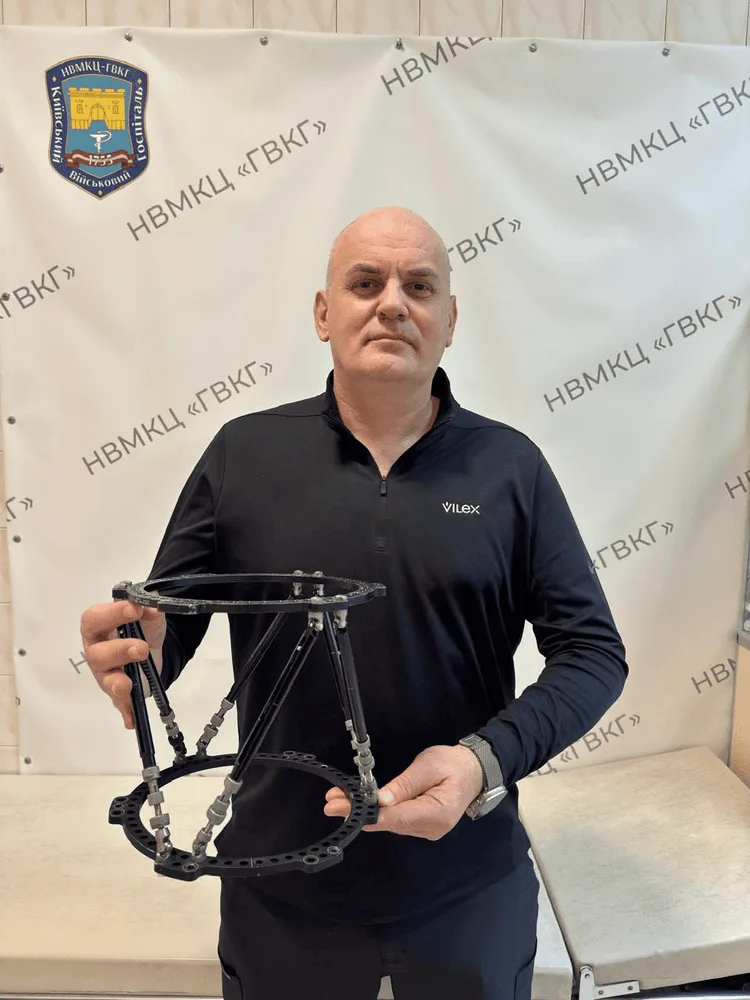
We are also actively introducing modified Ilizarov frame techniques, which help improve treatment outcomes and shorten patients’ recovery times.
Do you see a new generation of military traumatologists emerging?
Yes, absolutely. I personally support doctors who strive for professional development, are open to new knowledge, and want to grow. This gives us confidence in the future of our service.
A modern doctor should be motivated not only to carry out their daily clinical work but also to engage in research, analyze their own experience, seek new solutions, and introduce modern technologies.
Continuous professional development, a willingness to learn, and the ability to implement new approaches are precisely what reassure us that we are moving in the right direction.
Are there any patients who have left a particularly strong impression on you?
There are many. But perhaps the most rewarding patients for a doctor are those you follow from the beginning of treatment through to its completion, allowing you to see the final outcome.
When you remember the condition a person was in when they first came to you, everything they went through, and all the difficult stages of treatment, and then see how much they have changed by the end of that journey – that is when you feel truly fulfilled in your work.
What is most upsetting is when you invest not only your professional knowledge but also a part of yourself in a patient, and go through a lengthy course of treatment with them – sometimes lasting a year or even two – only for them to disappear, for example, by no longer staying in touch. You are then left not knowing what the outcome of all that painstaking work was.
And the outcome is always important, whatever it may be: highly positive, satisfactory, or even unsatisfactory. Only through follow-up feedback can we understand what was done right, where all the necessary factors for improving the outcome were taken into account, and how we can provide even better care to the patient next time.
One final question: How do you envision the future of traumatology?
This is a very interesting topic for discussion. Without a doubt, the future of traumatology will be shaped by innovative approaches, technological solutions, and personalized treatment.
We are already seeing advances in areas such as custom-made implants and constructs, modern limb reconstruction techniques, robotic systems, and navigation technologies. Many of these technologies have already been introduced around the world, but they require further study, adaptation, and development.
These innovations do not necessarily need to be implemented in every clinic, as this requires appropriate equipment, specialist training, and significant resources. However, high-tech centres have been established and are continuing to emerge around the world, where patients already have access to such innovative capabilities.
We are already carrying out ambitious projects, including at our Injury Clinic, involving the use of 3D-printed titanium constructs to fill complex bone defects, particularly those resulting from injuries to the limbs and pelvic region. This makes it possible to develop customized solutions for individual patients.
Another important area is reconstructive surgery. The transfer of tissue complexes on vascular pedicles has already become part of our daily practice, but this field is also constantly evolving, with techniques and opportunities for functional recovery continuing to improve.
Modern navigation systems in orthopedics, particularly for complex joint surgeries, are also advancing rapidly, making it possible to improve the precision and predictability of treatment.
But the most important thing is continuous learning. Modern traumatologists must constantly develop professionally: study new technologies, learn from international experience, and critically assess which techniques genuinely improve patient outcomes.
The future of traumatology lies in combining a doctor’s experience, cutting-edge technologies, and a personalized approach to each individual.