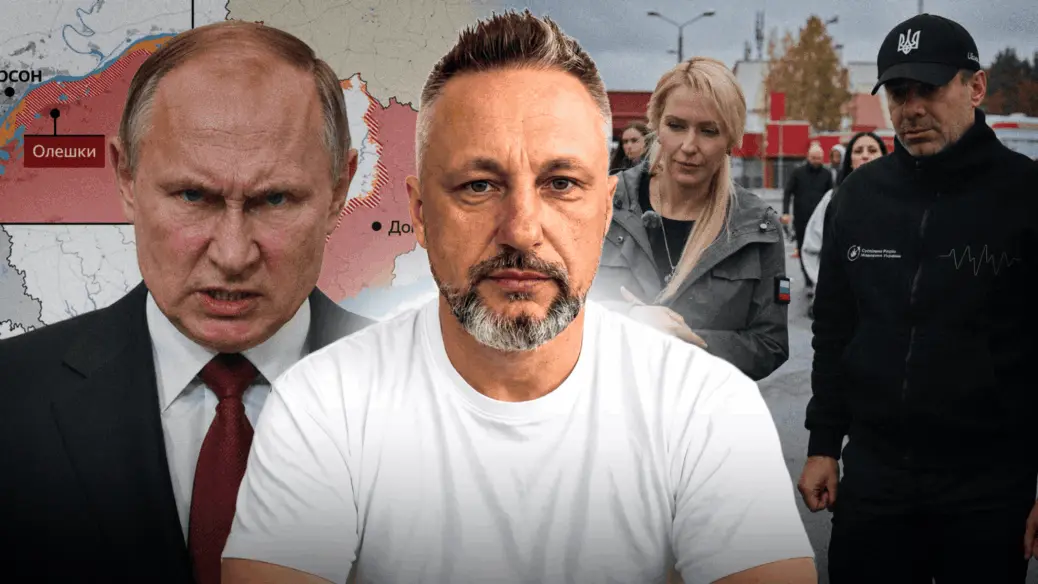
Petro Andriushchenko discusses the risks of the Oleshky ceasefire, threats to Ukrainian children, Russia’s mobilisation and propaganda, the prospects for unrest, and Ukraine’s strikes on Russian military logistics and oil refineries.
A ceasefire in Oleshky could become not only an opportunity to save civilians but also a trap that Russia could exploit for its own interests. Amid the evacuation of Ukrainians from the occupied territory, risks include child abductions, changes in the positions of Russian troops, and a large-scale information provocation involving foreign journalists.
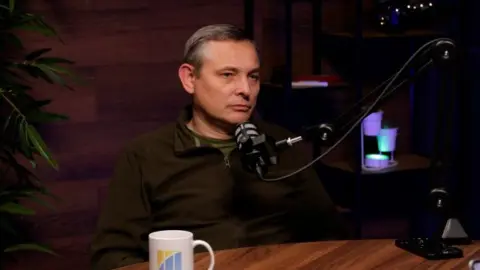
Petro Andriushchenko, head of the Centre for the Study of the Occupation, explained in an interview with 24 Kanal how Russia could use the situation in Oleshky to discredit Ukraine, why Kyiv risks losing the information war, and what the raids targeting conscripts in Moscow indicate. He also assessed the consequences of Ukrainian strikes on Russian military logistics and oil refineries.
The “Ceasefire” Trap in Oleshky: Evacuation, Children, and the Risk of an Information Provocation
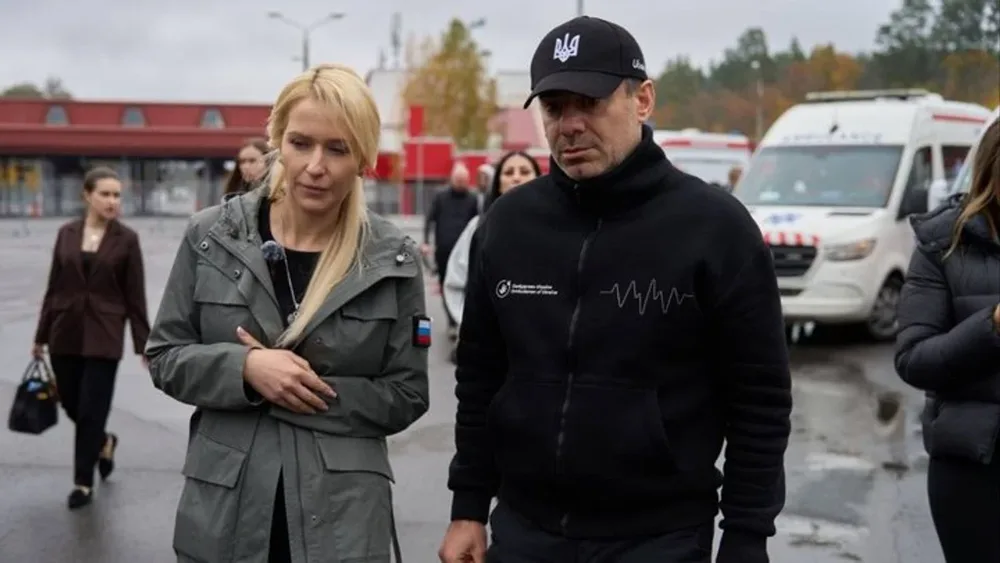
Melania Trump said that a ceasefire between Ukraine and Russia in Oleshky had taken effect, and that the truce had been extended beyond the city to ensure the safety of humanitarian convoys. Meanwhile, the Financial Times reports that Ukrainians may initially be evacuated to Crimea and then taken to Russia. Their fate afterward is a cause for concern. What do we need to understand about this gesture of goodwill on Russia’s part? What risks does it pose, and how could Russia exploit the situation for its own interests?
There are many risks, in fact. For the past few days, this has been practically the only thing we have been discussing. I think we are losing sight of certain aspects, and that could have consequences.
First, the positive development is that the ceasefire in the Oleshky area has been extended and expanded to neighbouring areas. This is very important. The Russians have begun spreading the claim that people travelling to Oleshky from other areas could come under fire. They argue that such movements have not been coordinated with the Russian authorities and would be treated as military operations because the ceasefire does not apply to neighbouring territories.
This primarily concerns Hola Prystan, located 20 kilometres from Oleshky. The situation there is essentially the same, but the city has not been mentioned in media coverage or in the agreements. Meanwhile, people are trying to find routes to Oleshky so they can be evacuated.
The second risk is that it remains unclear exactly how people will return to territory controlled by Ukraine. It is logical to assume that they will be transported across the Dnipro River. This would indeed require a wider ceasefire zone and a clear understanding of how the evacuation will be carried out.
If people are returned via another agreed route, they will have to cross all of Russia and then enter Ukraine through Belarus. This would be a much more complicated journey for a humanitarian mission.
The greatest risk for us concerns children. The day before yesterday, Dmytro Lubinets stressed that Ukraine has a procedure for the compulsory evacuation of children and families with children from frontline areas to territory controlled by Ukraine. But how can this procedure be applied to Oleshky?
It is occupied territory, although it is located close to the front line. How can Ukrainians be forcibly evacuated from there? At the same time, Lantratova stated that the evacuation must be voluntary and that children should not be discussed at all. Lantratova is a criminal and an accomplice in the abduction of Ukrainian children.
The risk is that the Russians could take our children away. This would cause widespread outrage, rule out the possibility of using Oleshky for further humanitarian operations, and undermine trust in the Ukrainian authorities.
The final risk is the arrival of a large number of foreign journalists in occupied Oleshky. These include American and European media representatives. Our sources mentioned Tucker Carlson, who could be brought in to convince foreign audiences that Ukrainians had imposed a blockade and committed genocide.
I do not see us taking adequate measures to counter this. There is no information indicating that Ukrainian journalists have received accreditation or been included in the trip to show what is actually happening in Oleshky. This means we have found ourselves in a weak position.
Military personnel on the Kherson front are not particularly happy with this ceasefire because they understand how the Russians could exploit it. They will have an opportunity to reposition their forces and improve their positions.
Today, this is a classic trolley problem. At the same time, the positive aspect is that the ceasefire has been extended to a larger area. This will allow people in Kherson Oblast to move around more safely and replenish their supplies. The ceasefire will also fully apply to the part of the Dnipro’s right bank controlled by Ukraine. Kherson, Beryslav, and other settlements will be able to catch their breath and build up the necessary supplies for the period after the ceasefire ends.
What Will Russia Show the World in Oleshky, and How Ukraine Is Losing the Communications Battle
And as for foreign journalists, what will they show the world? Will it be the same as in Mariupol? They certainly won’t talk about what the Russians have turned Oleshky into. Where will they find undamaged places to film? In Mariupol, we saw them showcasing individual buildings that had supposedly been rebuilt. What will they show in Oleshky?
And this is where we find ourselves caught in our own trap. Most of the destruction in Oleshky will have been caused by strikes from our side. And it is clear why. When the Russians occupy a high-rise building from which they terrorise people in Kherson, it is obvious that sooner or later it will be hit. And the strike will come from our side. That is precisely what they will show.
We will reap the consequences of a global failure in the state’s communications strategy because we are keeping this problem under wraps.
At the same time, the question arises: what should Oleshky look like during a war? People made their own decision to remain under occupation. Our people understand what is happening, who is to blame, and why strikes are being carried out from the Ukrainian side.
They say, “Hit them harder so we can return home as soon as possible.” We should not keep this problem under wraps. We need to call things by their proper names: the Russians are using civilians as cover. That is why we are forced to act with the utmost caution, and infrastructure suffers as a result.
We cannot persuade all civilians to evacuate. But if we stop carrying out strikes altogether, the consequences could be catastrophic, potentially even leading to the loss of Kyiv in three days, with enormous loss of life.
Tucker Carlson could exploit this situation. It seems that he considers even Hitler an acceptable figure. The Russians will continue to fuel this narrative. Lantratova is not afraid to engage in public confrontations and then negotiate with Lubinets.
She accuses the Ukrainian army, claiming that it alone is to blame for everything. Meanwhile, we remain silent. International media pick up Lantratova’s statements and spread them around the world. Yet there are no corresponding comments from Lubinets that could serve as a counterargument.
We must draw conclusions now to prevent this situation from happening again. We need to understand that Melania Trump is willing to help secure a ceasefire if communication is handled properly.
We can then turn to Kamianka-Dniprovska, Enerhodar, and our own Nikopol. We need to start taking a tougher stance now, including at the level of Ukrainian officials. We continue to play the neutrality card, but it is not leading to anything good.
Raids Targeting Conscripts in Moscow: Why Mobilisation Has Reached Russia’s Capital
In conversations with people who call him, Putin says he will not give up Donbas. What unrealistic plans for capturing it is he still pursuing? Raids targeting conscripts are already taking place in Moscow. Security forces have stepped up operations to identify young men of conscription age and send them into the military. These raids have now reached the Russian capital. Does Putin believe this will help him achieve his goals?
This was bound to happen, in fact. Moscow is no exception. These people are registered as residents of Moscow, but they will serve in the army just like everyone else. Nothing will save them.
The fact that these raids have begun and are being documented in Moscow is a very telling signal. It means that Putin is not afraid to launch such operations even in the capital and show the entire country what lies ahead for it.
There is also St Petersburg, and I think it is only a matter of time before similar raids begin there. Those who left Russia in 2022 fearing mobilisation and later returned may now also find themselves among the first to be sent into the military.
Even 18-year-olds are being drafted into the army. A similar situation is unfolding for women, who are being recruited into military service as extensively as possible. Mobilisation has now reached Moscow.
Russia is running out of resources, and the Kremlin has no other way out. Meanwhile, Russian army losses are increasing.
I can no longer even remember the last time Russian losses fell below 1,000 in a single day. Now I cannot recall when they dropped below 1,500. This means we may soon see 2,000 losses a day.
This is the death throes of Putin’s regime. Yes, things are difficult for us. Yes, the Russians are launching strikes. But overall, this does not fundamentally change the situation: the front line remains where it was. Moreover, we are gradually advancing and liberating territory, including in the very Donbas that Putin is so unwilling to give up.
But there is no need for him to give it up – we will take it back ourselves. All that is needed is time, patience, and perseverance.
The Likelihood of Unrest and the Latest Strikes on Oil Refineries and Military Logistics
Does Putin really believe that raids targeting conscripts will help him? But now that they have reached Moscow and St Petersburg, surely this must provoke some outrage among local residents?
No, no, nothing of the sort will happen there. Over the past twenty years, Russians have gone through several transformations, but none of them has led them to start protesting. For that, you need at least some citizens, even if they are not particularly politically conscious. In Russia, however, virtually nothing remains beyond the population itself.
They still live somewhere between Raskolnikov and Gerasim from Mumu. They wanted to restore the Russian Empire, and that is exactly what they got. But those who dreamed of becoming imperial masters forgot that there is a small group consisting of the emperor and his inner circle, while everyone else is mere rabble. And this rabble does not know how to rebel. It is content with what it has.
A person thinks: “If I go out and protest, they’ll definitely send me on a meat-grinder assault. But if I stay home and keep quiet, maybe I’ll even be given a white Lada.” There is no one there who could organise a rebellion, and there is no foundation on which to build one.
There will be no protests.
Yurii Fedorenko described Ukraine’s strikes on rubber industry facilities as highly successful. How do you assess the latest attacks? At the same time, there are warnings that Russia could launch a massive combined strike within the next 48 hours. Kyiv is coming under ballistic missile attacks, while Russian oil refineries have been burning fiercely over the past week.
First, we should not oversimplify the situation. Just because something did not catch fire today does not mean it will not tomorrow. There are aspects of air defence that we cannot see. For example, Ukraine attacked data centres in Melitopol. We have not seen Russian air defence operating at such intensity in that area for a long time.
What does this mean? Russia has managed to strengthen its air defence and redeploy additional missiles to the Azov Sea region. The main corridor we used for our strikes ran precisely through the Melitopol area. Otherwise, reaching Russian oil refineries would simply be impossible.
First, we need to break through the first line of air defence. The Russians have now strengthened it. At the same time, strikes on data centres and facilities in occupied territories close to the front line continue. I would like to see breaches in Russian bridges.
I have two favourite bridges in Rostov Oblast that we have already struck. I would like them to simply cease to exist. Then we could see how the Russians would transport military equipment across the Don without a railway connection.
Our intelligence services and the Unmanned Systems Forces are working on specific tasks and targets. There will definitely be surprises. For now, our military-industrial complex is not powerful enough to launch simultaneous large-scale attacks on targets in occupied territories and disable Russian oil refineries. That is why we all need to work harder and donate more actively.