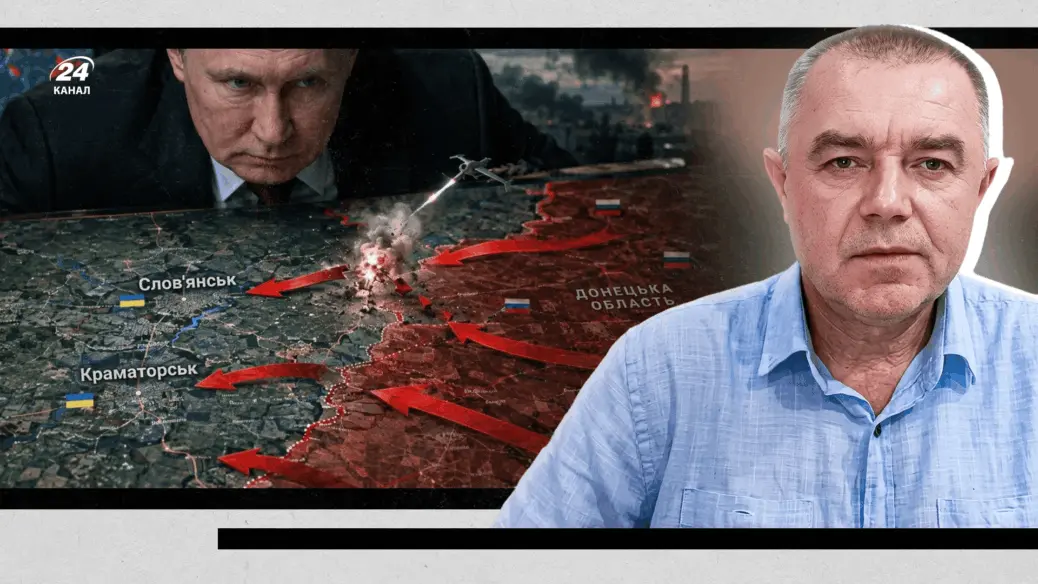
Roman Svitan discusses the risks of pausing strikes on Russian oil refineries, Starlink restrictions, frontline developments, attacks on data centers, and the growing role of interceptor drones.
Ukrainian strikes on Russian oil refineries have become one way to disrupt fuel supplies to the occupying army. However, no new attacks on major oil refineries have been observed in recent days, while Russia continues to strike Ukraine’s energy infrastructure.
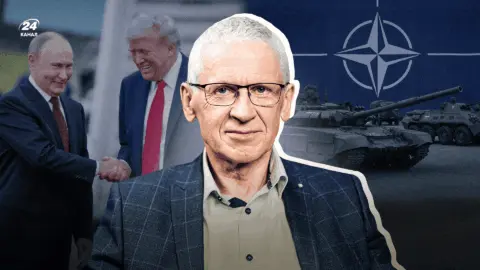
Roman Svitan, a reserve colonel in the Armed Forces of Ukraine, flight instructor, and military expert, explained on 24 Kanal what risks such a pause could pose to Ukraine. He also analyzed Starlink restrictions, changes along key front-line sectors, and the capabilities of Ukrainian drones to counter Russian aircraft.
Russian Oil Refineries Have Been Given Time to Recover
Explosions were reported again in Russia’s Rostov region on the night of October 14, near the Novoshakhtinsk Oil Refinery. At a nearby oil terminal that had already been hit, new storage tanks caught fire. However, as Svitan noted, there had been no new attacks directly targeting major Russian oil refineries since October 10.
The pause raises questions, as Russian forces continue to attack Ukraine’s combined heat and power plants, gas infrastructure, and other energy facilities. Meanwhile, there have been no public reports of agreements that would require Ukraine to halt its strikes on Russian oil refineries.
“Strikes on oil refineries have stopped, while the same number of missiles and drones keep coming at us. I’ll go further: even more are coming. Specifically, they are targeting combined heat and power plants, gas transmission infrastructure, and other energy facilities. No one has even raised the issue of halting strikes on Russia’s oil industry. At least, there has been no discussion of this in the public sphere,” Svitan stressed.
The military expert suggested that the pause may be intended to prevent Ukraine’s leadership from coming into conflict with Donald Trump over his arrangements involving Russian diesel fuel. However, he said he did not know whether an order to halt the strikes had been issued or who might have issued it.
Among the possible motives behind the U.S. president’s actions, Svitan cited business interests linked to Russian oil companies. In particular, he speculated that Trump might have an interest in Lukoil’s assets, while acknowledging that he did not know the details of any potential negotiations or deals.
The military expert sees the greatest danger in the possibility that damaged Russian facilities could gradually resume production. According to his rough estimate, Russia had more than 30 major oil refineries in operation: around 10 had been put out of action, another 10 or so were undergoing repairs, while the rest continued producing fuel.
Even a week without further strikes could allow some refineries to make progress in restoring their capacity. Svitan doubts that Russia would primarily direct any additional diesel fuel to the United States, which already has sufficient domestic supplies.
“If we stop striking them for a week now, even the 10 refineries that are currently shut down will begin repairs. The 10 that are already undergoing repairs will resume production. Where will the diesel go? Do you think it will go to the American market? There is enough fuel there already; nobody needs it. This diesel will go to the Russian army,” the military expert explained.
Additional volumes of Canadian diesel fuel could also reach the U.S. market, with Svitan estimating these supplies at approximately one million barrels per day. He therefore links the resumption of Russian production primarily to the risk of improved fuel supplies for the occupying forces.
For this reason, the military expert has the most questions for the command responsible for conducting combat operations. He believes it is necessary to explain why strikes on major oil refineries have stopped, as he considers attacks on oil processing facilities one of the main ways to weaken the Russian army.
Starlink Restrictions Could Disrupt Ukrainian Military Operations
Another concern has emerged following reports of changes to the operation of Starlink satellite internet. Serhii Beskrestnov, an adviser on unmanned systems, reported restrictions affecting certain SpaceX connectivity plans, while Serhii Sternenko drew attention to terminals disconnecting when drones were moving at high speeds.
Initially, reports indicated that Ukrainian drones began losing connectivity at speeds of approximately 160 miles per hour. Later, reports emerged of problems at speeds of 60–70 miles per hour as well. For unmanned systems that rely on Starlink during combat missions, such restrictions could pose a serious obstacle.
Svitan recalled that Ukrainian forces conducted operations even before SpaceX introduced its satellite internet service. However, under the current circumstances, some missions, particularly offensive operations, may need to be reconsidered if their execution depends on a stable connection.
“We now simply need to hold on for at least a few weeks. It is very difficult, extremely challenging, but necessary. Certain activities, such as offensive operations involving Musk, simply need to be suspended, understanding that they will be disrupted,” Svitan noted.
The expert links possible changes in cooperation with American technology companies to the upcoming U.S. congressional elections. He hopes that the political situation may change after the vote, giving American lawmakers greater opportunities to influence decisions made by the Trump administration.
In his view, Elon Musk must also take the position of the U.S. government into account, as his companies’ operations depend on their relations with government institutions. Therefore, Svitan does not rule out a return to full cooperation if the political balance in Washington shifts after the elections.
The timely warning of ballistic missile attacks remains another pressing issue. Following strikes on Kyiv, a debate emerged over delays in air raid alerts. Ukrainian Air Force spokesperson Yurii Ihnat explained that no warning had been issued ahead of one attack, while a warning was issued before the next.
Svitan pointed out that residents of cities near the front line have long lived with limited time to respond to missile threats. He compared the situation in Kyiv with the difficulties that Kharkiv, Dnipro, and Kherson have faced on an ongoing basis.
“For the fifth year, people in other cities have been living under the same conditions, without Patriot systems and without any real protection. Only Kyiv had been protected. Now Kyiv is simply being brought to the same level as Kharkiv, Dnipro, and Kherson. There is nothing unusual about this, at least in that respect. We simply have to adapt to these circumstances,” the military expert said.
At the same time, Svitan provided no evidence that the problems with alerts had been caused by a deliberate restriction of U.S. intelligence sharing. He suggested that difficulties in transmitting information could persist for some time until the political situation in the United States changes.
The military expert sees Congress as playing an important role in continued support for Ukraine. Mechanisms for influencing the administration could be particularly effective during the adoption of the U.S. budget for the coming year, when lawmakers would have an opportunity to raise issues concerning military and technological cooperation with Ukraine.
Counterattacks Near Lyman Undermine Russia’s Plans
Ukrainian forces continue counterattacking in the northern part of Donetsk region, where Russian command had previously sought to create a threat of encircling the Sloviansk-Kramatorsk urban agglomeration. Andrii Biletsky, commander of the Third Army Corps, and the analytical project DeepState reported changes along the front line, particularly near Zelena Dolyna and Kolodiazi.
The gains involve nearly 100 square kilometers of territory where Ukrainian forces have made progress. Svitan praised the actions of the Third Army Corps, which is narrowing the Russian salient north of Lyman and gradually straightening the line of engagement.
Reducing the length of the front line allows Ukrainian forces to concentrate more troops along a shorter defensive sector. This creates more favorable conditions for repelling Russian attacks and potentially advancing further.
“They are straightening the front line. They are doing the right thing. First, eliminating such a salient reduces the width of the front, probably by almost half. And when the front becomes narrower, the density of our troops increases, creating an opportunity to push the Russians beyond the Chornyi Zherebets River,” Svitan explained.
Further operations will depend on the balance of forces and the characteristics of the terrain. The next natural defensive line beyond the Chornyi Zherebets is the Krasna River, but advancing toward it too quickly could create additional risks for Ukrainian units.
Although the Chornyi Zherebets is a small river, dams and lakes in certain areas make troop movements more difficult. Therefore, the goal is not only to advance but also to secure positions from which Ukrainian forces can repel potential counterattacks by Russian reserves.
Svitan considers the most appropriate option at this stage to be securing a favorable defensive line and preparing defensive positions. At the same time, he emphasized that this is his personal assessment of the situation, based on the local geography rather than information about the Ukrainian command’s plans.
“The best option at this stage is to reach the Chornyi Zherebets River, secure the positions, build fortifications, and meet the main offensive force of Russian reserves from more favorable positions. Most likely, that is what will happen. This is the logic of the situation, not inside information, but simply an attempt to read the battlefield,” the military expert stressed.
Russian forces are also facing difficulties in the Oskil direction. Ukrainian units, including the Khartiia Corps, are putting pressure on the occupying forces, which are trying to hold their positions on the river’s right bank. For Russian forces, withdrawing across the Oskil could mean returning to a more advantageous defensive line.
Svitan does not rule out the possibility that, by the end of the year or the conclusion of the current military campaign, Ukraine’s Defense Forces will be able to hold the right bank of the Oskil and reach the right bank of the Chornyi Zherebets. Such a development could prevent Russia from implementing its earlier plan to encircle Sloviansk and Kramatorsk in the near future.
“This effectively eliminates the strategic prospect of encircling Sloviansk and Kramatorsk in the near future. This is what the ‘Third Corps’ has been working on. Why is this so important? On the one hand, these may appear to be tactical actions, but they lead to serious strategic miscalculations by the Russian General Staff,” Svitan explained.
The Russian offensive plan depended to a large extent on the ability to cut the road connection between Sloviansk and Izium. The occupying forces’ subsequent operations south and southwest of the urban agglomeration were planned around this objective, but Ukrainian counterattacks are forcing Russian command to reconsider its plans.
One possible option for the occupying forces remains an advance toward Sloviansk from the direction of Bakhmut and Kostiantynivka. However, Ukrainian troops already have prepared defensive positions in these sectors, which could significantly complicate frontal assaults.
The situation near Dobropillia also remains important, where Ukrainian forces are preventing Russian troops from advancing toward Kramatorsk and Druzhkivka. Azov units are operating between Dobropillia and Kostiantynivka, and Svitan assessed their deployment as advantageous for defending against and containing a Russian offensive.
As a result, the occupying forces may find themselves having to advance between Ukrainian formations, risking attacks on their flanks. The military expert compared this situation to the difficulties Russian forces had already encountered near Sviatohirsk during their attempts to encircle Lyman.
Despite Ukraine’s gains, the threat of further attacks remains. Svitan predicts that Russian command will continue deploying its available equipment and personnel, particularly if fuel supplies to the occupying forces are not further restricted.
“They will keep trying to advance, suffering heavy losses, and continue applying pressure. All the more so if we stop striking Russia’s oil industry, they will have fuel. They will throw all the equipment they have brought out into battle; they will not keep it in reserve. If there is fuel and there are people to crew the armored vehicles, they will send them into battle,” Svitan warned.
Russian forces are also facing difficulties in the southern sector. According to the expert, Ukrainian units have significantly limited their ability to advance toward Pokrovske, near the border of Dnipropetrovsk region.
In Zaporizhzhia region, areas near Huliaipole, Orikhiv, and Stepnohirsk remain vulnerable. However, the considerable distance from Russia’s main supply bases and Ukrainian drone operations targeting logistics could hinder the occupying forces’ advance.
Svitan sees the greatest threat in a possible direct assault on the Sloviansk-Kramatorsk-Druzhkivka urban agglomeration from the south and southwest, particularly from the directions of Chasiv Yar, Kostiantynivka, Bakhmut, and Myrnohrad. According to his assessment, Russian command has concentrated more than 100,000 troops in this sector.
The situation near Dobropillia could remain particularly tense in the near future. Russian forces will attempt to weaken Ukrainian positions that threaten their flank ahead of a potential offensive toward Kostiantynivka and Druzhkivka.
Strikes on Data Centers Could Inflict Significant Losses on Russia
The Russian army depends on fuel supplies, which is why Svitan considers strikes on oil refineries one of the most important ways to weaken the occupying forces. At the same time, Ukrainian drones can also target other facilities that support the Russian economy and military infrastructure.
These include oil terminals, fuel transshipment facilities, and storage sites. The military expert mentioned Novorossiysk, Primorsk, and oil pipeline infrastructure in the Samara area, but stressed that attacks on such facilities should not replace systematic strikes on oil refineries.
“Besides supplying exports, the products of oil refineries also fuel the Russian army. The army runs on diesel and fuel. Fuel is the lifeblood of any army. Without fuel, the army comes to a standstill. That is why oil refining must be the top priority, followed by oil transshipment,” Svitan explained.
Another important target has been Russian data centers. In particular, reports emerged of a strike on a facility linked to Sberbank in Russia’s Saratov region. Svitan believes that the centralization of digital systems makes Russia vulnerable to attacks on major data processing centers.
Unlike Ukraine’s more decentralized digital infrastructure, Russian information systems, the expert suggests, rely heavily on a limited number of large computing facilities. Their operations may support financial transactions, railway transport, the energy sector, and other critical industries.
“The data centers were hit – excellent. This is exactly what needed to be done. The Russians themselves showed us where to strike when they began attacking our data centers. Our facilities are simply more dispersed, so we don’t have the same problem as the Russians. But when we started striking theirs, practically everything collapsed,” the military expert stated.
Svitan suggested that Russia has approximately five to seven large computing complexes where a significant portion of its digital information is concentrated. According to his assessment, some of these facilities have already been hit, but the exact extent of the damage and its consequences for the operation of connected systems remain unknown.
In his view, the financial sector could be particularly affected. Damage to infrastructure that provides access to electronic banking data could temporarily disrupt transactions and the operation of financial services.
At the same time, Svitan does not suggest abandoning strikes on oil refineries in favor of targeting digital infrastructure. He believes attacks on data centers can complement the campaign to weaken Russia, but fuel production has a direct impact on the Russian army’s ability to conduct combat operations.
Interceptor Drones Could Become a Threat to Russian Helicopters
Ukrainian unmanned systems are increasingly being used not only against ground equipment but also to strike aerial targets. During the discussion, the speakers mentioned a successful FPV drone attack on a Russian helicopter, which required a high level of operator skill.
Striking a helicopter differs from attacking a ground target because of the specifics of its flight. The rotor generates powerful air currents that can affect the movement of a small drone. Therefore, the operator must have a thorough understanding of their equipment’s capabilities and the characteristics of the aerial target.
“It is difficult, no question about it. The helicopter stays airborne through the movement of its rotor blades. The area they cover is quite large, making it practically impossible to approach. There are specific aerodynamic effects caused by the movement of the blades. It is very difficult and requires extensive training. And this is exactly the task they managed to accomplish,” Svitan explained.
Specialized interceptor drones may be a more promising option for countering Russian helicopters. They differ from conventional FPV drones in their capabilities and may be more effective when operating against aerial targets.
At the same time, helicopters have different designs that affect their flight characteristics. Therefore, using unmanned systems against such targets requires appropriate operator training.
“For an interceptor drone, a helicopter is the best target. You just need to understand the mechanism, and each helicopter has its own specific features. Coaxial-rotor helicopters have one design, while those with a tail boom have another. In other words, the mechanisms differ,” the military expert noted.
Svitan believes that the capabilities of interceptor drones extend beyond air defense. He suggested that these systems could eventually be used to counter Russian aircraft at greater distances, including through the use of unmanned platforms that provide communications.
Implementing such technologies requires a stable transmission of control signals, making access to satellite internet an important consideration. Svitan does not rule out the possibility that relevant developments are already underway and that existing unmanned systems will acquire new applications over time.