Ukraine has officially removed Russian language from the European Charter’s protected languages list, marking a major shift in language policy amid Russia’s ongoing war against Ukraine.
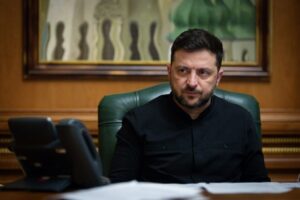
Ukraine has officially removed the Russian language from the list of languages protected under the European Charter for Regional or Minority Languages after President Volodymyr Zelenskyy signed Law No. 4699-IX, marking one of the country’s most significant language policy changes since Russia’s full-scale invasion.
The move follows the adoption of legislation by Ukraine’s parliament, the Verkhovna Rada, in December 2025 and concludes a years-long effort to revise Ukraine’s implementation of the European Charter for Regional or Minority Languages. The law updates Ukraine’s official interpretation of the Charter and removes Russian from the list of languages eligible for special protection measures.
Announcing the decision, Verkhovna Rada Chairman Ruslan Stefanchuk described the measure as both a matter of national security and a fulfillment of Ukraine’s European obligations.
“The language of the aggressor state cannot benefit from protection mechanisms created to support the languages of indigenous peoples and national communities,” Stefanchuk said.
Why Ukraine Removed Russian From Charter Protection
The European Charter for Regional or Minority Languages was created to support endangered, vulnerable, or numerically smaller languages across Europe. Member states determine which languages qualify for protection within their own territories.
Ukrainian lawmakers argued that Russian does not meet the criteria that originally inspired the Charter. Unlike many minority languages facing extinction or declining use, Russian remains one of the most widely spoken languages in Ukraine due to centuries of imperial Russian and Soviet influence.
According to explanatory materials accompanying the legislation, Russian’s historical dominance means there are no grounds to classify it as a threatened language requiring special protection. The updated law also seeks to eliminate legal ambiguities that critics said had enabled political manipulation of language issues for years.
The legislation stems in part from an updated official translation of the Charter prepared by Ukraine’s Ministry of Foreign Affairs in 2024. Lawmakers argued that previous interpretations incorrectly emphasized ethnic minorities rather than the protection of vulnerable languages themselves.
What Changes Under Law 4699-IX
The new law removes Russian and the outdated designation of a separate “Moldovan” language from Ukraine’s Charter framework.
At the same time, Ukraine continues to recognize and support numerous minority and regional languages, including:
- Crimean Tatar
- Romanian
- Hungarian
- Polish
- Slovak
- German
- Bulgarian
- Gagauz
- Czech
- Hebrew
- Yiddish
- Romani
- Karaim
- Krymchak
- Urum
- Rumeika
Supporters of the law emphasize that Ukraine is not reducing protections for genuine minority communities. Instead, they argue the legislation better aligns the country’s legal framework with the Charter’s original purpose: preserving vulnerable linguistic and cultural heritage.
Language Policy and National Security
The decision comes amid Russia’s ongoing war against Ukraine, now in its fourth year since the full-scale invasion began in February 2022.
Language has long been central to Russian political narratives regarding Ukraine. For years, the Kremlin has cited the protection of Russian speakers abroad as part of its justification for intervention in neighboring countries.
Ukrainian officials argue that maintaining special international protections for Russian under a minority-language framework became increasingly difficult to justify after Moscow launched the largest war in Europe since World War II.
Stefanchuk said Ukraine remains committed to protecting linguistic diversity while strengthening the position of Ukrainian as the country’s sole state language.
“This decision is about dignity, justice, and Ukraine’s linguistic security,” he said.
Part of Ukraine’s European Integration Path
Despite criticism from some pro-Russian voices, Ukrainian officials insist the legislation is fully compatible with European standards and obligations.
The law does not prohibit the use of Russian in private life, media consumption, religious practice, or cultural activities. Instead, it changes the legal framework through which Ukraine implements the European Charter.
Supporters say the measure reflects European principles by focusing protection on genuinely vulnerable languages rather than those backed by a powerful neighboring state.
As Ukraine continues its bid for European Union membership, officials present the reform as part of broader efforts to modernize legislation, strengthen national identity, and harmonize Ukrainian law with contemporary European standards.
For many Ukrainians, the decision represents more than a legal adjustment. It symbolizes another step away from centuries of Russian political and cultural dominance and reinforces Ukraine’s determination to define its own future amid an ongoing war for independence and sovereignty.
Tags: European Charter language policy Politics Russian language Ukrainian language