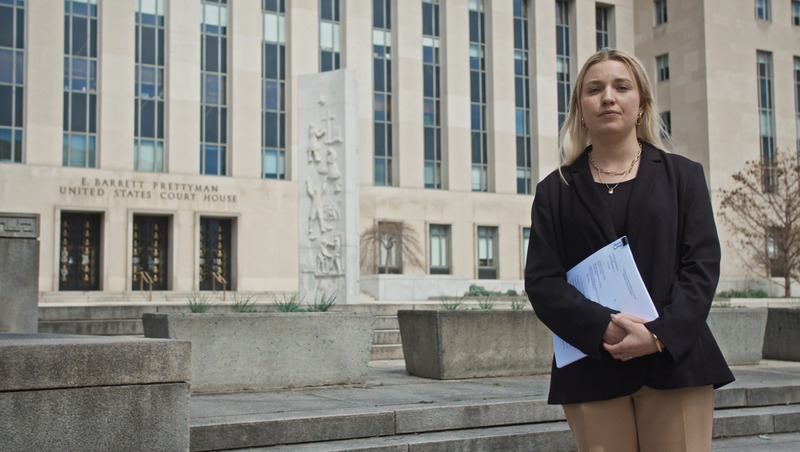
A family of U.S. citizens has filed a sweeping federal lawsuit in Washington, D.C., accusing the Russian Federation, the Islamic Republic of Iran, and the Democratic People’s Republic of Korea of responsibility for the death of a Ukrainian soldier killed near the front line in eastern Ukraine.
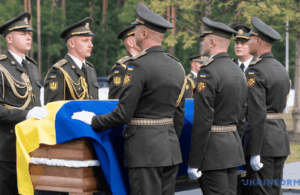
According to the complaint filed on January 2, 2026, in the United States District Court for the District of Columbia, the plaintiffs allege that 21-year-old Andrii Rachok was killed on February 22, 2024, during intense fighting near the city of Avdiivka while defending Ukraine from Russian forces.
Allegations of State-Sponsored Terrorism
The lawsuit claims that Russian troops used mortars supplied by North Korea and Shahed-type kamikaze drones supplied by Iran during the battle that killed Rachok. The complaint further alleges that Iran’s Islamic Revolutionary Guard Corps, including its elite Quds Force, provided training, technology, and operational support that enabled the drone attacks.
Plaintiffs argue that these actions constitute an extrajudicial killing under U.S. and international law and fall within the terrorism exception of the Foreign Sovereign Immunities Act, allowing foreign states to be sued in U.S. courts.
American Family Seeks Accountability
The plaintiffs — all U.S. citizens residing in Maryland — include close relatives who describe themselves as the functional immediate family of the fallen Ukrainian defender. They allege long-term psychological trauma, including depression, panic attacks, and post-traumatic stress, following his death.
The complaint names Russia, Iran, North Korea, and Iran’s Quds Force as defendants and seeks compensatory and punitive damages, as well as a declaratory judgment that the killing violated international law.
Iran and North Korea Named as Terror Sponsors
Iran and North Korea are both officially designated by the United States as state sponsors of terrorism. The lawsuit cites extensive public reporting that Iran has supplied thousands of attack drones to Russia, while North Korea has delivered millions of artillery rounds and other munitions used against Ukrainian forces and civilian targets.
Although Russia is not designated by the U.S. as a state sponsor of terrorism, the plaintiffs argue that Moscow can still be held liable under the commercial activity exception of U.S. law due to weapons transactions and financial operations connected to the war.
Part of Broader Legal Effort
The case reflects a growing trend of legal action aimed at holding Russia and its partners accountable for alleged war crimes and acts of terrorism committed during the invasion of Ukraine. European institutions have previously labeled Russia a state sponsor of terrorism, and international courts have issued arrest warrants against senior Russian officials over alleged war crimes.
If successful, the lawsuit could set a significant precedent for civil claims against states accused of materially supporting Russia’s military operations in Ukraine.
Potential to Spark a Broader American Legal Movement
Legal experts note that the lawsuit could evolve into a broader, highly visible legal and political movement in the United States. Thousands of Americans have lost relatives — spouses, children, siblings, or partners — who were killed while serving in or supporting Ukraine during Russia’s full-scale invasion.
Because the plaintiffs in this case are U.S. citizens and are invoking U.S. federal jurisdiction, the lawsuit provides a legal blueprint that could be replicated by other American families seeking accountability for deaths linked to Russian military actions and the foreign states supplying weapons used in the war.
If additional cases follow, the litigation could develop into a coordinated wave of civil actions targeting Russia and its military partners, potentially amplifying public pressure on policymakers and courts to expand legal accountability mechanisms tied to the Russia-Ukraine war.
A copy of the complaint is available at:
https://kelsiekimberlinfoundation.org/russian-lawsuit/