The exhibition At the Core explores Ukrainian artists creating amid blackouts, cold, and scarcity, turning daily survival into presence, reflection, and resilient artistic practice.
This winter, blackouts have ceased to be an exception. For many cities, they have become a mode of existence in which people live without electricity, with disrupted rhythms, cold apartments, and darkness that turns into part of everyday life. In these conditions, not only daily routines change, but the very structure of time itself: the day is divided into segments, pauses grow longer, and familiar processes come to a halt or slow down.
For Ukrainian artists, this means working not “despite” the blackouts, but “within” them. Darkness, cold, and the absence of familiar conditions are no longer perceived as temporary obstacles; they have become the environment in which searching, thinking, and creating continue.
As reported by Suspilne Kultura, Anna Andrukh spoke with artists whose works are featured in the new exhibition project “At the Core” at Mercury Art Center about what their day looks like in the dark, how the artistic process changes, and what helps them maintain an inner sense of stability in this reality.
Everyday Life in Darkness: New Rituals and Pauses
During blackouts, daily life takes on different proportions. What was once standard or considered a basic minimum becomes an event; what seemed automatic now requires attention and time. For the artist Yuriy Syvyryn, charging his equipment has turned into a distinct practice of recording a state.
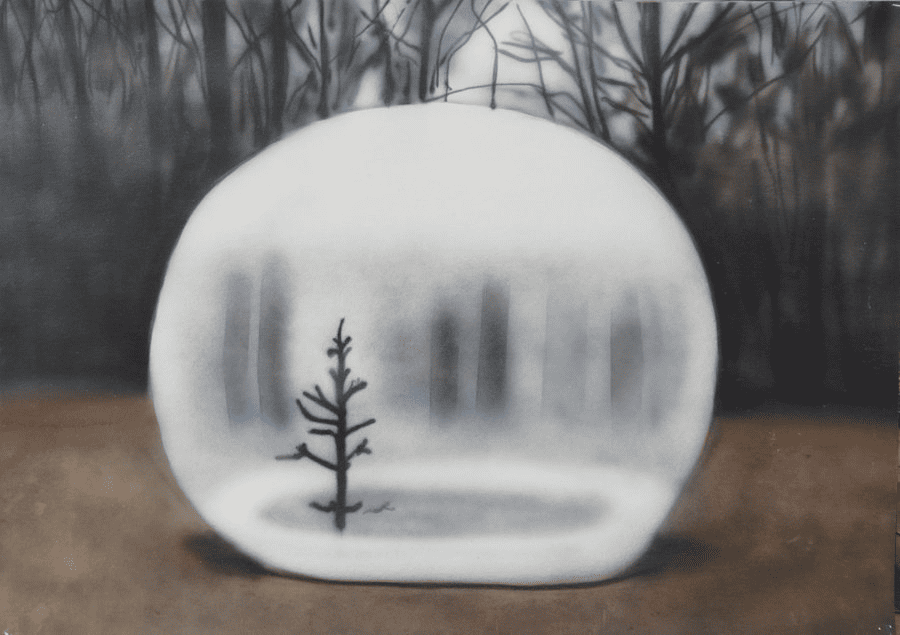
“Charging equipment has turned into a separate artistic practice — something between On Kawara and Roman Opalka (Polish and Japanese conceptual artists): recording time and state from the descent into the shelter. Nothing particularly romantic, more a registration of presence,” the artist says.
The blackout has also changed the way information is consumed. Yuriy began listening to Radio Kultura, which works without the internet, and storytelling and reading have replaced the endless scroll of news. Even the moment when electricity returns becomes an event of shared experience:
“When the lights come back on after ten hours of darkness, you can hear a neighbor shouting and celebrating — as if Shevchenko had scored a goal against Barcelona at the Olympic Stadium in 1998. That moment of collective joy is felt very physically.”
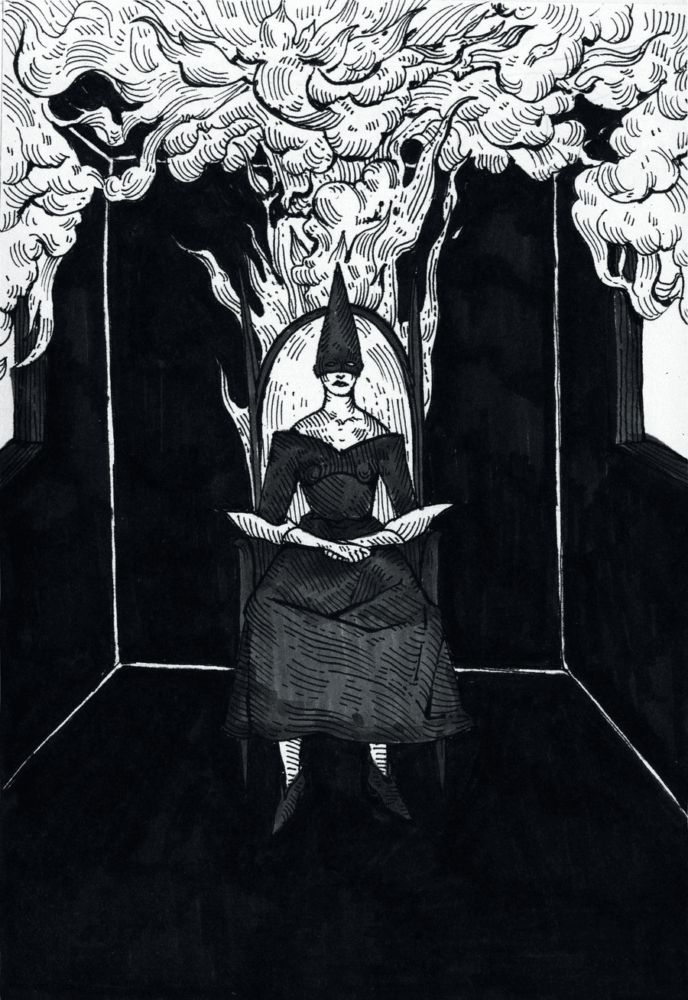
In Ave Libertatemaveamor (Ave), everyday life during blackouts is closely intertwined with motherhood. Her day consists of experiencing her daughter’s childhood in wartime through rituals of closeness and imagination.
“We have a ritual every night of laying out a path in the hallway to immediately move our daughter there. It’s a cozy place, our little den,” the artist explains. “We made a puppet theater, where there’s a moskal who always kidnaps someone, but is always defeated and driven away.”
Here, darkness does not stop life — it changes its form, making everyday actions richer and more meaningful. Technical limitations since 2022 have taught her maximum focus.
“In the short time when there is light, I try to get everything done. And drawing graphics with a headlamp and candle — that’s such a luxurious atmosphere.”
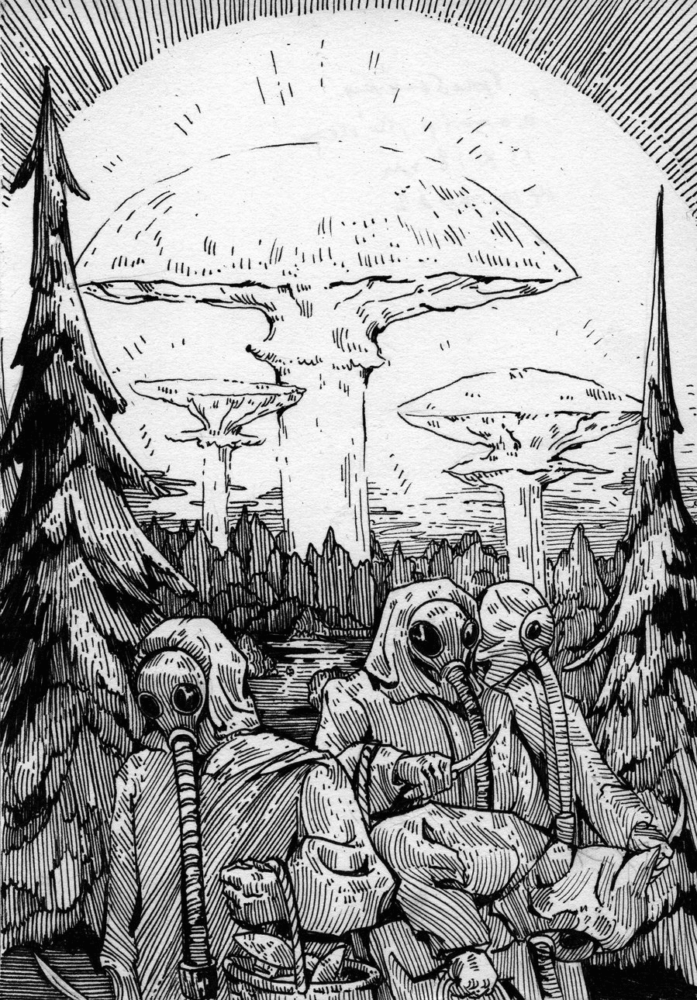
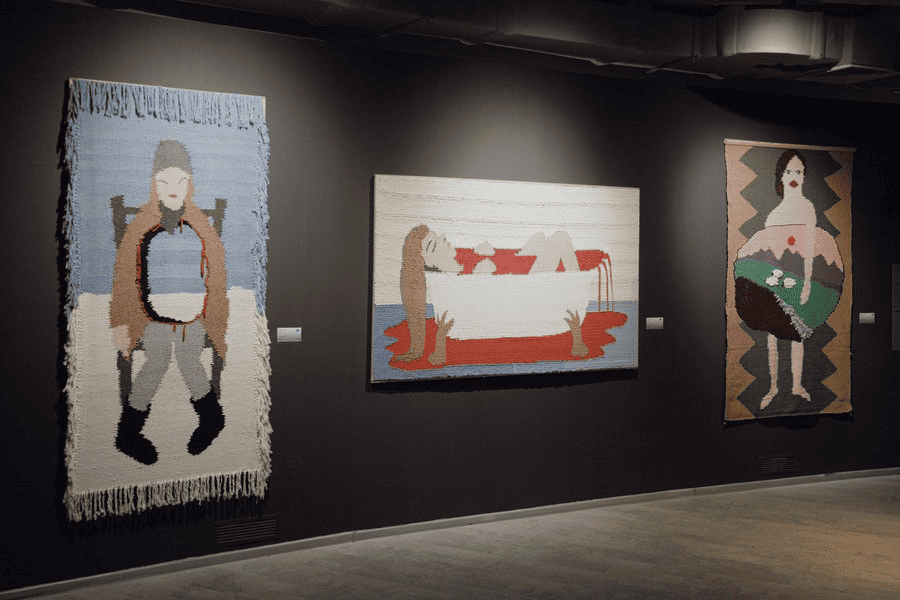
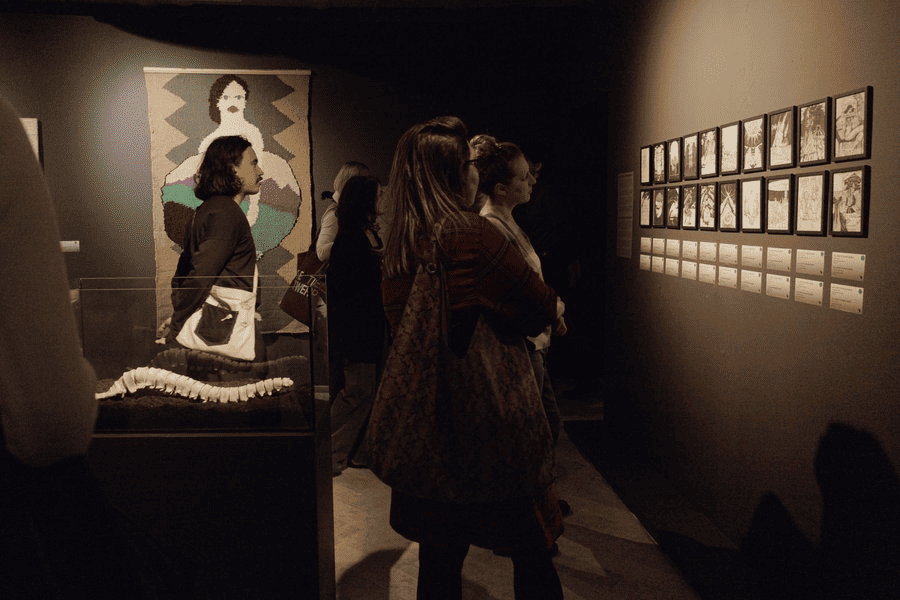
In the project At the Core, Ave presented works she created almost daily since the start of the full-scale war. They are a response to everyday life broken down into black and white, reflecting the sense of threat that has entered the home.
“You try to find symbols and images to explain to your mind where you are now,” Ave adds.
When Conditions Become Part of the Work
Over time, blackouts have entered the creative process as a new norm. For the artist Halyna Dudar, the turning point came while working almost by touch in semi-darkness.
“I suddenly realized that this fragility, the slowing down, and the intense listening to the body — that is the work itself,” she recalls. “In these conditions, ideas related to breathing and the sense of support were born.”
Light and warmth, she says, only set the rhythm but do not determine the possibility of creating. The absence of familiar conditions creates an intimate space, where simple things — like tea, candles, or the sound of snow — gain significance and become part of the process.
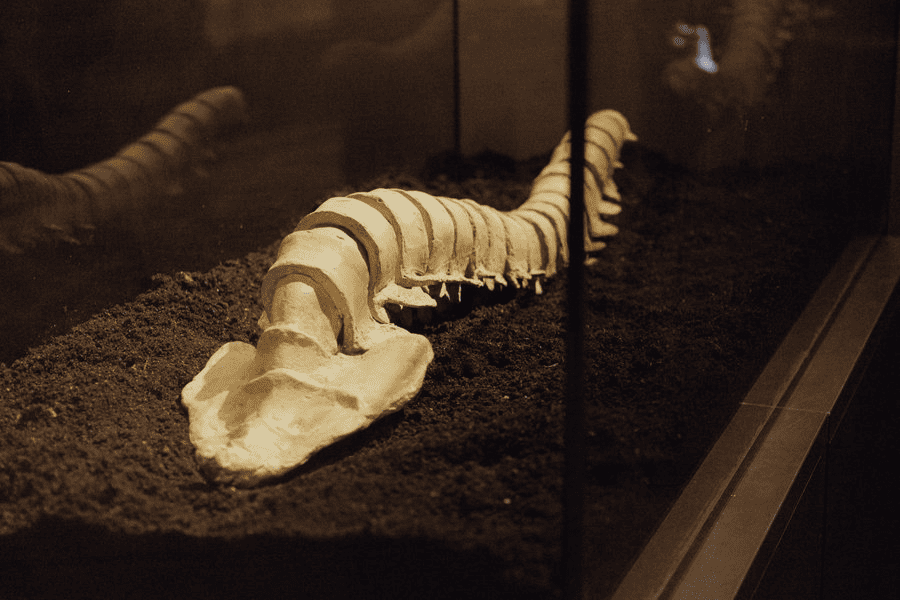
Within the project, she presented the installation That Which Holds — an image of a spine immersed in soil and placed in a glass display case. For Halyna, it is important not to illustrate trauma, but to record it as a constant, almost imperceptible presence.
For Maryna Talyutto, darkness and cold have become the environment for creativity. This winter, the artist’s work follows no usual schedule: her studio has no light or heating, so most of her work takes place at home. Previously, time in the studio was a daily ritual. From morning until noon — coffee, work, silence. This rhythm coincided with when her daughter was at school and provided a sense of stability and focus.
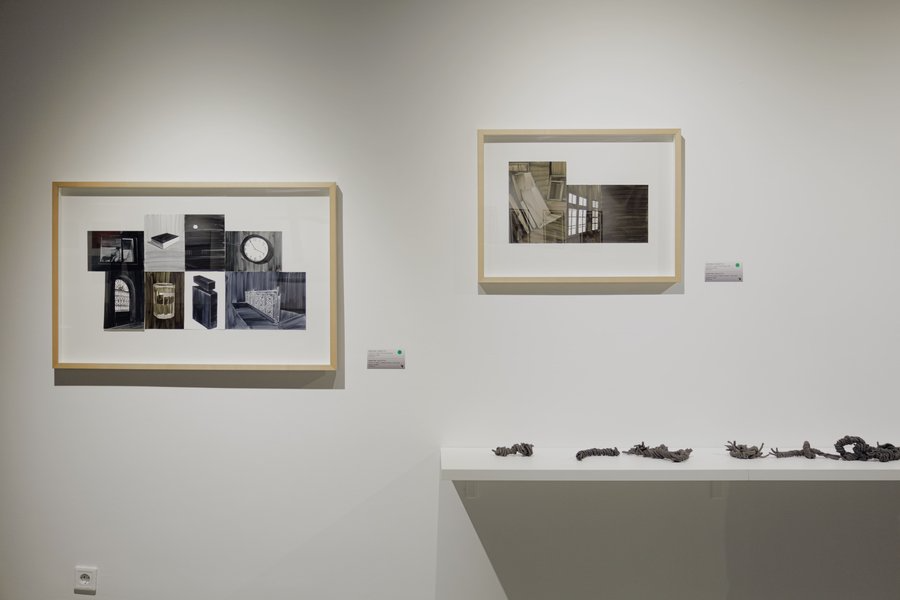
Now, this routine has disappeared, and the day is made up of fragments depending on light, warmth, and available opportunities. Working under a single lamp, without stable heat, has shifted the focus from the result to the everyday, routine action.
“At some point, I realized that working in these conditions constantly is not an exception, but the norm,” the artist says. “It is precisely under these circumstances that projects began to speak differently — more simply, more precisely, without anything unnecessary.”
This routine has become a way for her to maintain mental stability. The artist began work on the series Simple Things at the start of the full-scale war, and it turned into a therapeutic gesture — returning attention to the table, the cup, the sofa as anchors of everyday life.
Art as Support and a Way to Hold On
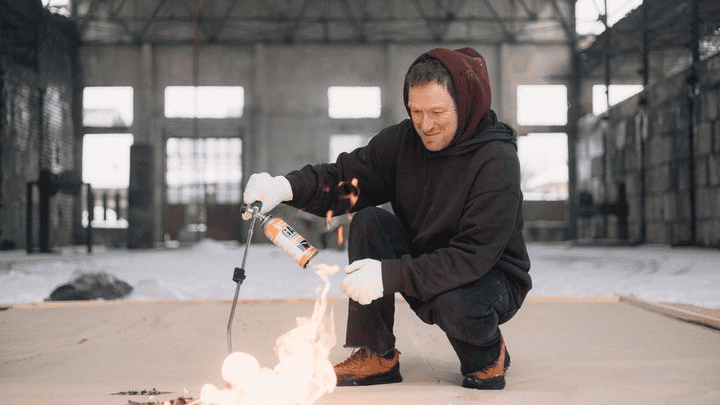
For Roman Mykhailov, challenging conditions have long been collaborators in the artistic process. Within the project At the Core, he presented a work from the series Burn of Reality — a large-scale installation created in the Kivsh creative space hangar in Lviv, prior to the exhibition opening.
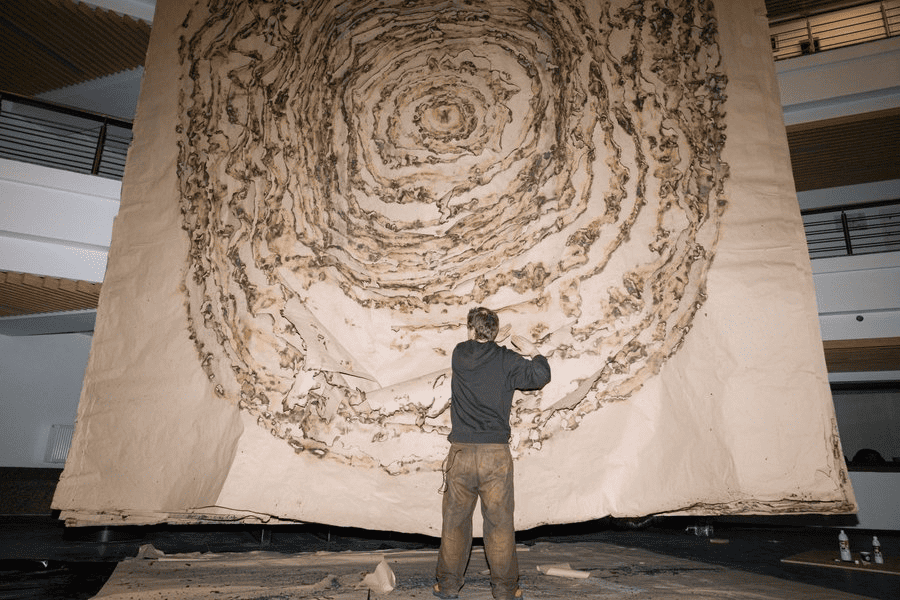
Working on it during the toughest wave of power outages in Kyiv, the artist found himself torn between caring for his family and the necessity to create.
“The ability to create sustains you both mentally and physically. For me, difficult conditions are not a reason not to work, but rather an opportunity to explore alternatives and new forms,” he explains. “Challenges have become co-authors of my artistic practice.”
Even with limited time, much of which goes to family, Mykhailov emphasizes that art remains a point of support, without which it is impossible to live on or be of any use.
Sound as a Way to Structure the Day
The experience of the artist Kinder Album adds another dimension to this conversation — sound and bodily presence. In Lviv, the electricity situation is more stable than in Kyiv: there are outage schedules that allow for planning the day. Household changes here are less dramatic, but still noticeable.
“In Lviv, the electricity situation is much better than in Kyiv. There are outage schedules, and I don’t particularly feel a lack of power, but I’ve started making coffee more often on the gas stove,” the artist says.
Evening blackouts became a turning point in her creative process. Limited technical possibilities unexpectedly opened a new direction — music.
“During the evening outages, I started connecting a small children’s synthesizer to a power bank and creating songs. I’ve already recorded two songs,” Kinder explains. “Making music gave me a push in my painting practices.” This experience did not replace her visual work, but rather expanded it, adding a different rhythm and way of thinking. At the same time, caring for her physical well-being remains an important support.
“Mental health is sustained by regular visits to the gym and the pool, where there is always light and even a sauna,” the artist notes.
At the Core: Art as a State of Presence
In the project At the Core, all these experiences converge into a shared state. These are works born not from a reaction to an event, but from prolonged existence within a traumatic reality: in darkness, cold, scarcity, and pauses.
As Halyna Dudar puts it, her installation That Which Holds is not about illustrating trauma, but about recording it as a “constant, almost imperceptible presence.” This approach is common to all participants: here, art is neither escape nor compensation, but a way to remain present, focused, and alive in an ongoing reality.
And perhaps this very ability to stay engaged in one’s work today is the most precise form of inner support.
The exhibition project At the Core will run until March 29 at Mercury Art Center, Lviv, 10 Mitskevych Square.
Tags: blackout creativity contemporary Ukraine artists cultural resilience energy crisis art resilience art Ukraine art war stories
![Line of freight trucks halted at the Yahodyn-Dorohusk border crossing as Polish carriers protest and withdraw from the e-queue amid a blockade. :contentReference[oaicite:2]{index=2}](https://empr.media/wp-content/uploads/2025/05/kordon-480x270.webp)