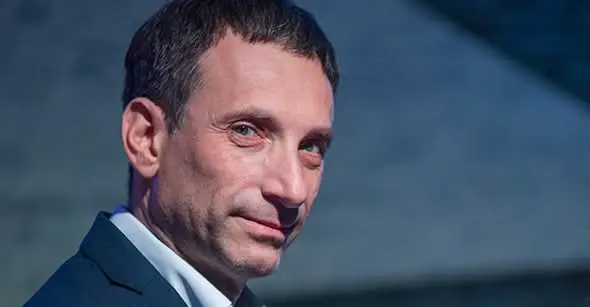
Vitaliy Portnikov draws parallels between Ukraine and Sicily, warning that a mafia concerned only with plunder could ultimately destroy the state it operates within.
Trapani could be considered one of the most vibrant cities in Italy as a whole, and Sicily in particular. However, there are so many colourful cities in this country, so many magnificent buildings and sun-warmed marble streets, that Trapani could easily have faded into the background of my travels around Italy. And indeed, it did! What stayed in my memory were the nearby towns and sights – romantic Erice, where you could wander along its high-altitude streets among the clouds, and the cliffs of San Vito. I had almost forgotten Trapani itself, with its promenades and ferries to the Aegadian Islands. This was reported by Vitaliy Portnikov.
But I remembered it as soon as the latest recordings from Operation Carthage surfaced. I would even call this operation a project, given how much it reveals about our state. And here is why.
It was Trapani that served as the setting for Damiano Damiani’s famous TV series The Octopus (La Piovra) – a landmark work of my youth. Soviet television viewers were fascinated by the handsome hero Michele Placido, but what interested me most was not Police Commissioner Cattani’s love affairs. Rather, I was intrigued by how Sicilian society was organised at the time when the incorruptible Commissioner Cattani arrived on the island to take charge of the local police.
And there I was, walking around Trapani, looking at palaces, the police headquarters, law firms and banks, wondering what it must be like to live in a country where the state and organised crime are so deeply intertwined that you simply cannot tell where the criminal ends and the prosecutor begins. Or the judge. Or the law enforcement officer.
And now I know.
We have become so accustomed to the constant fight against corruption, which has been our main grievance with every government since independence, that we failed to notice how a genuine mafia had taken root in the loosened soil.
For now, it is a mafia of thugs. These are petty-minded, short-sighted people who entered public service solely to enrich themselves and saw the war as an opportunity to amass as much wealth as possible. For reasons that are difficult to understand, they are convinced of their own impunity, discuss their crimes right in front of anti-corruption agencies’ microphones, and flee abroad, losing the Prosecutor General’s official seal along the way.
Had it not been for the political immaturity of Ukrainian voters and the impossibility of replacing and cleaning up the government during wartime, these people would never have been able to go this far. On the other hand, if Ukraine were not so critically dependent on the West in its efforts not necessarily to win, but at least to survive, these people really could have remained unpunished – just as they do in neighbouring Russia.
If we do not stop these people, others will come. The kind who once ruled Sicily. More cautious. More intelligent. Capable of keeping their mouths shut in front of detectives’ microphones. Of leaving nothing in writing. People who will not simply murder inconvenient journalists and lawyers, but generously fund their own. People who will turn elections into a mere formality and government into an instrument of their own enrichment.
However, something similar is already happening. With every new instalment of Operation Carthage, Ukraine increasingly resembles a state captured by the mafia, while the country’s highest-ranking officials, who created the conditions for this catastrophe, maintain a conspicuous silence.
A state captured by the mafia can be reclaimed through elections, national renewal and the lustration of all those who came to power through populist political projects or collaborated with them while holding public office. But during wartime, we are deprived of that opportunity, and this is yet another incentive for Putin to prolong the war. Nor are forceful methods of dismantling a mafia state an option for a country for which democracy is crucial in demonstrating why it deserves continued support.
The idea that we are all in the same boat does not apply to the mafia. It is hardly surprising that one of its leaders goes by the nickname “The Mexican” and is suspected of having ties to Russian intelligence services.
An ordinary corrupt official may simply have no interest in slaughtering the cow he milks – and that is the extent of his patriotism. A mafioso, however, is convinced that his “business” will continue to operate under any flag. He understands neither the concepts of morality and honour nor the importance of national borders. New rulers may well replace the mafia’s influence with their own, but you will never be able to convince him of that, because he is certain that either he himself or the “right people” will work everything out with everyone.
A corrupt official needs a position and a state. A mafioso is interested only in territory to plunder. He will not give a second thought to the possibility that his actions could lead to the destruction of the state – even if he wears a general’s uniform in that state’s security services or serves in its government.
And that is precisely why an undefeated octopus is a death sentence for Ukraine.