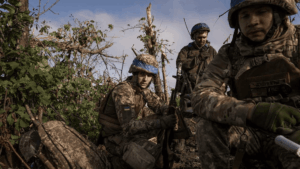
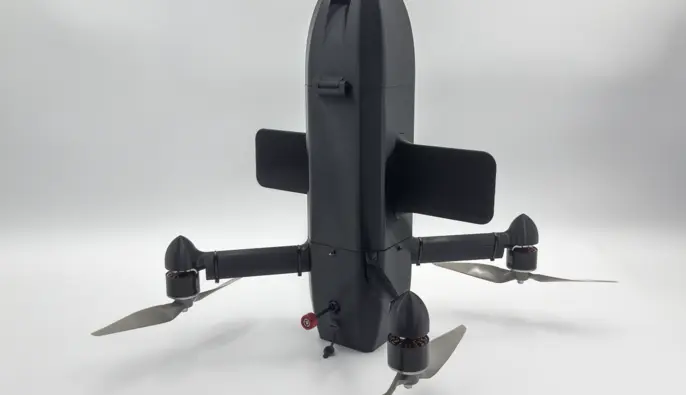
Foreign experts are flocking to Kyiv to study Ukraine’s anti-drone defense systems, developed during years of war and now drawing global interest for their effectiveness against Shahed attacks.
Kyiv is experiencing enormous buzz, with hotels packed with foreigners urgently interested in Ukraine’s drone defense industry.
It looks like a gold rush. Through pain and humiliation, through the loss of valuable assets, world leaders have realized that Ukrainians — and only Ukrainians — have the best solutions to modern challenges: cheap, mass-produced, and practical, says public figure and commander of the “Orden Santiago” strike drone company Ihor Lutsenko.
“You could say that we and Russia are running side by side in the drone race. Sometimes they are ahead of us, sometimes we are ahead of them.
But if we talk about anti-drone air defense designed to counter so-called deep UAV strikes, we have no equals here.
Three and a half years of Shahed terror have forced us to develop immunity.
This includes experience working with radars and other detection systems, interceptor drones, and unique solutions for integrating all these elements into a single system.
The Russians don’t have any of this — which means the rest of the world has even less.
Thanks to the war between Israel and the United States against Iran, the entire world has become convinced of the need for immunity against Shahed-type drones.
Since 2019, Iran’s neighbors have lived under the threat of strike UAVs, ever since Tehran first used these weapons to attack oil processing facilities in the Persian Gulf.
But Arab countries still have not managed to create a proper response, and now they are turning for help. To us, in Kyiv,” Lutsenko writes.
In his opinion, the state has not done enough to ensure that such unprecedented technological solutions and such outstanding units emerge in Ukraine.
“Still, it is good that radars are being purchased — even if these procurements are scattered across various agencies that are not actually related to air defense.
It is good that at one point the gates were opened for state orders for millions of drones, which helped grow a private UAV manufacturing sector that may sometimes be semi-professional and opaque, but is capable of acting quickly.
Finally, the grants distributed by the Ministry of Digital Transformation also played their role.
But the main credit belongs to field commanders and teams of grassroots fighters who, since the summer of 2024, have boldly pushed these initiatives forward and have learned to deliver excellent results.
They shot drones down, designed systems, and experimented.
Now we — a nation that is relatively small in terms of population and territory, and not particularly wealthy — have become one of the leading countries in the military sphere.
Our high position in the global ranking has cost us a lot of blood. Half of my friends with whom we began this struggle in 2014 are already gone. But as we can see, it was not in vain,” he concludes.
According to President Volodymyr Zelenskyy, more than ten countries are interested in Ukrainian drones and the experience of using them — without which they would be far less effective.
Ukraine has sent three teams of experts to the Middle East to help, among other things, protect American military bases.
According to sources cited by the Wall Street Journal, the world’s largest oil company, Saudi Aramco, is negotiating to purchase Ukrainian drones.










![Visitors at the “Thank You With All My Heart” Ukrainian exhibition at the Council of Europe, featuring the Great Amber Heart and powerful war art. :contentReference[oaicite:2]{index=2}](https://empr.media/wp-content/uploads/2026/02/heart-300x171.png)