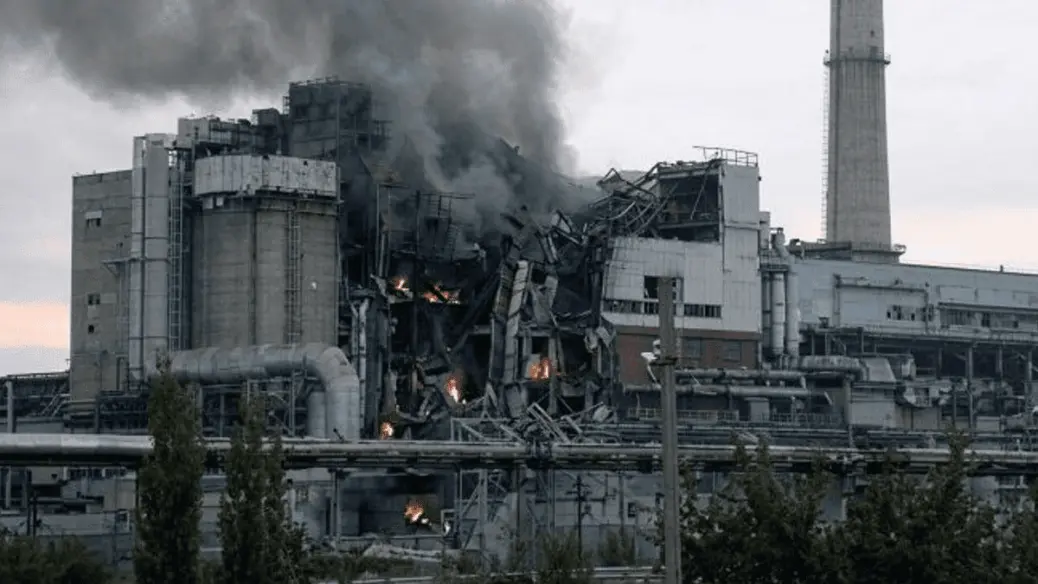
The UN Commission found that Russian authorities had committed war crimes and crimes against humanity by continuously attacking Ukraine’s energy infrastructure, leaving millions of people without heating, electricity, and water.
According to Espreso TV, this is stated in a new report by the Independent International Commission of Inquiry on Ukraine, submitted to the UN General Assembly, the UN Human Rights Office reports.
The Commission classified the strikes as war crimes because Russia deliberately directed attacks against civilian objects, and as crimes against humanity in the form of other inhumane acts. It examined the consequences of large-scale attacks, particularly during the winter of 2025–2026, and their cumulative impact since autumn 2022.
Hundreds of Drones and Missiles at a Time: How Russia Escalated Its Attacks on Energy Infrastructure
According to the Commission, waves of attacks involving hundreds of drones and missiles simultaneously have become more frequent and intense over the years and have spread to more regions. They have caused significant damage to Ukraine’s energy sector. A new wave of attacks is already underway.
“As the cold weather approaches, the attacks have intensified again, raising serious concerns about threats to civilians’ lives and health,” said Erik Møse, Chair of the Commission.
State Policy, Not Coincidence: Why This Constitutes a Crime Against Humanity
The evidence gathered by the Commission indicates that the attacks on energy infrastructure were carried out deliberately, in line with a state policy aimed at depriving the civilian population of electricity and other essential services and inflicting suffering on them.
According to the Commission, Russian commanders who ordered the strikes knew that district heating facilities in major population centers were indispensable to civilians, especially during winter. Russian authorities had also publicly announced further strikes and outlined plans to carry them out.
Millions Left Without Heating in Temperatures of -21°C: What Ukrainians Endured
Last winter, when temperatures dropped to -21°C, millions of people in Ukraine were left without heating, electricity, water, and gas for extended periods. Prolonged exposure to cold and the lack of essential utilities severely affected civilians’ physical and mental health.
Older people and those with limited mobility faced the greatest difficulties. Fearing they might become trapped in elevators if the power suddenly went out, they were unable to go to shelters during air raid alerts and remained in unheated homes without electricity or water and without access to life-support equipment. For families with children, prolonged school closures and the cold at home, which made children ill, only exacerbated the problems.
“I was lying there in the cold and hungry, without medicine, without anything,” said a 74-year-old woman from Kyiv.
“The scariest thing was falling asleep and not waking up. It was like torture, being afraid of dying from the cold,” said a 53-year-old man from Kyiv.
The Commission based its findings on testimonies from 255 people who endured such conditions during the winter in the Dnipropetrovsk, Kyiv, Kharkiv, Kherson, Mykolaiv, Odesa, Poltava, Zaporizhzhia, and Zhytomyr regions, as well as information provided by Ukrainian authorities, doctors, and non-governmental organizations.
The Commission also examined Ukrainian Armed Forces strikes on energy infrastructure in Russia and in Russian-occupied Ukrainian territories, but was unable to investigate their consequences because Russia denied access and did not respond to its requests.