
A 69-year-old woman evacuated her injured husband from a frontline village, pushing him 13 kilometers under drones, leading to life-saving surgery and refuge near Kyiv.
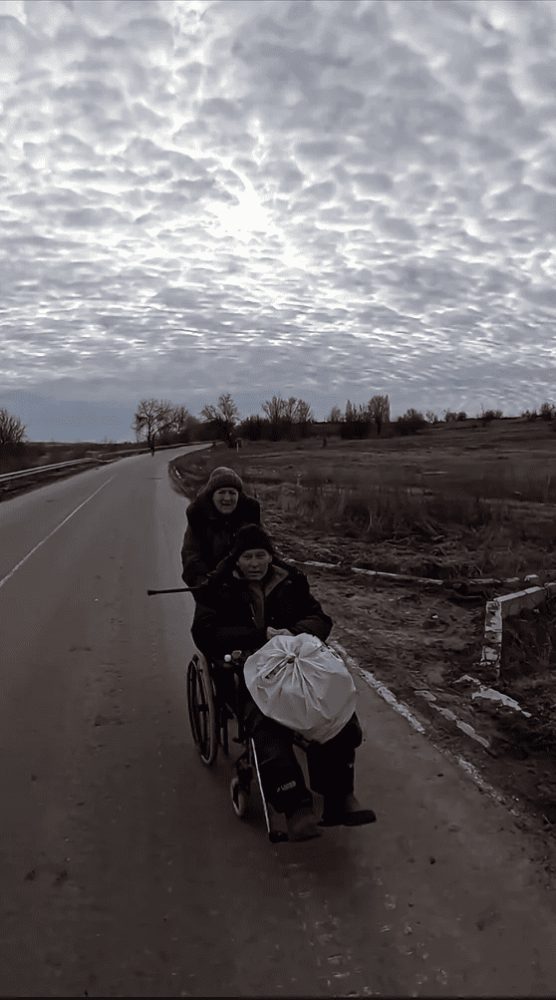
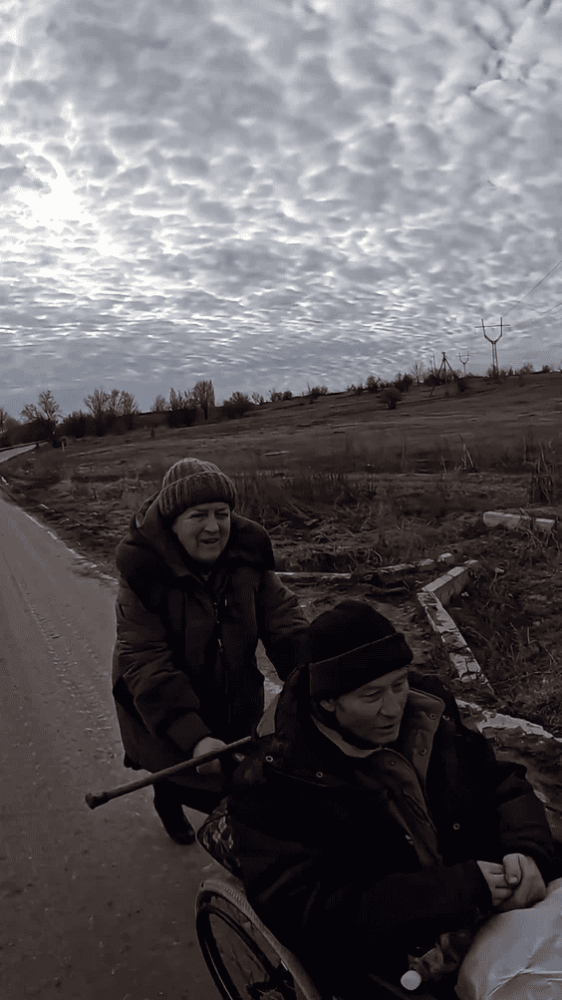
The video featuring Natalia and Fedir Martynenko spread across social media: a 69-year-old woman transported her husband on a wheelchair for 13 kilometers. Their native village of Novoselivka near Kostiantynivka is a combat zone, and volunteers and evacuation teams no longer entered the city or surrounding areas. This was reported by Hromadske.
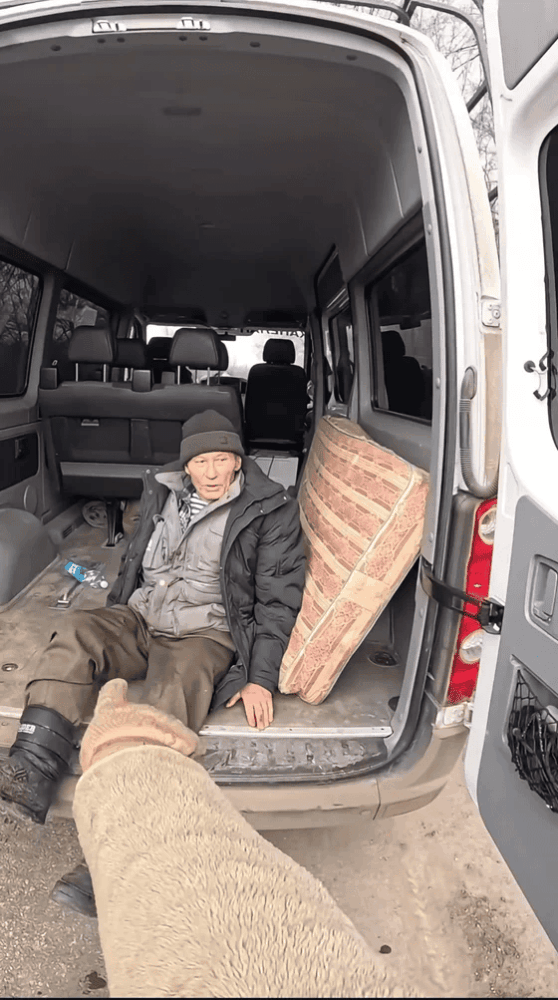
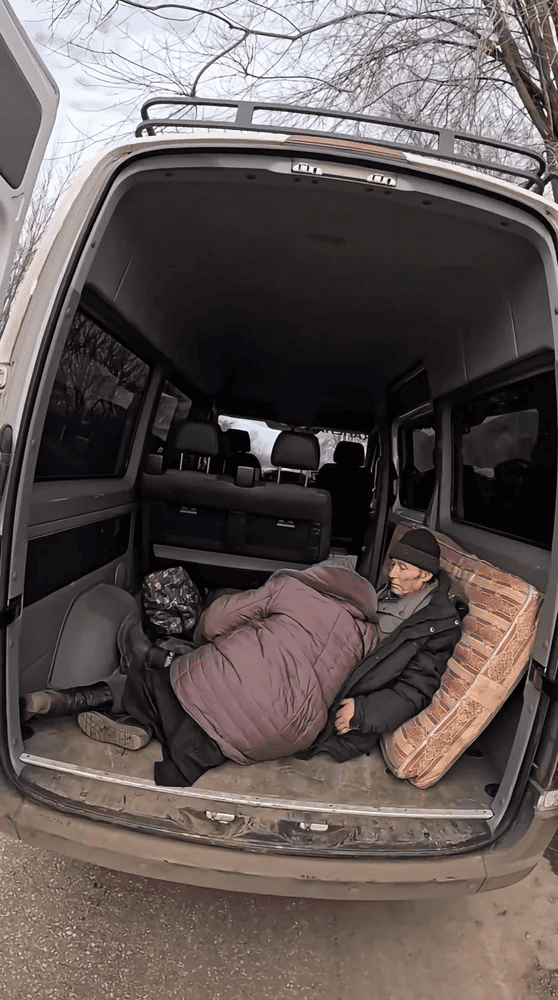
The couple was met by chaplain-volunteer Vadym Heiko and taken to a hospital in Kramatorsk. On the same day, Fedir underwent surgery: his leg was amputated. Had the Martynenkos delayed for a few more days, the outcome for the pensioner could have been much worse.
Getting used to the silence
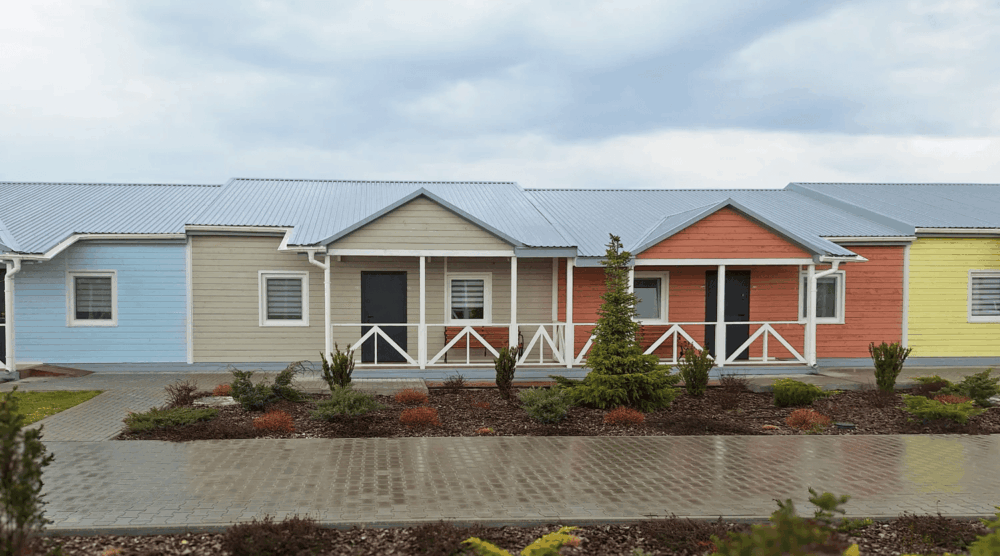
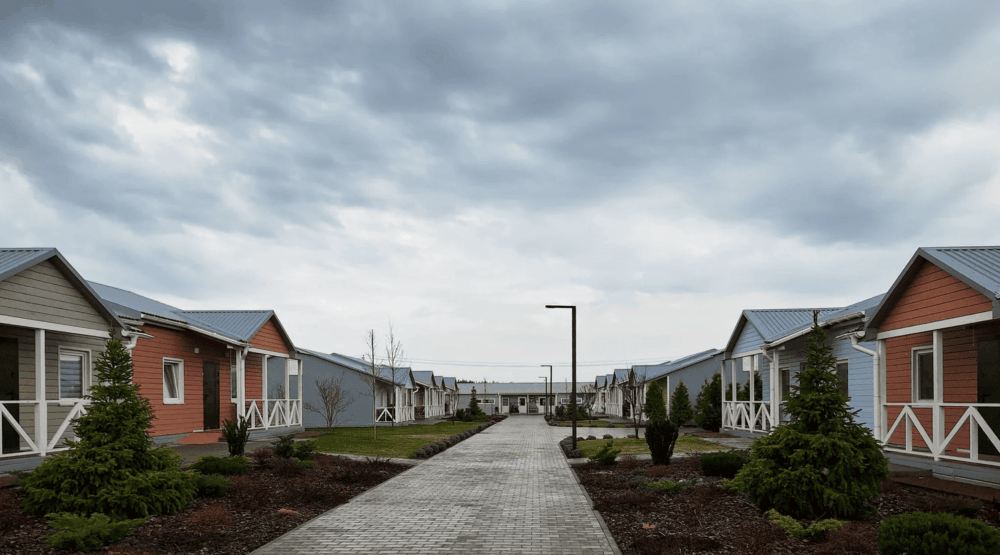
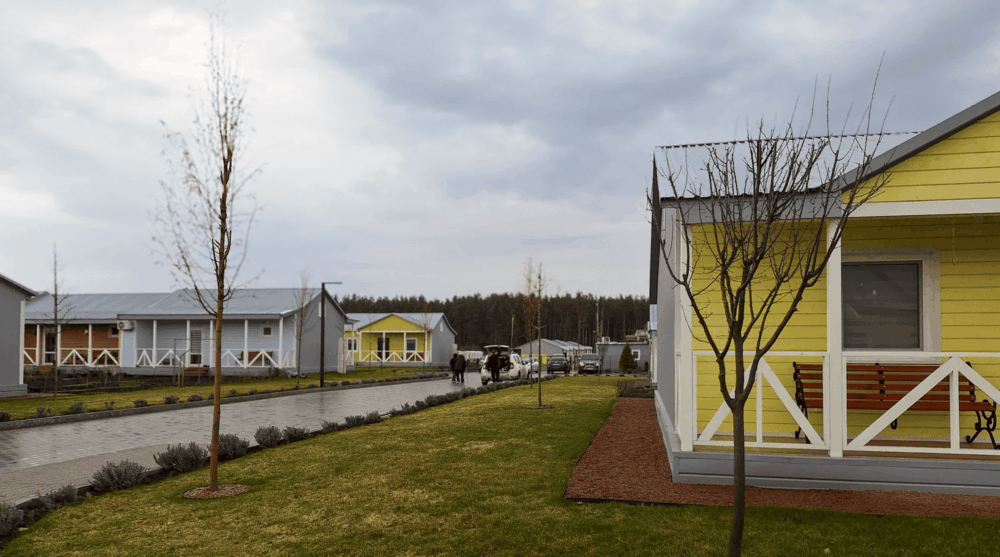
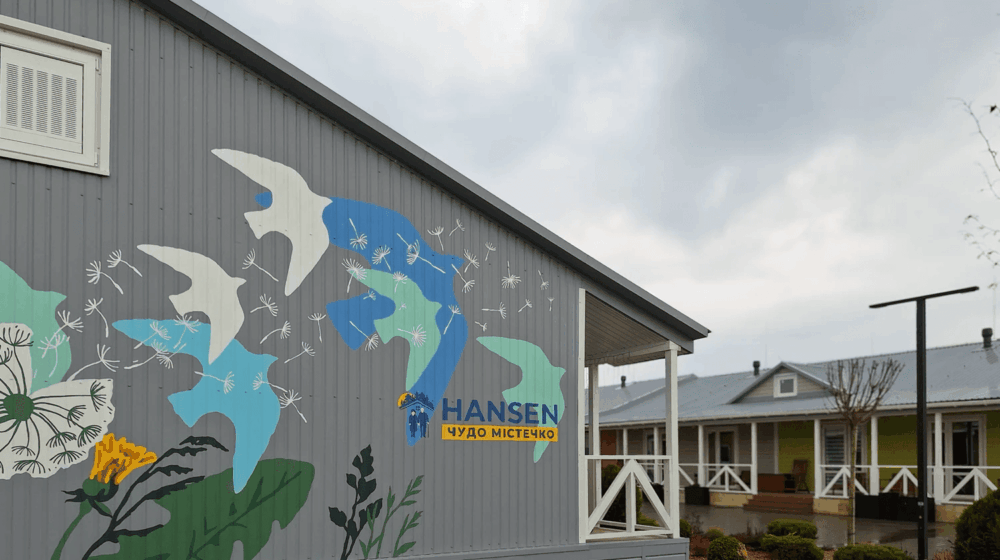
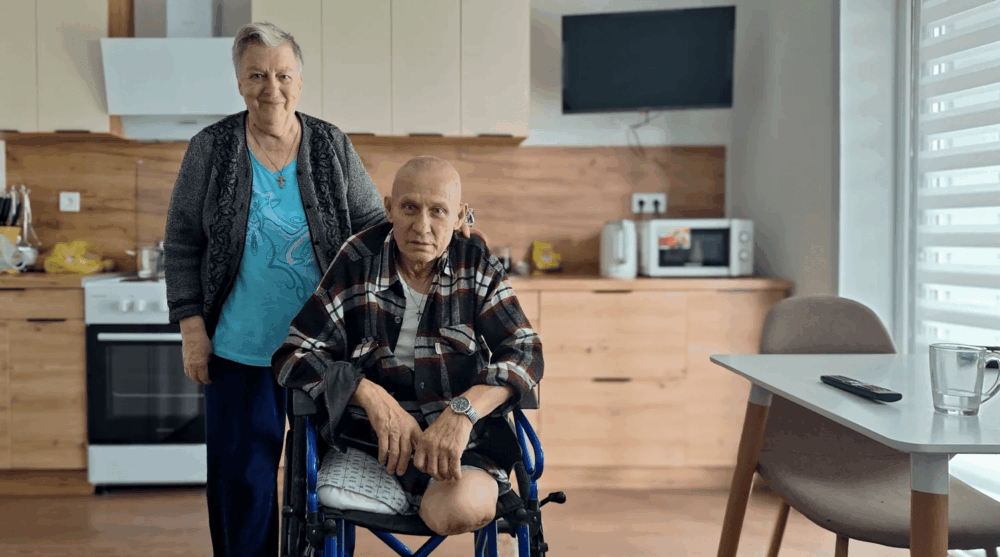
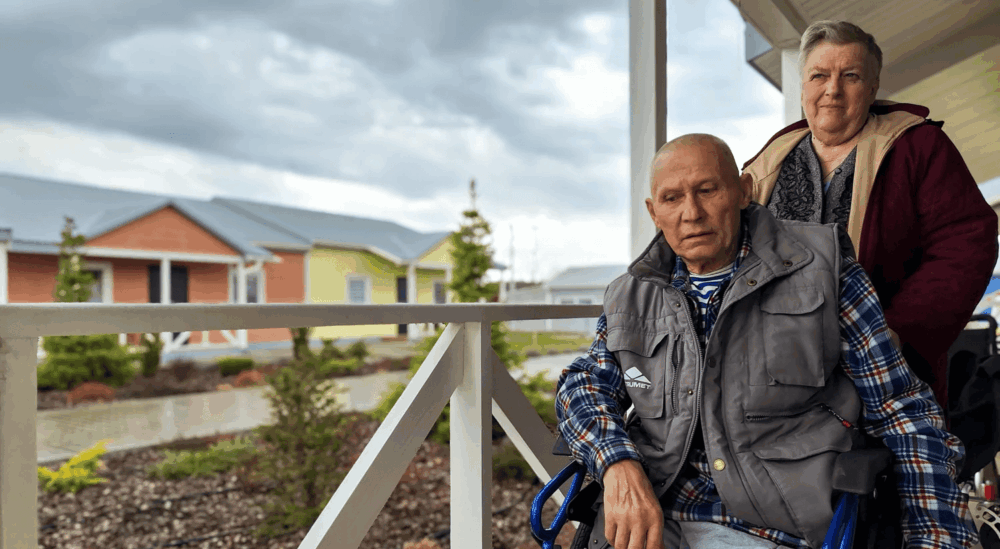
The Martynenkos are now settling in the Kyiv region — in “Hansen Miracle Village.” There are usually no vacancies here, and a third phase for displaced people is currently under construction. Out of 10,000 applications, the organizers have to select 300. But executive director Oleksandra Kondrasheva saw the video of Natalia and Fedir and was determined: “We have to take them in.” And now they are here.
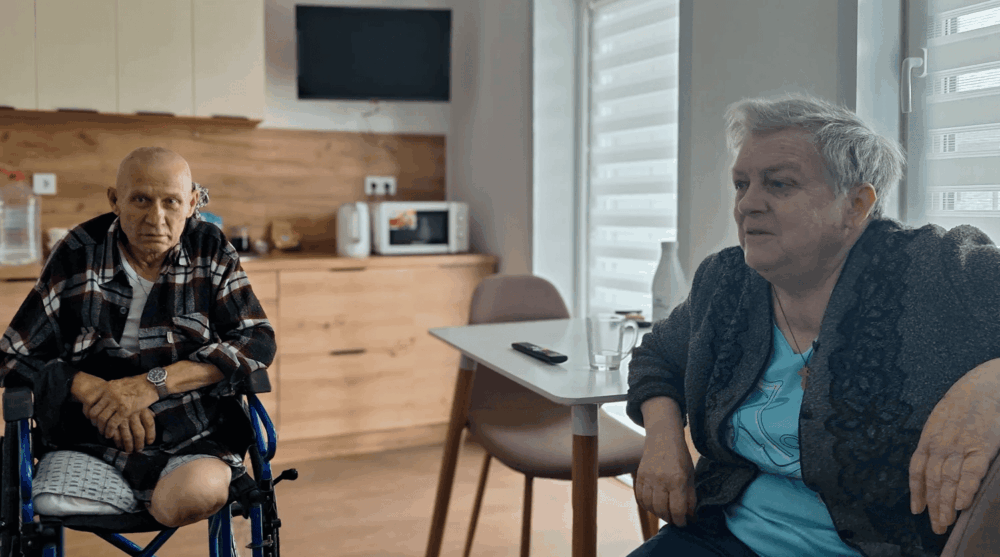
“We’re getting used to the silence,” Natalia says. It’s raining outside, and we are talking inside a small house: there are rows of them here, neat and brand new, with fresh appliances and furniture. “No explosions, no ‘Shaheds.’ You can’t even hear air raid alerts, and it feels so strange — even unsettling.”
Natalia is originally from near Kostiantynivka, where her entire family had lived for generations. Fedir lived on a neighboring street. When he returned from the army, they got married — she was 18, he was 21. They have now been married for 51 years.
Their daughter passed away a year and a half ago due to a blood clot. Their grandchildren and great-grandchildren are in Russia, far away, near the Sea of Japan. Natalia and Fedir worked at a glass factory in Kostiantynivka. After retiring, they managed their household in a home they had built and rebuilt over the years.
In 2014, a flag of the self-proclaimed “DPR” flew over the city council for several months until Ukrainian forces tore it down. In the following years, the city lived relatively calmly: the Lenin monument was demolished and replaced with one of Shevchenko; in the presidential election, residents voted for pro-Russian candidate Yurii Boyko, and in the second round — for Volodymyr Zelenskyy. The 90th Battalion was stationed in Kostiantynivka, fighting for Donetsk Airport and defending Pisky, Zaitseve, and Opytne.
How could it be that he would stay home alone while I’d be safe?
Since 2022, bombs, missiles, and mines have rained down on the city and surrounding villages. Dozens of houses were destroyed at once; the Russians smashed schools, lyceums, boiler houses, and “Points of Invincibility.” Residents were killed. When the cemetery was closed, people were buried in their yards. No funerals, no farewells, no gatherings: neighbors would hastily dig a hole, wrap the body in plastic, and quickly disperse so a drone wouldn’t spot them.
For a long time, nothing struck the corner of the village where the Martynenkos lived. They kept hoping the war would end soon or that the Russians wouldn’t reach them. They didn’t even make plans for a “what if” scenario.
Last August, water, electricity, and gas disappeared in Kostiantynivka, and as winter approached, it became clear there would be no heating. Shops and markets, banks, and hospitals closed. People fled en masse — wherever they could: to relatives or to safer places where they could rent housing. Families with children were evacuated by force. On the Martynenkos’ street, out of more than a hundred residents, only about ten remained.
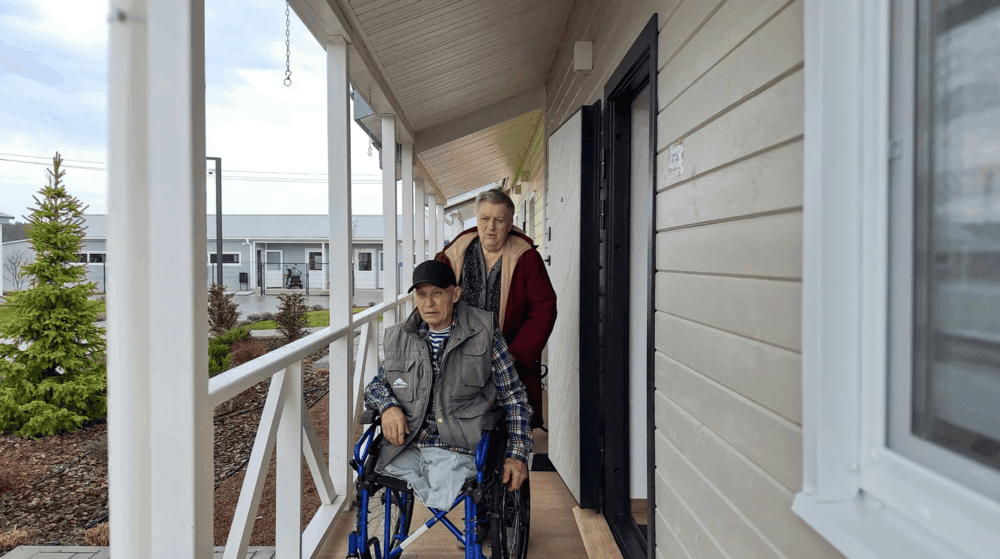
Natalia and Fedir stayed. He had no leg — his had been amputated eight years ago due to diabetes. He used a prosthesis and a cane. Their pensions amounted to less than 10,000 hryvnias for the two of them. They reasoned that if they left, they wouldn’t last long on that kind of money.
Winter came with its severe frosts. The husband dismantled the automatic boiler, and the couple heated their home with coal and firewood they had prepared in advance. They used candles, oil lamps, and flashlights for light. They charged their phone (there was occasional signal) and a power bank at their neighbors’ place using a generator. They also pumped water with it.
What did they eat? “Canned food,” potatoes they had stored for winter, and lots and lots of grains and preserved goods — everything volunteers had been distributing for years as “humanitarian aid” finally came in handy.
“At first, even the cats didn’t want to eat that, and we dreamed of dairy, lard, meat — but later both they and we gave up those aristocratic habits,” Fedir says sadly.
Someone left them a gas cylinder, someone else — a tiny stove and small camping canisters. When the weather allowed, they cooked over a fire in the yard, although the military warned them not to — the smoke could be seen. And the sky was swarming with drones. The couple joked: don’t open your mouth, or one might fly in.
“But we kept heating and cooking. God spared us,” Natalia recalls.
The husband didn’t want to go down into the cellar: without a leg, on a prosthesis, it was difficult. And she was afraid to go alone — for him.
“How could it be that he would stay in the house alone while I’d be safe? I didn’t leave him. We slept in the same bed, and the cats were with us too — Vaska and Ryzhyk.”
That’s how they lived: once it got dark, they would sit facing each other and talk. About everything in the world.
Nataliia Mazina / hromadske
Nataliia Mazina / hromadske
Injury and the decision to leave
They rarely went outside the yard. And when they did look out — one house was gone, then another. Once, near their fence, a drone struck a young man. He didn’t even move.
Natalia cried constantly as she watched her native place being destroyed. In January this year, Fedir was wounded. He went out to call a neighbor, and a drone fell about eight meters from him. An explosion, a column of black smoke — his healthy leg “boiled” in three places. The smoke cleared.
“What was that, Serhii?” Fedir asked his neighbor, looking around: the gate was damaged, the garage wall battered.
“Didn’t you realize you almost lost your life?” the neighbor replied with a hoarse laugh.
His wife treated the wound, but a fragment remained somewhere inside. A month later, the toes on his leg began to turn black. Fedir realized the same process had started as with his previous leg. It had to be amputated, otherwise gangrene would set in. His temperature was already rising; he had a fever. Natalia kept heating the house every two hours to keep him warm.
“It was because of the leg that we decided to leave,” she explains. She messaged her in-law in Kyiv, asking for help. The woman found volunteer Vadym Heiko, who was to pick the couple up and take Fedir for surgery.
The heart is not made of stone
But the hardest part still remained — to leave the shelled area: volunteers no longer went there. It was extremely dangerous and frightening. In the sky — drones; on the ground — damaged military vehicles and dead bodies. Volunteers advised them to leave in the rain or when it was cloudy — fewer drones then. But the weather, as if on purpose, was good and sunny every day in March. They had to set out in such conditions.
Early in the morning, they locked the house and didn’t look back, didn’t say goodbye, so as not to break their hearts. They took only a bag with documents and medicine and set off.
“We feel so sorry for Ryzhyk. He’s a little cat who found his way to us. Vaska is older, he’s four years old — he’ll manage. Though both of them can catch mice. Ryzhyk is so smart; I’d say, ‘Time to sleep,’ and while I was getting to bed on crutches, he’d already be there. We couldn’t take the cats — nowhere to — and we didn’t even know where we would live,” Fedir sighs.
They asked a neighbor to look after the animals.
Acquaintances helped them cross the river: the bridge had been destroyed, but someone had thrown branches and laid down doors to make a kind of ford. Natalia was led across by the hand, Fedir was carried, and both were helped to get across the field. After that, the couple continued along the paved road on their own.
For the elderly woman, the 13-kilometer distance was extremely difficult. Through tears, she kept repeating to herself: “Natasha, you have to keep going. Natasha, forward.” Drones buzzed behind them, and she prayed.
They encountered several groups of Ukrainian soldiers heading out on missions to the front line. They asked them: “Why did you wait so long, you two?”
All the while, the woman stayed in contact with volunteers. They drove up and quickly loaded the couple into a car — nearby, a drone flew past. The pensioner still doesn’t know how it didn’t drop anything on their heads. She wonders if the operator may have spared them.
By 10 a.m., they were already at a hospital in Kramatorsk. After lunch, the doctors brought Fedir out of surgery: “If it had been a few more days, there would have been no point in coming.”
There is currently no communication with Novoselivka or Kostiantynivka. The couple knows that a few days after their evacuation, a strike hit the house opposite theirs; the roof of their own home was blown off, and the windows and doors were shattered. What happened to the cats is unknown.
“They brought us here, to the Kyiv region, to this ‘Miracle Village.’ A full table of food was waiting for us, we receive a hot meal once a day, there are medical checkups, and places to walk with a wheelchair. They even gave us two more, one of them electric. Everyone around is very kind. We had a video call over the internet with the village’s founder, Hansen — he personally gets to know all the residents. We will be grateful to both him and Vadym for the rest of our lives,” Natalia says with pain. And adds:
“My husband forbids me to remember our home… But I dreamed about it today. And the people we lived with.”
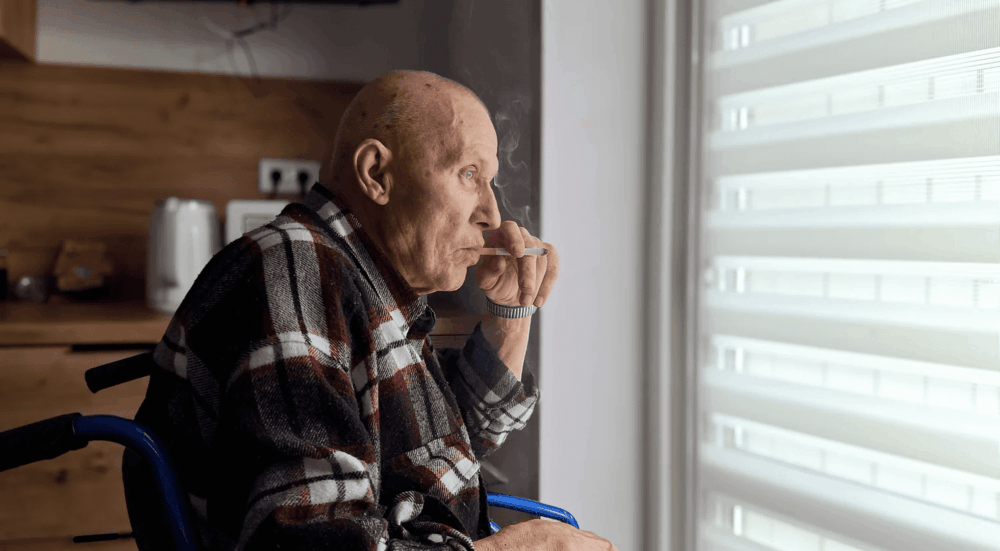
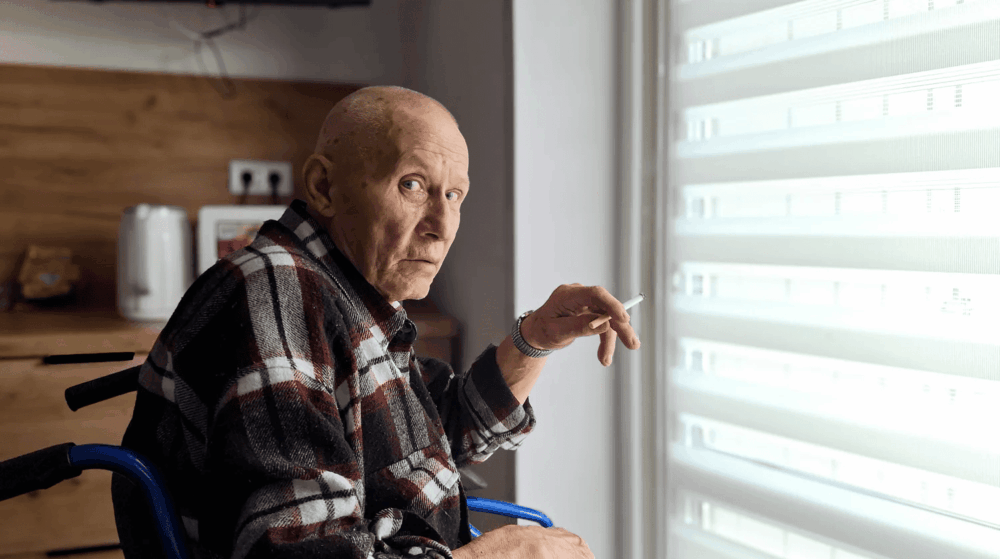
Fedir lights a cigarette and turns toward the window.