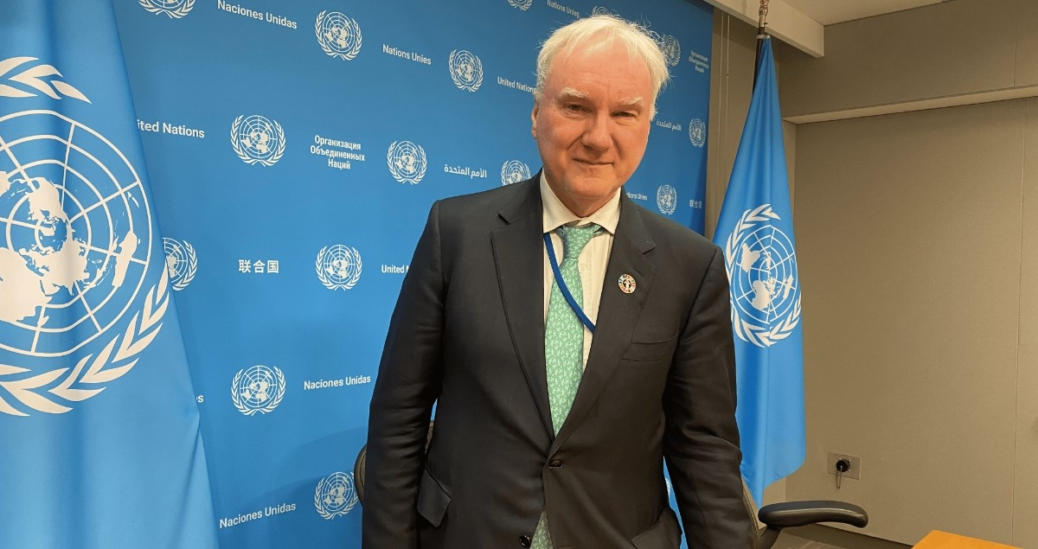
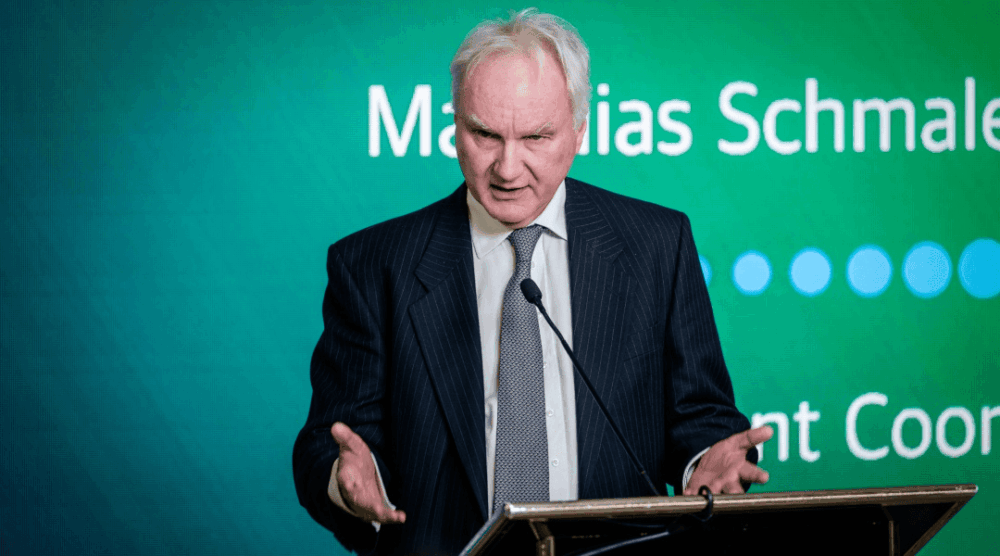
Matthias Schmale, UN humanitarian coordinator in Ukraine, says the country remains functional despite the war and stresses that no negotiations about its future can exclude Ukraine itself.
Matthias Schmale was appointed to his current position in August last year. He has over three decades of experience in international humanitarian operations. He has worked with the International Federation of Red Cross and Red Crescent Societies, held leadership positions at the UN Relief and Works Agency for Palestine Refugees (UNRWA) in Lebanon and Gaza, and coordinated programs in Africa and Nigeria. A German by origin, he grew up in Botswana, South Africa, and near Berlin, and from childhood was concerned with issues of apartheid and injustice.
He recently stated that he does not feel optimistic about the cessation of hostilities in the Russian war.
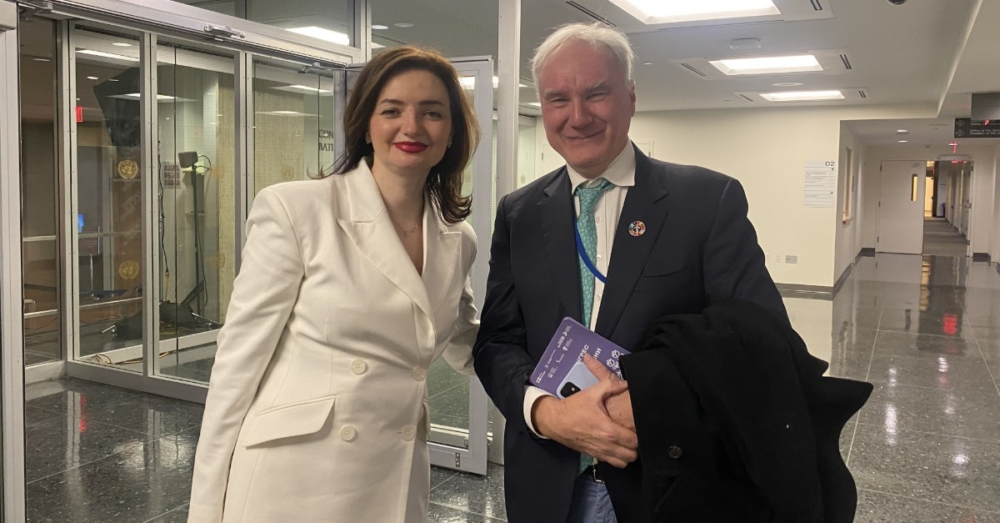
We talk with Matthias Schmale about efforts to achieve peace, UN assistance to Ukraine, and the challenges of the current winter, Ukrinform reports.
EVEN DURING THE WAR, THE UKRAINIAN AUTHORITIES ARE ABLE TO ENSURE CITIZENS’ WELL-BEING
Volodymyr Ilchenko: Mr. Schmale, on December 3, the UN General Assembly adopted a resolution calling on Russia to return the Ukrainian children who were abducted. How significant is this document?
Matthias Schmale: Children who have been abducted or transferred to Russia are a very emotional issue. It is extremely important for Ukrainian politicians and citizens that these children are returned and live in safety and decent conditions.
The General Assembly resolution is a strong signal of support, which is highly valued on the ground.
Volodymyr Ilchenko: In one interview, responding to a question about why some people remain in dangerous areas along the front line, you said that, according to them, they are paying tribute to those who gave their lives defending the country. Putin’s propaganda claims that Russia is “liberating” territories from Ukrainians. How would you respond to such statements?
Matthias Schmale: Let me explain that the reason you mention is only one aspect of why people do not want to evacuate. There are other factors as well…
I cannot comment on what, according to Russia, is happening on the ground. I can only describe what I see. And what I see is a continuation of the slaughter: people are dying and being injured, vital civilian infrastructure is being destroyed, including schools and medical facilities.
This is wrong and unjust and must stop. As the UN Secretary-General has repeatedly stated, the full-scale Russian invasion violates the UN Charter and Ukraine’s territorial integrity, and the international community must work to restore respect for these principles.
Volodymyr Ilchenko: Every time Russian Foreign Minister Lavrov comes to the UN, he claims that the tragedy in Bucha was fabricated by “nationalists” and staged by the British. What would you say to him if he repeated this lie to you personally?
Matthias Schmale: I would answer the same way I am saying now. I can only describe what I personally observe and what reliable sources on the ground report.
Although I was not in Bucha in 2022, Ukrainian civilians, human rights defenders, and non-governmental organizations — witnesses who deserve trust — described it very clearly. I cannot imagine how such a thing could be fabricated. It really happened.
Volodymyr Ilchenko: You also said in one interview that Ukraine is by no means a “failed state” and functions fully, including providing services under extremely difficult conditions. It seems this statement challenges Kremlin propaganda. Could you elaborate on this point?
Matthias Schmale: What I mean is that, from my experience working in the humanitarian field worldwide, there are failed states where humanitarian operations, even with international support, are essential for people’s survival. In Ukraine, humanitarian work is also important, but it complements the government’s efforts, which continue to function despite the war.
This is by no means a state that has collapsed. The Ukrainian authorities are largely able to maintain services, ensure safety, and provide citizens’ well-being, although they rely on international assistance in many areas. Humanitarian operations strengthen, rather than replace, the government’s capacities.
NEVER SAW “NATIONALISTS” IN UKRAINE
Volodymyr Ilchenko: We see that, since Russia cannot boast of successes on the battlefield, it has intensified attacks on cities, claiming to fight “nationalists.” Have you ever encountered anyone described by the Kremlin as the nationalists Russia is supposedly fighting?
Matthias Schmale: No, I have seen nothing of the sort. Ukraine has over 30 million people, so I have not met everyone, but in my interactions with the authorities, citizens, and non-governmental organizations, I have not come across this phenomenon.
Volodymyr Ilchenko: You emphasize the significant risks for Ukrainians from Russian strikes, especially during the winter period. How reliable is the heating infrastructure? Does the UN have any options to support the population to mitigate the consequences if the situation worsens?
Matthias Schmale: We are very concerned about the problems that may arise during the winter. The UN and its humanitarian partners provide support to rural areas near the front line — cash assistance, funds for insulation, and solid fuel. So far, we have reached one million people out of the 1.7 million we plan to support, but we lack sufficient funding.
The greatest concern is for cities such as Kharkiv, Dnipro, and small front-line settlements, where the destruction of energy infrastructure is intensifying. Repairs cannot keep up with the damage caused. If the winter is severe and energy outages continue, there is a risk of catastrophe — thousands of people could be left in apartment buildings without heating or water.
FUNDING ALWAYS DECREASES DURING PROLONGED CRISES
Volodymyr Ilchenko: Regarding UN assistance — is it sufficient?
Matthias Schmale: The international community has shown generosity, providing over $4 billion for Ukraine’s needs in 2022, $2.6 billion in 2023, and $2.2 billion last year.
This year, funding is decreasing, which always happens during prolonged crises, and we are experiencing a shortfall. For example, our winter plan, aimed at assisting vulnerable populations living near the front line, is currently financed at 65%, covering only one million people.
Volodymyr Ilchenko: Almost daily, you release statements about Russian attacks. Is it difficult each time to find different words so as not to repeat the same thing, since the situation keeps repeating?
Matthias Schmale: It is not easy, but I work with experienced media advisors to find ways to properly describe the facts. The attacks result in deaths, injuries, and destruction, and there are frameworks to respond in different ways.
The UN does not have an army; our weapons are words, moral authority, and advocacy. We must speak clearly about what is happening and hold the perpetrators accountable.
Volodymyr Ilchenko: Do you spend most of your time in Kyiv or on trips across Ukraine?
Matthias Schmale: I am based in Kyiv, but I travel every two to three weeks. Much of the humanitarian work takes place across the country, primarily in the east, near the front line. I visit these areas to observe operations and meet with authorities.
I travel by car or train.
For example, a trip to Dnipro takes five hours, to Kharkiv five to six hours, plus additional time to reach the front line. I usually spend two to three days in these regions, observing the affected populations and meeting with them.
IT IS IMPOSSIBLE TO NEGOTIATE A COUNTRY’S FUTURE WITHOUT THE COUNTRY’S PARTICIPATION
Volodymyr Ilchenko: What would you say about the list of Russia’s “demands” — in particular, that Ukraine should cede part of the Donetsk region and reduce its army in exchange for a ceasefire? And do your assessments align with what Ukrainians think about the current international diplomacy involving the U.S. and Europe aimed at ending the war?
Matthias Schmale: The UN has made it clear that Russia’s 2022 invasion violates the UN Charter and Ukraine’s territorial integrity.
As the UN Resident and Humanitarian Coordinator, I can say that it is absolutely clear: it is impossible to negotiate the future of a country at war without that country itself being at the negotiating table.
There is skepticism about negotiations with the Kremlin if Ukraine is not fully involved in them. The red lines are clearly defined: talks cannot result in any territorial concessions, regardless of whether the territory is currently occupied by Russian forces or not, and no elections should be held during wartime.
The transfer of territory would be unjust and unacceptable.
Both civilians and officials in Ukraine emphasize that the conflict must end — but not at any cost.
As for European support, we value the international solidarity shown by Europe, as well as by Canada, Japan, and other countries. Despite concerns about maintaining assistance over a long period, I have not heard anyone say that the international community, including Europe, is letting Ukraine down.
Volodymyr Ilchenko: What do you think — do politicians and international journalists pay enough attention to Ukraine, compared to how actively they discuss the situation in the Middle East?
Matthias Schmale: Every serious crisis deserves attention — Gaza, Palestine, Sudan, Myanmar, Ukraine… My role is to ensure that Ukraine is not pushed into the background and that the international community continues to support it.
Tags: global solidarity humanitarian aid international support matthias schmale Russia invasion Territorial integrity Ukraine 2025 ukraine war United Nations War Crimes

![Kyrylo Marsak in Olympic figure skating gear smiling on the ice at Milan-Cortina 2026, capturing pride, viral hopak atmosphere, and Ukraine energy. :contentReference[oaicite:4]{index=4}](https://empr.media/wp-content/uploads/2026/02/kyrylo-480x270.png)

![Visitors at the “Thank You With All My Heart” Ukrainian exhibition at the Council of Europe, featuring the Great Amber Heart and powerful war art. :contentReference[oaicite:2]{index=2}](https://empr.media/wp-content/uploads/2026/02/heart-300x171.png)

![Ukrainian Roboneers and Latvian partners at the signing of a defence robotics and underwater technology cooperation memorandum. :contentReference[oaicite:2]{index=2}](https://empr.media/wp-content/uploads/2026/02/oboronka-300x168.png)