
Ukraine’s defense industry faces a wave of law enforcement raids against major arms manufacturers, raising questions over investigations, political influence, and possible attempts to control the market.
Oboronka investigares, according to Ukrainska Pravda.
Since the beginning of the full-scale war, private arms production has been steadily displacing state-owned manufacturers. Defense companies have become not only a crucial factor in the war effort but also a profitable business.
Remarkably, Ukraine’s law enforcement system managed for a long time to avoid conducting widespread raids on arms manufacturers, despite having ample grounds to do so. Both conscientious officers — investigating actual crimes and the embezzlement of funds allocated for weapons procurement — and corrupt officials, staging “mask-show” raids simply to extort bribes, could easily have found work in this sphere.
However, the lull did not last long. In 2026, the targeted and relatively cautious investigative actions against individual arms companies — with a few exceptions — gave way to a full-fledged tour of major defense enterprises by law enforcement agencies.
And this is not limited to the widely publicized raids on Vyriy Industries and Ukrainian Armor.
Oboronka has learned of several other manufacturers of drones, electronic warfare systems, ammunition, vehicles, and components that have been visited by law enforcement officers in recent months.
Even in the absence of formal charges, raids take a toll on defense companies. The recent opening of exports and efforts to secure international partners have made the industry particularly sensitive to high-profile media coverage and public accusations.
Some raids are conducted without court warrants, others involve beatings and pressure on company managers, while some are accompanied by anonymous Telegram channels publishing commissioned materials against the companies — efforts that often do more to discredit law enforcement agencies themselves than to provide them with informational support.
Moreover, these smear campaigns against manufacturers are frequently linked to Defense Minister Mykhailo Fedorov, adding a political dimension to the raids.
All of this raises questions about the nature of these investigative actions and the extent to which they are systematic.
Oboronka examined whether this is an attempt to bring order to the opaque defense sector — or to bring it under control.
“Get on your knees, you f***ing a***ole!” — this is how the morning began for the deputy director of Ukrainian Armor, the country’s largest private arms manufacturer. The company’s management later alleged that the executive had been beaten by officers of Ukraine’s Security Service (SBU). And this is far from the only raid carried out at defense enterprises in recent months.
Since the beginning of the full-scale war, private arms production has been steadily displacing state-owned manufacturers. Defense companies have become not only a crucial factor in the war effort but also a profitable business.
Remarkably, Ukraine’s law enforcement system managed for a long time to avoid widespread raids on arms manufacturers, despite having ample grounds to conduct them. Both conscientious officers — investigating actual crimes and the embezzlement of funds allocated for weapons procurement — and corrupt officials staging heavy-handed raids simply to extort bribes could easily have found work in the sector.
But the lull did not last long. In 2026, the targeted and relatively cautious investigative actions against individual defense companies — with a few exceptions — gave way to what has become a veritable tour of the country’s major defense enterprises by law enforcement agencies.
And it is not just the widely publicized raids on Vyriy Industries and Ukrainian Armor. Oboronka has learned of several other manufacturers of drones, electronic warfare systems, ammunition, vehicles, and components that have been visited by law enforcement agencies in recent months.
Even in the absence of formal charges, such raids take a toll on defense companies. The recent opening of exports and efforts to secure international partners have made the industry particularly sensitive to high-profile allegations and negative publicity.
Some raids are conducted without court warrants; others involve beatings and pressure on company managers. Still others are accompanied by anonymous Telegram channels publishing commissioned stories targeting the companies — campaigns that often do more to discredit law enforcement agencies themselves than to provide them with informational support.
Moreover, the smear campaigns targeting defense manufacturers are often simultaneously linked to Defense Minister Mykhailo Fedorov, adding a political dimension to these raids.
All of this raises questions about the nature of these investigative actions and whether they are part of a broader, systematic effort. Oboronka set out to determine whether this is an attempt to bring order to the opaque defense sector — or to bring it under control.
What Did Investigators Bring to Ukraine’s Largest Arms Manufacturers?
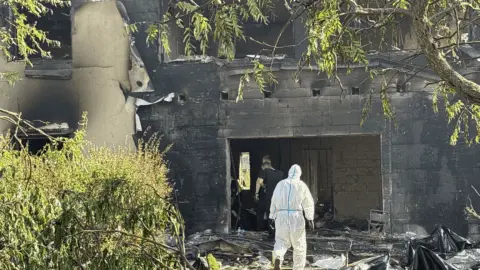
The law enforcement crackdown on defense companies became a subject of public discussion following reports of raids on Vyriy Industries, which currently produces 25% of all Ukrainian FPV drones. In early July, the State Bureau of Investigation (SBI) carried out approximately 70 searches involving the company’s managers, its CEO, his relatives, and contractors across various regions of Ukraine.
Investigators also discovered and seized UAH 32 million in cash from the company’s office, funds that were reportedly intended for salary payments.
“We paid salaries to top managers and key developers in cash for security reasons rather than transferring the funds through banks. There was documentation for this money, and all applicable taxes had been paid. Even the SBI investigator initially did not want to seize the cash during the searches, but it was ultimately taken,” Vyriy Industries CEO Oleksii Babenko told Oboronka.
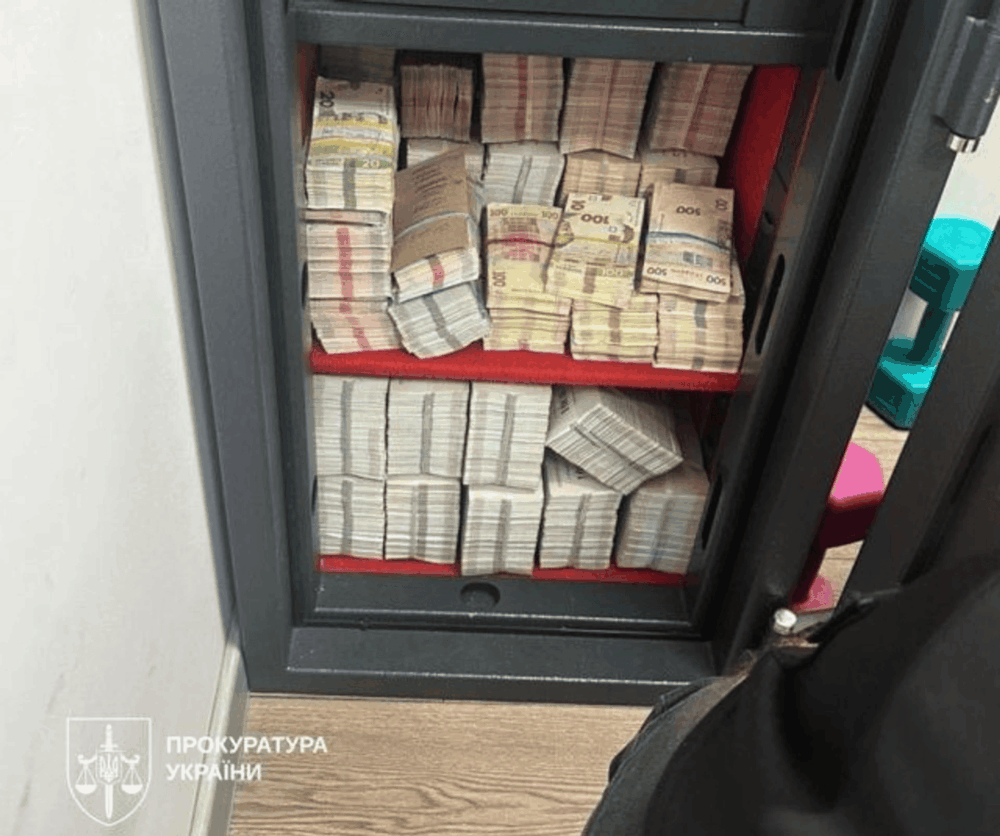
The SBI alleges that the company inflated drone prices by including fictitious administrative expenses in its pricing structure, allegedly channeling funds through hundreds of sole proprietorships (FOPs). Babenko denies the accusations, insisting that the company’s transactions with FOPs were used to procure Ukrainian-made components for FPV drones from domestic manufacturers and were entirely lawful.
“I’ve seen claims suggesting that we work with around 150 sole proprietors. Let me reveal a secret: according to our reporting, the real number is closer to 400–500, because no single company is capable of producing 8.5 million components,” he said during a briefing.
According to Babenko, searches were carried out at the premises of numerous sole proprietors, some of whom were allegedly pressured to immediately provide testimony about purported money-laundering schemes.
At first glance, it may appear that law enforcement agencies were simply doing their job and pursuing various investigative leads. So why did the case trigger such a strong public backlash?
First, there was the perceived absurdity of the situation itself: the SBI conducted large-scale, heavy-handed searches involving significant manpower as part of a price-inflation investigation targeting a company widely recognized in the market for its competitive pricing, as well as the quality of its products and customer service.
This is reflected in numerous public statements by military personnel. Dozens of units openly came to the company’s defense — an unusual development in cases of this kind.
The company’s position is further supported by data from the Dot-Chain Defence platform, a military marketplace where commanders independently select unmanned systems based on the price-to-quality ratio. Vyriy Industries is one of the platform’s leading suppliers, accounting for 33% of all deliveries.
Secondly, the searches were conducted without court warrants, under a special legal procedure that may be invoked when investigators believe there is a risk that evidence could be destroyed.
Thirdly, just one hour before the company’s press conference at the Parkovyi Convention and Exhibition Center, the venue’s management prohibited the event from taking place without providing any explanation — further adding a political dimension to the situation.
However, the greatest public outrage was sparked by the fact that the searches took place only after a coordinated media campaign aimed at discrediting Oleksii Babenko across Telegram channels, a number of questionable websites, NGOs, and social media accounts. More on this shortly.
Another high-profile case involved raids on Ukrainian Armor, which took place two days after the searches at Vyriy Industries. According to the company, Deputy CEO Maksym Polyvianyi suffered a concussion after allegedly being assaulted in the bathroom of his own home during the operation.
Footage released from security cameras appears to show that the officers neither identified themselves nor informed him that procedural actions were being carried out. They reportedly pointed firearms at the executive and forced him to his knees.
Ukrainian Armor promptly released photographs showing Polyvianyi’s injuries. However, the Security Service of Ukraine (SBU) denied using physical force and stated that no official complaints had been filed against its officers. At the same time, in comments to Oboronka, the company’s CEO, Vladyslav Belbas, said that complaints regarding the actions of law enforcement personnel had been submitted to the SBU, the SBI, and the Prosecutor General.
The case itself concerns the supply of grenade launchers manufactured in the Czech Republic, with Ukrainian Armor acting as an intermediary. The company was contracted to deliver modern RPG-75M launchers, while the military allegedly received grenade launchers manufactured in the 1980s.
Notably, there is currently no conclusive evidence demonstrating that the launchers do not correspond to the declared model. According to a court ruling reviewed by an Oboronka journalist, the searches were authorized on the basis of a visual inspection of the launchers, during which investigators identified labels and markings dated 1986–1988 on certain components.
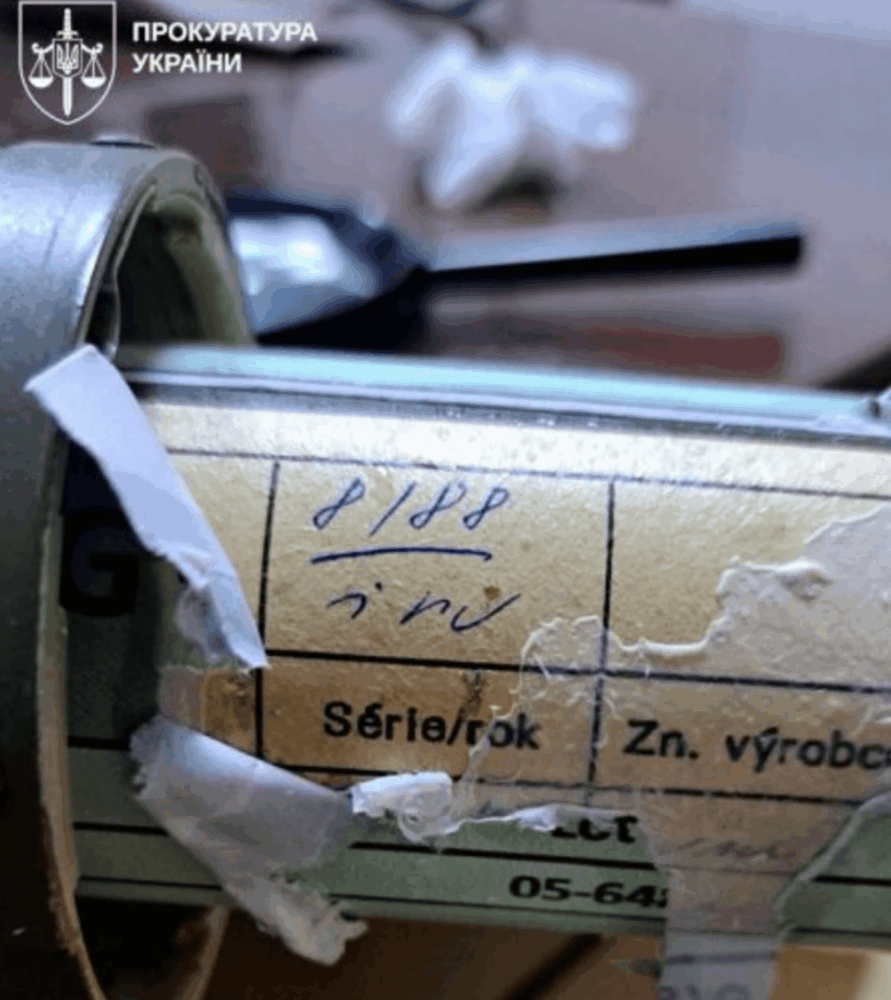
At Ukrainian Armor, the situation is explained by the fact that the Czech manufacturer did indeed use aluminum tubes (combustion chambers) from existing factory stock to produce new grenade launchers. The company argues that this complies with international technical standards and is common practice in the production of weapons and other equipment, provided that the components and the final product undergo testing and meet the specified technical requirements.
“Flamingo missiles use AI-25 engines taken from storage, which were purchased from around the world, but no one claims that the missiles themselves were manufactured in the 20th century,” Belbas said.
According to him, the company has had cases where weapons were delivered with quality-related reservations, but all disputes were previously resolved through formal claims, defect remediation, or replacement of products in accordance with contract terms.
“Now, we are not even being allowed access to these grenade launchers to see for ourselves whether there are actually any issues and to find ways to resolve them. Legally, the products have still not been accepted by the military, while the crates, judging from the court rulings, appear to have already been unsealed,” Belbas said.
The SBU also stated that the Logistics Forces Command had allegedly warned the Defense Procurement Agency (DPA) that this type of grenade launcher was ineffective and urged the agency not to purchase it. In other words, according to the investigation’s logic, these grenade launchers should not have been purchased at all.
The DPA responded that the procurement was carried out in accordance with established procedures and that the supplier was selected based on the lowest price, after the military had confirmed that the RPG-75M launchers were equivalent to the item required for purchase. This means that either one side (the DPA or the SBU) is manipulating the facts — or does not fully understand the weapons procurement process.
Anonymous Law Enforcement Press Office
These two cases share one common feature: the raids targeting Ukrainian Armor and Vyriy Industries took place amid intense media attacks against the companies.
The campaign to discredit the heads of defense companies was carried out through multiple channels, including anonymous Telegram channels such as “Joker” and “Kartochnyi Ofis,” news outlets like Insider UA and Trukha, as well as a number of social media pages.
For example, on July 2, several days before the searches at Vyriy Industries, one news Telegram channel published a fake report containing what were allegedly photos of the raid at the company — even though the raid had not yet taken place at that time.
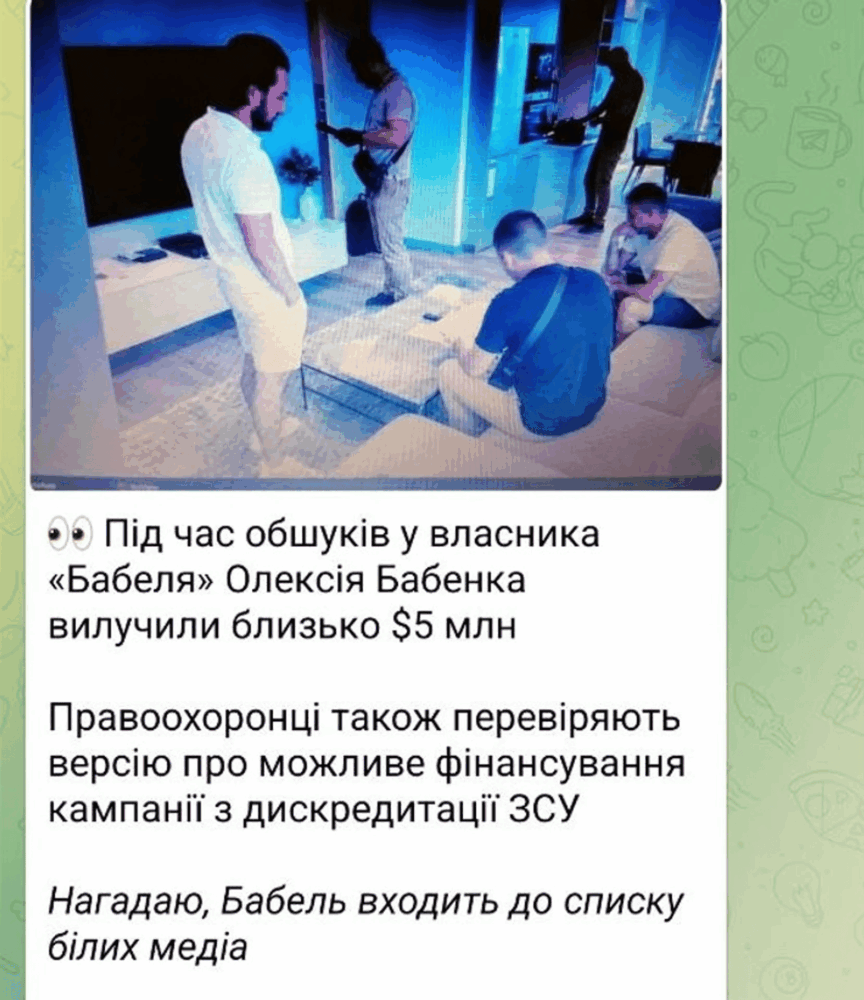
Meanwhile, administrators of some anonymous Telegram channels somehow had access to certain details of the case several hours before law enforcement agencies publicly communicated them.
There were also more creative attempts to target the manufacturers. For example, the outlet StopCor, which frequently publishes materials bearing signs of black PR campaigns, sent one of its employees directly to a Vyriy Industries corporate event three weeks before the searches, apparently with the intention of later turning the footage into an “exposé.”
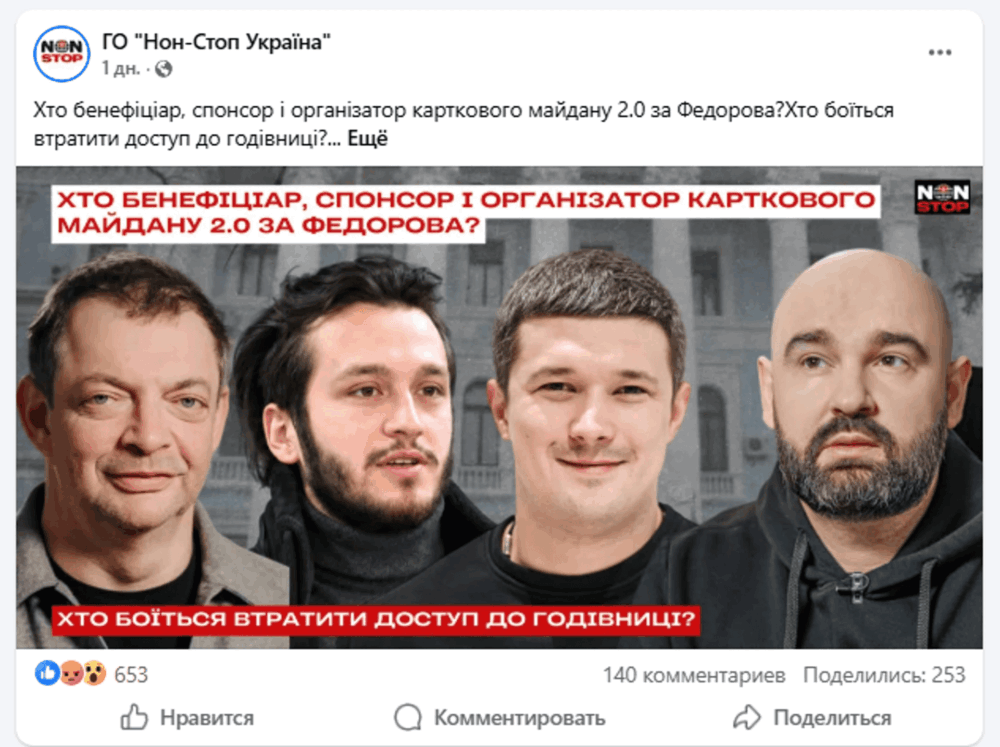
A particularly notable actor in this process is the “human rights” NGO Non-Stop Ukraine, which published a series of materials about Vyriy Industries and Ukrainian Armor. These materials were then promoted by various Facebook accounts in the comments sections under posts from major news pages.
One of the manufacturers of FPV drone components told Oboronka that on the day of the searches at Vyriy Industries, this NGO began sending letters to the company’s contractors, addressed in particular to various law enforcement agencies, alleging the “creation of a criminal organization by Oleksii Babenko.” In practice, this created a toxic media narrative around the company.
A review of the court registry also reveals lawsuits filed by the NGO Non-Stop Ukraine against Ukrainian investigative authorities, accusing them of inaction regarding alleged violations by Ukrainian Armor that had been reported by the organization itself.
Interestingly, Non-Stop Ukraine presents itself as a “human rights volunteer organization that puts the interests of society above its own.” Its “About Us” section features a scanned letter of appreciation for its active civic stance, signed by Iryna Mudra, Deputy Head of the Office of the President of Ukraine.
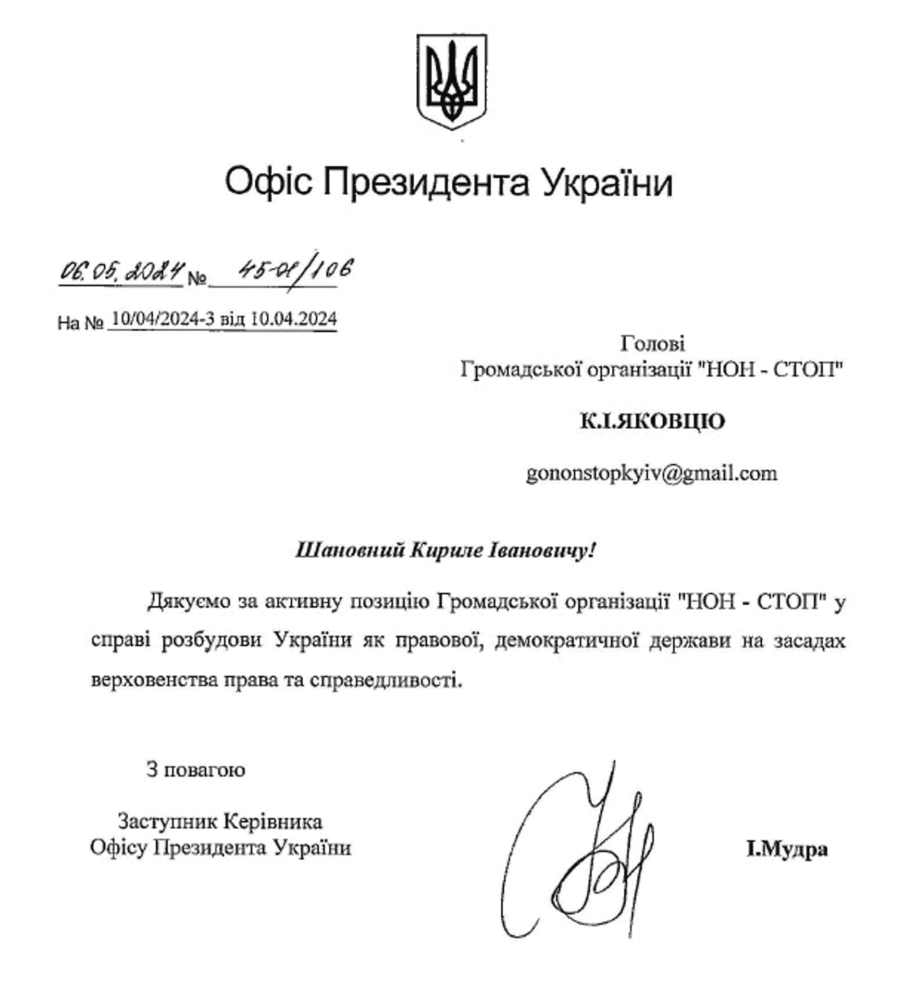
Oboronka asked Iryna Mudra what exactly this organization had received the letter of appreciation from the Office of the President for, and whether the document was authentic at all. After the article was published, the official responded that it was not a letter of appreciation, but rather a reply to a letter from the NGO regarding alleged corruption involving one of the senior officials.
Another notable pattern is that, several days before the raids, attempts were made to link the companies’ executives to other controversial stories.
For example, Babenko was linked to alleged attempts to discredit Commander-in-Chief Oleksandr Syrskyi, as shortly before the searches, the publication Babel, which he owns, released an investigation into alleged torture in the Skelia regiment.
This even gave rise to a theory that the searches targeting Babenko were retaliation for the journalistic investigation. Babenko himself does not believe this theory, arguing that the attacks had been ongoing long before the publication of the story. He also denies having any influence over the outlet’s editorial policy.
At the same time, Ukrainian Armor was linked to alleged attempts to discredit the missile program and attacks against Fire Point. These claims targeted Serhiy Pashynskyi, head of the National Association of Ukraine’s Defense Industries, accusing him of being the “real owner of Ukrainian Armor” in the publications in question. Pashynskyi himself, however, publicly supported Fire Point during the controversy.
The final piece of the puzzle is that former Defense Minister Mykhailo Fedorov frequently appears in publications targeting both companies. One outlet even accused defense companies of organizing rallies in support of Fedorov, portraying them as a “fight for the feeding trough.” In other words, attacks aimed at discrediting defense manufacturers and media campaigns targeting the defense minister appear to be linked, raising even more questions about their nature.
Among those targeted by the media attacks were also two of Ukraine’s largest drone manufacturers — General Chereshnya and SkyFall. The companies told Oboronka that, as of now, neither of them has been subject to searches by law enforcement agencies.
How Do We Move Forward?
Ukrainian Armor and Vyriy Industries are not the only companies that have come under scrutiny from law enforcement agencies. In February, searches were carried out at the homes of executives and at the production facilities of Spetsmashproekt, a private manufacturer of large-caliber ammunition. The reason cited was the alleged non-compliance of the ammunition with the stated technical specifications.
In the spring, searches were conducted at UkrArmotech, a major armored vehicle manufacturer. The stated reasons included alleged price inflation compared with market levels, as well as claims that the integrated Morok electronic warfare system did not meet its declared specifications. The company’s bank accounts were even temporarily frozen, casting doubt on its ability to fulfill orders — the freeze was later lifted by a court decision.
Oboronka is also aware of major searches carried out at at least one more large drone manufacturer and two additional electronic warfare (EW) system producers. However, their executives declined to comment publicly to Oboronka due to concerns about possible escalation from investigative authorities.
It is worth noting that the mere fact that law enforcement agencies conduct searches is not inherently negative. Authorities have a duty to investigate, defense companies vary widely, and there are certainly dishonest actors among them.
One positive point for law enforcement is that the damage caused to state defense procurement by this series of investigative actions appears to be significantly smaller than it could have been. Both Vyriy Industries and Ukrainian Armor continue fulfilling deliveries under their existing contracts.
However, the broader context of these searches — including their toxic “anonymous” media coverage, aggressive pressure tactics, and the weak level of justification provided — raises concerns that these investigative actions may not be aimed at restoring lawful order, but rather at intimidating certain manufacturers and bringing them under control by manipulating procedural measures.
How can one distinguish between absurd searches that pose a threat to companies and state defense procurement, and genuinely justified investigative actions?
Clearly, the only solution is complete transparency. Law enforcement agencies must explain their actions to the public and manufacturers, engage with journalists, understand the specifics of how the industry operates, and approach the legal grounds for their actions responsibly. Media coverage and communication should be official rather than “behind-the-scenes” and anonymous, while the treatment of those involved should correspond to their actual procedural status.
Ultimately, law enforcement agencies must operate strictly within the framework of the law, preventing various “parasites” from exploiting the situation for personal gain.
The reputation of Ukraine’s investigative authorities, to put it mildly, leaves much to be desired — the latest investigation by Slidstvo.Info concerning the 143 apartments allegedly linked to the brother of SBI Director Oleksii Sukhachov is just one example. Any unjustified pressure on major arms manufacturers will continue to provoke a strong public reaction.
The media attention has already drawn the attention of members of parliament. On July 17, a meeting of the relevant parliamentary committee was held, with representatives of Ukrainian Armor and Vyriy Industries invited to discuss and examine the situation.
The content of the discussion at the committee meeting is classified as a state secret. However, Belbas says he saw a genuine desire among lawmakers to objectively examine the situation and keep it within the framework of the law. Babenko also described the lawmakers’ approach as constructive.
At the same time, Belbas sees no signs that investigators are acknowledging their mistakes and does not expect a quick resolution to the issue. Babenko is also cautious about expressing optimism.
“At this point, I assess the chances of a lawful resolution at 50/50. A sign that the process is moving in the right direction would be the return of the money that was unlawfully seized from the company. In that case, trust would increase,” Babenko said.
A court hearing on the return of the seized funds to Vyriy Industries is tentatively scheduled for Tuesday, July 21.
The defense industry has traditionally been highly complex and closed. Large-scale defense businesses operating with significant production volumes during wartime, rapidly expanding while navigating constant regulatory changes, are even more challenging to manage. With enough determination, criminal proceedings could be initiated against almost any major manufacturer.
However, it is crucial that law enforcement agencies maintain a sense of proportion. This balance can easily be lost amid intensified competition for state contracts and ongoing reshuffles within the Ministry of Defense, which could create ideal conditions for attempts to “redistribute” the market and target competitors.
Tags: Arms Manufacturers Defense Procurement EMPR media investigations military industry Ukraine defense industry Ukraine Politics