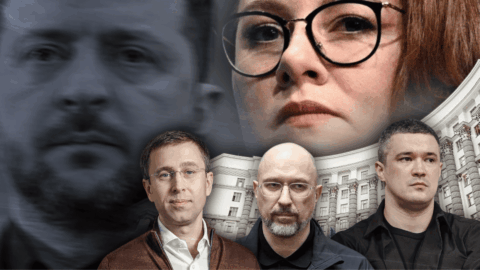
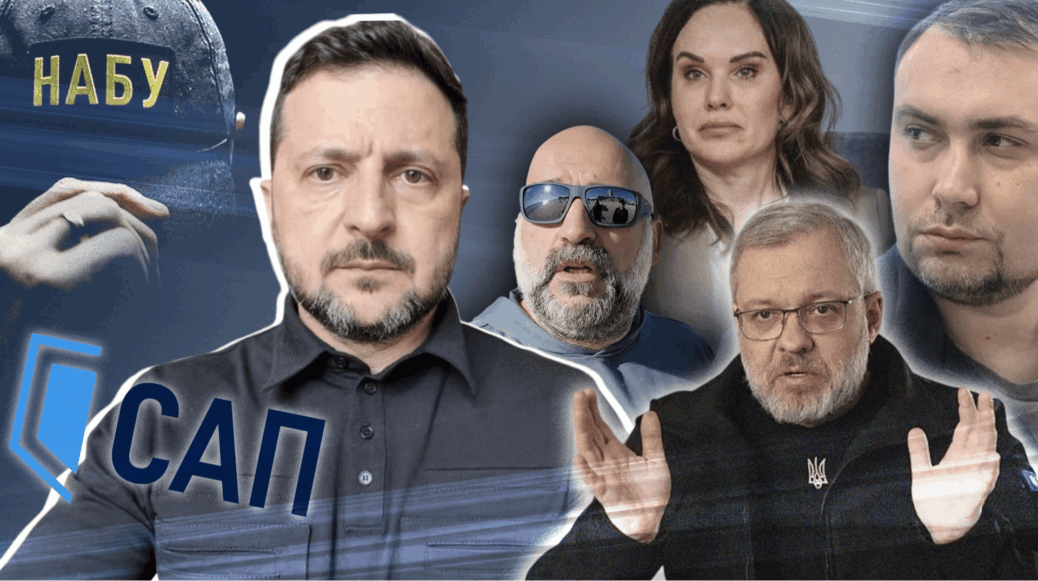
Ukraine’s anti-corruption agencies expose an alleged scheme to collect and legalize bail for ex-minister Herman Halushchenko, implicating senior officials and raising questions about corruption within the Presidential Office.
“Life is like a box of chocolates: you never know what you’re gonna get,” says one of the famous quotes from the Hollywood film Forrest Gump. The same, however, cannot be said about the Presidential Office and its “managers.” The results of yet another lightning-fast operation by NABU and SAPO, bearing the same name, show that people whose actions, like those of their predecessors, once again show signs of abuse and corruption continue to find their way into the president’s inner circle.
Another quote from the film of the same name as NABU and SAPO’s latest operation is particularly reminiscent of the authorities’ behavior over the past year, after the president’s first associate, Oleksii Chernyshov, was served with a notice of suspicion: “I ran because I had to run. I didn’t think about where it would lead me.”
The attempt to destroy the independence of NABU and SAPO a year ago, as well as the search for bail money for Herman Halushchenko as recently as June this year, are different attempts by the authorities to evade responsibility without considering the consequences for the country as a whole. The only difference is that then and now, different state bodies and institutions were used to achieve the goal.
How can the presidential office of a country at war be involved in searching for UAH 150 million in illicit funds and subsequently laundering them through a state-owned bank? Why might Andrii Yermak’s successor, Kyrylo Budanov, already be involved in this? And who dragged the country into yet another corruption scandal?
Ukrainska Pravda investigated why, having abandoned the fight against corruption, the authorities began to lose to it. Because that is precisely the concept articulated by Deputy Head of the Presidential Office Iryna Mudra in the latest batch of recordings from the new NABU and SAPO operation.
“Halushchenko’s Odyssey”
In November 2025, after the launch of the NABU and SAPO operation under the telling name “Midas,” many of Ukrainska Pravda’s sources in political and business circles repeatedly emphasized that there was not a single top-ranking official involved in the case concerning the alleged embezzlement in the energy sector. Mindich, they argued, was certainly a friend of the president, but that was not an official position.
“And where does NABU’s jurisdiction come in here? Even Halushchenko (former energy minister and later justice minister – UP), whose voice was heard on the “Mindich tapes,” has not been charged,” complained one influential businessman from the authorities’ inner circle.
In February this year, anti-corruption investigators detained the former minister as he attempted to leave the country. Thus, Halushchenko was served with a notice of suspicion and a preventive measure in the form of UAH 200 million bail, while the Presidential Office was left with a major headache.
By that point, Halushchenko had become not only one of the highest-ranking figures implicated in the criminal organization at the center of Operation Midas, which law enforcement agencies accuse of embezzling more than $100 million from Ukraine’s beleaguered energy sector.
Halushchenko is the key that could allow NABU and SAPO to open two doors at once. One bears the sign: “The Presidential Office’s role in the activities of the criminal organization.” The other: “Who was the true beneficiary of the offshore accounts to which tens of millions of dollars were transferred.”
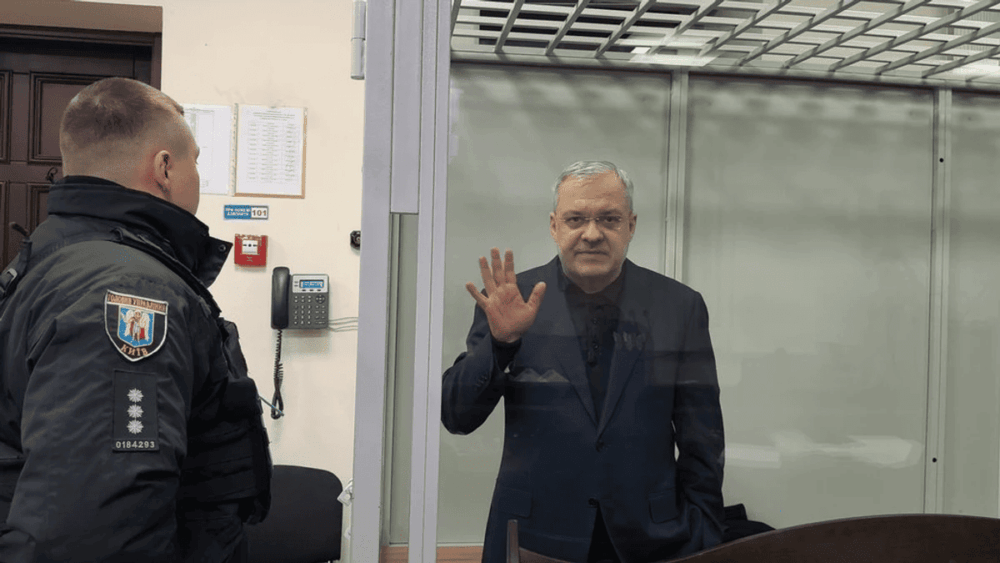
Despite all these factors, Herman Halushchenko’s release from the detention center was delayed for a long four and a half months. In April of this year, according to sources cited by Ukrainska Pravda, Halushchenko began to seriously worry that he had been forgotten in the highest corridors of power. The former minister’s “loneliness” coincided with the publication of excerpts from the so-called “Mindich tapes” on Telegram channels. The excerpts were in the possession of the suspects’ lawyers, including Herman Halushchenko himself.
The Presidential Office linked the publication of the tapes to Andrii Smyrnov, a former deputy head of the Presidential Office and a lawyer. At the time, Smyrnov’s associate and former head of the Presidential Office, Andrii Bohdan, was added to the sanctions lists. And Herman Halushchenko received a signal that the Presidential Office had not, after all, forgotten that he was still in detention.
However, in early May, the attention of the entire ruling elite was diverted by a notice of suspicion issued against a far more important Andrii Yermak, who was suspected of involvement in the legalization of UAH 460 million during the construction of the upscale Dynasty cottage community near Kyiv.
According to UP sources in political and business circles, UAH 140 million for Yermak was collected literally across the entire government hierarchy: in the Presidential Office, in parliament — including with the involvement of David Arakhamia, head of the president’s parliamentary faction — and among ministers. Even former Ukraine national football team coach Serhii Rebrov, according to UP’s sources, was forced to contribute UAH 30 million.
Rumors that Halushchenko might strike a deal with investigators significantly intensified the authorities’ search for a “ransom” for the “offended” former minister the following month. It is important to understand that the problem was not that the money was unavailable in the authorities’ numerous back offices, but that the UAH 200 million had to be legitimate money, rather than stolen funds.
On June 12, Ukrainska Pravda reported that bail was being prepared for Halushchenko. At the time, UP sources emphasized that businessman Vasyl Astion could be used to rescue Halushchenko. Astion is a close associate of Andrii Smyrnov, the aforementioned former deputy head of the Presidential Office, who himself is facing two charges from NABU and SAPO. Astion, however, denied this information in a comment to UP.
At the time, sources among influential businessmen claimed that President Volodymyr Zelenskyy had tasked his chief of staff, Kyrylo Budanov, with organizing the search for and legalization of the funds, and that Budanov, in turn, had brought former MP and property developer Maksym Mykytas into the operation.
On June 29, UAH 150 million was finally posted as bail for Herman Halushchenko. As is customary, the money came from companies unknown to the public, with equally unknown owners. Halushchenko was released. And it seemed that the Presidential Office, the president himself, and his associate Tymur Mindich could breathe a sigh of relief.
That was until August 19, when it became known that NABU and SAPO had managed to document the operation to “save Private Ryan.”
An “Emergency” Office?
On the morning of August 19, it became known that NABU and SAPO were conducting searches at the offices of Iryna Mudra, Deputy Head of the Presidential Office, and Vadym Stolar, a member of parliament from the banned pro-Russian Opposition Platform – For Life party, who had, however, already become unaffiliated and nonpartisan.
At the same time, according to Ukrainska Pravda sources, Mudra was still in Israel as recently as last week. Stolar, who, according to the same sources, had once again left for his “Monaco constituency” last month, celebrated his birthday on August 10 and, unlike Mudra, prudently “forgot” to return to Ukraine. Sources cite a leak about a pending notice of suspicion as the likely reason.
According to recordings from Operation “Forrest Gump,” Mudra repeatedly refers to the leadership when discussing the collection and legalization of the bail money for Halushchenko. Whether this “leadership” was Presidential Office chief Kyrylo Budanov, or whether the president himself issued instructions regarding the bail, is too early to say.
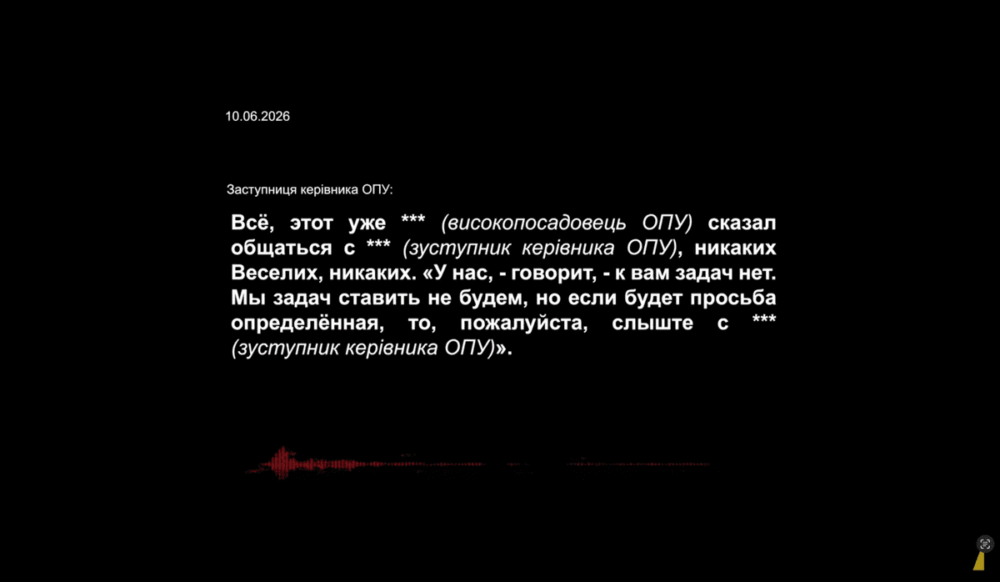
However, if Mudra was inherited by Budanov from Andrii Yermak, political establishment sources claim that another defendant in the criminal case, Vadym Stolar, was brought into the Presidential Office directly by the former head of the Main Intelligence Directorate of the Ministry of Defense.
According to the same sources, Budanov was in constant contact with Stolar both before and after the January transfer from the “island” to the government’s “mainland.” Budanov also communicated with Mykytas. However, anti-corruption agencies have so far declined to comment on whether NABU and SAPO have recordings featuring Budanov’s voice. According to UP, however, Budanov is mentioned in the text of the notice of suspicion issued to Mudra.
Ukrainska Pravda sent a request to the Presidential Office asking for information about Stolar’s and Mykytas’s visits to the Presidential Office. According to UP sources, Budanov has privately insisted that he did not meet with the businessmen at the Presidential Office.
At the same time, several influential businessmen, speaking off the record, described the involvement of the head of the Presidential Office in resolving a number of business-related issues connected not only to Stolar’s interests but also to those of another influential businessman, Borys Kaufman.
In particular, Kaufman has been actively involved in the redistribution of the pharmaceutical market in recent months. Stolar, meanwhile, was involved in a conflict with Yevhen Sihal, who is also known in political circles as “Chicken.” (The confrontation between MHP founder Yuriy Kosiuk and AgroMars owner Yevhen Sihal — two influential businessmen who competed for years in Ukraine’s agricultural market — UP).
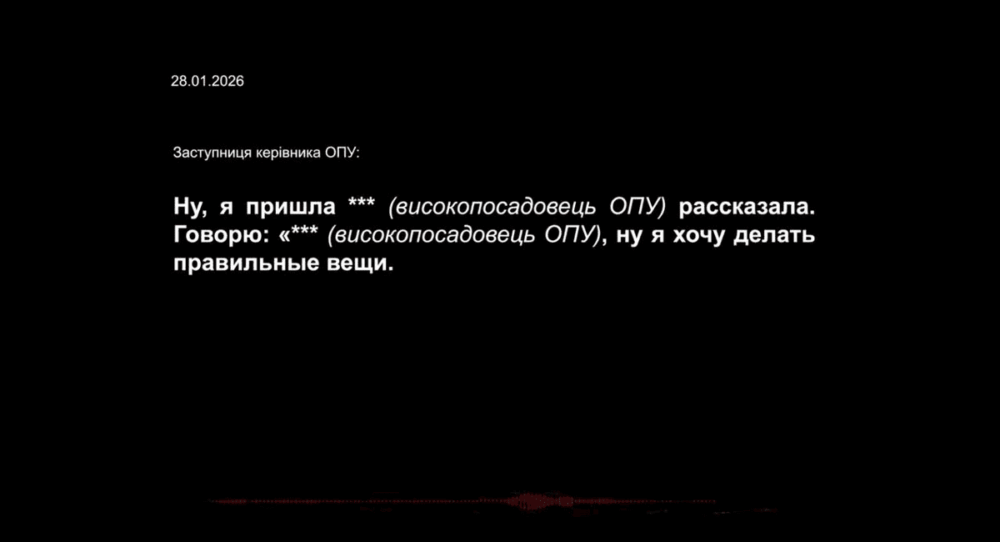
It is also not difficult to infer from the context which senior Presidential Office official Budanov’s deputy is quoting in a conversation with Mykytas: “He says: corruption needs to be systematized and controlled. There is no need to fight it — it needs to be controlled.”
“There are a lot of emergency issues there,” one influential law enforcement official comments on the activities of the head of the Presidential Office.
“He’s keeping a low profile after the tapes were published. He’s not meeting with any outsiders,” says a Presidential Office source, describing Budanov’s current mood. However, UP sources close to the head of the Presidential Office himself are less panicked: “He says everyone keeps referring to the recordings, but on recordings anyone can say anything. And he communicates with all the businessmen. All big business is in contact with him. Someone needs help, and he raises the issue publicly at the Council of Entrepreneurs. Some are being pressured by law enforcement, while others simply need to vent.”
Thus, the possible course of action by the anti-corruption agencies in this case may depend directly on the testimony of Budanov’s subordinate, Iryna Mudra. This, in turn, as in the case of Herman Halushchenko, will depend on who collects her bail and how quickly. Given the second episode in this criminal case, which concerns the raider takeover of a number of assets worth hundreds of millions of hryvnias, “buying” Mudra’s freedom will not come cheap.
According to UP sources in business circles, Budanov is already dealing with this issue. The main priority is that the funds must be “crystal clear.” Unofficially, people close to the head of the Presidential Office add: “He is helping with lawyers, not money. There are people who can help with the bail without him. As ridiculous as it may sound right now, everyone is acting strictly in accordance with the law.”
By evening, following the morning searches, Mudra issued a statement: “Today I submitted my resignation, and I will defend my good name myself, without shifting this fight onto the state.”
According to sources for Ukrainska Pravda in political circles, Mudra believes that she was recorded by her partner, Maksym Mykytas, who has been involved in various anti-corruption investigations for many years. NABU and SAPO are not disclosing details of the high-profile operation for understandable reasons.
“They simply cannot acknowledge our skill,” one influential representative of the anti-corruption system said off the record. He added: “Listen to the ruling on Mykytas’s pretrial detention and you’ll understand that this isn’t the case. And the law prohibits committing crimes while carrying out a special assignment. No one at NABU would have agreed to something like that. Plus, he has UAH 200 million in bail.”
During the hearings on pretrial measures for the suspects in the case, it emerged that Mykytas and Stolar had discussed counter-surveillance at the beginning of the summer, including having someone follow them, because if NABU had wiretaps and expert analysis, “we’d be f**ed.”* Mudra, for her part, told Mykytas that someone had warned her that NABU had a case against her and advised her not to appear in public places together with him — which did nothing to prevent the suspects from facing NABU and SAPO together on the morning of August 19.
“Outsmarted Themselves”
As of now, the results of the Presidential Office’s operation to rescue Herman Halushchenko from pretrial detention can be assessed as follows:
– Deputy Head of the Presidential Office Iryna Mudra, who, according to investigators, coordinated the collection and legalization of the bail money for Halushchenko, has been dismissed from her position after being served with a notice of suspicion and the publication of recordings from the NABU and SAPO operation dubbed “Forrest Gump.”
– The Presidential Office has “lost” another figure involved in the case — Viktor Dubovyk, head of the Directorate for Legal Policy (he is being held in pretrial detention after being served with a notice of suspicion by NABU and SAPO — UP), who repeatedly served as the Presidential Office’s “talent pool” candidate in competitions to select independent heads of reformed law enforcement agencies.
– The criminal origin of the UAH 150 million in bail money for Halushchenko could result in the funds being confiscated in favor of the state.
– Accordingly, Herman Halushchenko may return to pretrial detention in the near future. The authorities will once again face the task of finding the money and devising a scheme to legalize it in order to post new bail for Halushchenko.
– The Presidential Office faces new risks as it may need to find bail money for Mudra, as well as deal with her possible testimony. She did not apparently decide on her own to rescue Halushchenko, but was evidently acting on instructions.
– Head of the Presidential Office Kyrylo Budanov may find himself embroiled in his first corruption scandal in a high-ranking position, with no clear prospects for how it will be resolved.
– For the second time, society has received evidence that the authorities are using the nationalized state-owned Sense Bank for their own interests.
– Once again, society has heard how unchecked power is being used to protect those in the authorities’ inner circle.
– As part of Operation “Forrest Gump,” 10 suspects have been served with notices of suspicion.
– Next time, it will be extremely difficult to find businessmen willing to provide funds through opaque means to post bail for yet another NABU and SAPO suspect.
We publish below a conversation between former MP Maksym Mykytas and businessman Vasyl Astion. The conversation was quoted by an SAPO prosecutor during the hearing on the preventive measure for Mykytas:
M: Do you have about UAH 200 million available through bank transfer?
A: No, I don’t have any free cash at all right now.
M: Well, you understand, I’m not asking you to give it to me. I’ll pay you back immediately with a good interest rate. I mean, if they bring it in, you can put it in.
A: Of course, I’ll do it.
M: Well, they brought UAH 200 million for Herman, and now we’re figuring out how to transfer it. Just please don’t tell anyone — not Vadik, no one. Don’t tell anyone right now.
A: And where will I need to transfer it? I don’t want to make the payment from my own account.
M: It will have to be transferred on my behalf; I’ll tell you where to send it. They’ll hand it over to you there. You’ll be able to do it, right?
A: Yes.
M: Good job.
A: Do I need to transfer 100 or 200?
M: 200. That’s what I asked you. So, they’ll hand it over to you somewhere in Kyiv, and everything will be fine?
A: Yes, I’ll tell you where to bring it.
M: All right, good.
A: It’s just that the responsibility will be on your side in case something…
M: Good Lord, you lived in Vienna; you’ll live in Bangkok or Venezuela.
A: I’ll transfer the 200 million to you.
Ukrainska Pravda reached out to Vasyl Astion for comment. In response, he said he did not want to interfere with the investigation and declined to answer the publication’s questions.

An interesting detail: the conversations between the suspects suggest that UAH 200 million was initially collected for Herman Halushchenko’s bail. The court then reduced the amount to UAH 150 million. This may indicate that once the state machine gets involved, finding an extra UAH 50 million is not a problem at all.
The only question is how long the resources of the back offices of people in one way or another connected to the authorities will last if NABU and SAPO continue exposing corruption in the highest echelons of power, while the number of notices of suspicion and the amounts of bail continue to grow.
Tags: Herman Halushchenko Kyrylo Budanov nabu presidential office SAPO Ukraine Corruption Ukraine Politics