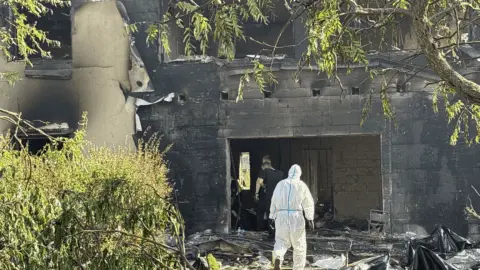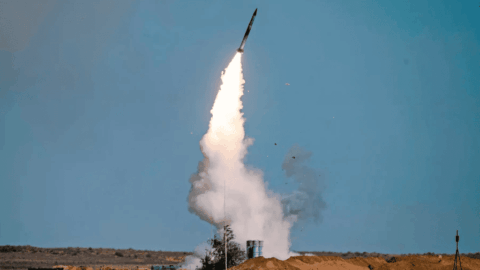
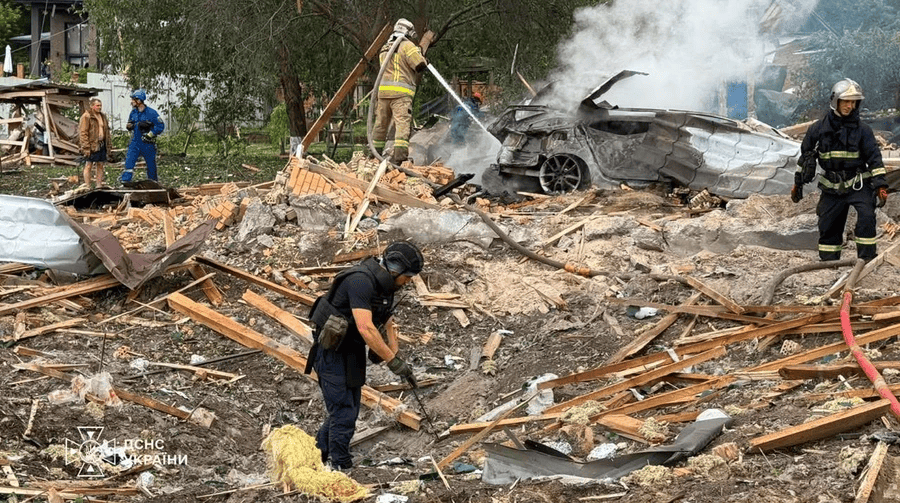
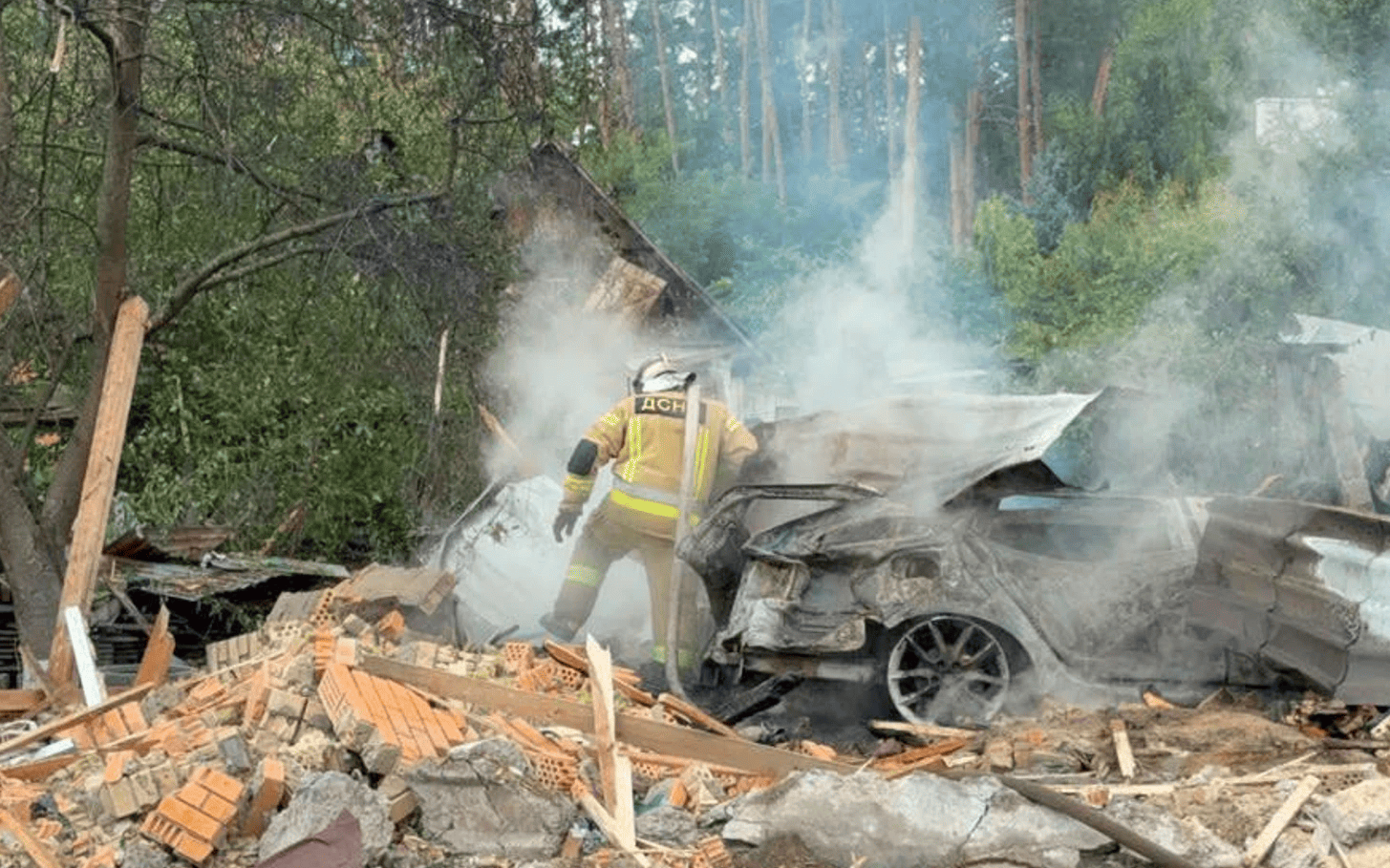
On July 24, a tragic event occurred for Ukraine’s entire defense industry: Russians struck a location in Kyiv Oblast with ballistic missiles where many weapons manufacturers had gathered. A forum that was supposed to feature demonstrations of military equipment from a wide range of producers instead resulted in the deaths of at least 10 people. Around a hundred visitors were also injured.
A lot of questions immediately arise. Why are arms exhibitions needed at all? Who organized this event? From the outside, this event may appear to be the height of negligence, as it involved a gathering of people who are critically important to the defense effort in close proximity to a missile strike site.
However, if we delve deeper into the issue, it becomes clear that arms exhibitions and demonstrations are held throughout Ukraine almost every day, and abandoning them is simply impossible, because they are not only about PR.
Even President Zelenskyy’s evening remarks that “no weapons exhibitions should be held during wartime; we have warned about this a thousand times” sound somewhat strange, given that the President himself has attended Ukrainian defense forums, and the organization of some of them is approved at the highest level.
Nevertheless, the situation surrounding this particular exhibition reflects a worrying trend in which organizers of such events become complacent, and as a result the state simply cannot guarantee security.
Oboronka spoke with witnesses to the tragedy in Kyiv Oblast and with organizers of defense exhibitions. We explain why defense forums are needed and what lessons should be learned from the tragic loss of life following the missile strikes.
“If It Hadn’t Been for the People with Tourniquets, the Death Toll Would Have Been Higher”
The event was organized by the drone association Armada. It is an association of private weapons manufacturers. There are dozens of such organizations in Ukraine. Some are influential, while others are barely active.
Armada is not just another “no-name” organization. Its members include major drone companies such as Vyriy Industries, TAF Industries, Deviro, and Buntar Aerospace. Armada itself is part of the Ukrainian Council of Gunsmiths, one of the two largest associations of private weapons manufacturers in Ukraine. The Council of Gunsmiths denied any involvement in organizing the forum, stating that it was an initiative of Armada itself.
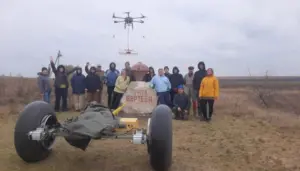
The event was dedicated to technologies for protecting critical infrastructure. It featured demonstrations of interceptor drones, detection systems, and networking opportunities with representatives of the government, businesses, and the military. Tents were set up on site, along with an exhibition area.
There are frequent accusations online that the forum had been announced in advance. This is both true and false at the same time.
Oboronka also received an invitation to the event, and no location was specified there. The venue was disclosed only to registered participants late in the evening on the day before the event. We were also unable to find any evidence of public announcements about it in open sources.
On the other hand, information about the event was likely circulated through specialized groups for weapons manufacturers. Journalists from Dzerkalo Tyzhnia reported this. They published a screenshot from the event presentation that included the date and details.
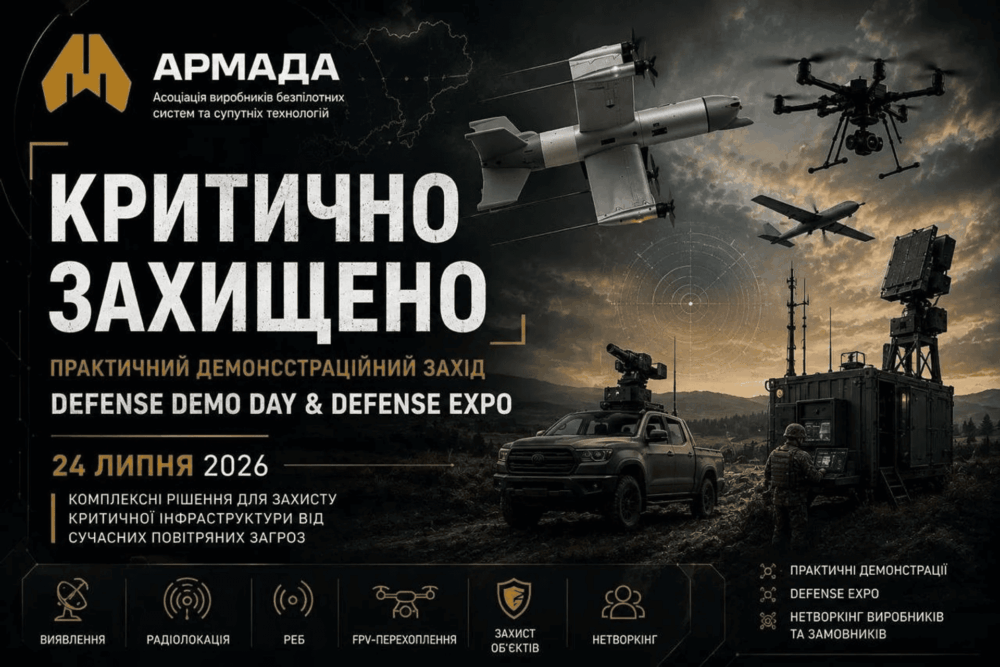
“We received this presentation from a drone developer who had been invited to register for participation in the exhibition. The presentation was circulated in specialized public channels and groups to register interested participants,” the publication clarified at the request of Oboronka.
Dzerkalo Tyzhnia allowed Oboronka to review the full version of the presentation. It indeed did not specify the location or even the region where the event would take place. At the same time, it contained enough information to assess the scale of the event and draw attention to it. The presence of Russian spies in specialized miltech communities has long been no secret within the industry, and administrators of such communities frequently warn about it.
Those interviewed who witnessed the event described what happened there as nothing short of a “horror.” The missiles struck directly where people had gathered. As of now, 10 people are known to have been killed and 100 wounded.
Questions arise not only about the event’s secrecy, but also about the safety measures at the forum itself.
“We didn’t see any ambulances on standby. The shelter was very rudimentary — basically just some ground-floor area. In reality, everyone ran into the forest to take cover. The worst part was the organizational chaos immediately after the first strike, because there were several of them. Communications were poor, so people relied on text messages. There was no signal at all in the forest, so everyone spent a long time trying to locate their people.
The police who arrived at the scene had no idea what was going on or what the event was about. Fire trucks completely blocked the road, and ambulances couldn’t get through. The ambulances themselves took a long time to arrive. If it hadn’t been for the people carrying tourniquets, the death toll would have been higher. Our team alone saved at least five seriously wounded people.”
“We went to retrieve the car. The damage was very peculiar — the car was largely intact, but the roof, the top of the rear seat, and the dashboard had been pierced. We’re not experts, but the trajectory suggests that the explosion was not the usual type, where fragments travel upward from a ground detonation. Instead, it appears to have come from above downward — it looks like an airburst. In other words, the Russians achieved exactly what they intended to do,” one of the forum participants anonymously told Oboronka.
Other witnesses also point to the poor level of organization at the forum.
“People ran to the shelter. The site was full of wounded people screaming, groaning, and calling for help. I ran to a man who was holding his stomach together with my fleece jacket. I applied a dressing. Later, I put a tourniquet on his leg that someone had brought. Before that, I had already managed to apply tourniquets to two other people. I only had four tourniquets… absolute powerlessness… and helplessness…
There was no ambulance on standby and no medics at the event. If there had been, at least two more people would still be alive. There was no communication at all. The wounded were lying there trying to call an ambulance themselves, or at least reach someone. The controller for our UGV burned down. The ambulances were not arriving. The Poles who were attending the event were the first to start evacuating the wounded with their UGV to the road,” forum participant Yuliia wrote on her Facebook page.
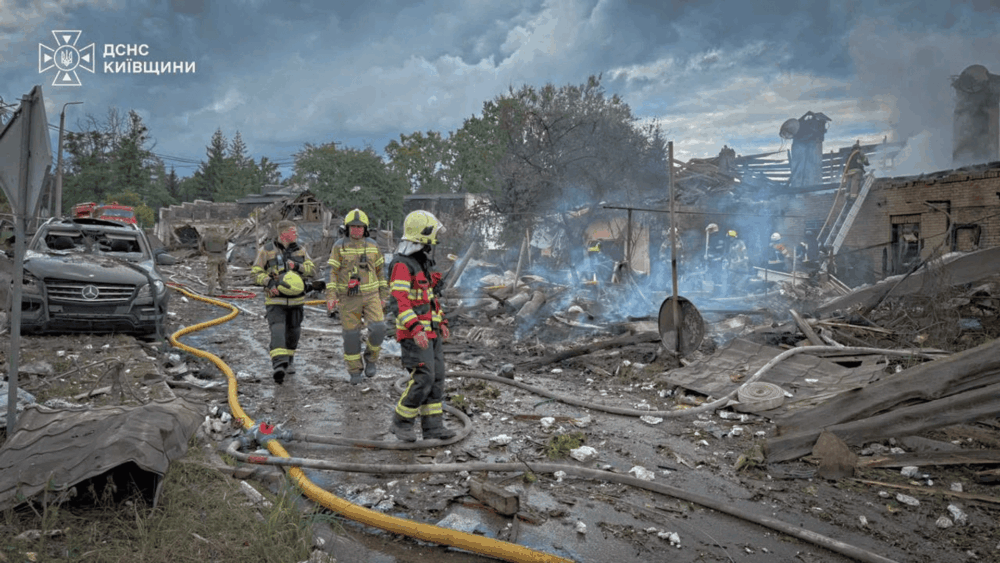
Another witness insists that there were three missiles and also recalls a traffic jam of ambulances on the road leading to the site. Moreover, he does not remember receiving an air-raid alert, although the Air Force officially issued one several minutes before the explosions.
“The people who invited me to this event generally did everything the way they always do; I’ve attended many tests before. (…) After I had gone around the stands that interested me, the missiles started hitting. One impact was behind me, another was in front of me, about 100 meters away. Only after the strikes did people start being directed to the shelter over the microphone, but that was probably not their fault — there was no siren. (In fact, the Air Force officially issued an alert several minutes before the strike, — editor’s note.)”
“There was a concrete building that the organizers directed people to, but most people ran into the forest, and I ran there as well. On the way, I provided assistance to the wounded. Five minutes later, there was a third strike. The location was not very convenient because there is only one access road from the highway to that site, through the forest. As I understand it, that is why there was a traffic jam involving SESU and ambulance vehicles,” military serviceman Andrii Lukashenko, who attended the forum, told Oboronka.
The main task for investigators now is to determine whether such a tragedy could have occurred at any defense-related event, or whether it happened because of negligence on the part of the organizers. Another key question is whether fewer people might have died had there not been possible official negligence.
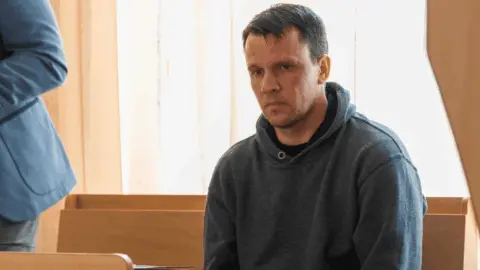
The Armada association did not respond to Oboronka’s request for comment to confirm or deny the information. At the time of publication, the organization had not publicly commented on the incident in any way. After publication, it became known that the chief organizer was also hospitalized.
It also became known after the publication of this article that the Armada association had published its official position regarding the strike on the exhibition in Kyiv Oblast on its website.
Information has also been circulating online — including through notorious Telegram channels known for spreading disinformation, such as Joker — claiming that the state defense technology cluster Brave1 was involved in organizing the event. In a comment to Oboronka, a representative of the cluster denied this:
“We were neither partners of this event nor co-organizers, and we only learned about it one day before it began.”
Arms Exhibitions and Security
The reaction on social media to the tragedy was entirely understandable: “Who even holds arms exhibitions during a war?” In reality, while this view is emotionally understandable, it is mistaken, as such defense forums, trials, exhibitions, and other industry events take place almost daily.
Defense forums and exhibitions do not exist solely for PR purposes. The reason is that Ukraine operates a genuine arms market rather than a rigid state-controlled production hierarchy like the one in Russia. This structure of Ukraine’s defense industry requires horizontal connections: communication between manufacturers in search of partners, exchanges of experience between military personnel and engineers, and open dialogue between government representatives and the market in order to stay aligned and coordinate efforts.
Moreover, the nature of the defense industry worldwide requires a high level of trust and personal contacts. This is why Ukrainian companies, for example, attend international exhibitions and spend millions of dollars on exhibition space. There is a significant difference between showing a video of a product and demonstrating it in person, allowing knowledgeable people to examine all its systems and design and conduct a test drive. Without this communication, weapons manufacturers would not have been able to achieve such success in production.
“At exhibitions and demonstrations, manufacturers, users, government customers, and potential partners meet. It is often after such meetings that testing, integration of solutions, contracts, or joint development projects begin. Our defense industry is developing very rapidly right now, and one of its advantages is precisely the short distance between the military and the manufacturer,” representatives of the Ukrainian Council of Gunsmiths told Oboronka.
The first organization to establish the practice of holding defense exhibitions during the full-scale war was the state defense technology cluster Brave1. Initially, these events involved only about a dozen niche miltech companies that needed a venue to present their products to the military. Over time, the events became larger in scale. Some are now held at testing grounds in a closed format specifically to help military personnel communicate to manufacturers the need for particular solutions on the battlefield.
“Another category includes forums and summits. They are aimed at attracting international partners and foreign investment. Here, too, we see tangible results — with our support, Ukrainian manufacturers secure investments, reach cooperation agreements, and gain an opportunity to voice the industry’s urgent needs. This often prompts the state to look for ways to address them,” a Brave1 representative told Oboronka.
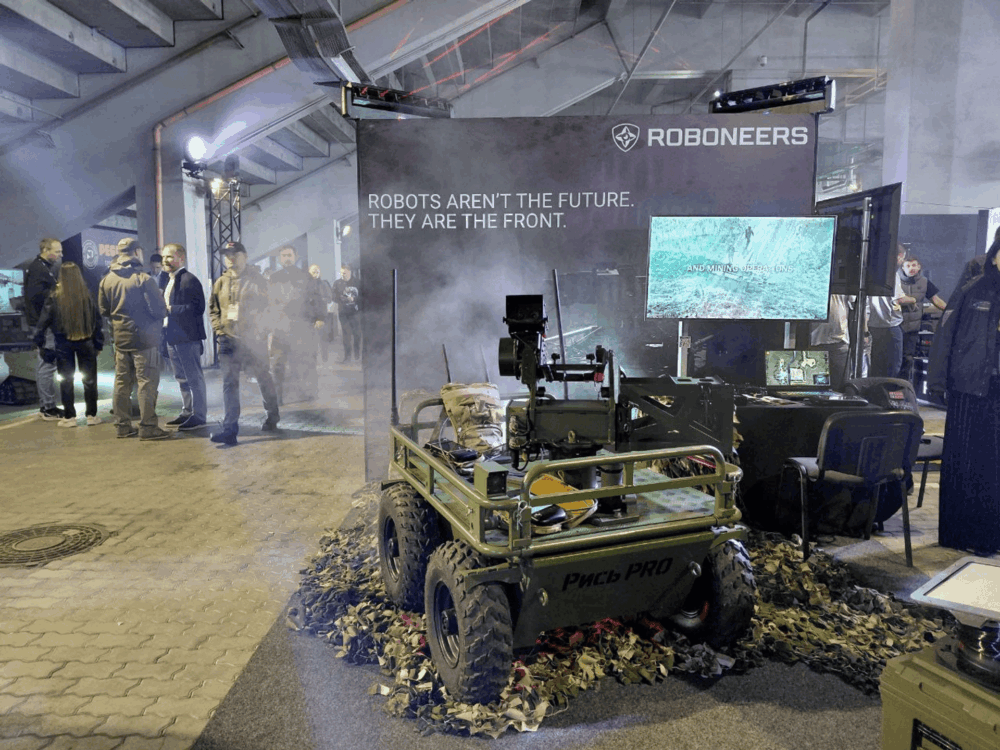
Safety rules for defense industry events are very strict. The cluster remains in constant contact with the Defense Forces and security services to protect exhibition venues. For example, during last year’s exhibition in Lviv, the Security Service of Ukraine (SBU), the National Police, the Military Law Enforcement Service, and the National Guard conducted large-scale counterintelligence operations in the city for several days. Security personnel inspected vehicles, restricted access to certain streets, and checked the documents of suspicious individuals.
Organizers carefully conceal the location and disclose it only at the last moment. Journalists are strictly prohibited from publishing anything until everyone has left the venue. There are also rules governing photography to avoid revealing the identities of important individuals. Security personnel equipped with screening gates and metal detectors operate on site, attendees are promptly notified of air-raid alerts, and shelters are usually located nearby.
However, perfect security measures do not exist, and even they can fail. For example, during one of last year’s forums, a woman ignored security rules and posted an Instagram story from the shelter at the event venue. Because the shelter was fairly recognizable, Russian OSINT analysts were able to identify it precisely and publish its location on their Telegram channels. No missile strikes were carried out against the site at that time.
“Anyone attending such events in 2026 should understand all the levels of risk involved. This ranges from needing to protect yourself with sunscreen to recognizing that the event could be a target for a Russian attack. In my experience, safety briefings are always provided at such events, and notifications about air-raid alerts are always issued. Organizers always emphasize that no one should remain at the venue. I will not discuss what exactly happens at an open-air venue when an alert is announced,” Militarnyi journalist Kateryna Suprun told Oboronka.
Today, exhibitions and demonstrations are organized by many different organizations — events open to the press alone take place almost every week. Even individual private defense companies hold their own events to showcase their products to military personnel and the media. To their credit, many of them genuinely take security rules seriously. However, there are also situations where guaranteeing safety is either impossible or where organizers simply do not pay sufficient attention to it.
Based on the experience of Oboronka journalists, participants do not feel safe at every defense-related event. Proper shelters, reliable communications for monitoring threats, and other essential conditions are not always available.
“The location was sent out in an invitation via the insecure Telegram app the evening before. There was no instruction to enable air-raid alert apps on phones. The Starlink connection kept dropping due to the large number of participants. There were no shelters, and in the event of an air-raid alert, people were instructed to disperse across the surrounding field. As for the alert itself, it was announced by one of the organizers in a deep, commanding voice,” Oboronka journalist Sviatoslav Nakonechnyi says, describing a problematic event organized by one of the organizations.
Unfortunately, this is not the first time that inadequate security measures have led to disaster. One need only recall the tragedy in Chernihiv, when Russians struck the city center during a gathering of drone manufacturers.
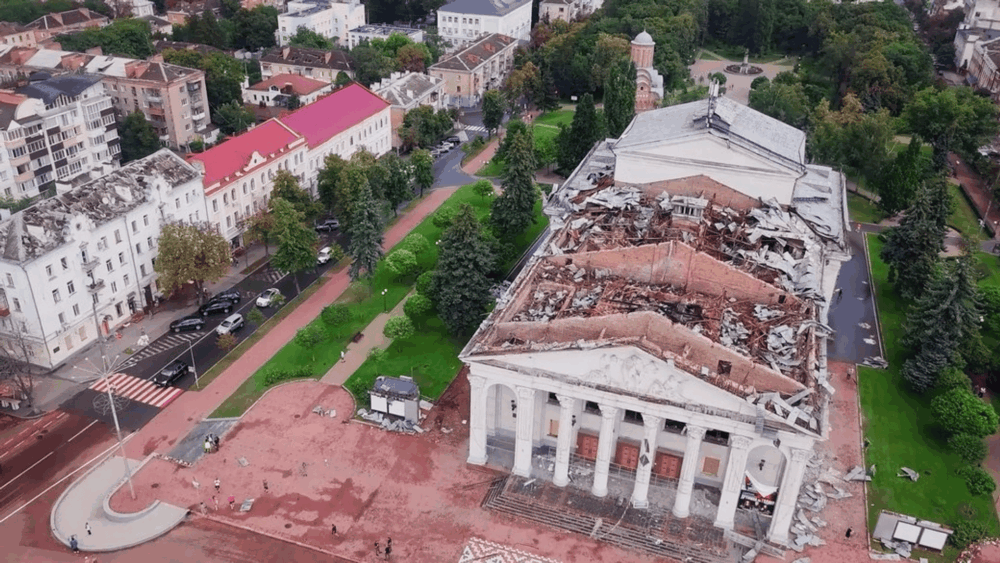
Guaranteeing protection against such incidents with 100% certainty is impossible, according to Vadym Hlushko, founder of the OSINT community CyberBoroshno.
“Preventing information leaks about large events is impossible because there are too many variables that need to be controlled. During the distribution of event notifications, the organizers’ email accounts may already be compromised, or Russians may register for the event and obtain the information, or the email account of someone who registered for the event may be compromised. Alternatively, human intelligence assets may be operating within the ranks of the organizers, the companies involved, or the security services responsible for the event’s protection,” he told Oboronka.
At the same time, a scenario in which Ukraine bans all defense forums appears misguided. It may be necessary to review and update security protocols. However, the complete cancellation of military equipment exhibitions as a phenomenon could deal a serious blow to the industry.
Ultimately, any military activity at a training ground also involves risk, as Russian missiles can strike at any moment. But that does not mean military personnel should be prohibited from carrying out their duties.
“Defense exhibitions are necessary for the industry. But I believe that under conditions of large-scale attacks, they should either be held underground, as we used to do, or in western Ukraine, where Iskander and S-300 missiles cannot reach,” concluded Serhii Honcharov, Director of the National Association of Ukrainian Defense Industries (NAUDI).
Tags: Defense Forum EMPR media Military Technology missile strike National Security russia ukraine war Ukraine defense industry