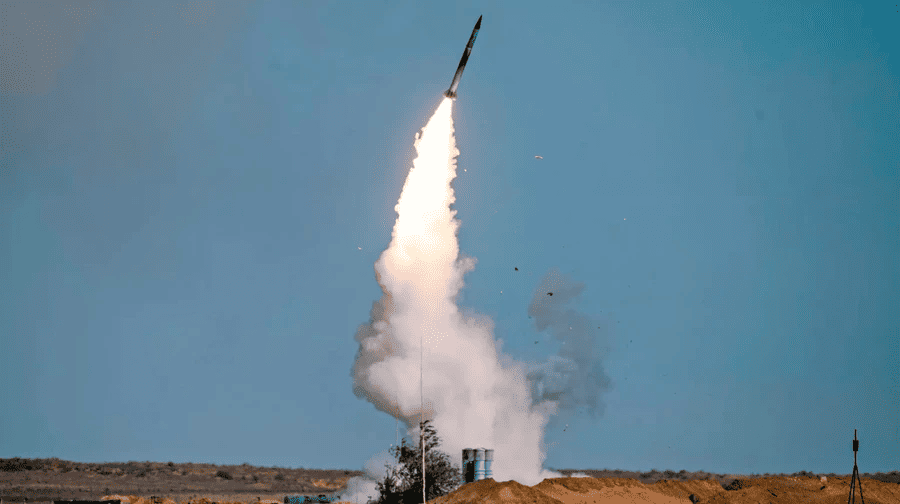
Russia has transformed S-300 and S-400 air defense missiles into strike weapons, creating a new threat by combining speed, mass attacks, and production scale.
On the night of August 5, Russia launched 24 ballistic missiles at Ukraine, which the Ukrainian Air Force classified under the combined category of Iskander-M/S-400. The primary target was the Kyiv region. Due to a shortage of Patriot interceptor missiles, none of the incoming targets were intercepted.
What makes this significant is that the S-400 was originally designed as an air defense system to shoot down aircraft and missiles — not to strike ground targets. However, Russia has begun mass-producing missiles for the system, extending their range to reach Kyiv and significantly enhancing its long-range strike capabilities.
Oboronka explains what these missiles are, why they are so fast yet relatively inaccurate, and why they pose such a serious threat to civilians.
How an air defense missile turns into a shortened ballistic missile
Russia has used air defense missiles to strike ground targets before. In 2022, it attacked frontline cities with old surface-to-air missiles from the S-300 systems.
Later, evidence emerged of the use of new 48N6 missiles compatible with later versions of the S-300 and S-400 systems. In 2026, they were joined by RM-48U missiles, which the Russian defense industry is mass-producing by converting decommissioned air defense missiles. According to Ukraine’s Defense Intelligence, in 2025 Russia produced 200 such missiles, while its target for 2026 exceeds 480 units.
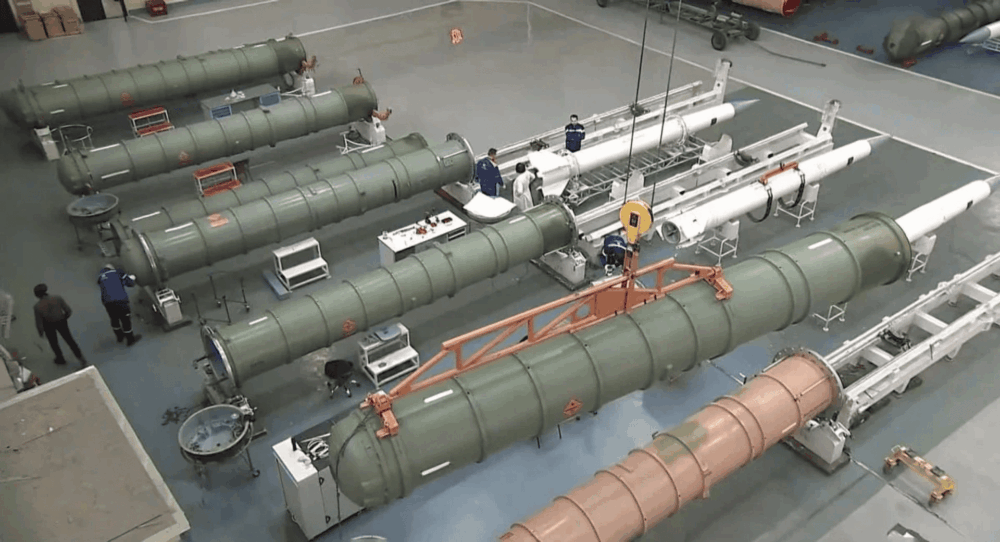
The isolated use of existing air defense missiles has turned into a separate production line capable of regularly supplementing Iskander missiles during combined salvos. Russia is able to deploy more high-speed targets in a single attack, even though these missiles are less accurate and less powerful than specialized ballistic missiles.
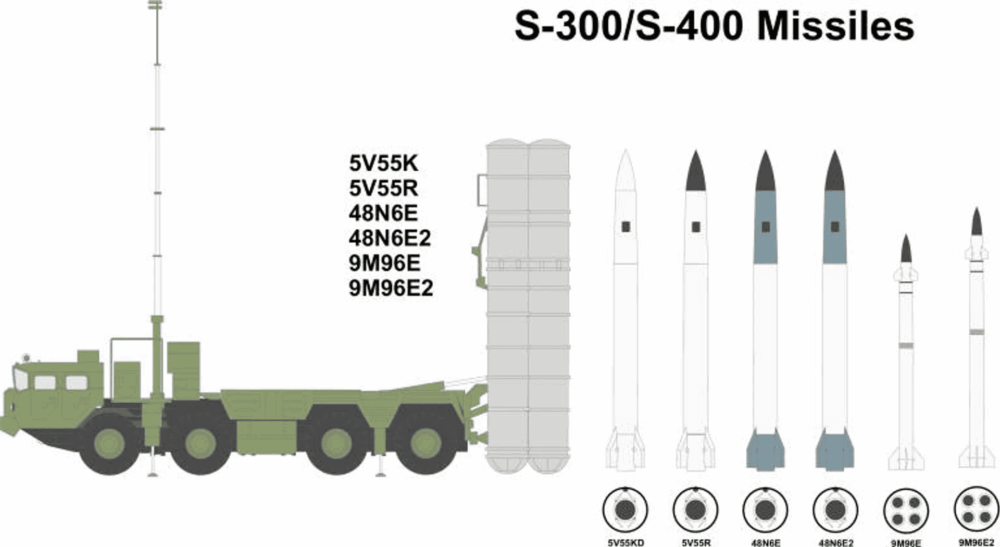
The names S-300 and S-400 are often used as shorthand designations for a missile, although in reality they are large families of surface-to-air missile systems. Each includes radars, command posts, launchers, and several types of missiles. Even the official Rosoboronexport catalogue lists several missiles for the S-400 system, including 48N6E3, 48N6E2, 40N6E, and 9M96E2. Therefore, a recovered 48N6 fragment does not always make it possible to determine the exact version of the air defense system that launched it based solely on the missile’s index — these missiles are often compatible with both later versions of the S-300 and newer S-400 systems.
The oldest missile of significance in this story, the 5V55R, weighs around 1.66 tonnes and carries a high-explosive fragmentation warhead weighing approximately 130 kg. Its standard range for engaging aerial targets is up to 75 km. The newer 48N6 missile weighs around 1.8 tonnes, while the warhead mass, depending on the modification, is listed in various reference sources as ranging from 143 to 180 kg.
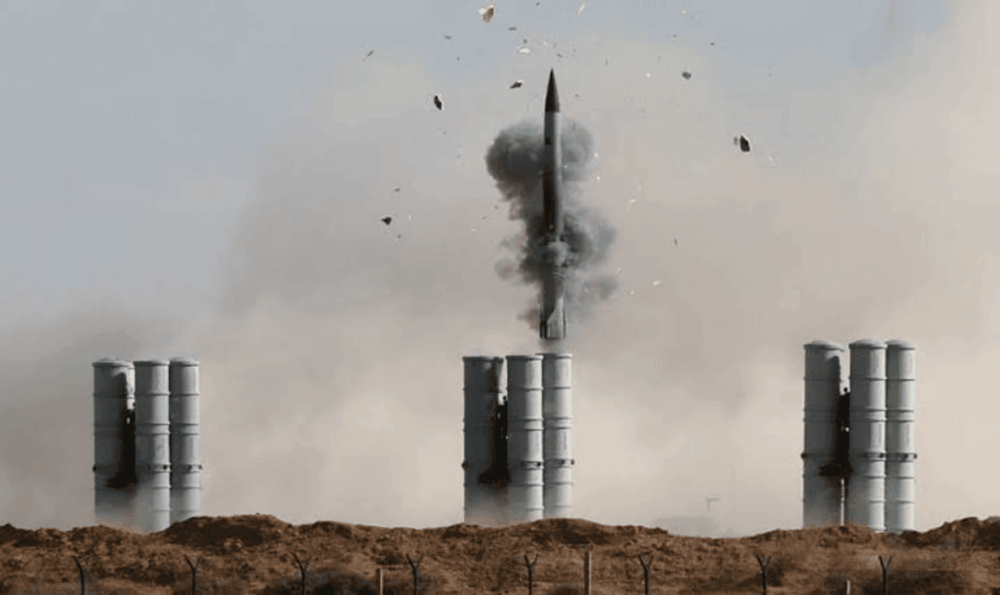
Both surface-to-air missiles were originally designed primarily to destroy aircraft and missiles in the air. Their warheads create a large number of fragments, but they do not have a specialized penetrator or a warhead casing designed to pierce concrete or strike hardened structures. As a result, they are less effective than operational-tactical missiles when hitting fortified point targets. However, this does not make them safer in urban areas. The high speed, the mass of the missile itself, and the spread of fragments create a significant impact zone even with a relatively small warhead.
The 40N6 missile stands apart as the longest-range missile designed for the S-400 system, with a stated range of up to 380 – 400 km for intercepting aerial targets. In November 2023, Ukrainian officials reported finding fragments of a 40N6 missile in the Zaporizhzhia direction. However, the mere presence of fragments does not prove that the missile was used against a ground target rather than by Russian air defense forces. There is no publicly available evidence of its systematic use against ground targets. Similarly, the aircraft interception range cannot be directly applied to ground strikes, as the flight profile and guidance methods are different.
The ability of S-300 systems to strike ground targets was not an improvisation created after 2022. Back in May 2011, three Russian surface-to-air missile regiments conducted exercises at the Telemba training ground, where five combat missiles from a stationary S-300 system were launched against ground targets. According to the Russian military, all of them hit their targets. A test range result, where coordinates are known in advance, cannot be directly compared with a long-range strike under combat conditions, but it confirms that such a mode existed and had been practiced.
The exact ground-target guidance algorithms of different versions remain classified. Available technical explanations indicate the use of standard inertial and radio-command guidance during part of the flight. This means that over long distances, stable correction from a ground radar is limited by the radio horizon, after which the missile continues its flight using inertial guidance. It was likely this type of system that allowed the 48N6DM to travel more than 200 km during the strike on Kyiv. This explains the combination of high speed and relatively low accuracy over long distances.
That is why, in this case, the term “ballistic missile” requires some qualification. The 5V55 or 48N6 does not become a full equivalent of the 9M723 missile used by the Iskander-M system. Instead, it travels a significant portion of its route along a ballistic-like trajectory and, during the final stage, falls within a designated area. There is no publicly available and verified data on the circular error probable of such strikes, so the exact figures that sometimes appear in the media lack sufficient confirmation.
The lack of a reliable accuracy indicator is also important when assessing individual strikes. A hit at a test range or on a large industrial site does not prove the ability to consistently strike a small structure at maximum range. The longer a missile flies without radio correction, the less its behavior resembles that of a specially designed high-precision munition.
High speed leaves little time for a response. According to Ukrainian assessments, the 48N6DM can accelerate to approximately 2.5 km/s, meaning that a flight over 200 km takes only a few minutes. During the attack on the Kyiv region in January 2023, the warning system was not always able to provide advance notice of the threat. This is not due to the missile being “invisible”, but rather to its short flight time and the difficulty of quickly determining whether an S-300 or S-400 launch is targeting an aerial object or a ground target.
Geography of strikes: from Mykolaiv and Zaporizhzhia to Kharkiv
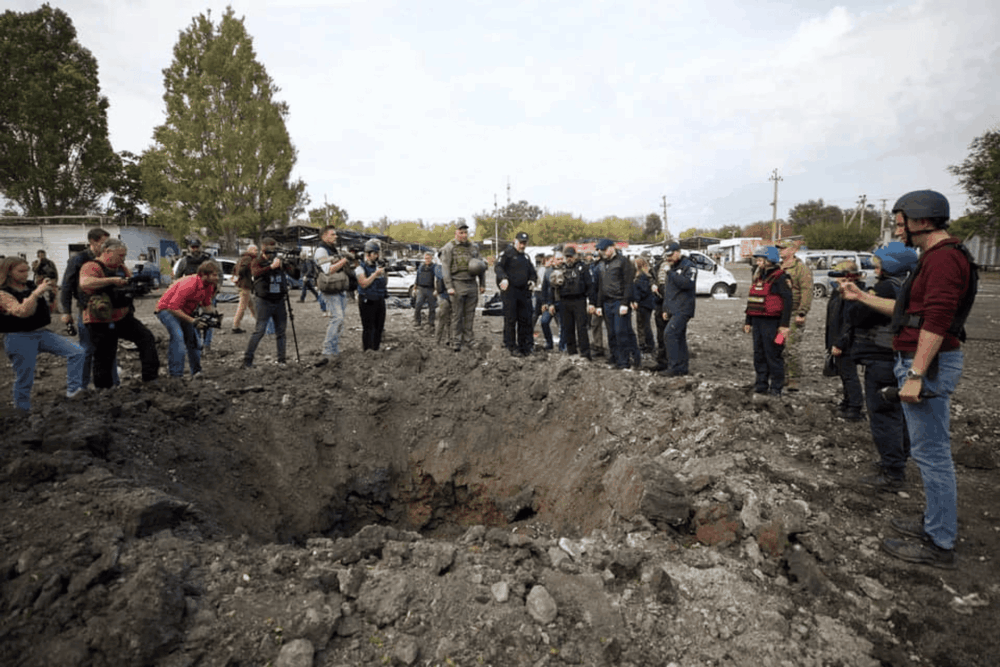
In 2022-2023, S-300 missile strikes were most often recorded in regions relatively close to the frontline or the Russian border. One of the most severe incidents was the attack on a humanitarian convoy in Zaporizhzhia on September 30, 2022. Russia launched 16 S-300 missiles at the city and its outskirts, four of which struck the area of a car market and a convoy of civilian vehicles. Thirty-two people were killed, and the total number of injured reached 118.
In the south, the same threat affected Mykolaiv. On October 23, 2022, one of the Russian S-300 missiles struck a five-story residential building. No one was killed in that attack.
On April 14, 2023, Russian forces launched eight S-300 missiles at Sloviansk. They damaged residential buildings, administrative facilities, and commercial sites. After the rescue operation was completed, 15 people were reported killed and 24 injured.
On the evening of October 21, 2023, two missiles struck a Nova Poshta terminal in Novyi Korotych near Kharkiv. Prosecutors preliminarily identified them as S-300 missiles launched from the Belgorod region, while explosive experts recovered characteristic fragments at the site. The final death toll rose to eight, with another 15 people injured.
These cases demonstrate the main advantage of this type of weapon for Russia: the launchers are already positioned close to the combat zone, while the short distance to Kharkiv, Zaporizhzhia, or Sloviansk significantly reduces warning time.
When the S-400 reached Kyiv

On the morning of January 14, 2023, the Ukrainian military reported that Kyiv had been struck by missiles from the S-400 system launched from the northern direction. Photos of the missile fragments contained markings that made it possible to identify the 48N6DM. The Bryansk region was named as a possible launch area, but the exact coordinates and final findings of the examination were not publicly released. Therefore, it is more accurate to refer to this as a well-grounded Ukrainian assessment rather than a fully confirmed fact.
The newer 48N6DM could travel significantly farther than the older 5V55 missiles and carried a heavier warhead. However, this does not mean that any S-400 missile can accurately strike a ground target at a distance of 400 km — this figure primarily refers to the 40N6 missile and its use against aerial targets. In the case of the Kyiv strike, Ukrainian specialized sources referred specifically to the 48N6DM and a range of more than 200 km.
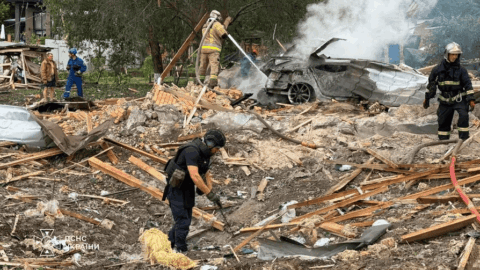
In the summer of 2026, S-400 missiles began regularly appearing in reports alongside Iskander missiles again. On July 2, the Ukrainian Air Force recorded 24 missiles in the combined “Iskander-M/S-400” category and intercepted four of them. On July 6, there were 23 such missiles, while no successful interceptions of ballistic targets were reported. On August 1, one out of 27 missiles from this group was shot down, and on August 5, none of the 24 missiles were intercepted. All four attacks were primarily directed at Kyiv or the Kyiv region. Based on publicly available data, it is impossible to determine the share of S-400 missiles within these figures.
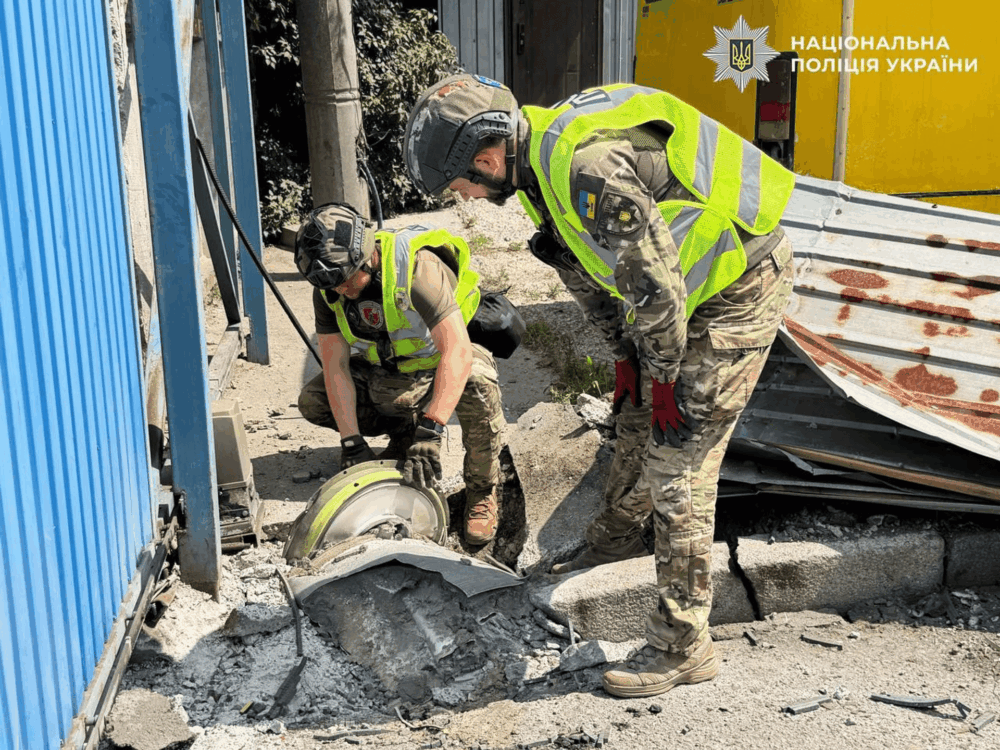
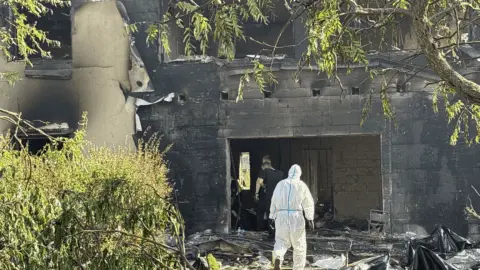
Additional material evidence appeared after the July 14 attack. In Kyiv’s Darnytskyi district, the warhead and fragments of an S-400 missile were recovered. The exact modification was not specified, so this case confirms the use of the system but does not provide grounds to automatically classify the missile as a 48N6DM or 40N6.
The low interception rate during these attacks is linked to their trajectory, speed, and the limited number of suitable missile defense systems available. Russia is exploiting the shortage of Patriot interceptor missiles and is therefore increasing the intensity of ballistic attacks. Such aerial threats require Patriot systems or similar missile defense platforms — including SAMP/T, which is also in service with Ukraine. This creates an unfavorable asymmetry: even a relatively inaccurate missile forces defenders either to risk a protected target or to spend a scarce interceptor missile.
RM-48U: From the disposal of old missiles to a mass-produced strike weapon
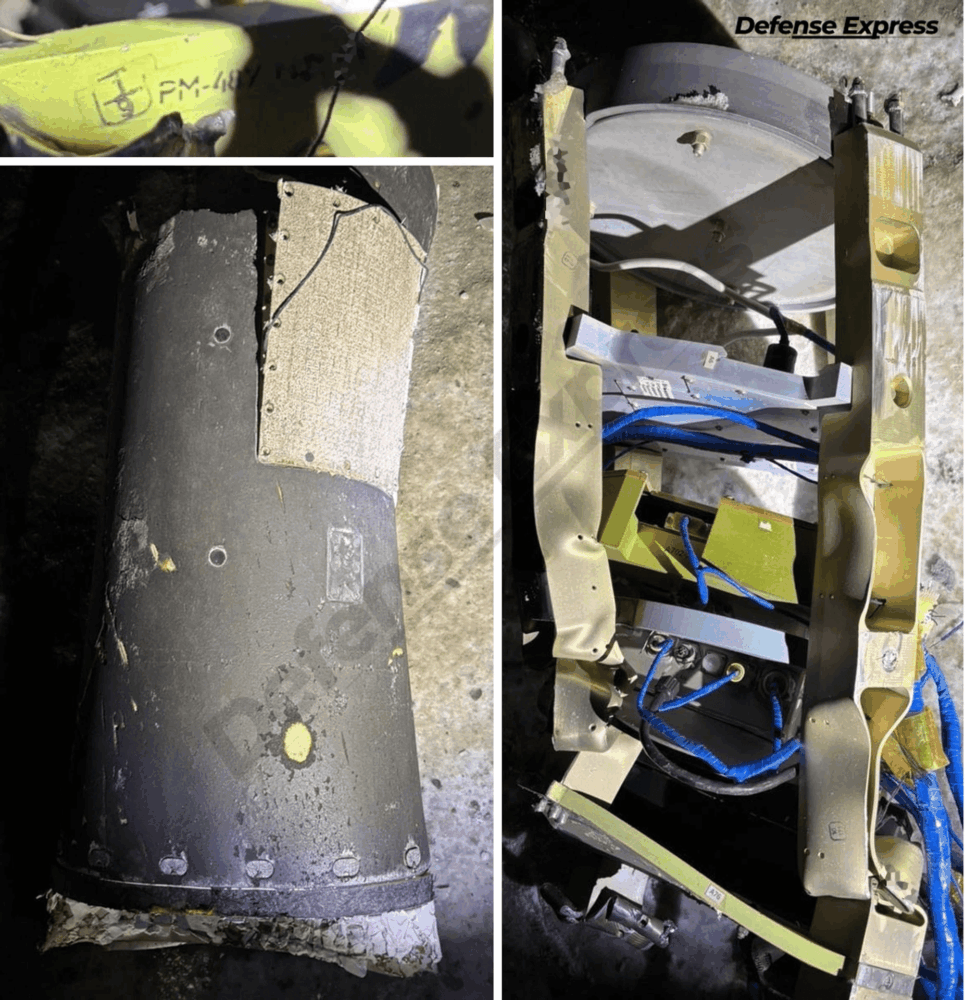
After the combined attack on January 20, 2026, Ukraine publicly showed fragments marked RM-48U for the first time. This is a target missile produced by converting old 5V55 or 48N6 missiles after the end of their service life. It is launched from related S-300 and S-400 systems.
At that time, it was unclear whether the standard warhead had been restored on the specific missile or whether it was being used as a decoy target. In the January estimate of the cost of another Russian attack, Ukraine’s Defense Intelligence referred to the RM-48U missiles used as training missiles. However, by June, they were listed in military intelligence data as “RM-48U strike missiles” intended for ground targets. This suggests that there may be different configurations or methods of using the same missile family.
The scale of the program also became clear only in 2026. According to Ukraine’s Defense Intelligence, production exceeded 200 units in 2025, the plan for 2026 is more than 480, and the current production rate reaches up to 50 missiles per month. Therefore, the first public discovery of fragments in January was not necessarily the first actual use. It was simply the first case that could be openly linked to a specific designation.
These figures change the perception of the RM-48U as a one-off attempt to dispose of expired missiles. Instead, it is a separate mass-production program that allows Russia to turn retired air defense munitions into strike missiles or decoys. The RM-48U is not equivalent to the Iskander in terms of accuracy, warhead weight, or its ability to penetrate hardened structures. However, it increases the number of high-speed targets in combined attacks and places additional pressure on Ukraine’s warning and missile defense systems.
For air defense operators, the difference between a combat missile and a decoy becomes clear too late. A high-speed target cannot be safely ignored simply because it is assumed it may not carry a warhead. It still needs to be tracked by radar, its trajectory assessed, and a decision made on whether to use an interceptor. This is why the RM-48U has military value even in a decoy configuration.
Not a replacement for the Iskander, but a second strike echelon
Russia’s use of S-300 and S-400 missiles against ground targets has a clear practical logic. It allows Moscow to use accumulated Soviet-era stockpiles, some of which are already approaching the end of their service life, while also employing launchers positioned near Ukraine. The RM-48U adds organized conversion of decommissioned missiles to this approach. Soviet-era stockpiles are gradually being depleted, while the production of new surface-to-air missiles requires significant resources and time.
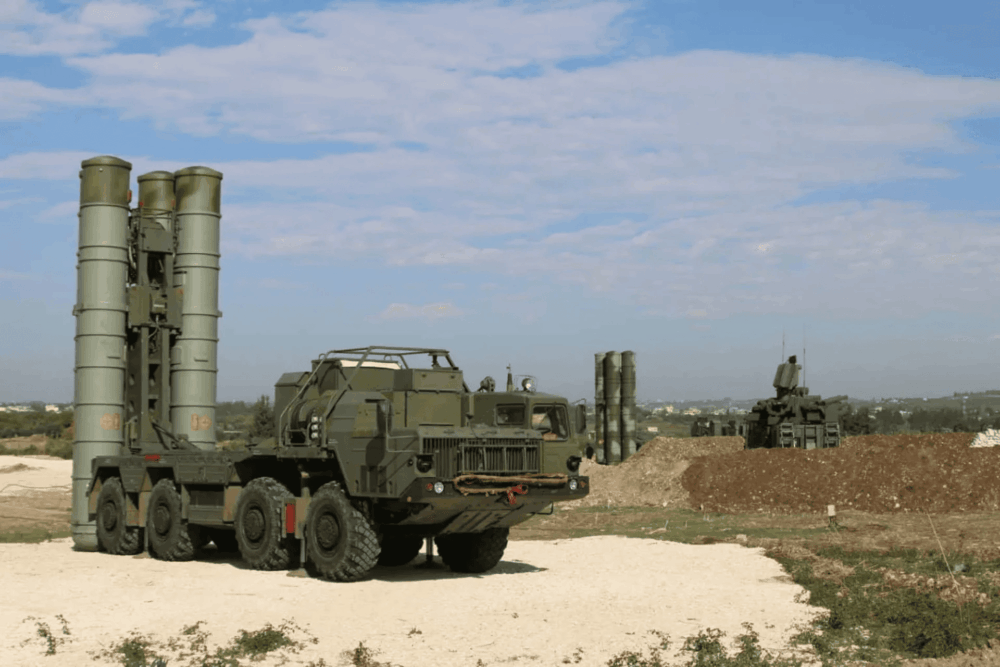
At the same time, this is not a free replacement for operational-tactical missiles. The 5V55 and 48N6 missiles carry smaller warheads without significant penetration capabilities, have less proven accuracy against ground targets, and consume resources that Russia needs for its air defense forces. Their value lies elsewhere. They can quickly cover relatively short distances, increase salvo density, and create another type of target that cannot be countered with conventional anti-drone or cruise missile defenses.
For Ukraine, the response cannot consist solely of deploying additional batteries. Patriot and SAMP/T systems require a constant supply of scarce interceptor missiles. At the same time, faster detection of launches, timely warnings, the dispersal of personnel and critical production facilities, as well as strikes against launchers, radars, and enterprises involved in Russia’s missile program are also necessary. The serial production of RM-48U shows that the threat will not disappear as stocks of older 5V55 missiles gradually decline. It is already transitioning from the use of accumulated stockpiles to a separate production and strike capability.
Tags: Air Defense EMPR media kyiv missile attacks russia ukraine war Russia-Ukraine War Russian missile systems S-400