
President Zelenskyy prepares a major government reshuffle: Svyrydenko’s resignation, Koretskyi’s appointment, and new personnel changes signal shifting power dynamics and preparations for a difficult winter.
Ukrainska Pravda investigates.
On Sunday, July 12, something happened that officials on Bankova Street had been preparing for over the past several weeks, but that few expected to occur so soon.
President Volodymyr Zelenskyy decided to reshuffle the government ahead of schedule. Yuliia Svyrydenko’s Cabinet did not even make it to its first official anniversary, which was due to be marked on July 17.
Just recently, the prime minister had presented the country’s new 15-year economic strategy, yet on Sunday the president asked her to step down.
In a sense, Svyrydenko’s entire tenure as prime minister fit between two Ukraine Recovery Conferences. She was appointed after last year’s forum in Rome and dismissed following this year’s conference in Gdańsk.
Although discussions about the prime minister’s possible resignation had been circulating for about a month among political, government, and parliamentary circles, most sources interviewed by Ukrainska Pravda had predicted that a Cabinet reshuffle would not take place before August.
However, events unfolded much faster.
According to sources at Ukrainska Pravda, the final trigger for the swift government changes was an unexpected conversation the president had on Bankova Street last week.
What exactly prompted Zelenskyy to accelerate the Cabinet reshuffle, why the resignation happened now, which candidates are genuinely being considered for the position of prime minister, and what lies at the heart of the current personnel rotation are questions explored by Ukrainska Pravda.
Svyrydenko’s Unexpected Resignation
The news of Yuliia Svyrydenko’s resignation came as a surprise to many — including Yuliia Anatoliivna herself, who was reportedly informed of the decision at the last moment.
However, a closer look at the developments within the government over recent months suggests that the move was far from unexpected.
The first factor that made a government reshuffle inevitable was the shift in the balance of power following the searches, dismissal, and corruption allegations involving Andrii Yermak.
Svyrydenko’s Cabinet was originally formed under the former head of the Presidential Office, and after his departure, the new political heavyweights are seeking to secure their own share of influence. Svyrydenko herself had reportedly urged the president to dismiss Yermak and sought to avoid being associated exclusively with him.
Formally, the parliamentary majority responsible for forming the government has not changed. However, the actual architecture of power has undergone a dramatic transformation: the model in which the president remains the sole leader has been reinforced, while his inner circle has expanded to include an entire network of decentralized centers of influence.
The second reason behind the government’s resignation was the president’s growing fatigue with what members of Zelenskyy’s team refer to as “government babysitting” when describing cooperation with the Cabinet.
In a system where the head of the Presidential Office personally set nearly all of the government’s priorities, and the prime minister coordinated virtually every step with Bankova Street, Svyrydenko was an ideal fit.
Over time, however, this model began to frustrate the president himself. According to Ukrainska Pravda’s sources, Zelenskyy increasingly expected the prime minister to demonstrate independence rather than seek approval for every minor decision. During some meetings, he would even publicly remark, “Surely you can handle at least this without me.”
Strategic decisions will, of course, continue to rest with the president. However, the day-to-day management of the government is expected to shift to the new prime minister, who will be expected not to seek endless approval from Bankova Street, but to put forward independent initiatives, deliver ready-made managerial decisions, and assume personal responsibility for their implementation.
The third reason for the Cabinet reshuffle is timing.
Ukraine has already passed the key international events of the summer political season: negotiations with financial partners, the NATO summit, the Ukraine Recovery Conference, and others.
Several weeks of relative calm remain before the start of the autumn political season. This window gives the new prime minister an opportunity to form a team, take over the management of the government, and prepare for the challenges of the fall without unnecessary haste.
The fourth, less obvious reason is the long-standing conflict involving Defense Minister Mykhailo Fedorov and virtually every group that has emerged around the defense budget during the years of the full-scale war — from military factions associated with the commander-in-chief to purely commercial interests represented by several members of parliament and figures connected to the Presidential Office.
Fedorov is publicly criticized, unsurprisingly, for what opponents describe as the “wrong” approach to mobilization and military procurement reforms. Yet, according to sources, the real reason some want him removed is different: after stepping aboard what they describe as the “train of corruption,” instead of ordering an espresso and quietly riding along with everyone else, he chose to pull the emergency brake. The passengers in the luxury carriages of corruption did not appreciate that.
As a result, the “president of Mindich” now finds himself weighing his options against the “president of reforms”: whether to stand by an assertive minister whose public credibility helped shield the administration in the wake of embarrassing corruption scandals, or to continue alongside “old friends” while preserving the system’s stability.
However, the primary reason lies elsewhere. Officials on Bankova Street have ultimately come to terms with the fact that no elections will take place this autumn. Instead, the country must prepare for what could become the most difficult winter since the beginning of the full-scale war.
In the government’s view, Russia will attempt, before the onset of cold weather, to inflict maximum damage on Ukraine’s energy sector, natural gas production, and fuel infrastructure — in short, on whatever remains of the country’s energy system.
It is the active preparation for this campaign that will become the principal task of the new government.
All of the issues mentioned above have been gradually accumulating over the past several months. The president kept them in focus but was in no hurry to initiate a large-scale Cabinet reshuffle.
What was needed was the right moment — and it emerged unexpectedly.
According to Ukrainska Pravda’s sources on Bankova Street, Ukraine’s Ambassador to the United States, Olha Stefanishyna, met with the president last week and informed him of her intention to leave the diplomatic service.
There were several factors behind this decision. One was the strong possibility that the National Anti-Corruption Bureau of Ukraine (NABU) could soon notify her of suspicion in connection with one of several older cases that predated her appointment as ambassador. The second was purely personal. For many years, Stefanishyna has worked continuously on European integration and relations with the European Union and the United States.
She now intends to take a break — to address her legal matters, get some rest, and, ultimately, earn some money outside of public service.
For Zelenskyy, this unexpected resignation proved to be more of an opportunity than a problem.
The vacant ambassadorial post in Washington provided a chance to resolve several personnel issues simultaneously.
Last year, the need to appoint a new ambassador to the United States also served as the catalyst for a major government reshuffle and the formation of Svyrydenko’s Cabinet.
Now, the situation has nearly repeated itself.
On Sunday, the president invited Yuliia Svyrydenko for a meeting and offered her the position of Ukraine’s ambassador to the United States. According to Ukrainska Pravda’s sources, the prime minister did not anticipate such a turn of events but accepted the offer.
Ultimately, this is precisely the kind of proposal that members of the presidential team rarely decline.
Moreover, since the beginning of the summer, people who worked closely with Svyrydenko had noticed that she had become increasingly cautious about committing to long-term projects and had more frequently hinted that she was uncertain whether she would still be prime minister by the autumn.
As such, the prospect of her resignation was not entirely unexpected to her. She has been part of Zelenskyy’s team for far too long to be surprised by such twists of fate.
A New Prime Minister: Four Names, but Only One Real Contender
After speaking with Yuliia Svyrydenko, the president moved on to the second stage — finding her successor.
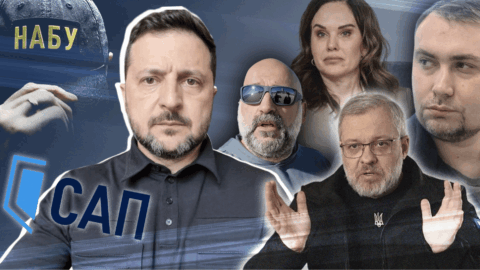
Formally, there were several candidates. Shortly after reports of Svyrydenko’s departure emerged, Servant of the People parliamentary faction leader Davyd Arakhamia reportedly shared their names in the faction’s group chat: Mykhailo Fedorov, Oleksii Koretskyi, Denys Shmyhal, and Ihor Terekhov.
In reality, however, the political weight of these candidates varied significantly, and some were never seriously considered for the premiership at all.
According to Ukrainska Pravda’s sources, during conversations with Defense Minister Mykhailo Fedorov on Saturday and Sunday, Zelenskyy asked whether he would be willing to lead the government.
Fedorov declined. Having joined the Ministry of Defense only a few months ago, he has only recently begun implementing his own vision for reforming the institution. Abandoning that process on the eve of winter would have meant starting over from scratch.
For that reason, Sunday’s conversation between the president and Fedorov was reportedly more of a working meeting than a genuine interview for the position of prime minister.
Following the meeting, according to members of the Servant of the People faction, the defense minister assured colleagues that everything was fine and that he would continue his work.
However, several of Ukrainska Pravda’s sources within the governing team believe that this is not entirely — or perhaps not at all — the case. There is speculation that Zelenskyy may offer Fedorov a return to the Ministry of Digital Transformation or another largely symbolic position.
It was allegedly for this reason that, in parallel, the president asked Interior Minister Ihor Klymenko to be prepared for a possible transfer to the Ministry of Defense. Klymenko is considered to be directly aligned with the president, while his ministry continues to be significantly influenced by Oleh Tatarov, Deputy Head of the Presidential Office.
Should such an appointment take place, current National Police Chief Ivan Vyhivskyi could be named to lead the Ministry of Internal Affairs. In other words, Klymenko was never seriously considered as a candidate to head the government.
Thus, the situation could ultimately lead to a split between Zelenskyy and Fedorov. For the minister, this would mean a period of uncertainty; for Zelenskyy, it could result in the loss of a significant portion of the public support that has begun to accumulate thanks to Fedorov’s dynamic initiatives at the Ministry of Defense.
Any decision to dismiss the minister would be difficult to interpret as anything other than punishment for effectiveness in favor of corrupt interests. However, if the president is indeed considering removing the defense minister, he evidently believes there is someone else capable of commanding a similar level of public trust.
The chances of Kharkiv Mayor Ihor Terekhov becoming prime minister were even slimmer than those of Klymenko.
In recent months, Terekhov has appeared with increasing frequency on the national political stage. According to Ukrainska Pravda’s sources in political circles, this has been largely facilitated by Servant of the People faction leader Davyd Arakhamia.
Arakhamia reportedly sees Terekhov as one of the potential leaders of a future political project centered on regional administrators — a kind of party of “effective managers” that could also include Vitalii Kim and other regional leaders who distinguished themselves during the war. Ukrainska Pravda first reported on the launch of this initiative in October of last year.
For this reason, the president’s meeting with Terekhov was primarily political in nature.
The two discussed the situation in Kharkiv, the city’s preparations for the winter season, and the possibility of the mayor assuming a role within the central government.
Terekhov reportedly “thanked the president for his confidence” but replied that he wished to remain mayor. He then returned to Kharkiv, having secured the status of a politician whom the president considers a national-level manager — and, perhaps, having boosted his approval ratings by an additional two to three percentage points.
The president also held a separate meeting with Denys Shmyhal. However, he was not seriously offered the opportunity to lead the government.
That is because Zelenskyy had only one genuine favorite: Serhii Koretskyi, the current head of Naftogaz.
In recent years, the president has closely followed Koretskyi’s work and has come to regard him as one of the country’s strongest public-sector managers — particularly following his tenure at Ukrnafta, which he inherited as a deeply unprofitable company and transformed into a highly profitable enterprise.
According to sources, Koretskyi himself was genuinely surprised by the proposal.
In theory, Koretskyi had considered that such a conversation might take place one day. However, he certainly did not expect it to happen during that particular meeting.
The president asked him only one question: if the need arose, would he be prepared to lead the government? Koretskyi’s answer was affirmative.
According to Ukrainska Pravda’s sources on Bankova Street, Koretskyi candidly admitted that he does not yet fully grasp the scale of the challenges that await him. Nevertheless, he said he was willing to take on the task.
The president outlined the principal priorities for the future Cabinet: preparing the country for what could be its most difficult winter since the start of the full-scale war, protecting energy and fuel infrastructure, stabilizing the economic situation, and ensuring the effective management of international assistance.
Special attention should also be paid to the reshuffle within the security sector announced by the president. According to Ukrainska Pravda’s sources, this includes the previously mentioned potential changes at the Ministry of Defense and the Ministry of Internal Affairs — but not only those.
The president is reportedly considering appointing Oleksandr Poklad, currently the First Deputy Head of the Security Service of Ukraine (SBU), as the agency’s full-time chief. However, there are serious doubts as to whether such a nomination could secure parliamentary approval at this time. Having spent seven years in power, lawmakers have become increasingly cautious about appointing security officials without a de facto probationary period.
As a result, one possible scenario is that Zelenskyy could appoint Poklad as acting head of the SBU by presidential decree.
Such a move could potentially lead to a confrontation between the head of state and Kyrylo Budanov, who heads the Main Directorate of Intelligence and is also one of the most influential figures within the president’s broader security circle. While Budanov’s relationship with Poklad cannot yet be described as a personal feud, observers suggest it may not be far from reaching that point.
After holding the series of meetings on Sunday, President Zelenskyy published public statements outlining his decisions and departed Ukraine for another international trip.
“It’s his classic style,” one source within the presidential team joked. “The president launches a process and then leaves on a business trip so that, over the next few days, we all argue among ourselves, make peace, and present him with a finished result,” one influential member of Zelenskyy’s team said with a smile.
As of Monday morning, only one decision appeared to have been finalized: the resignation of Yuliia Svyrydenko.
Following that, the governing coalition, together with the president, is expected to complete consultations regarding all remaining appointments.
Most of these decisions — as well as the overall composition of the future government, which ministries will remain, which may be merged or divided, and who will lead them — are still under discussion.
Any lists of names currently circulating on social media and in the media may change multiple times, making their publication premature and of little value at this stage.
For now, only one name appears to stand out as the likely successor to Svyrydenko: Koretskyi — unless something extraordinary happens.
Tags: EMPR media Fedorov governance government reshuffle investigations koretskyi svyrydenko Ukraine Politics Wartime Leadership zelenskyy