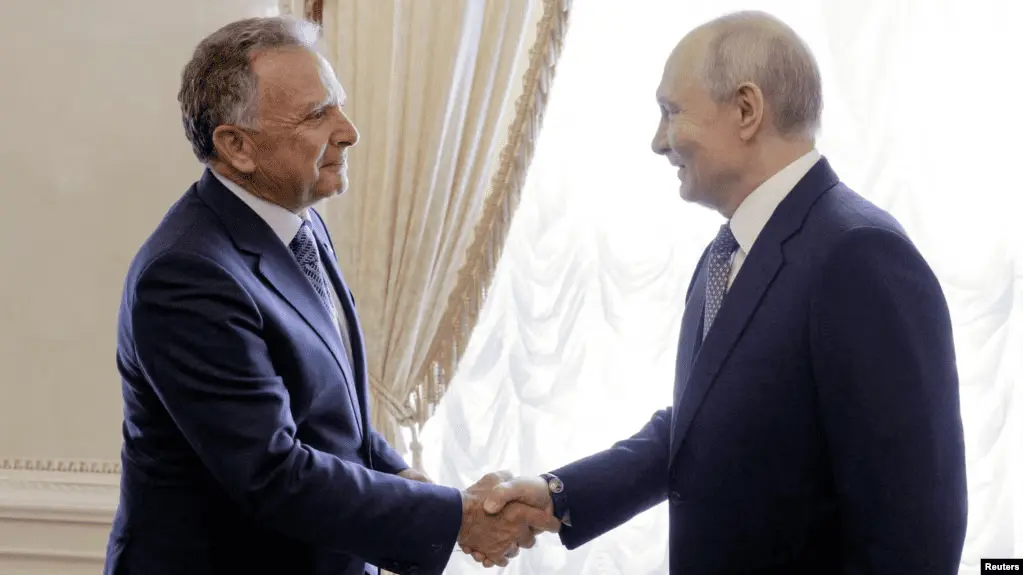
U.S. President’s special envoy Steve Witkoff met with Russian President Vladimir Putin at the Konstantin Palace in St. Petersburg. The meeting took place a day after talks with Ukrainian President Volodymyr Zelenskyy in Norway’s capital, Oslo, on ending the war.
The meeting in St. Petersburg was the ninth between Donald Trump’s special envoy Steve Witkoff and Russian leader Vladimir Putin. This was reported by Radio Svoboda.
Kremlin foreign policy aide Yuri Ushakov said that Jared Kushner, U.S. President Donald Trump’s son-in-law, was unable to attend the meeting in person due to illness and reportedly joined it virtually.
Ushakov said the war in Ukraine was the main topic of discussion between Putin and Witkoff, adding that the U.S. president’s special envoy “noted new approaches by Europeans and Kyiv to resolving the conflict.”
According to Ushakov, Vladimir Putin indicated during the talks that the Kremlin was “generally ready to resume” trilateral negotiations on the “main issue” in the second ten days of November — that is, after the U.S. congressional elections scheduled for November 3, 2026.
Ushakov said Steve Witkoff responded that such a decision by Russia would be received by the U.S. president “with great satisfaction.”
When asked about the prospects for ending the war, Ushakov replied, according to the Russian TV channel Dozhd: “I don’t know how close we are to that, but things are moving in that direction.”
U.S. President’s special envoy Steve Witkoff described the talks in St. Petersburg and the earlier meeting in Oslo as “constructive,” but stressed that “a lot of important work remains to be done.”
“These discussions were constructive; they will continue in the format of trilateral negotiations between the United States, Russia, and Ukraine at the technical level. Although a great deal of important work remains to be done, President Trump remains committed to ending this war and achieving a comprehensive and lasting peace that will ensure security and prosperity for generations to come,” Witkoff wrote on X.
- On October 21, The Atlantic reported that Putin wants to meet with Trump and Xi Jinping in southern China to discuss ending the war. Ukraine is not expected to participate in these talks. The Atlantic also reported that the U.S. president wants a peace agreement to be signed in December at the G20 summit at his resort near Miami.
- As of October 21, China’s Ministry of Foreign Affairs had provided no information about a possible meeting between the Chinese, U.S., and Russian leaders to discuss ending the war in Ukraine. Beijing reiterated that its position “remains unchanged: to facilitate peace talks and a political settlement.”
What Did Zelenskyy Convey to Witkoff After the Talks in Oslo?
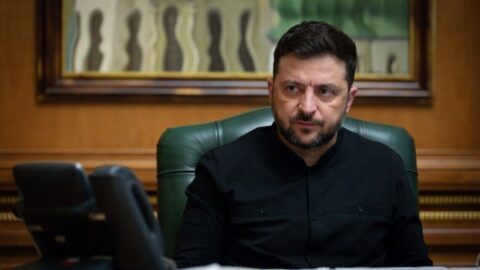
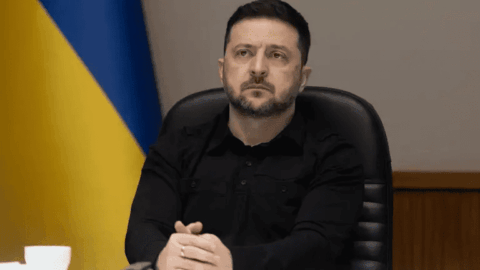
“We have several clear ideas on how to achieve peace,” Ukrainian President Volodymyr Zelenskyy told journalists after the talks in Oslo on October 20, which were also attended by Norwegian Prime Minister Jonas Gahr Støre and Finnish President Alexander Stubb.
Zelenskyy said that Witkoff would present Russia with a proposal for trilateral talks involving the leaders of Ukraine, Russia, and the United States.
“We want the Americans to convey these ideas to the Russians,” Zelenskyy said, adding that “one of the important ideas is to move toward a potential trilateral meeting of leaders to address issues that only leaders can resolve.”
Trump commented on the possibility of direct talks between Putin and Zelenskyy, saying that the two leaders did not necessarily have to meet face-to-face to reach an agreement.
“They don’t have to be in the same room. I think they can do it another way,” Trump told reporters on October 20.
Is Intelligence Sharing “Working Now”?
U.S. Secretary of State Marco Rubio, who is visiting India, described Witkoff’s talks with Zelenskyy in Oslo as “positive.”
“It was positive, nothing unexpected, nothing amazing, and now he, armed with these ideas, will be able to go to St. Petersburg and share them with the Russian side – and we’ll see if we can make some progress,” Rubio told reporters on October 21.
Zelenskyy expressed gratitude to the United States for providing intelligence on Russian missile strikes, adding that early warning systems were now working effectively.
“We are grateful that intelligence is working… I’m talking about early warning, which is very important for our people, for children, adults, and civilians, because we can hear when a ballistic missile is coming,” Zelenskyy told reporters in the Norwegian capital.
Zelenskyy confirmed that Kyiv immediately accepted the U.S. proposal for an energy truce, but Russia continued its attacks, underscoring the need for strong security guarantees for Ukraine.
Meanwhile, Kremlin spokesperson Dmytro Peskov said Moscow sought lasting peace rather than merely a ceasefire, responding to Kyiv’s call for an energy truce.
Stubb said the talks in Oslo had delivered “real progress” on both long-term prospects and immediate issues.
He said participants had identified “some elements of peace” within the broader picture, along with key points concerning security and the economy.
Russian Attacks Continue Amid Talks
As talks continued, Moscow pressed ahead with its attacks on Ukraine, killing at least four people in overnight Russian drone and missile strikes across several regions.
A Russian strike on Kyiv on October 21 killed two people and injured two others, while also damaging a 24-story residential building, Kyiv Mayor Vitali Klitschko reported.
Energy company DTEK announced emergency power outages in several districts of the Ukrainian capital on October 21 following Russian attacks, as energy workers worked to restore electricity supplies.
In Kharkiv region, Russian drone attacks killed an 81-year-old woman and an 83-year-old man, local authorities reported.
In Lviv region, local authorities said a Russian drone “attacked an enterprise” overnight, injuring two workers and damaging a nearby private house with debris.
Russia attacked Ukraine overnight with cruise missiles and 186 attack drones, the Ukrainian Air Force reported on October 21.
Russia’s Defense Ministry said its forces had carried out drone strikes on Ukrainian logistics hubs, port infrastructure, and vessels.
It also reported that Russian air defenses had intercepted and destroyed 373 Ukrainian drones across several Russian regions.
Imprisoned American Released
During the meeting between Putin and Witkoff, which was streamed via video, both confirmed the release of Stephen Hubbard, a 74-year-old Michigan native who was captured by Russian forces in April 2022 and accused of fighting as a mercenary on Ukraine’s side.
Putin said Hubbard was at Pulkovo Airport in St. Petersburg, from where he would fly back to the United States with Witkoff.
On October 20, ahead of Witkoff’s visit, Trump said he had asked Putin to release Hubbard.
“I spoke with him for a long time. I asked him to release him. We’ll see what happens,” Trump told reporters in Washington.
In 2024, a Russian court sentenced Hubbard to seven years in prison.
Russia Reaffirms Support for Iran and Calls the U.S. an Adversary
Senior Kremlin officials have reaffirmed Russia’s support for Iran and openly described the United States as a long-term adversary of Russia, despite a recent unilateral concession by the U.S. in Moscow’s favor that allowed Russia to export diesel fuel, the U.S.-based Institute for the Study of War (ISW) wrote in its report.
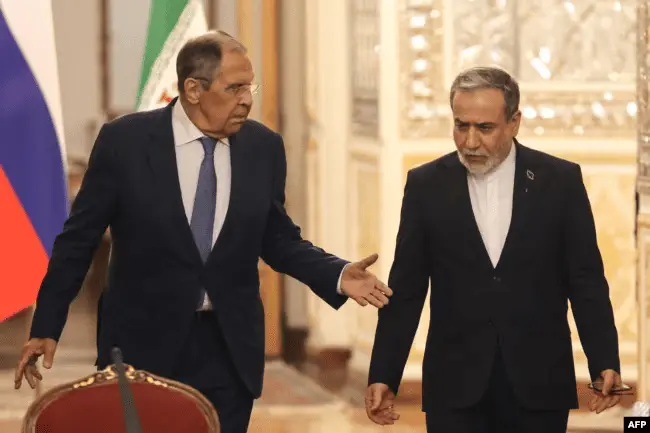
Analysts highlighted that on October 19, during a press conference with Iranian Foreign Minister Abbas Araghchi, Russian Foreign Minister Sergey Lavrov said that Russia and Iran held “similar or close” positions on most regional and international issues.
Lavrov also condemned the U.S. “illegal acts of aggression” and “unprovoked aggression” against Iran, stressing that Russia “has no intention of abandoning” its economic and investment agreements with Iran.
The Russian foreign minister added that trade between Russia and Iran had increased by more than 10% in the first eight months of 2026.