Czech journalist Martin Ondráček explains how, over four years, the “A Gift for Putin” project has mobilized Czech support for Ukraine, providing weapons, humanitarian aid, and prosthetics, directly helping both on the frontlines and in civilian areas.
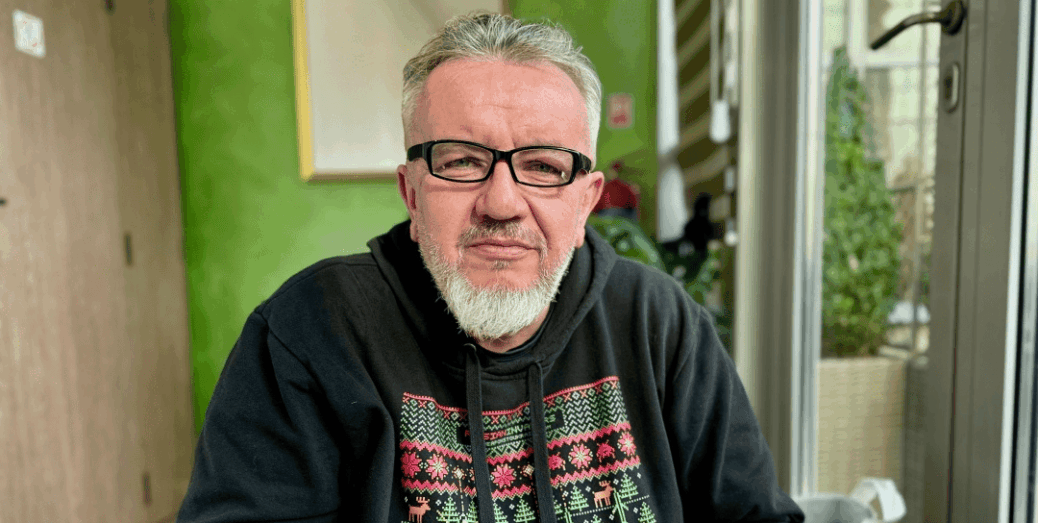
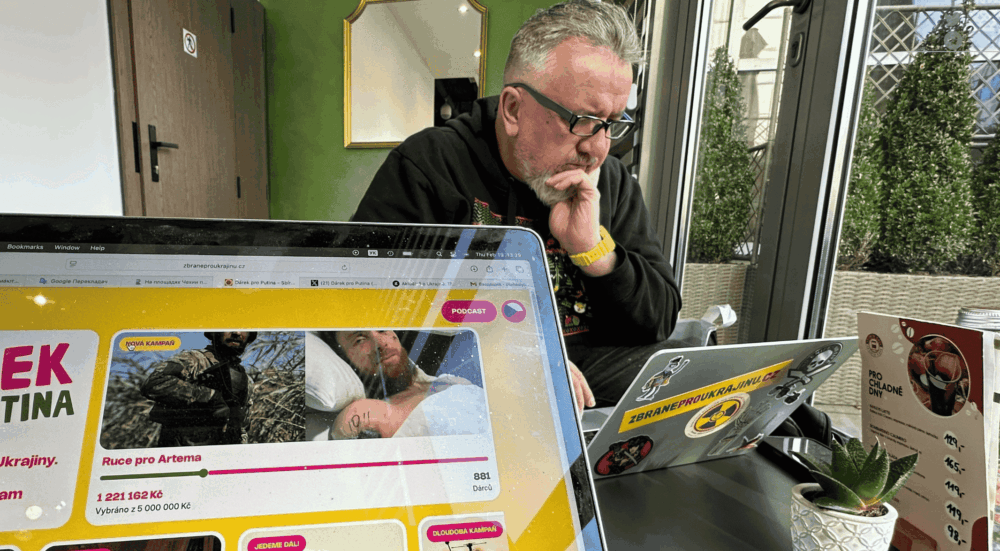
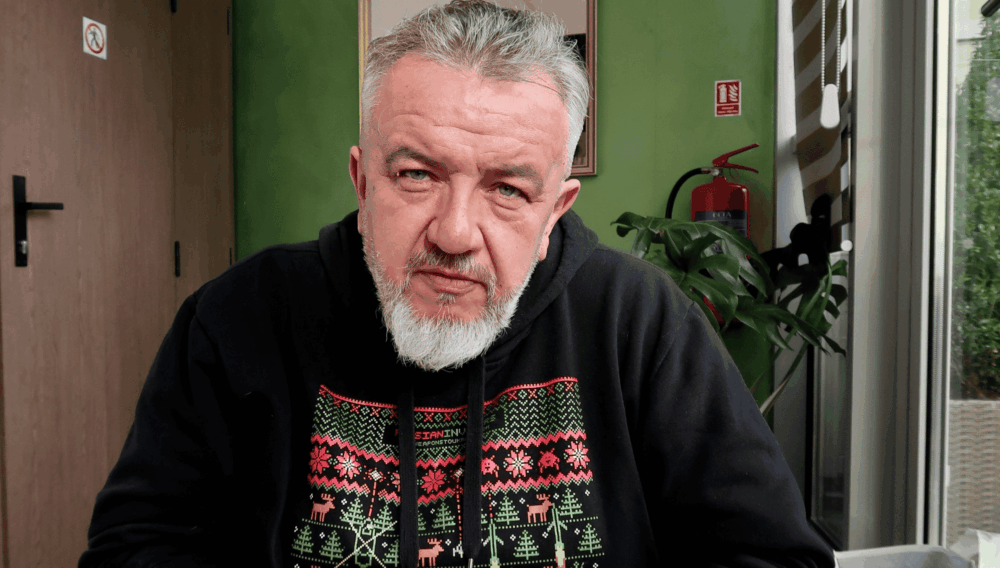
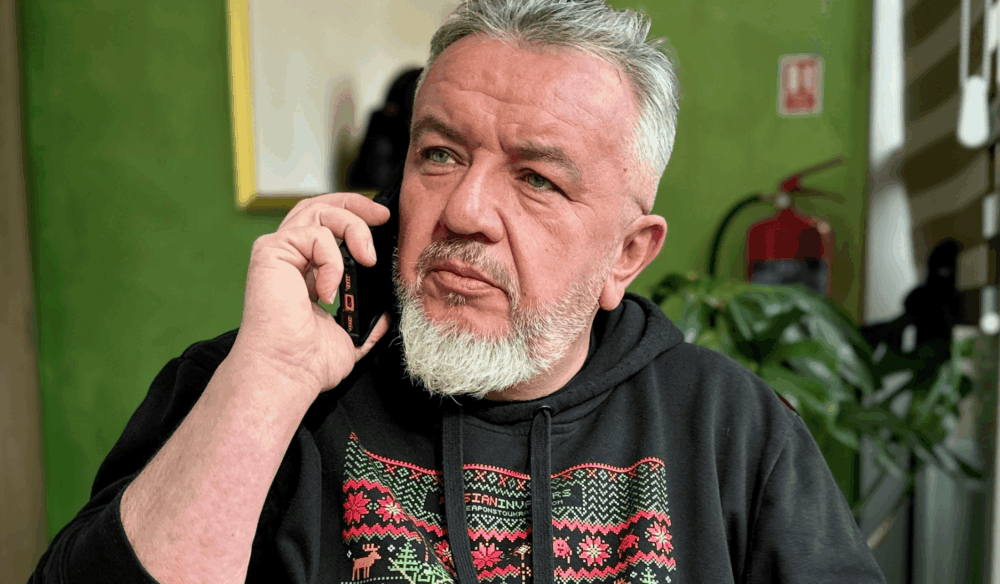
Czech journalist Martin Ondracek is one of the creators of the unique fundraising project for weapons and other military supplies for Ukraine, “A Gift for Putin.”
A correspondent from Ukrinform recalled with Mr. Martin, an incredibly energetic, positive, and ironic person, what has been accomplished over four years of Russia’s full-scale aggression against Ukraine and through the initiative, which is respected by Czechs, valued by Ukrainians, and hated by Russians.
EXPORT LICENSES FOR WEAPONS WERE OBTAINED WITHIN DAYS
Let’s go back to the very beginning: the initiative appeared in the first days of the full-scale war…
Yes. It seems that already on the evening of February 25 (2022), the then Deputy Minister of Defense, Tomáš Kopečný, issued a call to send money for purchasing weapons to an account opened and published on social media by the Ukrainian embassy in Prague. And when they woke up the next morning, the account already had 55 million crowns!
The money from that account began to be spent very quickly. A big advantage was that this was handled by a group of people who, back at the end of 2021, had been making lists of where to find what was needed. So, at the moment Ukrainians received the first funds, they immediately started making purchases.
But even more important was that they managed to radically reduce the time the state needed to process all the export licenses for weapons. Under normal circumstances, this would take months, but they cut it down to days. They created groups across various communication platforms — from the Ministry of Defense, through the Ministry of Industry, the Ministry of Foreign Affairs, and even the intelligence services. And virtually everything was approved online.
This account went viral and became extremely popular. Within two or three weeks, it had received 1 billion crowns. Later, of course, activity began to slow down, and that’s when we stepped in. We provided a kind of marketing “umbrella” for the account, since the Ukrainian embassy had plenty of its own concerns.
The whole idea was conceived by Dalibor Dědek — a businessman, owner of Jablotron, a billionaire. He was doing business in Ukraine, and many of his employees and friends went to the front. Dalibor began helping with his own money, providing military supplies. Later, he came up with the idea to get more people involved. This was in mid-March. He called me and asked for my help.
And then my friends and I came up with the concept of creating a brand. From the very beginning, it was meant to be a bit ironic, because Czechs always respond that way when something bad happens. We didn’t want to make fun of the war, but humor was necessary — otherwise people couldn’t cope. Winston Churchill wrote about this very well in his memoirs, for which he received the Nobel Prize in Literature, noting that humor literally saved lives.
The idea came from my acquaintance, Czech writer Petr Stančík, who sent me a photo of British technicians writing on the bombs they used to bomb Berlin: “Happy Easter, Adolf.” We decided that marketing should follow that same spirit. We chose not to manipulate emotions, not to rely on images of destroyed cities and dead children, and not to use blue-and-yellow symbols like everyone else did, but to do everything completely differently: not “Weapons for Ukraine,” but “A Gift for Putin.” That’s how the irony came about — something that Czechs understand.
So the project is backed by a team of authors.
Exactly. Many people came to us, saying that it would never work and that we wouldn’t be able to raise money for weapons.
We created a sort of online store, featuring almost 45 types of weapons that were most commonly used in the war being discussed. We set the prices so people would know that a standard AK-47, for example, costs 5,000 crowns, a magazine full of bullets – 300 crowns, a Javelin – 4.5 million crowns, and a modernized T-72 tank – 25 million crowns. People were surprised, and we began running campaigns around this.
In fundraising, it’s always important to show exactly what you’re buying. So we started identifying specific types of weapons, giving them names, and telling stories — particularly about the defense industry and what these weapons do on the battlefield.
Many people came to us and said that you can never raise money for weapons because weapons kill people. I responded that a weapon is like a knife, matches, or a car — it all depends on whose hands it’s in and how it’s used. We are providing weapons to those defending themselves from the brutal attack of another state, and if you want peace, the answer is very simple: the Russians need to go back to Russia — and there will be peace. That’s it.
TANK “TOMÁŠ,” MISSILE “DANA,” AND HELICOPTER “ČESTMÍR”
It’s known that you give certain weapons, which you’re raising money for, names. The first one was the tank “Tomáš,” if I remember correctly.
We discussed it for a long time. We give weapons names to give them a human dimension. The tank “Tomáš” — because everyone knows Tomáš Garrigue Masaryk (the first president of Czechoslovakia), but it was also in honor of a person who did a lot to help Ukrainians get weapons (Tomáš Kopečný).
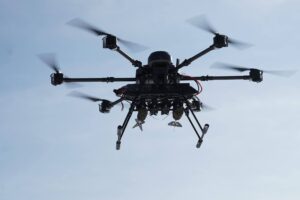
There were MLRS “Přemysl” (a legendary figure in Czech history), anti-drone systems on jeeps “Viktor,” and a modernized version of the patrol car “Hektor”; the Black Hawk helicopter “Čestmír” (the hero of the cult 1980s TV series Flying Čestmír, famous for its well-known song, but here also a play on the words “honor” and “peace”). We have two Flamingo missiles “Dana” (named after the nuclear physicist, head of the State Nuclear Safety Authority Dana Drábová, and a great friend of Ukraine, who passed away at the end of last year). All of this carries meaning and symbolism.
We listen to Ukrainians because they know best what they need. Today the priority is drones and air defense. We run many campaigns in collaboration with partners, including the Serhiy Prytula Foundation. In some cases, we know that every euro invested destroyed 15 euros’ worth of Russian equipment — which is a very good indicator.
You constantly run campaigns for drones. One of the new ones is for the “Wild Boar” drones. Where does that name come from?
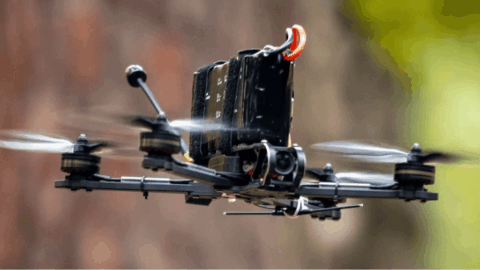
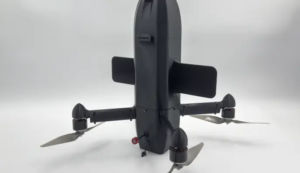
Ukrainians call it that — this is what the drone looks like (shows a photo). It’s plump, like a wild boar.
Listen, you don’t want to raise money for a drone called something like UNC40. Nobody cares about that. You want to raise money for a drone that has a good Czech name, and for which you can create a nice logo. Something that really “clicks” with people.
GENERATORS, MEDEVACS, AND PROSTHETICS
Weapons are the main focus of our work. But you also organize humanitarian campaigns. For example, a month ago the SOS Kyiv campaign was launched to purchase generators amid Russian attacks, or the evacuation vehicles “Oksana,” and, most recently, the new campaign “Hands for Artem.”
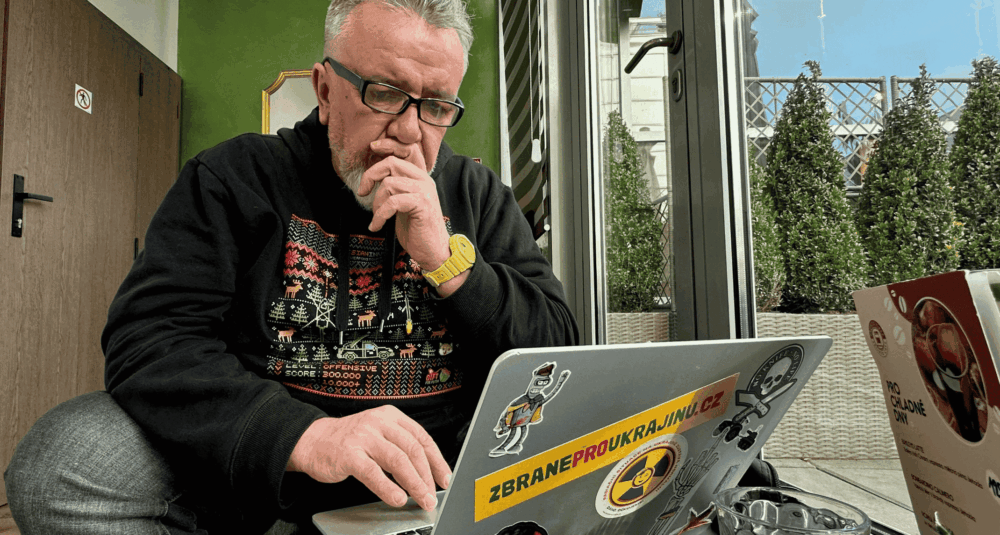
“Hands for Artem” is a campaign we launched on February 18. It came about completely by accident. We have friends in the organization Team4Ukraine, who have been helping Ukraine since 2014. They work very close to the frontlines and provide humanitarian aid, collaborating for many years with specific units to deliver supplies. One of these units is the 53rd Brigade, where Artem serves. When this happened to him last November, they learned about it immediately. And it’s very likely that Artem was applying the tourniquets that they themselves had delivered.
They told me the whole story: how Artem walked for 12 hours in a critically severe condition, and ultimately he lost both hands in a high-level amputation. I said it was important to start a fundraiser to provide high-quality bionic prosthetics, and the surgery would be performed in Lviv. Superhumans (a Ukrainian center specializing in prosthetics, reconstructive surgery, rehabilitation, and psychological support for war victims) is today, from a European perspective, absolutely number one. We want to introduce Czech society to Superhumans, to show that such a clinic exists, that it has a history, and that it truly works miracles.
Now we managed to bring Artem to Prague. It wasn’t easy. We hope that President Petr Pavel will meet with him, and later they will be able to shake hands.
The same goes for ambulances. At the beginning of summer, we were at a festival in Slovakia, where we sell merchandise and constantly conduct informational work with young people. Our Slovak friends received a very harsh video of an evacuation vehicle that had just been destroyed by a drone strike. We said: let’s try to replace it. Today we already have 79 vehicles, preparing 15 more — we’re heading out on March 3 (about 80% of the vehicles go directly to units, the rest we distribute ourselves). But the fundraising continues, and we already have funds for another 70 vehicles.
On the weekend, for the 4th anniversary of the full-scale invasion, you’re organizing an installation featuring models of “Shahed” drones. Tell us about it.
There will be 17 life-size models in various cities across the Czech Republic and 5 models in Slovakia. In addition, on Saturday, when the rally in support of Ukraine takes place in the center of Prague, we will be live streaming all day, dedicated to the 4th anniversary.
CZECHS DONATE MORE EVERY YEAR
The war has been going on for many years. Do you feel that interest in the project is fading?
No! Interestingly, we’re constantly growing. Every year we raise more than before. I think it’s because more and more people are realizing that the war can’t be won without weapons, and also that Russians understand only one argument — force. Until they get a strong response, nothing will change. History has proven this countless times.
Moreover, I think this project has a therapeutic effect. One of my acquaintances said: “I see in the news that these scumbags hit a residential building with a million-dollar Iskander missile. To vent my anger, I take out my credit card and send you 3,000 crowns. And it helps me.” For many, it’s the need to take action, to fight against evil.
We openly say: if you send us 1,968 crowns (a symbolic number for Czechs — the year of the Soviet invasion to suppress the Prague Spring), you can buy a portion of explosives for an FPV drone, and statistically, one FPV drone accounts for 0.9 to 1.6 dead Russian occupiers. People understand that.
Can you give some numbers: how many people donate, and how much money has been raised?
Last year we raised 384 million crowns, of which 100 million came from a one-time donation by Ivo Lukačovič, the owner of the Czech company Seznam. In total, there were 89,000 donors. The most valuable are regular donors — there are 6,500 people who send a set amount every month.
This year, in just two months, we already have 112,000 donors. As of February 19, we had raised 228 million crowns, of which 187 million came from 96,000 donors — for the “SOS Kyiv” campaign to purchase generators. I think these are different people than those donating for weapons.
Overall, we don’t store data about donors — only their number. Security is more important than statistics.
How many campaigns have there been over these four years?
I can’t tell you that. Really, I can’t. We’ve raised 1,485 million crowns. That’s thousands of drones, tens of thousands of ammunition units, hundreds of vehicles that we’ve sent. I don’t think anyone can count it exactly anymore.
These are dozens of major campaigns. And on top of that, there’s a lot we don’t talk about at all. We have the financial means to fulfill very specific requests—and we do. For some of them, no one will ever know we carried them out. And that’s the way it should be.
Until recently in the Czech Republic, the government, volunteers, and civic initiatives were all acting as one team. Now, the main burden falls on volunteer organizations…
Honestly, the volunteer organizations that help never really needed the government. Every billion is good, of course, but Ukraine won’t collapse if a billion doesn’t come from the Czech Republic.
I really like using Slovakia as an example. Today, Slovakia appears in the media and public space as a very anti-Ukrainian country. Very much so. But if you look at the volume of trade Slovakia conducts as a reliable partner of Ukraine, and the amount of weapons coming from Slovakia to Ukraine, it’s quite impressive.
If you recall the pre-election rhetoric of Czech politicians — claims that the weapons initiative would stop, that Ukraine would get nothing… The elections are over, and now that can be forgotten. That’s political reality.
A GENERATION IS GROWING UP THAT SEES RUSSIA AS A BUNCH OF MORONS
So Ukrainians can count on the Czech people not “getting tired” and continuing to support us for some time?
The war has been going on for four years, longer than the so-called Great Patriotic War. To me, everything indicates that this war could continue for several more years. I see no reason why the Russians would give up their demand to take the Donbas, which they shouldn’t be allowed to do. Everyone knows the war won’t end with that. It will only pause for six months or a year, and then it will start again. Because the goal of the so-called special military operation is to “denazify” Ukraine and change the regime. Until that goal is achieved, the war will not end. So this is not about peace, only about a temporary ceasefire.
I don’t see any force that could make them stop if Europe doesn’t take radical action and if the United States doesn’t impose truly strict restrictions on oil and gas exports. The Russians have enough resources to finance the war. And most importantly — they have time. If there’s something they can use to completely poison Europe, forcing it to abandon Ukraine, it is precisely time. Their tactics are completely obvious. Anyone who thinks that the Russians will wake up tomorrow and agree to some ceasefire is insane.
Just six months ago, some people here were saying the war should end and that Ukraine should make concessions. After the Russians forced Ukrainians to freeze, it became clear that this was their biggest mistake — they thought they could break the Ukrainians. But every action has a reaction — and here it was the opposite. I see this when I go to Ukraine and talk to people on the frontlines: they curse everyone — Syrysky, Zelenskyy, logistics, corruption… But when you ask if they will surrender, the answer is always the same: never. Because that would mean spitting on the graves of those who have already died. And this is something all those “experts” from Europe, who tell Ukraine what it should do, should understand: they just need to come and talk to the people who actually live there.
You already mentioned the year 1968. But those events are probably remembered by the older generation, while young people are less interested…
The memory of 1968 in the Czech Republic hasn’t disappeared. There are parents who tell their children about it. And there are also kids who have their own channels of communication and information exchange. Among them, Russians simply don’t have a good reputation, partly because they don’t know how to reach them. Russian systemic propaganda is aimed at middle-aged and older people on social media; it doesn’t work on children, or they simply don’t know how to do it effectively.
The same is happening in Ukraine, where a generation of children is growing up during the war. A generation of seventeen- and eighteen-year-olds is taking shape, in whose minds it will be forever engraved: Russians are a bunch of morons. Not because their parents told them so, but because they see this war for themselves. They see every day that Russians are on territory where they have no business being and are spending millions and millions of dollars to destroy Ukraine’s civilian population.
Fighting on the frontlines is one thing. But when power plants and heating networks are destroyed, it becomes clear that this is about the genocide of the civilian population. This war is being waged in ways that would be unacceptable in any normal society.
A generation is growing up that will never want to have anything to do with Russia. And even if they experience this war only through the media, their perspective is already being shaped for decades to come.
I think that one day studies will be written about how, through this war, Russia has raised across Europe a generation of people who, if they come to power, will never side with it.
Tags: anti-Russia generation EMPR.media European war sentiment fundraising for Ukraine Gift for Putin Martin Ondracek Ukraine support movement


![Visitors at the “Thank You With All My Heart” Ukrainian exhibition at the Council of Europe, featuring the Great Amber Heart and powerful war art. :contentReference[oaicite:2]{index=2}](https://empr.media/wp-content/uploads/2026/02/heart-300x171.png)