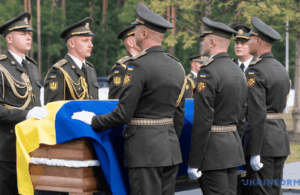

Russia systematically deported hundreds of Ukrainian children with Putin’s direct involvement; UN report documents forced transfers, psychological pressure, and ongoing uncertainty for families.
Deportation and the forced transfer of hundreds of Ukrainian children to Russia took place with the involvement of the country’s top leadership, including President Vladimir Putin.
According to BBC News Ukraine, this is the conclusion of a new report by the Independent International Commission of the UN on the investigation of events in Ukraine.
The authors of the document concluded that these actions were systematic in nature and constitute crimes against humanity.
The report, presented at the UN Human Rights Council session in March 2026, compiles numerous cases in which children were taken from occupied territories of Ukraine to Russia or to territories under its control. Children were placed in orphanages or Russian foster families, while others had their documents and citizenship altered.
The commission emphasizes that these actions were neither chaotic nor spontaneous. According to its findings, the decisions were made at the highest political level.
The Role of Putin and the Russian Leadership
The authors of the report note that the deportations of Ukrainian children occurred with the direct involvement of, or with the knowledge of, the highest levels of the Russian leadership.
“The Russian authorities at the highest level — including President Vladimir Putin and the structures directly subordinated to him — made decisions regarding the transfer of Ukrainian children to the Russian Federation and their subsequent relocation within the country,” the commission’s report states.
According to UN investigators, the Russian authorities not only organized the removal of children but also created a system that makes it difficult for them to return home. In many cases, parents or relatives were not informed of the children’s exact whereabouts.
The commission notes that official Moscow often justified these relocations as “evacuations” due to the war.
However, international humanitarian law requires that evacuations be temporary and carried out for medical treatment or safety purposes.
The Russian authorities, however, did not create a system that facilitates the return of children.
On the contrary, investigators found that children were often transported even further — deep into Russia, sometimes thousands of kilometers from Ukraine. Some children were placed in foster families or prepared for adoption.
The commission emphasizes that these actions were organized and coordinated by state structures, which demonstrates their systematic nature.
Some children were taken from orphanages or boarding schools, while others were removed directly from their families. Often, children were transported without the consent of their parents or legal guardians.
“These actions constitute crimes against humanity and war crimes of deportation and forced transfer of children,” the authors note.
The consequences of these actions affect not only the children themselves but also their families, who live for years in uncertainty.
“Many relatives still do not know where their children are or whether they will ever be able to return home,” the commission notes.
Moscow Changed Its Rhetoric
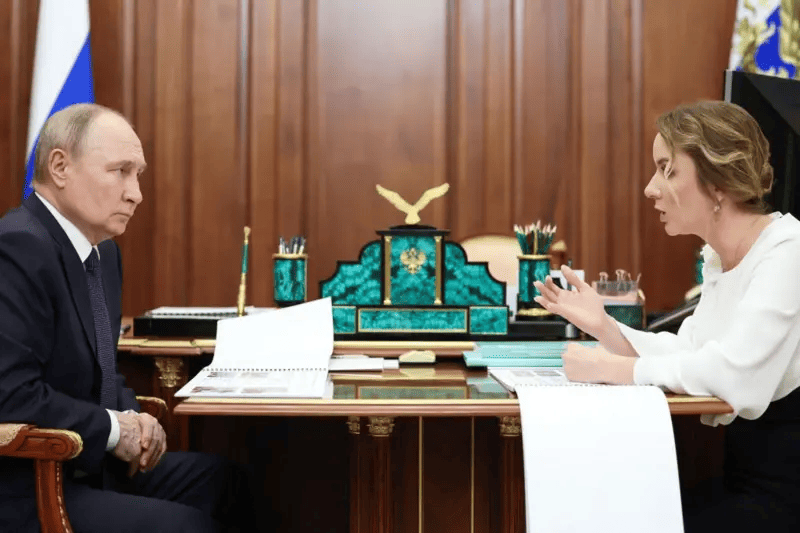
After the International Criminal Court issued arrest warrants in March 2023 for Vladimir Putin and the Commissioner for Children’s Rights Maria Lvova-Belova on suspicion of the illegal deportation of Ukrainian children, Russian rhetoric shifted.
Throughout 2022, Russian officials stated that “adoption” was the preferred option for placing Ukrainian children, and hundreds of Russians had already expressed willingness to take them in.
After the ICC warrants, Moscow began denying any adoptions. Since then, it has claimed that the children are only under “temporary guardianship” or “care in foster families.”
“I Am Still Looking for My Daughter”
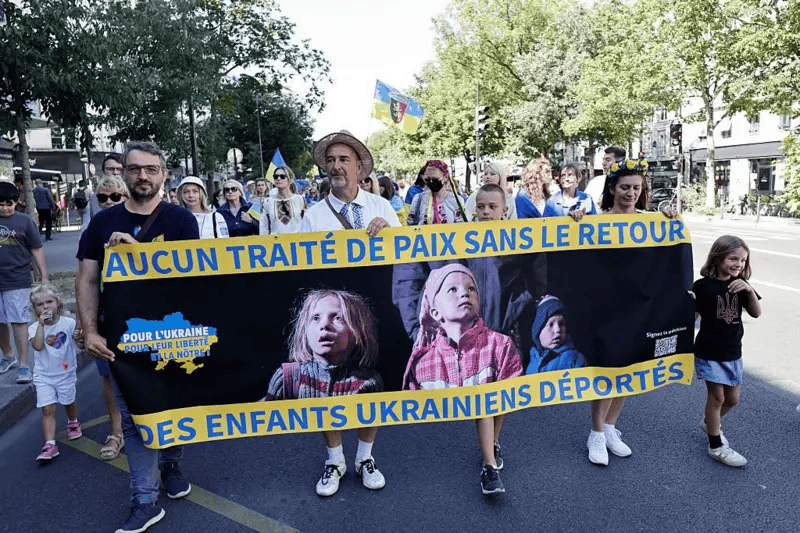
A separate section of the report is devoted to testimonies from the children themselves and their relatives. The document describes cases of psychological pressure on children after their relocation to Russia.
According to one girl, the staff at the institution convinced her that returning home was impossible.
“She was told: ‘Your mother won’t come, she has no money, she won’t be able to come for you,’” the UN report states.
The commission also cites testimonies from parents who have been trying for months or even years to find their children. One mother said she still has not found her daughter, who was placed in one of the Russian institutions.
“I am still looking for my daughter, and I am scared about what she might think of me and how she is surviving there, where many people hate Ukrainians,” the report quotes her as saying.
The commission verified and confirmed data on the deportation of 1,205 children from five regions of Ukraine. Eighty percent of them have still not returned.
Ukrainian authorities state that they have information on 20,000 children taken by Russia after the full-scale invasion. The actual number may be much higher, according to Ukraine. Around two thousand children have been successfully returned.
Violations by Ukraine and the Commission’s Recommendations
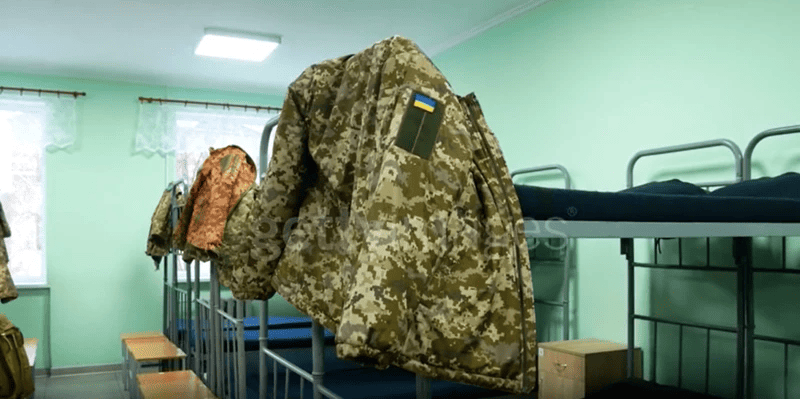
Although most of the documented crimes in the report concern Russia’s actions, the UN commission also highlighted certain issues in the practices of Ukrainian authorities. In particular, experts expressed concern about the application of Ukrainian legislation on collaboration.
The report notes that after the start of the full-scale invasion, Ukraine adopted a number of criminal provisions aimed at punishing cooperation with occupation administrations.
However, some of these provisions are formulated too broadly, creating a risk that people whose activities do not threaten national security could be held criminally liable.
Experts therefore recommended that the Ukrainian authorities review certain provisions of the legislation.
In addition, the UN commission pointed to systemic violations during mobilization in Ukraine. Reported violations include men being subject to arbitrary administrative detention, being denied access to a lawyer, and medical examinations by military-medical commissions being conducted hastily while ignoring medical warnings.
The commission also documented cases where those who refused military service on grounds of conscience were forcibly taken to recruitment centers and then to military units. Interviewees reported experiencing physical violence and psychological pressure.
Ukraine was advised to strengthen monitoring of the mobilization process, ensure the right to legal assistance and alternative civilian service, stop all forms of violence, and guarantee effective investigation of such cases.
However, the most serious violations and crimes documented by the commission are linked to the actions of the Russian Federation during the war.
According to the Office of the UN High Commissioner for Human Rights, since the start of Russia’s full-scale invasion, 15,000 Ukrainian civilians have been killed and 41,000 wounded.
These are only confirmed cases; the actual number of victims of Russia’s war against Ukraine may be significantly higher.
2026 January → February → March → April → May → June
Tags: child deportation crisis EMPR.media global security alarm international justice pressure russia ukraine war UN human rights report War crimes investigation