“Who will go to prison for the lack of preparedness for war?” — this is the line that opens Dmytro Chekalkin’s documentary “Barbecues Above All.” Iryna Mudrenko reveals.
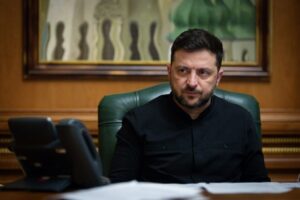
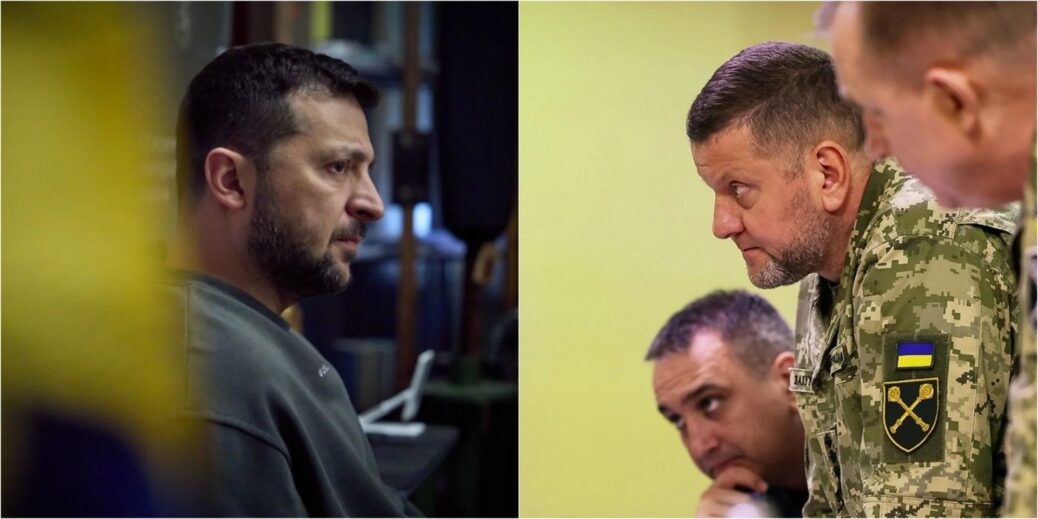
Let me state my conclusion upfront. In my view, President Volodymyr Zelensky should bear responsibility for failing to fulfill his constitutional duties and for policies that weakened Ukraine’s defense posture. At the same time, the authorities appear determined to place blame on General Valerii Zaluzhnyi and other military leaders.
The inevitability of a Russian attack was recognized by many — generals in the General Staff, opposition politicians in parliament, and Western partners in Europe and the United States. Yet, according to critics, those at the Presidential Office did not act decisively.
While Zaluzhnyi and then-Defense Minister Oleksii Reznikov reportedly urged the president to introduce martial law, and former president Petro Poroshenko called in parliament for increased defense funding, the head of the CIA, William Burns, personally visited Kyiv to warn of the threat of war. Critics argue that, instead of prioritizing defense preparations, the leadership focused on infrastructure projects.
In 2021 alone, approximately 348 billion hryvnias were reportedly spent on the “Great Construction” initiative. In an interview with RBC-Ukraine, Zelensky said:
“We could increase the size of the army two- or three-fold, but then, for example, we would not be able to build roads. That would be a problem for us.”
Critics interpret this statement as evidence that infrastructure spending was prioritized over national security and the protection of citizens’ lives.
According to this perspective, warnings from Zaluzhnyi and Western allies were not fully heeded, while information from Ukraine’s Security Service played a decisive role. The agency was later shaken by espionage scandals involving senior officials such as Andrii Naumov and Oleh Kulinich, and at the time it was headed by Ivan Bakanov, a long-time associate of the president. Critics say the possibility of a full-scale invasion was downplayed.
A month before Russia’s full-scale invasion, during a meeting in Kyiv with U.S. Secretary of State Antony Blinken, Zelensky reportedly remarked:
“Your intelligence is excellent, but you are far across the ocean, while we are here on the ground. I believe we may understand certain things about our country more deeply.”
What should a president do when war threatens the country?
Article 106, paragraph 20 of Ukraine’s Constitution provides a clear answer: the president has the authority to declare general or partial mobilization and introduce martial law. Critics argue that such decisions were delayed despite the visible buildup of Russian forces along Ukraine’s borders.
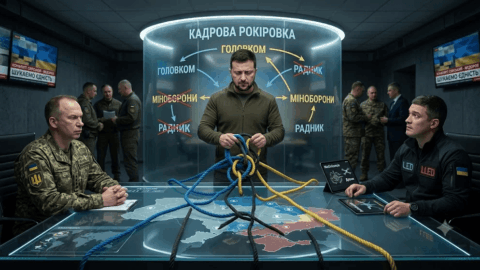
Dmytro Chekalkin identifies four key reasons for what he calls the catastrophic beginning of the war:
🔴 First, the president allegedly failed to approve critical defense programs. The Strategic Plan for the Use of the Armed Forces was not signed, prompting Zaluzhnyi and Reznikov to prepare crisis-response plans themselves shortly before the invasion.
🟠 Second, what critics describe as “self-disarmament”: reductions in procurement of body armor and ammunition, and the suspension of missile programs such as Vilkha, Stuhna, and Neptune.
🟡 Third, the absence of a timely mobilization decision.
🟢 Fourth, the failure to sign decrees authorizing the deployment of the Armed Forces and introducing martial law before the invasion. Without such orders in peacetime, military units were legally restricted in their movement and operational readiness.
There has also been discussion of a criminal investigation involving senior military officials. President Zelensky himself acknowledged during a meeting with journalists that proceedings existed and that the State Bureau of Investigation and the Security Service were examining the matter.
According to critics, the phrasing used by the president suggested that responsibility for the lack of preparedness might ultimately be assigned to military leaders rather than political decision-makers.
Chekalkin’s documentary presents a detailed narrative of how, in his view, Ukraine’s leadership failed to prepare adequately for Russia’s invasion, while military commanders did what they could to defend the country. This article is the first part of a planned review series analyzing the film. The next installment will focus on how Ukraine’s armed forces prepared to repel the offensive.
Dmytro Chekalkin’s film “Barbecues Above All”
Tags: empr.media Opinion global security invasion analysis leadership responsibility military strategy controversy russia - ukraine war Ukraine politics debate war preparedness