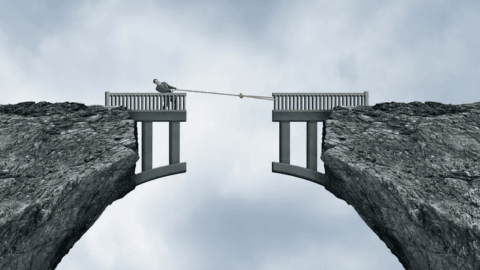
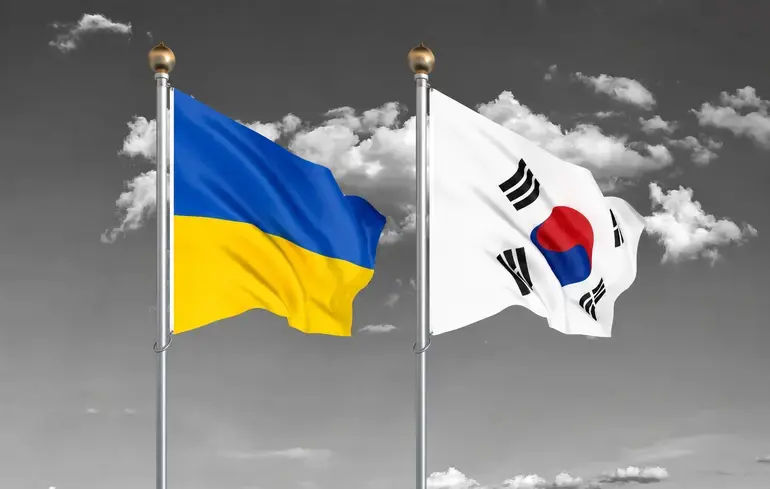
The Kyiv–Seoul diplomatic scandal highlights communication failures, eroding trust, and the urgent need for crisis management and professional diplomacy to restore bilateral relations.
We all hoped that the diplomatic scandal between Kyiv and Seoul would gradually die down, regardless of what had happened before. Instead, it is gaining momentum. This was reported by ZN.ua.
Never before have partners and adversaries alike watched so closely the statements exchanged by the leaders of Ukraine and the Republic of Korea (ROK) as they have since Ukrainian President Volodymyr Zelenskyy’s address to the UN General Assembly and the sharp reaction from ROK President Lee Jae Myung to the mention of transferring North Korean prisoners of war to the ROK.
Adherence to the Korean principle of “inhwa” — one of South Korea’s fundamental sociocultural values, referring to the pursuit of absolute harmony, peace, and balance in interpersonal relations and the avoidance of conflict, which manifests itself in international relations as “quiet diplomacy” — and Kyiv’s corresponding understanding of this principle still offered some hope.
When a serious dispute or major misunderstanding arises, Korean culture calls for resolving it privately, “behind closed doors.” The main goal is to save face (chaemyun) for all parties involved and avoid undermining the authority of a leader or partner. But apparently, we were not so lucky.
A Second Wind was unfortunately given to the scandal by the Ukrainian side. It was not a diplomat or an expert in Ukraine’s international and foreign policy who did it, but a person with a completely different professional background — Dmytro Lytvyn, adviser to the President of Ukraine on communications.
His denial that Ukraine had violated an agreement with South Korea not to disclose information about the transfer of two North Korean prisoners of war to the country was unequivocally perceived in Seoul as an accusation that the ROK leadership had made a false public statement.
One can argue over whether there was an agreement on non-disclosure or not, but for an official representing the President of Ukraine to make such a comment publicly was unequivocally to prolong and fuel the scandal. Let us agree, it was not the most successful move in foreign policy.
As a result, and quite predictably, Seoul issued a demarche, summoning Ukraine’s Chargé d’Affaires in the ROK, Andrii Veshkin, to the Foreign Ministry.
To be fair, we should note that the Korean side, whether consciously or unconsciously, made a whole series of mistakes and public statements, adding fuel to a fire that had only been smoldering.
One thing is beyond dispute: both sides urgently need diplomatic crisis-management measures and steps to restore trust. Otherwise, all the potential areas and initiatives for cooperation already agreed upon at the meeting in New York between the Ukrainian and ROK delegations, led by Ukrainian Foreign Minister Andrii Sybiha and his counterpart, Cho Hyun, will be put on hold for a very long time.
Those seeking to exploit the situation to undermine good Ukraine–ROK relations amid the crisis of trust unfolding before our eyes will also gain additional arguments for their provocations.
The common challenges arising from military-technical cooperation between Russia and North Korea, which poses a direct security threat to both Europe and the Indo-Pacific region, will not disappear either.
And bilateral cooperation between Ukraine and the ROK is too important to the partners for a crisis of trust to create artificial barriers to the pursuit of both sides’ national interests.
To find the right approach to diplomatic crisis management, one must nevertheless understand the basics.
First, the issue of keeping agreements confidential is not as straightforward as it may seem. The key point is not how each side interprets the situation, but that when you want to make certain matters public — especially from the UN podium — it is worth checking with your partners first. That is normal. That is precisely why diplomats work both at the central administration and at embassies in host countries.
The highest level of diplomatic professionalism is to have such trust and understanding of a partner — their domestic political circumstances, the differences between the Asian and European models, and the sensitivity of a particular issue in the context of specific circumstances — that you can simply sense these things professionally.
Or, at the very least, inform the partner of your intentions through the Ukrainian Embassy in Seoul or, in the absence of a Ukrainian ambassador there, through the ROK ambassador in Kyiv, and receive feedback before raising a controversial issue in a speech addressed to the whole world.
Second, if this is what happened, the ROK leadership should also have been more restrained and started not with a public statement, especially at the highest level, but, for example, by delivering its note through diplomatic channels to Kyiv.
But even after a partner issues a sharp statement, the next steps need to be carefully considered. It is important to assess whether trust between the countries, particularly in wartime, is more important than defending one’s reputation at home in Ukraine. An action plan for managing the crisis should be developed. An attempt should be made to “put out the fire” while this is still possible.
It is also necessary to analyze why this happened and make the appropriate adjustments to the mechanisms for preparing important international speeches by the President of Ukraine, as well as to the procedures for publicly responding to contentious situations involving international partners.
Third, responsibility for the draft of the speech, apart from the president himself — after all, it is his speech, and the address is ultimately his final version — lies with those who prepared and finalized it. In such cases, the Ministry of Foreign Affairs does not prepare the final text of the speech; it only provides proposals, however they may be formatted — as a draft of the entire speech, talking points, or key positions.
Therefore, with 99 percent probability, the final version of the speech placed in the president’s briefing folder was prepared by speechwriters, not diplomats. Sometimes these are the same specialists, but not in this case.
There have been “weak spots” in President Volodymyr Zelenskyy’s speeches from the UN podium before, but overall, in terms of structure, emotional impact, and the proper emphasis of key points, there had previously been virtually no questions for either the speechwriters or the speaker.
So, what happened? A very simple thing happened — a breakdown in internal communications: between the Ministry of Foreign Affairs and the Office of the President; between the Embassy of Ukraine in the ROK and the MFA; between the Office of the President and the ROK Embassy in Ukraine; and between the advisers and officials in the president’s inner circle.
So, what should be done now? The familiar “we have the right to make mistakes” will not work here. At least three steps need to be taken. And they need to be taken immediately!
First: non-specialist official representatives should stop commenting on this issue (as well as on other specific foreign policy matters), especially those who are far removed from diplomacy but are too “close to the president’s ear.”
Second: arrange a phone call between the Ukrainian Foreign Minister and his counterpart in Seoul. Better yet, of course, to avoid once again making the MFA the scapegoat — especially since there was a phone call recently, as well as an in-person meeting between the two in New York — the call should come from the Office of the President.
This is usually handled by the diplomatic adviser to the President of Ukraine (although it is currently difficult to determine exactly who that is, and responsibility is therefore blurred), or negotiations could even be held at the level of the two heads of state. Here, however, all the nuances that we cannot know for certain would need to be taken into account.
Third: carefully reassess whether the candidate nominated to serve as Ukraine’s ambassador to the ROK is still suitable in light of the changed circumstances. The priority now is not economic projects or even military-technical cooperation (under the current circumstances, progress in these areas is unlikely without overcoming the barriers that have emerged), but first and foremost — restoring trust!
In the short term, only a professional diplomat can achieve this, preferably a “heavyweight” with experience working in the region.
And most importantly. We are seeing an increase in the number of mistakes in Ukrainian foreign policy, which was quite rightly regarded as a successful area of the President of Ukraine’s work. Perhaps it is time to reset the system to its basic settings? And then, starting from a basic — professional and proven — version of the operating system, “upgrade” it.
Applications can be added, even the most advanced ones, but without reliable “hardware,” new “application software” is unlikely to be effective. Rather, as we can see, the opposite is true.