South Korea’s expanding diplomatic and commercial ties with Russia, including fuel shipments and weak export controls, are raising concerns among European allies over Seoul’s reliability.
South Korea is turning towards Russia amid tensions in its relations with Ukraine. This is causing concern among its European allies.
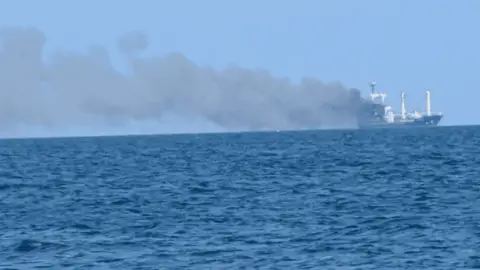
South Korean President Lee Jae-myung enthusiastically welcomed the crew of the PanStar Acro container ship, which had returned from a voyage through the Arctic. This was reported by Lubov Charivna.
On August 22, the vessel departed from the port of Busan on the country’s first-ever commercial voyage to Europe via the Northern Sea Route.
Praising the crew for their “courage and sense of responsibility” in “distant seas,” Lee pledged to “open a new path for the Republic of Korea.”
However, journalists note that European diplomats in Seoul did not share his enthusiasm.
The voyage has become a symbol of what Europe sees as Seoul’s diplomatic and commercial shift towards Moscow, even as the Kremlin deepens its partnership with North Korea and continues its war against Ukraine.
These concerns intensified following reports that South Korea had shipped 176,000 tonnes of fuel, including diesel, to Russia in July and August.
Seoul’s relations with Moscow have led some European diplomats to question whether South Korea remains a reliable partner.
“They do not really share our views. Their position is that the war will not last forever, and they want to resume business ties with Russia as soon as possible once it ends,” a European diplomat based in Seoul told journalists.
Europeans are even more concerned about South Korea’s weak enforcement of export controls on computer numerical control (CNC) machine tools, which Russia uses to manufacture ammunition.
In February 2025, two executives of a South Korean company were tried for illegally exporting $5.5 million worth of CNC machine tools to Russia. However, they received suspended one-year sentences, while the company was fined just $30,000.
Relations between Seoul and Moscow have been “gradually improving” since last autumn, says Mason Richey of Hankuk University of Foreign Studies in Seoul.
In November 2025, the National Intelligence Service’s Institute for National Security Strategy held a closed-door conference with Russia’s Council on International Affairs, a think tank backed by the Kremlin.
In June, Institute President Kim Sung-bae travelled to Moscow to take part in a closed-door strategic dialogue with his Russian counterparts.
Earlier this month, President Lee appointed Song Young-gil as a special adviser on peace diplomacy.
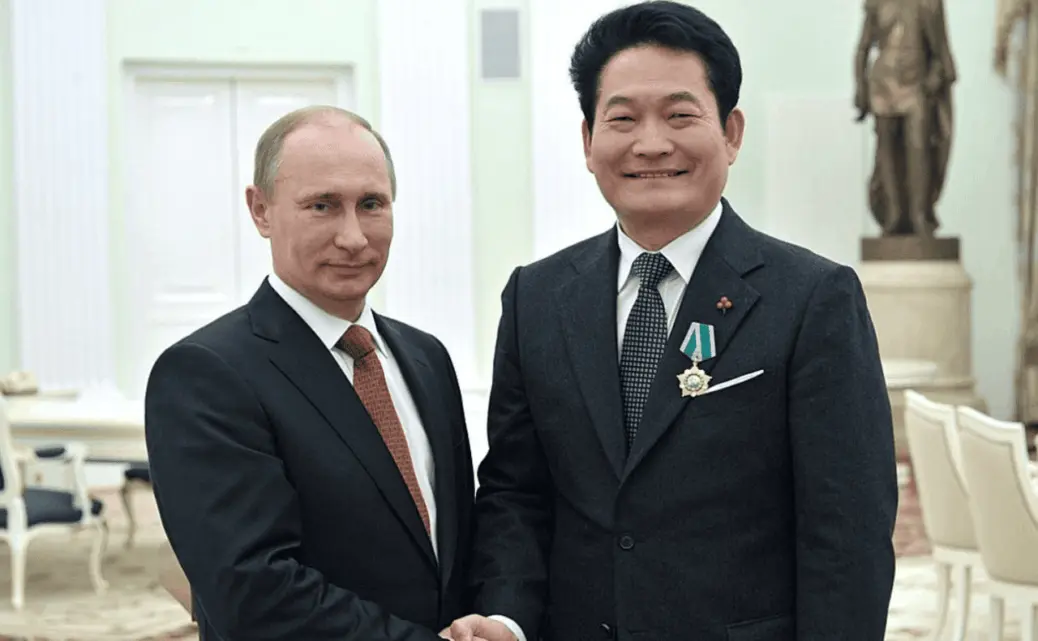
Song, who also served as South Korea’s special envoy to Russia, has long advocated closer ties with Moscow. In 2013, he received the Order of Friendship from Putin.
Kim Saeme of the Asan Institute for Policy Studies notes that Seoul’s approach to Moscow reflects a longstanding view of Russia as a powerful neighbour that cannot be ignored or provoked.
“South Korea’s foreign policy has historically been shaped by the concept of the ‘four major powers’: the United States, China, Japan, and Russia,” Kim said.