The National Anti-Corruption Bureau of Ukraine (NABU) and the Specialized Anti-Corruption Prosecutor’s Office (SAPO) announced today that they had exposed a criminal group as part of Operation Carthage. The group allegedly consisted of at least 12 people and was involved in operating call centers, drug trafficking, and producing counterfeit foreign currency. According to investigators, law enforcement officers from the Security Service of Ukraine (SBU), the Prosecutor General’s Office, and the National Police provided protection for the group’s activities.
Schemes, an investigative journalism project by Radio Svoboda, explains what exactly is revealed in the new recordings in the case.
Call Centers
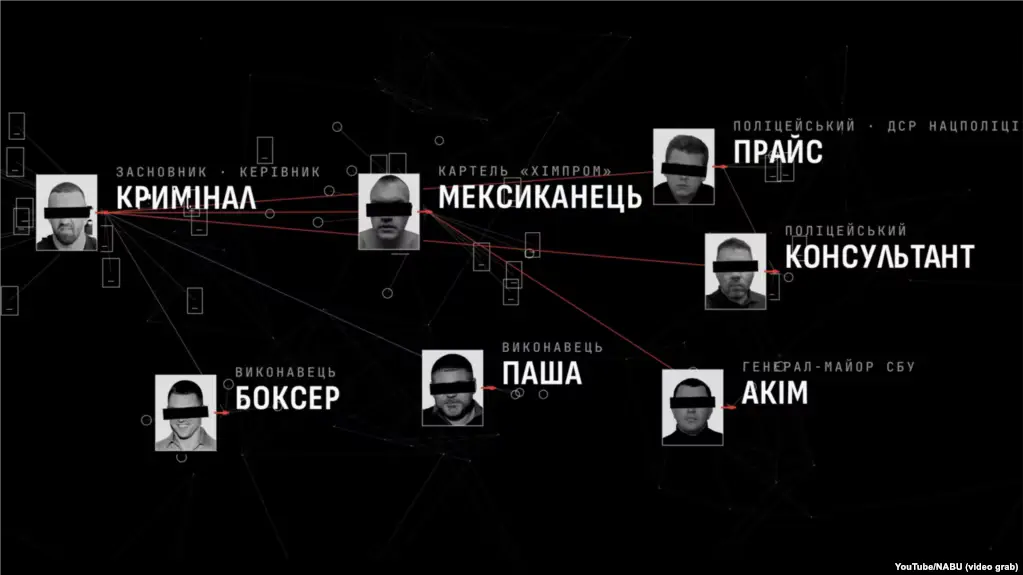
Investigators identify the alleged leader of the criminal group as a three-time convicted man nicknamed “Criminal” (presumably Andrii Osipov). According to the recordings, he runs his “businesses” with “The Mexican” (presumably Yegor Burkin, who is wanted in Ukraine), a Russian national who founded the so-called transnational drug cartel Khimprom. He fled Russia for Ukraine, where he continued his “business” activities. His current whereabouts are unknown. In the intercepted conversations, he repeatedly mentions his contacts with Russia’s Federal Security Service (FSB).
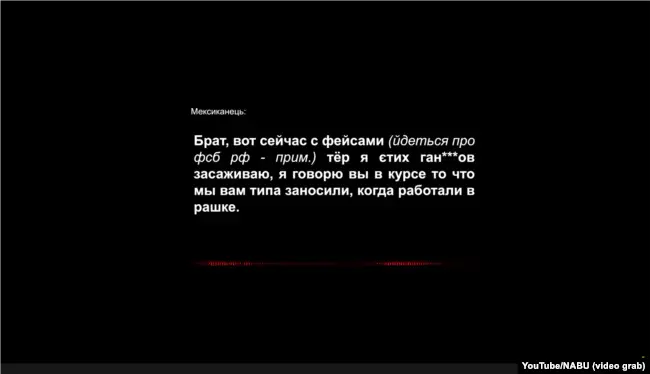
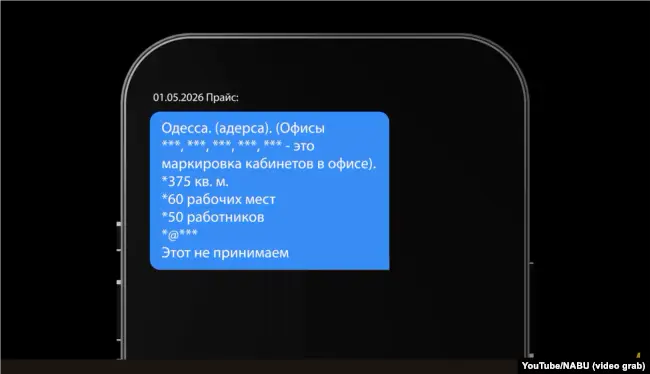
In the autumn of 2025, “The Mexican” was already allegedly running a network of fraudulent call centers, while “Criminal” was responsible for securing protection from law enforcement agencies — the SBU, the prosecutor’s office, and the National Police — to which he allegedly paid bribes, according to investigators. This cost $7,000 per month for each call center. In total, members of the criminal organization (CO) reportedly coordinated the operations of 52 call centers.
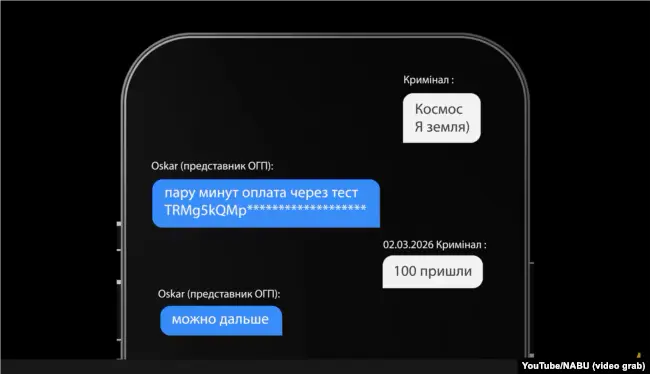
In their messages, “Criminal” and a person identified as “Oscar,” who is presumably a representative of the Prosecutor General’s Office, discuss where the money should be sent.
“Price” was responsible for “resolving issues” with the police. He was one of the heads of the National Police’s Department of Strategic Investigations (presumably Volodymyr Tsenov). From at least January to July 2026, he allegedly received payments in exchange for turning a blind eye to specific call centers.
After equipment was seized during a search of one of the call centers, “Price” allegedly instructed “Criminal” to file five identical complaints with the Pecherskyi District Court of Kyiv to manipulate the automated case allocation system and ensure that a particular judge was assigned to the case, according to investigators. Members of the “criminal organization” allegedly paid the equivalent of US$47,000 in cryptocurrency to a crypto wallet in exchange for this.
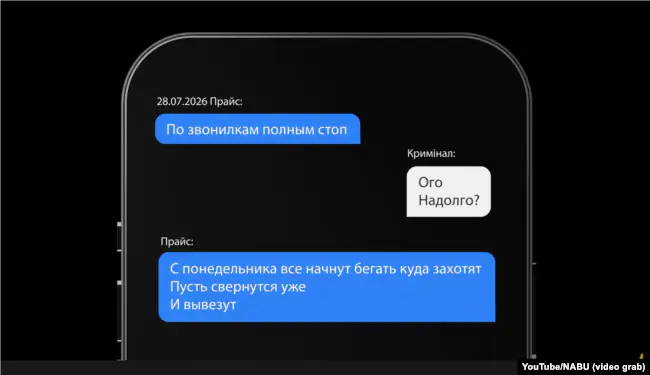
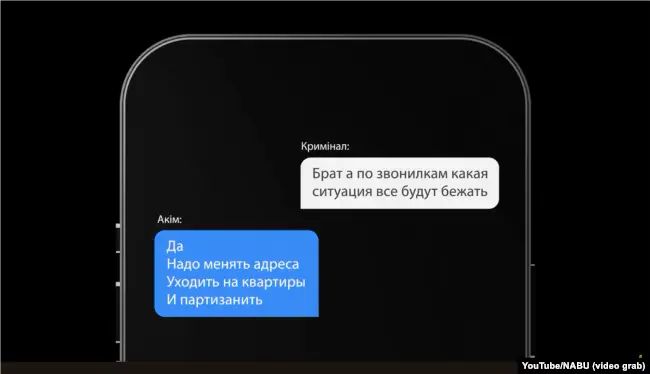
Following Ukrainian President Volodymyr Zelenskyy’s instruction to step up efforts to combat call centers in late July 2026, “Price” and “Akim” (an SBU major general, presumably Serhii Duka) allegedly warned “Criminal” that he needed to “wind things down” or “go underground,” according to NABU detectives.
Drug Trafficking
According to the recordings, “The Mexican” owns the U420 chain of stores, from which “Criminal” also received a share of the profits. Investigations have found that the stores sold narcotic substances disguised as “souvenirs” — the chemical formulas of the substances were modified to circumvent the ban on cannabis distribution.
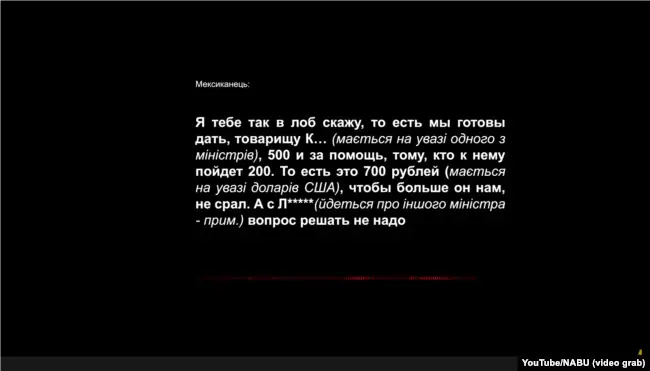
In the recordings, “The Mexican” and “Criminal” discuss attempts to bribe government ministers (presumably Ihor Klymenko, who was Interior Minister at the time, and current Health Minister Viktor Liashko) to prevent the substance’s formula from being added to the list of prohibited substances.
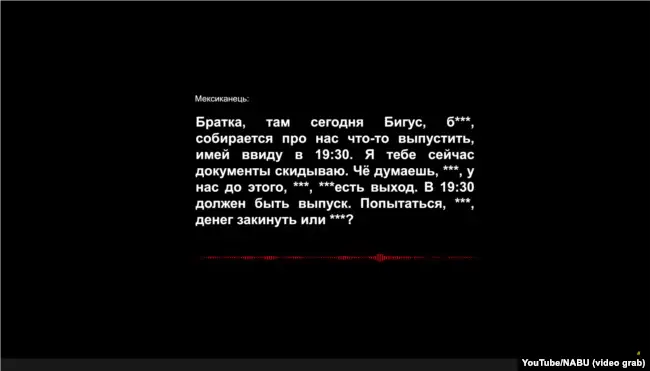
The bribery plan was not carried out, partly due to an investigation by journalists at Bihus.Info into the U420 chain. In the recordings, “The Mexican” and “Criminal” initially discuss the possibility of bribing journalists, but eventually turn to violent methods of intimidation, including “beating them up” or “throwing acid on them.”
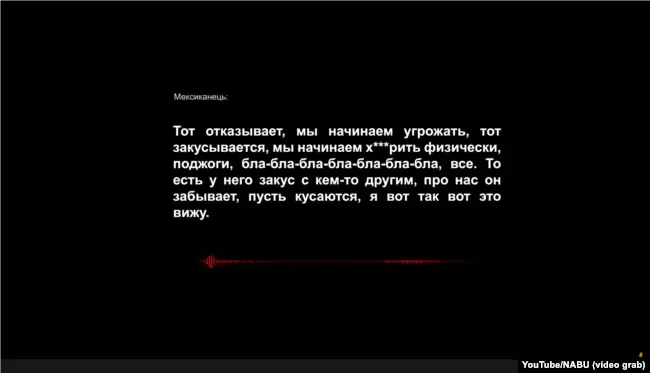
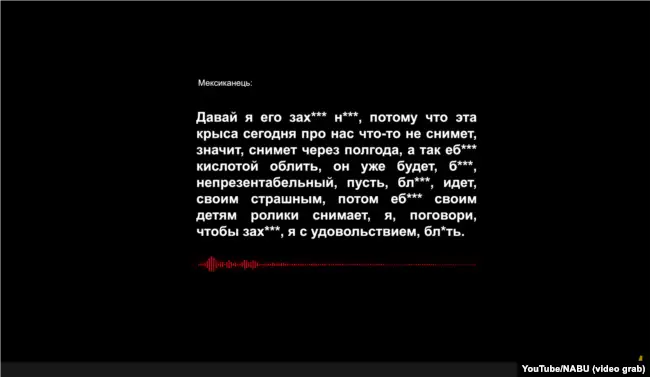
Regarding another activist who organized protests against the stores, they discussed using less high-profile methods, such as acid or hammers.
One of the options they considered for preserving their “business” was a bill to legalize marijuana in Ukraine.
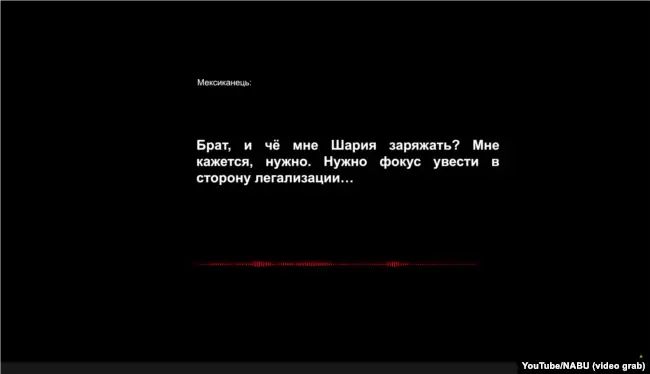
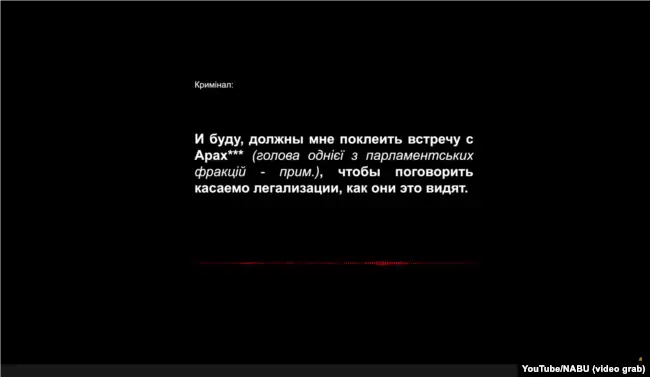
In one of the conversations, “Criminal” says that a meeting is supposed to be arranged for him with the head of one of the parliamentary factions (presumably David Arakhamia, leader of the Servant of the People faction) to discuss the initiative. Investigators do not specify whether the meeting actually took place.
Torture
The criminal group exposed by NABU and SAPO was involved in torturing and abducting people under the protection of law enforcement officers, the agencies report. These “tasks” were carried out by individuals nicknamed “Pasha” and “Boxer.”
For example, according to investigators, in July 2026, while preparing an attack on an individual near a sports club in Kyiv, the suspects received real-time photos and the geolocation of the victim’s car.
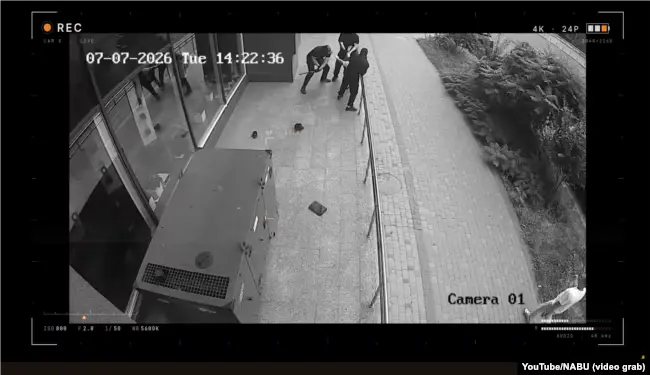
Access to the “Safe City” surveillance cameras, according to the labels visible in the photo, was obtained through an account belonging to an employee of the SBU’s Department for the Protection of National Statehood.
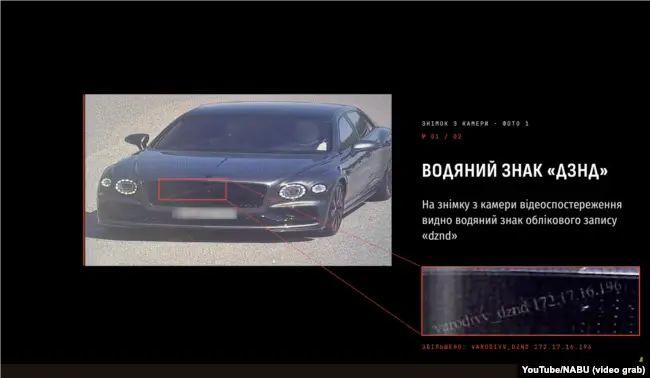
According to detectives, following the attack, the deputy head of the Criminal Investigation Department of the Main Directorate of the National Police in Kyiv Oblast (identified in the recordings as “Consultant,” presumably Oleksandr Demianchuk, deputy head of the Criminal Investigation Department) assured the organizers that no “Intercept” operation had been launched across the city and arranged for the attackers to be evacuated.
Counterfeit Euros
Detectives established that counterfeit currency was being produced in an underground printing facility equipped with specialized machinery and holographic matrices. The scheme involved printing the entire range of euro banknotes, from €5 to €500, with imitations of security features.
According to investigators, a serving police officer (“Consultant”) was directly involved in launching the counterfeit currency production operation, together with the suspects nicknamed “Criminal” and “Pasha.”
SBU Protection
According to investigators, “Akim” from the SBU helped “Criminal” gain access to personal data from databases (including information about people who had been tortured), obtain documents from criminal investigations, and secure assistance with court proceedings and the lifting of asset freezes. In addition, “Akim” used his connections with other law enforcement officials to help him.
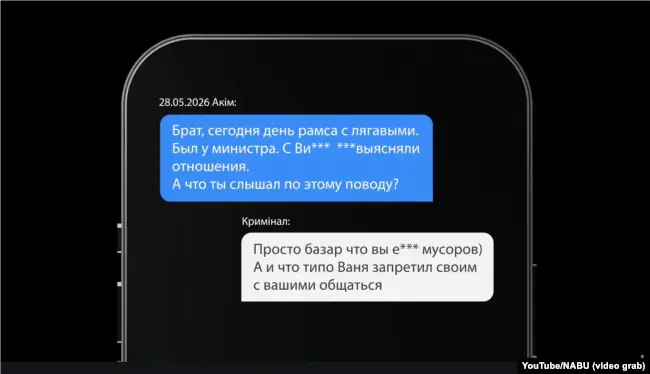
At the same time, SBU officials allegedly knew that “Criminal” was working in the interests of “The Mexican.” Investigators also say that the two discussed payments to SBU officers who were supposed to turn a blind eye to their organization. Between October 16, 2025, and April 25, 2026, 3.75 million USDT was received in the cryptocurrency wallet specified by “Criminal.”
Following the information released by NABU and SAPO, Schemes sent inquiries to the SBU, the National Police, and the Prosecutor General’s Office regarding the new findings and is awaiting their responses.
In the evening, the SBU announced that two senior SBU officials who had become subjects of the National Anti-Corruption Bureau’s investigation as part of Operation Carthage had been dismissed from their positions.
Earlier today, the National Anti-Corruption Bureau and the Specialized Anti-Corruption Prosecutor’s Office announced that at least 12 people were involved in the criminal organization exposed by the agencies as part of Operation Carthage. According to the agencies, the members of the organization had “established a system of regularly providing undue benefits to senior law enforcement officials in exchange for allowing fraudulent call centers and other illegal businesses to operate unhindered.”