Ukraine’s “cardboard revolution” turns protest into a digital-age performance, blending memes, political messaging and art while exposing society’s growing alienation from power.
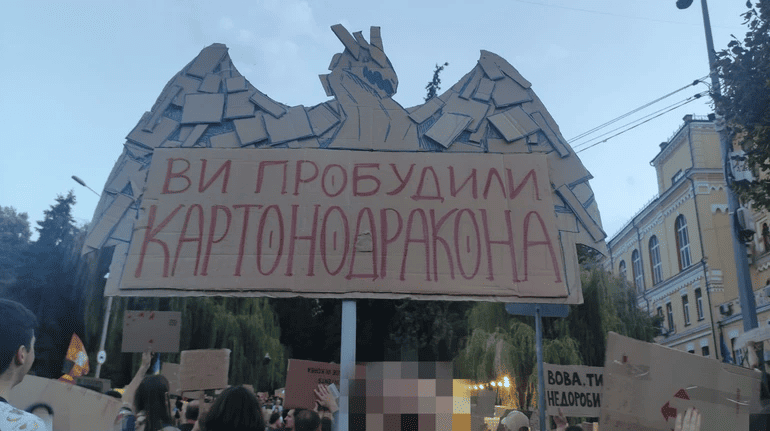
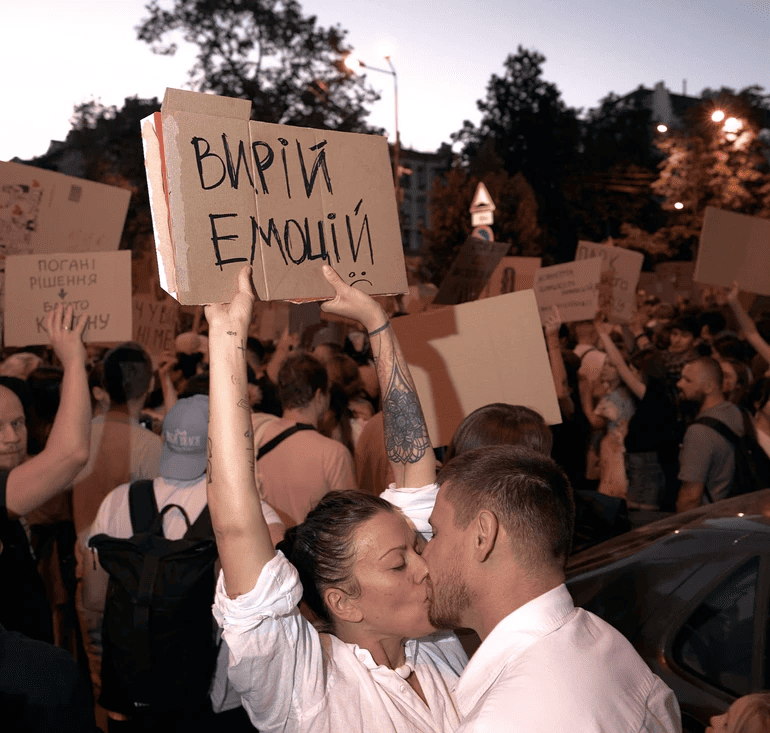
Protests against the dismissal of Defense Minister Mykhailo Fedorov tapped into the crowd’s full creative potential. During the first days of the demonstrations, at the Atlas Weekend music festival, which was taking place simultaneously, performer Hatespeech played a voice message from former Defense Ministry adviser on the use of UAVs Serhii Sternenko thanking the protesters, while the band LATEXFAUNA performed against the backdrop of Fedorov’s portrait on a huge screen. At rallies in Dnipro, children performed a dance to the song “Six Seven” in front of cardboard signs demanding Fedorov’s return. This was reported by UP Culture.
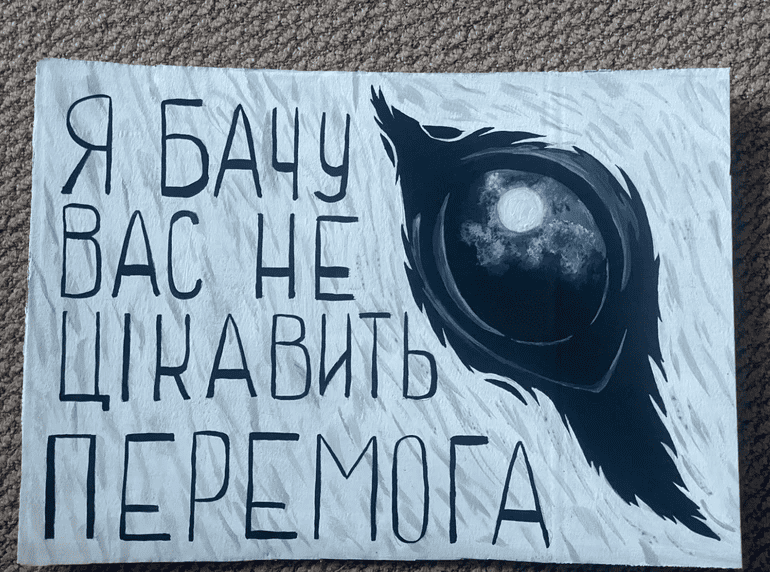
The variety of signs from the “cardboard revolution” led to the creation of the digital archive “Voices from the Square.” Actors and bloggers wearing outfits by Ukrainian brands came out in support of the former defense minister and posted photos of themselves holding cardboard signs on Instagram, which eventually raised suspicions about the protesters’ sincerity.
Art critic Oleksii Minko also joined the discussion about the cultural and political significance of the cardboard protests in 2026 in his column.
Politics on a Smartphone
In a recent episode of UP-2, political columnist Roman Romaniuk observed that during the press conference on the day of Fedorov’s dismissal, “he spoke, behaved, and made arguments exactly like Zelenskyy did in 2019.”
Although Fedorov’s remarks at the conference directly addressed existential issues, and he spoke sincerely and called things by their names, the mobilizing effect of the presentation was no less powerful than that of an episode from the first season of Servant of the People in 2015, starring Volodymyr Zelenskyy.
The episode was uploaded to YouTube as a separate clip titled “How Ukrainians Become Khokhols,” where it garnered more than 3.5 million views and already outlined a way of shaping an electorate: telling the blunt truth in front of everyone, while focusing exclusively on the cultural or behavioral aspect of an uncomfortable truth.
Fedorov likewise avoided directly naming the people responsible for structural problems and corruption in the state, instead focusing on the contrast between “Soviet” management culture and one that embraces reforms and change.
The Kvartal 95 school, multiplied by the skills of a savvy social media manager, is the formula behind Volodymyr Zelenskyy’s victory in the 2019 presidential election — a victory made possible by Mykhailo Fedorov, who was responsible for the digital campaign at the time.
As populism grew under the new government, so did society’s ability to communicate with the authorities in their own language. In a country where policy decisions are made with political ratings and the overall popularity of team members in mind, political results can only be achieved through effective publicity.
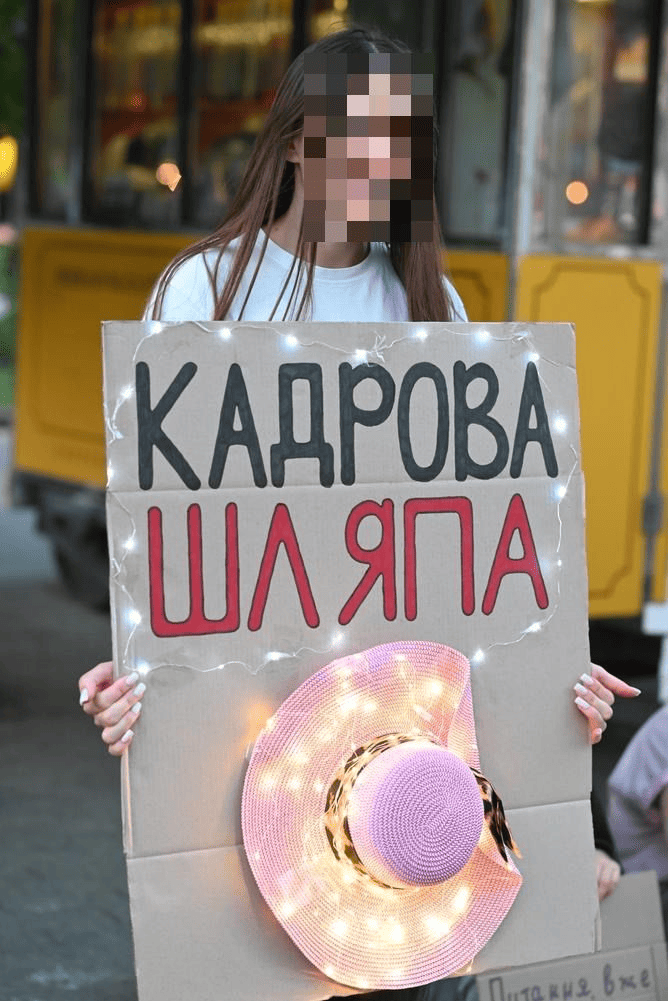
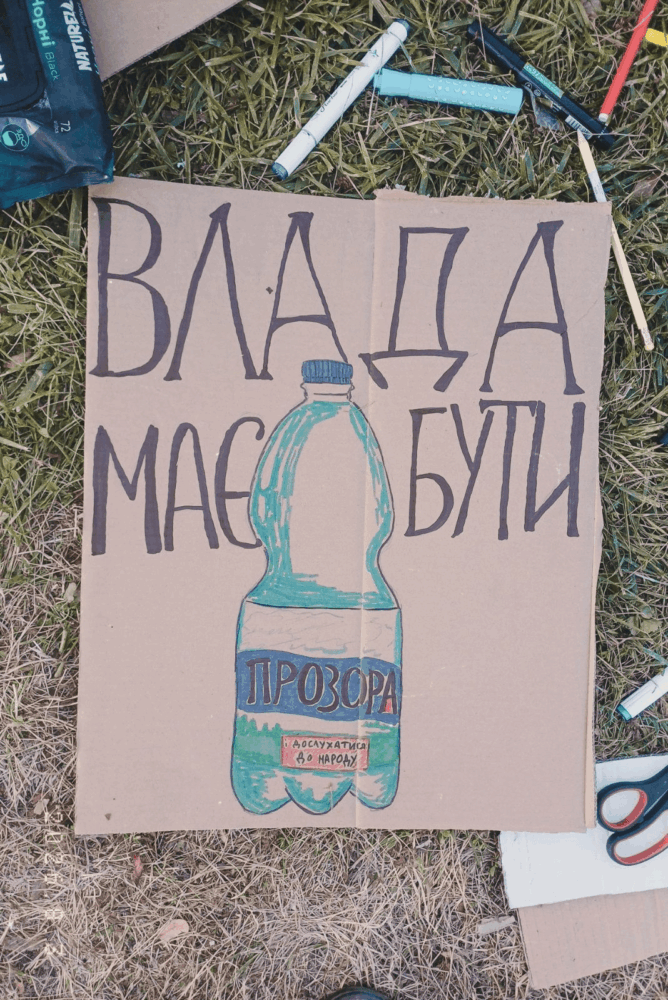
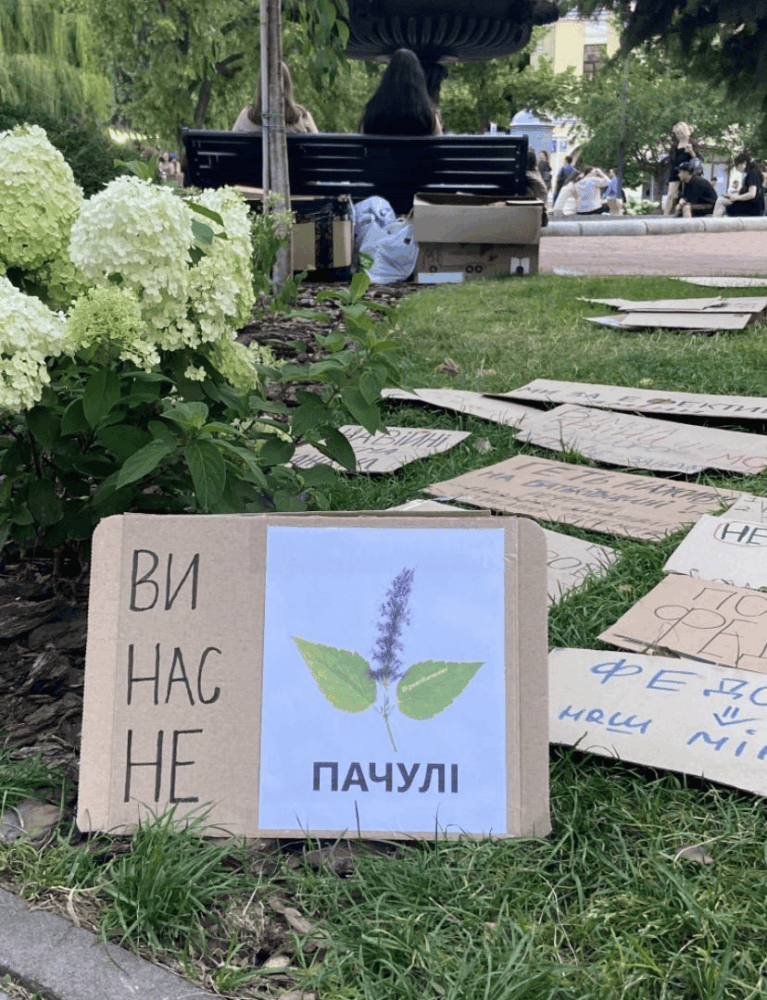
Politics continues during wartime, but it unfolds in the digital space. Young people who grew up with this format of communication from the authorities have put their creativity to work for publicity: they tell foreign audiences about the war and Russia’s war crimes in their stories, share their fundraisers with friends, and post cardboard signs to pressure the authorities.
The military has also adopted this political style. There is prioritized, politically and socially demanded content coming from military structures, regardless of their primary task: striking targets on Russian territory. In an interview with GRUNT media, veteran Bohdan Krotevych says that one of the biggest problems in the military today is that commanders operate FPV drones themselves from command posts.
Videos of strikes provide content, and with it, an argument for being directly involved in killing the enemy: “It creates the illusion of killing the enemy. But commanders forget about logistics, offensive operations, and planning — their primary responsibilities.” This content occasionally overshadows reports about crimes against Ukrainian servicemen in the Skelia Regiment and the 225th Assault Regiment.
Everything else in the military remains invisible — it is difficult to produce spectacular content amid dozens of KAB glide bombs hitting targets and the security measures that prohibit filming and publishing images from combat zones and military facilities.
In both civilian and wartime life, organized like a sales funnel, creativity is essential for producing social media content. Subordinated to the preferences of algorithms, it reproduces the nationalist rhetoric that underpins the state’s convenient promotion of the “unbreakable spirit” of the Ukrainian people and military, rather than breaking with “normality” and making the naturalization of ideology more difficult. Under these conditions, a protest is all the more valuable the more it disrupts the established order.
At the same time, the cardboard protest itself is a social network: confined to Franka Square as a platform where images and texts can be exchanged endlessly, trends can be followed, and reposts can be generated, it moves away from direct action, which would seemingly be so physically accessible. (In a similar but somewhat different political era, during the 2021 protests calling for Serhii Sternenko’s release from detention, protesters painted the building of the President’s Office and set off fireworks at its facade. The square near the Franko Theatre is one of the closest points to the President’s Office.)
In contemporary society, creativity is employed across a wide range of industries. Capitalism at its current stage expects entrepreneurs and employees to seek a “creative approach” when providing services and selling goods, while clients and consumers are constantly expecting something new.
The social media feed is built entirely around this: constant updates in which, between views, users are introduced to brands and products, while the number of views garnered by an inventive blogger is transformed into capital.
If the protest itself is organized like an algorithm, and the emotions, reactions, and desires of civilians and military personnel find expression in the form of content, perhaps art, when set against commodified creativity, can disrupt the transformation of society into a militarized IT startup?
Creative Nation
On the balcony of the Franko Theatre’s facade, in front of which the “cardboard” protests are taking place, there is an installation by Kateryna Prokopenko calling for the release of Azov prisoners of war, styled after early Soviet propaganda. But unlike the situation in the young Soviet republic, hopes for revolutionary transformation of society are not on the agenda, and this stylization, with its socially important message, instead serves more as a protective shield for the Franko Theatre.
Although the exhibition inside the theatre was open to visitors until March 19, the installation remains in place even now — not only as a reminder of the unresolved issue of returning prisoners of war, but also because the Franko Theatre is preparing a production of The Odyssey together with Azov.
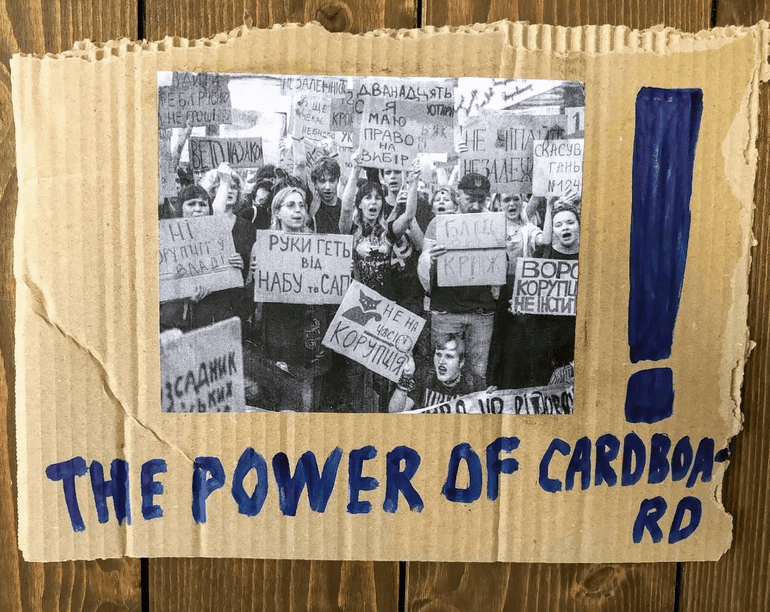
The facade of the Franko Theatre can be seen in the background of an image used by artist Thomas Hirschhorn for a collage bearing the large caption “The power of cardboard!” It shows young people holding cardboard signs during last year’s protests to preserve the anti-corruption agencies NABU and SAPO, which the president and members of parliament had attempted to dismantle amid preparations for investigations into corruption schemes involving the president’s inner circle. The collage itself is also made of cardboard.
For Hirschhorn, cardboard makes it possible to extend a two-dimensional space into three dimensions. The artist often imitates digital interfaces on cardboard, thereby looping the dichotomy between the “virtual” and the “real.”
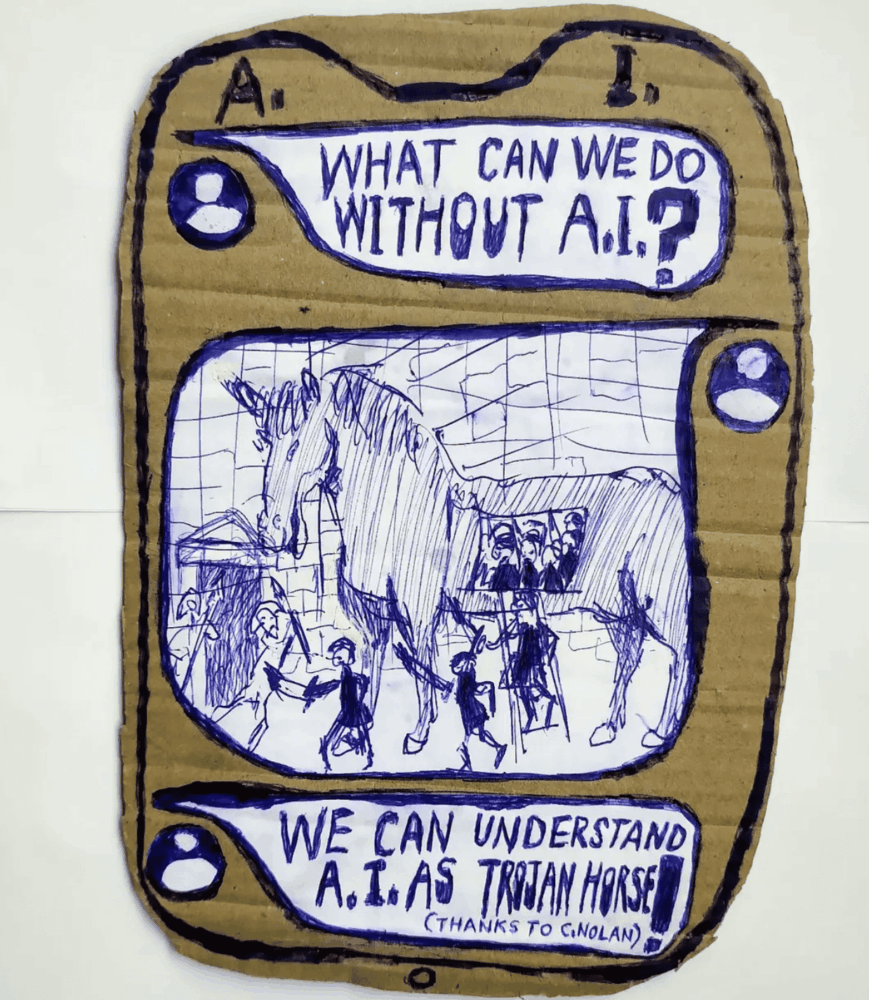
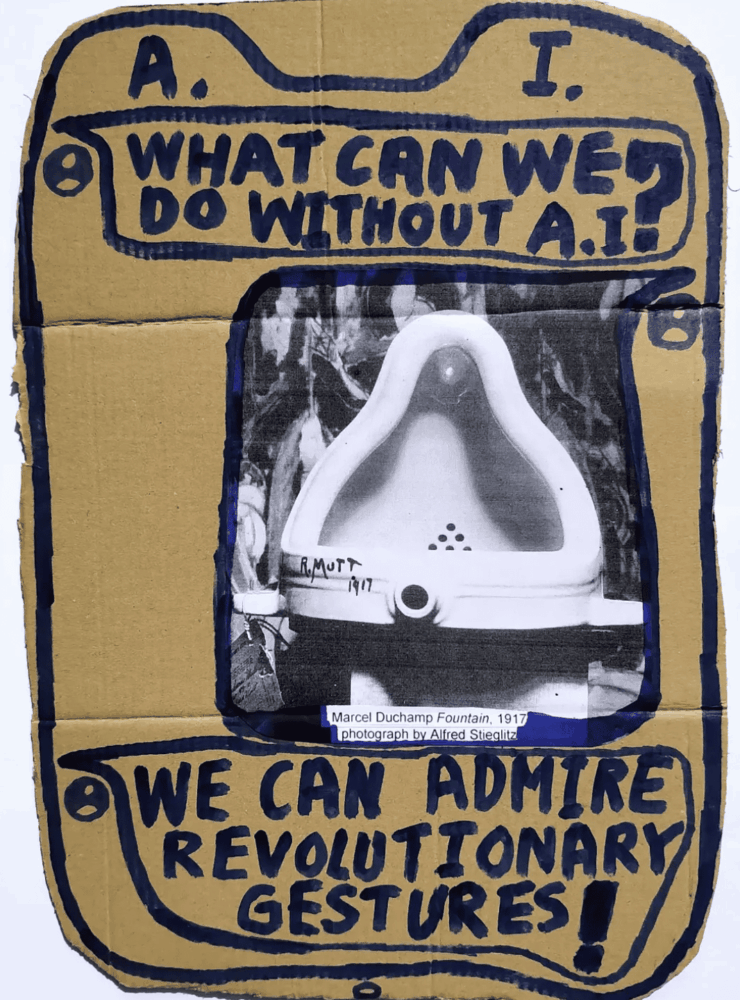
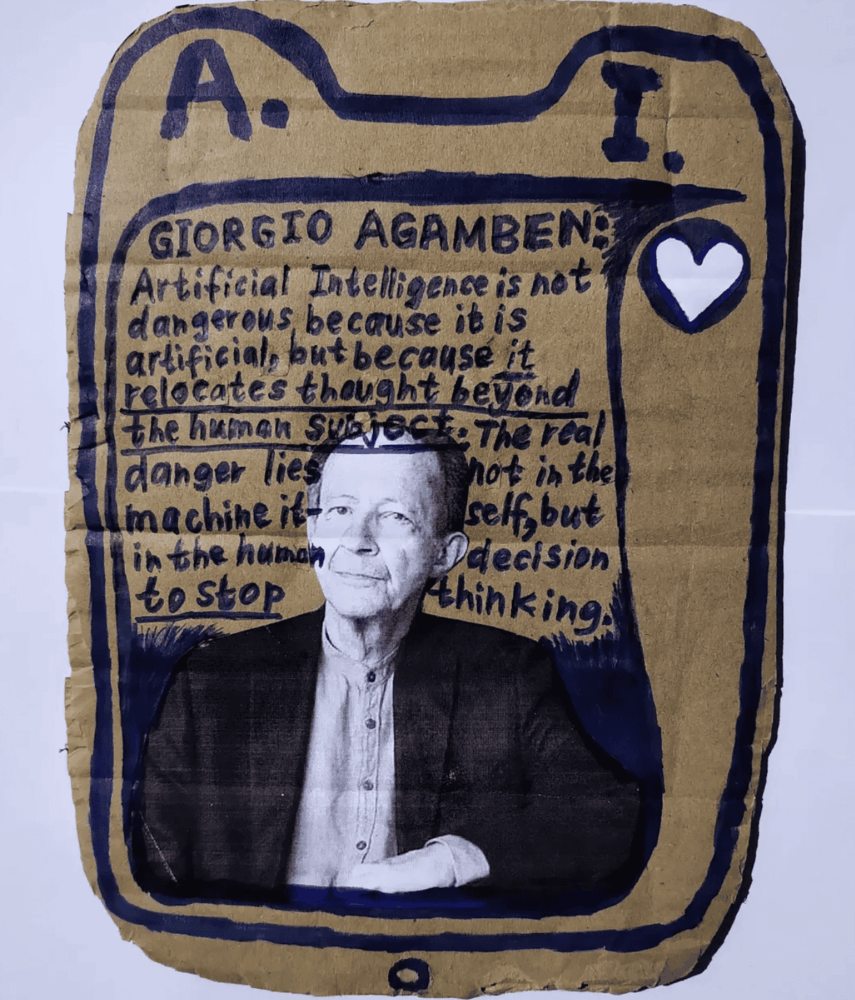
The protest outside the Franko Theatre does the same: digital reality spills out onto the streets, only to return to the memosphere.
Artificiality is another thing that interests Hirschhorn in this work. Cardboard can be used to imitate anything — including politics, strength, and power.
There is also an episode in the distant past of Ukrainian art in which artificiality is presented as an inherent feature of any political scene. Lviv-born artist Henryk Streng, who was involved in the left-wing movement, painted Demonstration of Paintings in 1933. The work depicts men standing side by side. Two of them hold paintings like protest banners, while another shouts into a canvas rolled into a tube, using it as a megaphone. The title, “Demonstration of Paintings,” can be read simultaneously as an exhibition of artworks and as a way of protesting with paintings.
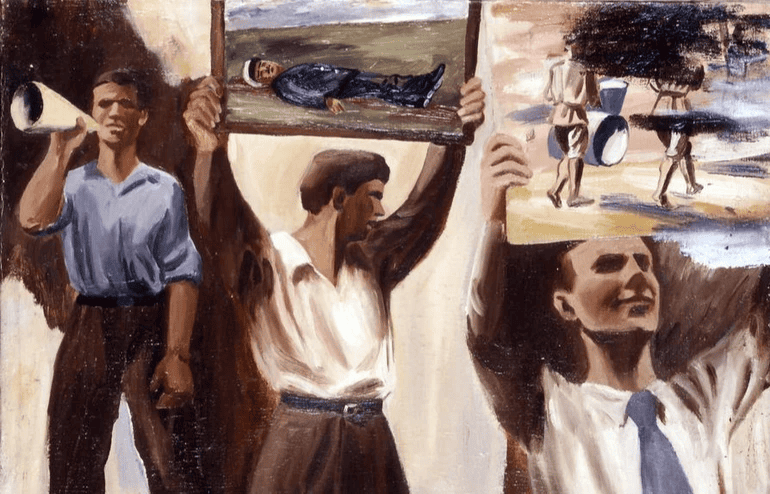
Streng himself did not arrive at this work immediately. Before that, art critic Debora Vogel had compared the artist’s work to that of constructivist Fernand Léger and surrealist Max Ernst. His search for a politically effective form eventually led him to the figurative style that Vogel described as his period of “social realism.”
However, Streng’s earlier painting experience, rooted in the modernist experiment of reducing human life to simple abstract forms, plays a cruel trick on the increasing politicization of his art. In a short note on Streng, Vogel describes how the human figure in his works tries to “‘do something’ and change,” but cannot overcome its resemblance to a mannequin.
In Demonstration of Paintings, the human-like mannequin “retains its former, somewhat dull and stiff, helpless and angular physiognomy, and dull, rigid movements, while at the same time rejecting the earlier generalization of this physiognomy, which now becomes detailed, individual, and rendered with photographic precision.”
Streng’s helpless physiognomy and the artificiality bestowed by Hirschhorn’s cardboard build a bridge toward understanding the contemporary form of Ukrainian protest. The protest, in fact, is not instigated by anyone and, of course, is not paid for by anyone. Instead, its participants are their own puppeteers.
The degree of radicalism in the protesters’ statements is regulated by the participants themselves. They ask people not to combine the slogans “Glory to Ukraine” and “Putin huilo,” because the latter sullies the former.
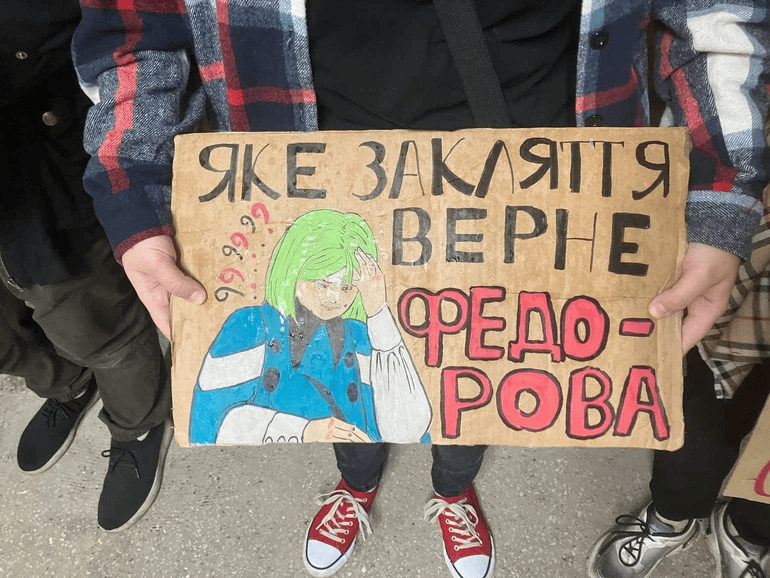
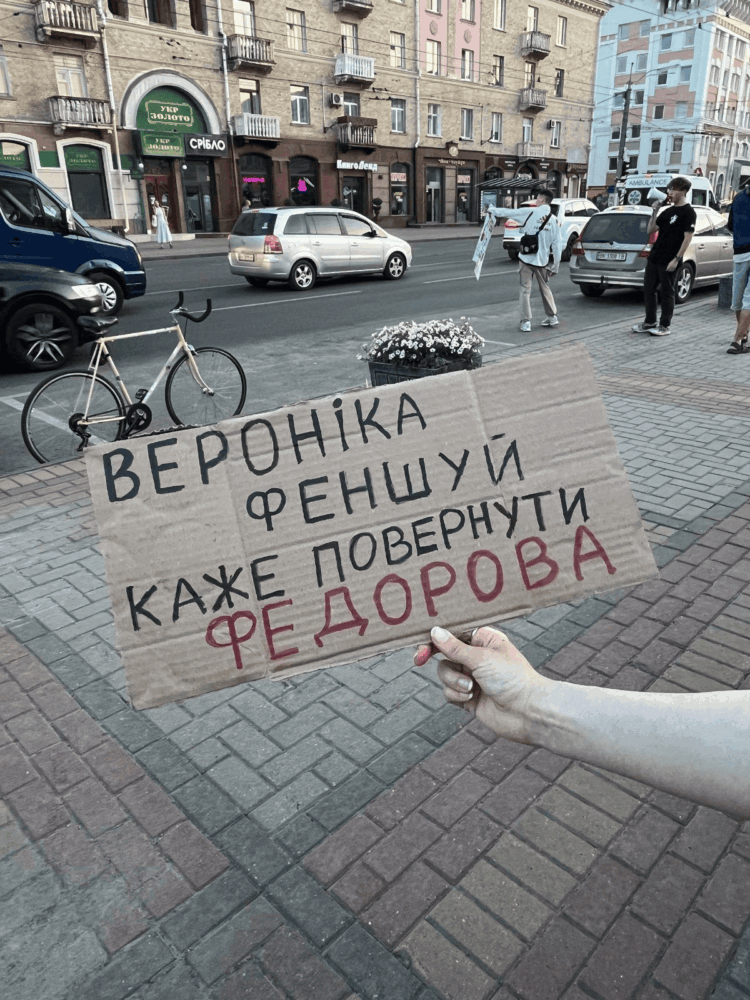
In the chanting of acceptable slogans, there is an echo of helplessness stemming from the unlikelihood of having any influence over the running of the state. Consciously or not, by loudly reciting the Prayer of the Ukrainian Nationalist, the protester channels all their anger at the fact that their fate is being decided by Veronika Feng Shui.
Perhaps that is precisely what makes the cardboard revolution avant-garde? Its uncompromising recognition of its own alienation from the levers of power, and its search for the most helpless form in which to express that alienation: displaying memes to one another in front of the tightly shut windows of the President’s Office.
Tags: Civic Resistance EMPR media maidan Protest Art Ukraine’s Cardboard Revolution Ukrainian culture Ukrainian Politics