
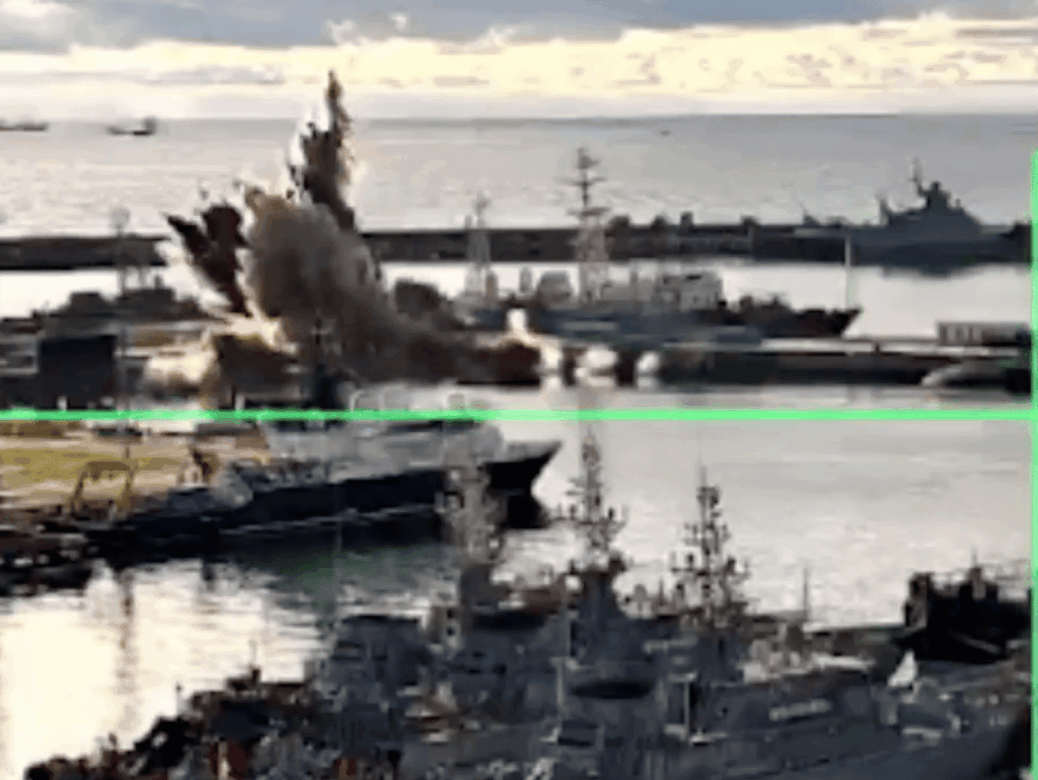
Ukraine has achieved a historic breakthrough in naval warfare after successfully striking a Russian submarine using underwater drones.
For the first time ever, Ukrainian Sub Sea Baby naval drones hit a Russian Project 636.3 Varshavyanka-class submarine, dealing critical damage and effectively putting the vessel out of combat.
The Security Service of Ukraine (SBU) has carried out another unique special operation, triggering a maritime “bang” in the port of Novorossiysk. For the first time in history, Ukrainian Sub Sea Baby underwater drones blew up a Russian Project 636.3 Varshavyanka-class submarine (NATO designation: Kilo). As a result of the explosion, the submarine sustained critical damage and has effectively been put out of action.
The submarine was carrying four launchers for Kalibr cruise missiles, which Russia regularly uses to strike Ukrainian territory.
The operation was conducted jointly by the 13th Main Directorate of the SBU’s Military Counterintelligence and the Ukrainian Navy.
The estimated cost of a Varshavyanka-class submarine is around $400 million. Given current international sanctions, building a similar submarine today could cost up to $500 million. This class of submarines is also known as the “Black Hole” due to its sound-absorbing hull, which makes it particularly difficult to detect with sonar.
It is worth recalling that the destroyed submarine was forced to remain in the port of Novorossiysk due to the successful operations of Ukrainian Sea Baby surface naval drones, which previously pushed Russian ships and submarines out of Sevastopol Bay in temporarily occupied Crimea.
According to available information, the explosion caused severe structural damage to the submarine, making further operations impossible. The Varshavyanka class is considered one of Russia’s most capable diesel-electric submarines and is a key element of Moscow’s naval presence, particularly in the Black Sea.
Crucially, the submarine was carrying four launchers for Kalibr cruise missiles — weapons regularly used by Russia to strike Ukrainian cities, infrastructure, and civilian targets. Its disablement therefore represents not only a tactical success, but also a significant reduction in Russia’s ability to conduct long-range missile attacks from the sea.
The strike highlights Ukraine’s rapid advancement in unmanned naval warfare and its growing ability to challenge Russian dominance in maritime domains previously considered secure. Ukrainian sea drones have already forced Russia to limit fleet movements, relocate vessels, and rethink its naval strategy.
This operation further underscores how innovative asymmetric tactics are reshaping the battlefield, allowing Ukraine to inflict high-value losses despite Russia’s numerical and technological advantages.
Tags: historic military operation Kalibr submarine naval strike russia ukraine war Russian navy russian submarine sea drones Ukraine ukraine's sea drones War Updates













![Visitors at the “Thank You With All My Heart” Ukrainian exhibition at the Council of Europe, featuring the Great Amber Heart and powerful war art. :contentReference[oaicite:2]{index=2}](https://empr.media/wp-content/uploads/2026/02/heart-300x171.png)