Former Lithuanian military intelligence chief Gintaras Bagdonas discusses Russian hybrid threats, NATO’s deterrence strategy, US reliability, and Europe’s urgent need to strengthen defence capabilities and prepare for future challenges.
Donald Trump’s agreements with Russia, negotiations to end the war, and Ukraine’s strikes on Russian oil refineries could significantly affect the war’s future course. Meanwhile, the Baltic states are preparing for new threats from the Kremlin that extend beyond hostilities.
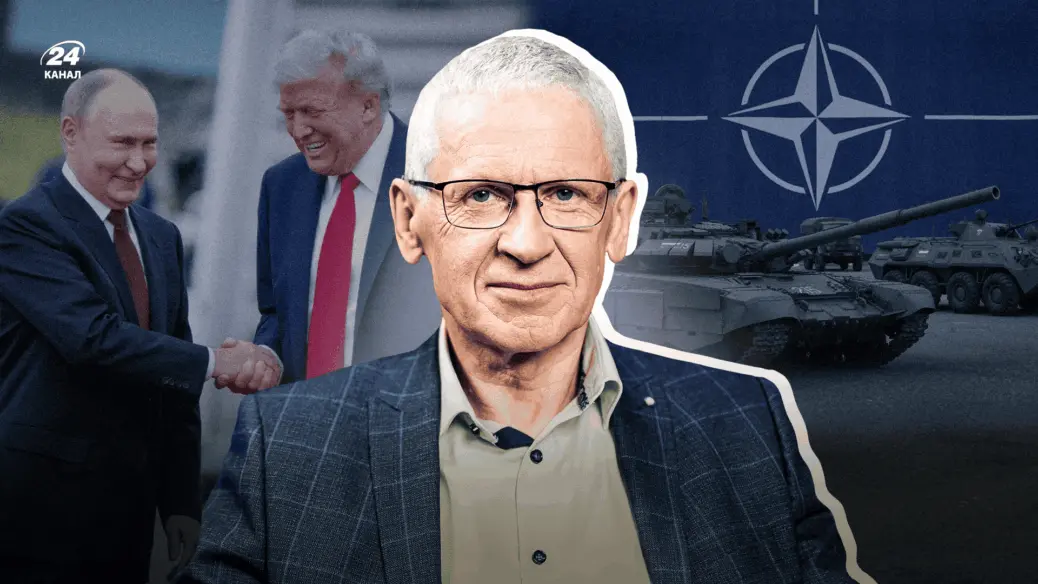
Retired Lithuanian Army Colonel and former head of the European Union’s military intelligence Gintaras Bagdonas explained in an exclusive interview with 24 Kanal what Trump seeks to achieve in relations with Russia, why Vladimir Putin will not agree to an energy ceasefire, and how Ukrainian strikes on oil refineries affect Russia’s war economy. The expert also discussed how the Baltic states are preparing for hybrid threats.
Trump’s “Diesel Deal” With Russia and Its Consequences
According to the latest reports, President Trump has decided to strike a deal with Russia to purchase 3 million tonnes of Russian diesel fuel. It is also understood that the United States is lifting sanctions on Russian diesel because it cannot purchase the fuel otherwise. As a result, the US Treasury Department has officially suspended sanctions on Russian diesel exports until April 7. What is your reaction to this deal taking place while Ukraine and the United States are holding negotiations in Miami?
My first thought was that it might be fake, but unfortunately, that is not the case. It is reality. Mr. Trump is guided by short-term goals – the upcoming US midterm elections on November 7.
Unfortunately, instead of helping Ukraine end the war on terms acceptable to your country and the entire democratic world, he is supporting the Russian economy. That is a fact.
Moreover, he is encouraging Moscow, the Kremlin, and Putin to continue the war and strengthen Russia’s military capabilities, since mineral resources are a major source of revenue for the Russian budget, which is equivalent to the country’s war budget.
In addition, we are increasing instability, and the war could spread beyond Ukraine, because Putin and his inner circle have repeatedly stated what they want to achieve. Finally, Trump’s decision to make an exception and lift sanctions undermines unity.
It could undermine unity among European countries and their people, sowing distrust in the international order, which has already been violated and destabilized. Nevertheless, we still have hope, and it is particularly important for small and medium-sized countries to uphold and rebuild an international order based on international law and reinforced by international organizations and alliances. This is the only force we can rely on as we build our future. So this is very bad.
On the other hand, I see that this volume of diesel will only cover a very short period, and Trump will not actually achieve the desired result. This is a manipulation of American citizens, because in the short term, it could affect the price of diesel or fuel in general on the US market.
In the long term, this will have no effect, because the same diesel or petroleum products that are currently being shipped to markets such as Brazil will now be redirected to the United States. I just hope that Ukraine will continue carrying out long-range strikes on Russian territory, weakening Russia’s capabilities, particularly its oil production capacity.
In your opinion, how could this affect the negotiations, given that the deal was announced before any energy ceasefire had been agreed upon?
It will undoubtedly have a negative impact. It will be very difficult for your country’s president to maintain the position that the situation demands, because, as we can see, the American side is once again doing what it had already said it would do.
Trump’s priority is not peace in Ukraine, but restoring his own popularity or that of his party ahead of the upcoming elections. This will affect the negotiations because, unfortunately, Trump is taking Russia’s side. Perhaps only in the short term, but he is.
Unfortunately, I have no good news on this, and my assessment is very pessimistic. However, we must rely on European unity and the solidarity of European countries that support Ukraine. Ukrainians are sacrificing their lives for us and giving us time to prepare for a potentially bleak future on the European continent.
Is an Energy Ceasefire With Putin Possible?
Could Putin agree to an energy ceasefire ahead of winter, despite the intensification of Russian strikes and the Kremlin’s unwillingness to stop the fighting?
At this point, I do not see that happening. From the very beginning, when the possibility of a ceasefire was on the table, starting at the beginning of Mr. Trump’s presidency, I have consistently maintained that there were no signs that the Kremlin was willing to agree to a ceasefire.
Let us look at Putin: his intentions are very clear. They want to break your nation, your state. And he repeats this every time, as do the members of his team.
So there is only one scenario in which he might agree, and perhaps it will not be him but his successors, if the Russian war economy is broken — seriously broken. Unfortunately, Russia has considerable resources, and Russian chauvinism, its militarized society, and the psychological readiness of its population give it a certain degree of resilience.
Quite a large number of Russians support Kremlin propaganda at home, and I see no change in the Kremlin’s policy. Perhaps things could change in the long term, but we must stand united in supporting your country and imposing strict economic sanctions, even a blockade. There is simply no other way.
I still hope that things may change after some time, perhaps after November 7, as the new situation in Washington’s political landscape, shaped by the elections, begins to have an impact. But we will see. Unfortunately, that is still some time away — three or four weeks — and things will be difficult on the political front, first and foremost.
The only hope lies in what your soldiers are doing right now in the well-known Operation Vivaldi and beyond, as well as in the support for your nation. I visit Ukraine from time to time, where I see people and talk to them. I have many friends and contacts there, and I see the unbreakable spirit of most of your people.
This is what we are learning from, trying to take the best lessons and make the most of them. You are no longer just a consumer of security; you are a provider of security. I think this is as obvious to me as it is to many Lithuanians, and probably to people across the Baltic states and my region. Unfortunately, as we can see from the other side of the Atlantic, this understanding is not shared everywhere.
Could Ukraine’s strikes on Russian oil refineries and diesel infrastructure become leverage against Putin and prevent Russia from supplying diesel to the United States, despite Trump’s threats?
I can see that Putin is exploiting the situation to undermine unity and continue driving wedges between neighboring nations, Europeans, and Americans. And, of course, he is trying to put an end to support for your country.
That is probably his main objective. We know that Russia’s exports of petroleum products, particularly diesel, are regulated, and that the country has a limited volume of products available for export.
That is why the Kremlin is raising this issue. But first and foremost, Putin will probably make every effort to manipulate all of us and all our political leaders, especially the Americans. And we have to acknowledge that he is doing so successfully.
Hybrid Attacks Against the Baltic States and NATO’s Response
How do you assess the threat Russia poses to the Baltic states and Lithuania? Could Vladimir Putin attempt an attack or invasion, as reportedly discussed between CIA Director John Ratcliffe and Russian intelligence officials? Do you consider the CIA’s warning to be a credible threat?
In fact, if we look at all these hybrid activities, including those that may involve kinetic attacks, and compare them across the Baltic states, including Lithuania, and other European countries, we can see that considerably more such activity is taking place in other countries, particularly Germany, Poland, Romania, and even France, Denmark, and other Nordic countries. This trend has continued since 2022, with the scale of these activities increasing.
As for the instrumentalization of migration, it is directly organized by the Lukashenko regime, but, of course, we can see that it is supported by Russia and Russian intelligence services. This has been going on for around four or five years, ever since Lukashenko illegally seized power following the 2020 election.
We have been quite successful in building a border barrier equipped with numerous sensors and advanced technology. We have significantly reduced the number of border incursions. However, this trend continues, particularly in our northern neighbor, Latvia. Just two days ago, there was even an incident in which an unarmed individual attacked a Latvian border guard.
We support Lithuania, and border guards from Lithuania, as well as Estonian border guard teams, have now also been deployed to Latvia to reinforce its border security. But this is just one of the ways Russia is trying to escalate the situation.
Most of our experts and political figures in Lithuania understand the situation. We see it as a Russian attempt to create a political crisis in our countries and sow distrust in NATO among the public and within society, ultimately creating chaos. And the ultimate goal, of course, is to end support for your country.
We have even seen several assassination attempts, including attempts to kill a Lithuanian citizen and a Russian citizen who was granted political asylum here in Lithuania. A trial is currently underway in Vilnius. These cases are directly linked to their support for your country and their opposition to the Kremlin.
There have been hundreds of such incidents. We have experienced GPS jamming along the border, as well as attempts to cut cables and damage undersea infrastructure. We have extensive connections across the Baltic Sea with the Nordic countries, including power cables, internet cables, gas infrastructure, and more.
There have been several such incidents, some of them even successful, in the northern part of the region, near Estonia. These attempts brought Article 4 of the NATO Treaty onto the agenda and subsequently led to the launch of the military operation “Baltic Sentry,” which is now active in the Baltic Sea. The number of incidents in this area has since decreased because countermeasures have been taken.
It is important that when our countries are attacked, we respond decisively, because there are two forms of deterrence: deterrence by denial and deterrence by punishment. Quite recently, when Denmark was targeted by hybrid attacks, it responded very firmly and courageously by announcing an increase in military support for Ukraine. This is a good example of how we should act.
Until recently, many countries preferred to remain silent. I even remember giving interviews to some Western journalists, and whenever I started talking about the need to punish Russia, respond with action, and be proactive rather than reactive, the response from the person I was speaking to was: “Wait, that’s escalation.”
No, on the contrary, that is de-escalation. Escalation occurs when we simply watch events unfold, express concern, or do nothing. That is what escalation really looks like. Unfortunately, not everyone yet understands how the Kremlin operates.
I think that the Baltic states and Scandinavia as a whole are more or less developing the right strategy for countering Russia’s actions. Russia is trying to spread fake news and disinformation in our societies. One such narrative is that NATO is treacherous and will not protect you. That is why we must be very careful not to take this disinformation narrative at face value.
When it comes to hybrid actions, there is a challenge because NATO does not have many tools at its disposal. The Alliance can respond primarily with military force, with a few exceptions. But communicating through political statements is essentially all it can do.
NATO is made up of our nations and our capitals. When it comes to hybrid actions and countering them, it is our nations that must be the first to respond to Russian attacks, whatever form they take. Only then should NATO be brought in.
Do you still trust the United States as a key ally? And do you feel that the Baltic governments, including the Lithuanian government, can still count on US support in the event of an invasion or a direct attack on the Baltic nations?
We need to make distinctions and be realistic. The challenge is that, unfortunately, European nations and European allies still lack the capabilities needed to effectively counter Russian threats. We must rely on support from the United States, while also helping the Americans change their views.
I have many friends in the United States from my previous appointments, and I know it is a democratic country. Unfortunately, however, current developments are very unfavorable for all of us. I believe in democracy and, as an optimist, I think that in the long term, the course of events will change and the American people will reverse these trends.
There is some good news: the United States has decided to redeploy troops to our country, as well as to Estonia, the Baltic states more broadly, and Poland. We are expected to receive several battalions of mechanized and engineering units in the coming weeks and months.
Even the President of the United States has expressed the view that he is considering establishing a permanent military base in our country. For many years, European countries have not done enough to build up their military and defence capabilities, and we are still seriously lacking in many of these areas.
First, there is intelligence, particularly space-based intelligence. Our long-range strike capabilities and logistical capabilities are also still inadequate, and developing them takes quite a long time, although there has been positive progress among European NATO allies.
Most European countries are allocating significant resources to strengthening their defence capabilities. However, in my very rough estimation, it will take at least five years to become an equal partner and ally to our American friends. So Europe and Canada need time, and unfortunately, this is a rather difficult period.
In my view, as a former intelligence officer, I would also say that we must not underestimate Russia. Russia is learning too, and it is quite clear that it is adapting to the demands of modern warfare, as we can see from the developments in Ukraine.