
Ukrainian photojournalist Yevhen Maloletka reflects on documenting war, preserving historical truth, ethical storytelling, and why photographs remain vital evidence for future generations.
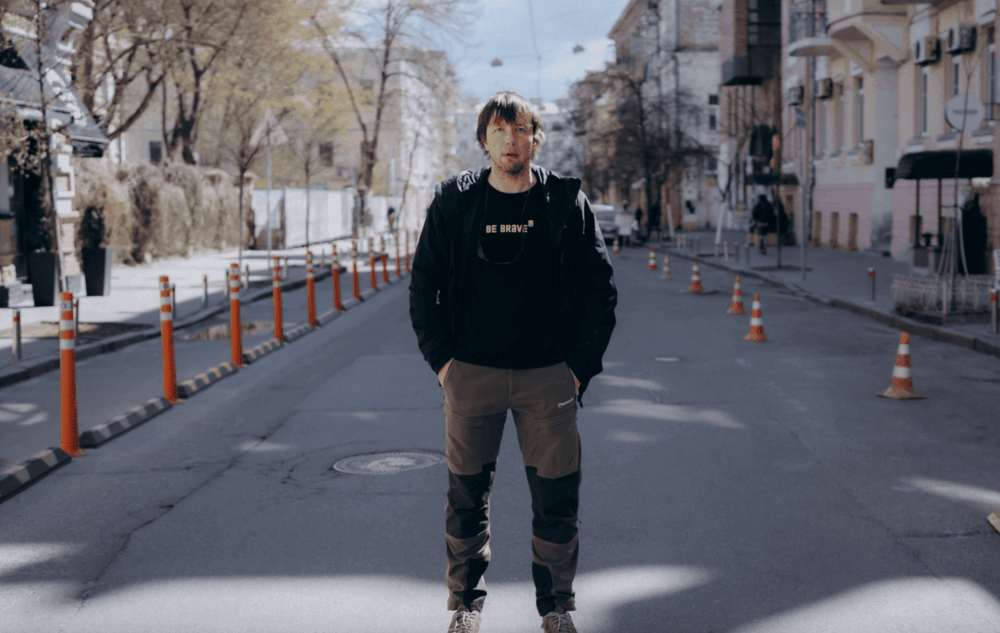
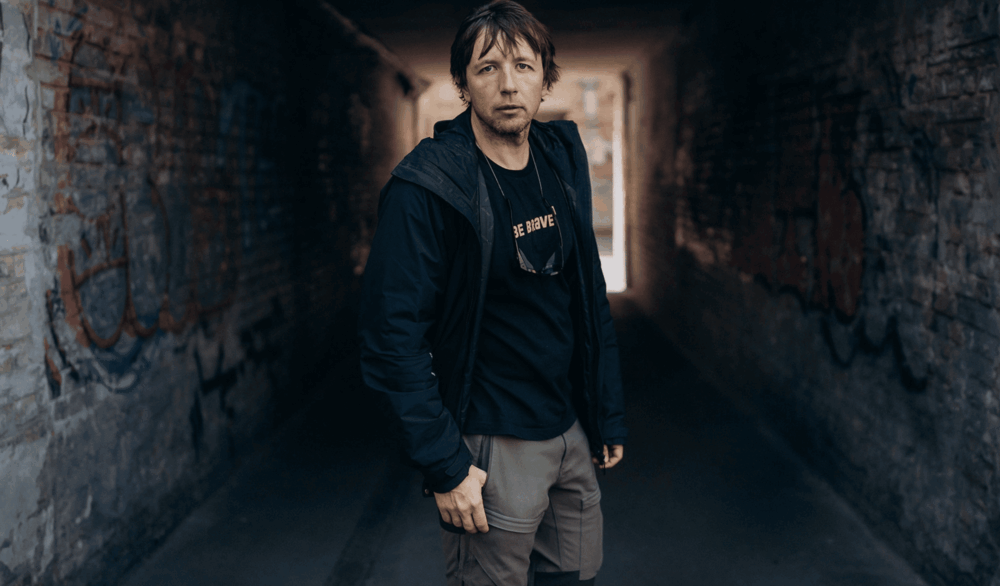
“I can’t distance myself from what I photograph,” says Yevhen Maloletka, whose images of the Russia–Ukraine war have become among the most recognizable in Ukraine and around the world. Yevhen is a Ukrainian photojournalist and correspondent for Associated Press, and the recipient of numerous prestigious awards.
Yevhen has been documenting the Russia–Ukraine war since 2014. Together with his AP colleagues, he was among the last international journalists reporting from Mariupol while the city was under Russian siege in 2022. After being evacuated, he continued to document key events of the full-scale war.
Most recently, his photograph taken in the aftermath of a massive Russian strike on Kyiv on April 24, 2025, was recognized in the Europe category of the 2026 World Press Photo Contest. The image depicts 65-year-old Valeriia Syniuk sitting beside her home after a missile destroyed the building across the street.
We previously spoke with Yevhen about the experience of writing and the key messages behind his book The Siege of Mariupol, published by Ukraїner in both Ukrainian and English. In this conversation, Ukrainer focus on sustaining international attention to Ukraine, the ethical challenges of working with sensitive content, and the “blank spots” in our understanding of the Russia–Ukraine war that have yet to be uncovered.
Can Photographs Stop Wars?
— You have received numerous international awards. How do you view them?
— Whenever a photograph or video receives recognition in journalism, I see it as recognition of an important story rather than of the author’s work. The author’s work comes second. What matters most to me is that Ukraine remains part of the global conversation.
That is why I am always happy when other Ukrainian colleagues receive awards. Likewise, when a foreign photographer or journalist is recognized for work related to Ukraine, that is important too. To me, it makes no difference who receives the award. What matters is that the Ukrainian agenda continues to be visible around the world.
Last year, the World Press Photo award went to a foreign journalist who photographed a child, and that was an important story as well. There are many terrible things happening in the world and many important issues connected to war, climate change, and protests.
But Ukraine has been holding out and resisting since 2014. It is extremely difficult to maintain the level of attention needed to ensure that people know more about our war and do not forget that it is still ongoing. So, for me, awards are a sign that our work matters, that people trust us, and that the world is becoming better informed.
— When the topic of Ukraine returns to the spotlight after awards are announced, for example, do you see any changes in public attitudes toward Ukraine in European countries or the United States?
— We can draw attention to a problem and increase awareness of a particular issue. But unfortunately, we cannot stop a war today with photography or video.
Images are now used to interpret events, for propaganda or counterpropaganda. They are shared on social media, where anyone can attach any caption or comment to them. People may believe those interpretations without ever looking at the original source. That is very painful. For us, it is important that people trust our work, that they understand more and have access to accurate information.
— When did photography lose that mission of stopping wars?
— I think it happened a long time ago.
— When you were documenting Mariupol, and later Bakhmut and Izium, did you still have some hope that those images would somehow make a difference?
— Those photographs from Mariupol changed nothing. Russia continued bombing Ukraine then, and it continues to do so now. Every day, we see new deaths in Ukraine, and nothing changes.
At the beginning, they (the Russians — ed.) at least tried to claim that they were targeting only military facilities. Now they have stopped even pretending. They simply do not care anymore.
“People Were Looking for Their Relatives in These Photos”
— You mentioned that in Mariupol you set yourself the mission of documenting, photographing, and showing what was happening, because there was no other purpose in being there. Do you remember the first assignment when you realized that this was the mission?
— In Mariupol, you do not see how your photographs spread. Your internet access is extremely limited. You can only send a few things, exchange a few messages with relatives, and find out how your family is doing and what is happening in the country, but only on a very superficial level.
You do not really understand the importance of your work while you are there on the ground. It is only after you leave and have time to reflect on everything that happened that you begin to grasp it.
When I was taking those photographs, I knew they were important. But how important? There is no way to measure information or to understand the scale at which it spreads.
Afterward, we realized that it had been a unique experience and that we had gathered unique material. Many people were able to search for their loved ones through those photographs and videos. The material also drew the attention of the international community.
Our task was to provide an understanding of what was happening in the city, to document as many facts as we could, and to send them out so that the world could see. At the same time, we distributed them through the Associated Press. People trusted us, and thanks to the agency’s extensive client network, our photographs were published around the world. People could see what Russia was doing.
Had there been no photographers or videographers there at the time, I think it would have been much easier for Russia to wipe everything off the face of the earth and then claim that none of it had ever happened.
— Because of the “rebuilding” of Mariupol?
— Of course. We can see what is happening in Mariupol now. People’s homes have been destroyed, and the remaining buildings are being demolished. People are simply being thrown out onto the streets and told, “Buy new apartments.”
— Which photographs changed your life?
— First of all, I would say the photographs from the maternity hospital (which was struck by Russia in Mariupol on March 9, 2022 — ed.). The photograph of Iryna Kalinina changed the course of events for me, for her husband, and, I think, for all of Ukraine. The world saw what Russia was doing.
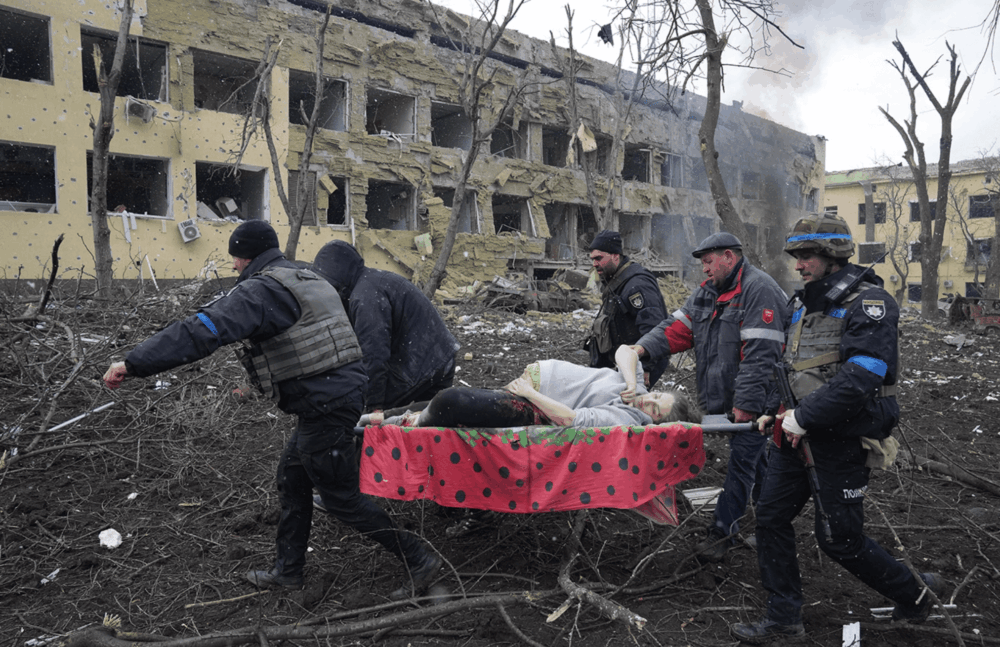
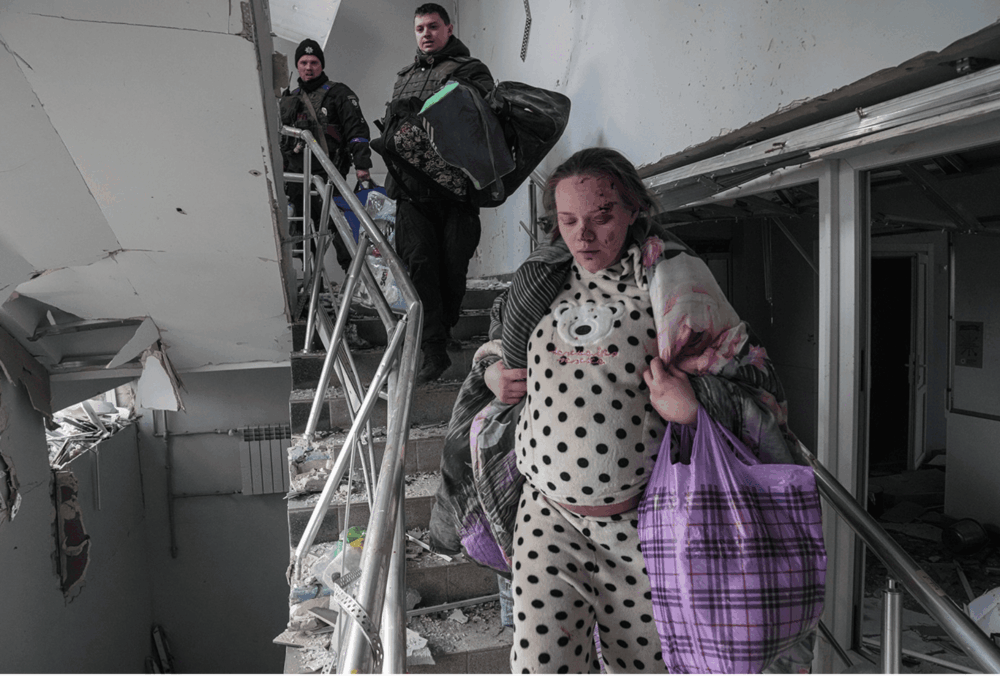
The Russian Federation began trying to counter the story by spreading disinformation and fabricating stories about me. In doing so, they only amplified the event and underscored its significance. But they did this exclusively for their domestic audience, continuing to claim that it was staged or something similar.
They continue to do this today, avoiding any mention of the victims of the maternity hospital attack and focusing instead on Marianna Vyshemirska, who survived, later became supportive of Putin, and claimed that there had been no airstrike. She either forgot — or does not want to acknowledge — that Iryna Kalinina was killed and that other pregnant women were injured. In the bed next to hers was a woman whose leg had been torn off.
They (the Russians — ed.) try to create multiple versions of the same event so that audiences never find the truth and instead become lost in a maze of competing narratives. People become so confused that they no longer want to investigate for themselves and simply accept whatever they are told, without looking at the other side or checking the facts.
— At the presentation of your book, its co-editor, Myroslav Laiuk, mentioned this photograph of Iryna and spoke about its artistic power and visual intensity. What were you thinking about at the moment you took it?
— Of course, you see a pregnant woman, a red blanket beneath her, a destroyed building in the background, and you understand that this is going to be an important photograph. But at that moment, I was mostly watching where I stepped so I would not fall, while continuing to shoot.
It was important to keep moving because I was following the group of police officers and firefighters carrying Iryna. Most of the time, I was looking down at my feet because there were tree branches, broken glass, and chunks of debris everywhere. The main thing was simply to keep myself together and avoid getting injured. Everything around us was shattered and covered in rubble.
I only saw the final result later on a computer. While we were driving away, I kept trying to remember what settings I had used and whether I had captured the image correctly. But if you look closely at the photograph itself, the lens was already damaged. That shows just how close our equipment was to failing under the conditions in which we were working.
— In one interview, you said that looking back at these photographs is a form of constant retraumatization for you. How do you manage it?
— In some ways, it helps that photography has no sound. When you are editing photographs, you do not hear what was happening, unlike with video. Sometimes sound can be even more disturbing than the image itself.
I try not to look at them more than necessary — only when I need to recall something, edit an image, or prepare material for a project. But even for me, these are deeply traumatic photographs. I cannot erase them from my memory. I remember all the key scenes. They are still in my head.
Of course, there have been many events since Mariupol, and they all begin to overlap in your memory. For an ordinary person living a peaceful life, one year in the life of a journalist like us can feel like five or even ten years. We work with information, and we work with trauma.
For me, photography is a way of making sure that what happened is not forgotten. I use photography to tell particular stories and bring attention to specific issues. I also work with video and enjoy different formats. But most of my work at the Associated Press is connected to photography, and that remains my primary focus.
I love my job, but of course it is difficult to witness all of this — the consequences of war — again and again. Sometimes it feels like déjà vu: you saw it last year, and then you see it again this year. And all of this documentation does not leave you with much hope that things are truly changing.
On Distance and Respect for the People He Photographs
— In Mariupol, when your team was working without communication, would you split up and cover different locations, or did you try to stay together?
— A team should always stay together. We arrived in Mariupol in my car, and the three of us continued moving around the city in that same vehicle. That was the case throughout our time there, except perhaps during the final days, when there simply was not enough room in the transport available. It is normal to travel with a producer and a cameraman. It is better to move and work as a team.
— What does the new reality of reporting look like now, when drones are so active?
— Everything is different. War does not stand still, and you constantly have to learn how to adapt to it.
When we plan trips, we try to travel in an armored vehicle, ideally equipped with electronic warfare protection. Sometimes we choose to move on foot instead because it is safer. We assess the risks in advance. But we also make sure to travel in pairs at a minimum.
You need to be with someone you trust, someone you know will not abandon you. You need to be confident that help will come if something happens, that there will be someone to call for an evacuation team, and that there will be someone capable of applying a tourniquet so that you do not bleed out. That is extremely important.
— You are a documentary photographer, but first and foremost a human being, and you build relationships with the people in your photographs. When did you realize that this was important to you?
— I cannot distance myself from what I photograph. I document very sensitive topics, and they are traumatic both for the people I photograph and for those who will eventually see these images.
If I were to take these photographs without respect for the person I am photographing, it would simply be dishonest. It is important for me to stay in contact with the people I photograph. Sometimes this is difficult, because it is news work and everything happens in the moment, under the conditions available. But even then, when selecting images, I try to be very careful and considerate in my choices — so that nothing is offensive or traumatic for the relatives of those depicted.
Because sometimes we show horror that not everyone is ready to see. For example, photographs from stabilization points where the wounded are brought. Many relatives of missing persons study these images very closely, searching for their husbands or brothers. It is extremely important to keep that in mind. They look at these photographs “under a microscope.”
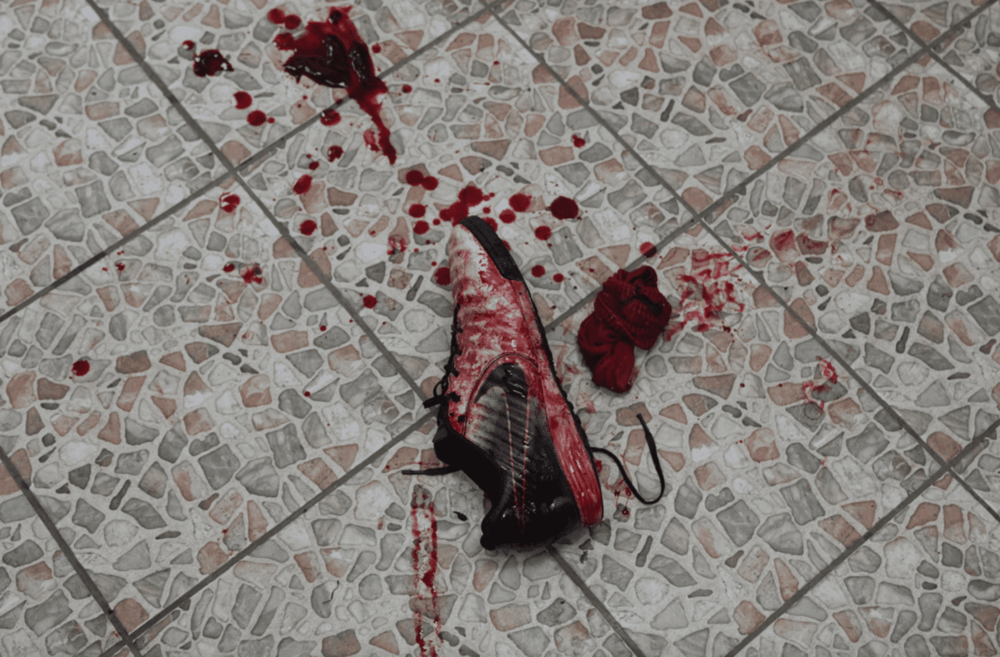
It is a very delicate responsibility, and it is crucial not to harm anyone. You cannot make everyone happy with this work. But it is still important documentation of events, including those where Russia is bombing us. We have to show it. Sometimes these are very graphic images, with blood. But it is not often possible to arrive immediately after a strike to witness the wounded or an evacuation from a building. You have to find the impact site, get there when firefighters, ambulances, and police are just arriving, and the rescue operation is beginning.
— What does that sense of delicacy look like in practice?
— You simply have to do it in a humane way.
There are no standards, no correct formula. You just need to select images with respect for the people you see in the photograph. It is difficult — to show reality while also making sure people are not traumatized. It is always a fine line. We have to give people some sense of hope that not everything is entirely hopeless.
But when we see how many victims there are every day, when children and adults are killed and buildings are destroyed… how can we not show it at all? We have to remember that there is a war in our country. Our country is facing very serious problems. There is an attempt to kill us every single day.
— There are people who, during a shoot, shout at you not to film them or react very aggressively toward you. Does that affect you in any way?
— If a person asks me not to film them, I accept their position and do not photograph them. It is a person’s right not to appear in the frame. If there is a possibility to have a discussion and, for example, explain why it is important, and the person agrees, then of course I do that. But it always depends on the situation—whether it is after a shelling, in a shelter, a basement, and so on.
— Have there been conflicts where you felt something needed to be documented, but a person refused or was not ready to be photographed?
— Of course, there have been many such cases. But sometimes people first say “no,” and later say “thank you.” In the moment, people may think it should not be shown. And then they change their perspective, because they understand its importance.
— How do you remain open to people when they push you away?
— Everyone has their own perspective. Some people understand what we do; others do not, or perhaps they have had a negative experience in the past. A lot depends on how a person feels about journalists—whether they distrust the media in general, whether they do not trust Ukrainian journalists specifically, and so on.
On Sensitive Content During Wartime
— Are there photographs you chose not to take — not because you missed the moment, but because you decided they should not be taken?
— Well, I am not a medic, and I do not need to make medical records of injuries in order to document an event. When there is such a concentration of pain, some images simply become overwhelming.
Even if I were to take those photographs — of the dead or the severely wounded — they would not necessarily help anyone. I am not a pathologist, and I am not conducting that kind of examination. My job is to create images that are important, images that can be used and published.
In most cases, you focus on photographing a horrific scene involving casualties or injured people in a way that can actually be published. So that a newspaper, a website, or another outlet can use the image. So that all of this work is not done in vain.
— So those more direct, explicit images cannot be published?
— In the past, during the previous century, they were published. Today, that is generally no longer acceptable. You can still take those photographs, of course, but in most cases they simply will not be published. Editors will not approve them because journalistic standards have changed.
We can still distribute such images with a graphic content warning, but you understand that many newspapers and online outlets will not use them. People may be looking at the news over a cup of coffee somewhere abroad. Are they going to want to look at images of dead bodies? Probably not.
And I cannot blur or alter the image, because that would violate the standards of documentary photography.
— Does it ever frustrate you to keep in mind that people in the West may be looking at these images over a cup of coffee while reading the morning news?
— The main goal is not to evoke empathy, but a sense of support.
What matters is that when people look at these photographs, they are left with at least a small sense of hope. We show terrible destruction, but there also has to be something about the people who will recover, who will receive treatment, and who will continue living. That is important.
— Where is the line between documenting events and using someone else’s pain for personal gain?
— I do not see any personal gain in it for myself. What I gain is another traumatic experience. If that were my goal, I would be photographing something entirely different. But we stay here because I believe we are continuing to do important work, despite all the risks involved.
We are still building a future, making plans, and continuing to live our lives. This is work — important work. I chose this profession a long time ago. I never thought I would become a war photographer, but that is how things turned out.
When the war began in 2014, I automatically went to document it because I understood how important it was. Both news coverage and documentation were critically important. Thanks not only to my efforts, but also to the work of many of my colleagues, we now have an archive of the war from 2014, 2015, and the years of the so-called ceasefire.
And what we have today is an extensive archive of the war — created by press officers, journalists, and international colleagues who have come here to document what is happening.
We all take risks when we go to frontline positions, and we understand that any assignment could be our last. There is no personal gain in that.
We do this because we chose this profession, and we continue doing it because we believe in its importance. That is why we keep going.
— When you are abroad, have you encountered people who ask whether the war in Ukraine is still going on?
— At the beginning, during the first years, everyone saw it and everyone heard about it. But now people have their own problems. In Latin America, in India, and elsewhere, they have their own realities. And what is Ukraine to them? It is far away. It does not directly affect their lives.
People live in completely different information environments. Through the media, we can only bring them a small part of the story, tell them an interesting account of what has happened here recently. That is all.
They might watch a two-minute news segment, close it, and go back to listening to their local radio — hearing about a utility bill that is changing tomorrow or a flood expected in a neighboring village. That is simply how it is. Everyone has their own concerns to deal with.
— Does the same rapid shift from one news story to another happen in Ukraine?
— Yes. People have already begun to forget the events of the winter. It was cold, now it is warm, life feels a little easier, and people forget the shelling that happened in the winter, in April, in May. There are simply so many events happening all the time.
People forget because they do not want to focus constantly on the negative. Our minds are not built for that. We do not want to be surrounded by bad news all the time. We need to make plans, get enough sleep, go to work the next day, take our children to kindergarten or school, visit a doctor, go to the countryside, or simply keep living our lives.
— The images you managed to bring out of Mariupol were among the very few that survived. When civilians left the city and went through filtration checkpoints, many erased photographs from their phones. Yet you managed to get both your equipment and memory cards through fifteen Russian checkpoints. Do you have a personal sense of how significant those photographs are?
— It was important to preserve the originals.
We have the complete archive, not just the files that were sent to the newsroom in reduced quality. Because of that, we can continue working with the material. That is extremely important.
For example, Dmytro Kozatskyi sent his photographs from Azovstal via Starlink, and those files are all that remain of his archive.
— The Mariupol you photographed — a city under siege, but still alive and holding on to some hope — now competes with a propagandistic image of the city. What can stand against that propaganda?
— We continue our mission of creating a historical record of Ukraine.
We are writing the contemporary history of Ukraine — a history that, a hundred years from now, may be condensed into a single paragraph in a textbook. But we are still writing it. That matters for the people who are living through these events today.
What is important is that we continue doing this work. We still have people, and we still have the means to document what is happening.
On the Blind Spots of Documentation
— Is there a particular idea or lesson that you hope people will remember about the times we are living through now?
— I would like us to have more material documenting wartime events and more books about our war.
I think the news will eventually fade, and people will forget much of it. But books and films will remain with us for a long time. The more books that are written about the present moment, and the more documentary films that are made about this war, the more material there will be for future generations.
— So, in essence, what remains in memory is what has been documented?
— That is exactly what remains. Photographs and videos will remain. Future films and chronicles of the war will be created from them — our war, or, as I would put it, the Third World War that is taking place right now.
— But there are countless events that were never documented. They will disappear from memory when the people who remember them are gone.
— We talk about the strike on the Mariupol maternity hospital on March 9, 2022, because it was documented. On that same day, the Russians bombed a residential building in Izium where around fifty people were sheltering. Those people died, and at the time nobody knew about it — there were no photographers or videographers there. Heavy fighting was underway, residents were hiding in the basement, and the building collapsed on top of them.
Only after Izium was liberated did that information become known. Had the city not been liberated, we might never have learned about it at all. And what is happening in the occupied territories today remains a huge blank spot.
Recently, a friend showed me a photograph from the Second World War in which her relatives are dancing. She told me that the Germans had gathered them to film a propaganda movie, and there was a photographer there who took the picture. But he did not photograph the men standing around with rifles, supervising everything and controlling the scene while making this documentary about how Crimean Tatars supposedly lived under occupation — on what the Germans at the time called “territory liberated by German forces.” Later, the photographer gave that woman the picture as a keepsake.
If you open German archives documenting what happened in Kyiv during the German occupation, you will find many fascinating images — not only from Kyiv, but also from Kharkiv and other cities.
In the same way, if you look at Russian information resources today, you will see the kind of material they produce. Propaganda is the only thing you will be able to see from the occupied territories. You will not find the truth there.
— A friend of mine from Mariupol lost contact with her husband’s father during the siege and occupation. Later, they saw him in a Russian propaganda video. Of course, in the video he was expressing gratitude, but for him it was also a way of showing his family that he was alive and unharmed. This relates to what you were saying about the blank spots in the occupied territories.
— We have many blank spots in our documentation for different reasons. From a military perspective, there are issues of risk, planning, and secrecy.
The liberation of the Kharkiv region and the Kherson region was documented not because of official support, but despite the obstacles that existed in most cases. Journalists went there on their own initiative. It was not because they were invited to be on the front line during the liberation of Kherson or during the destruction of the Kakhovka Dam.
To gain access, we sometimes had to “storm” certain state institutions that were trying to restrict coverage and ensure that less information reached the public.
I think much of this came from a lack of understanding of how journalists needed to work. My job is to establish facts, document reality as I see it, and communicate it to the world. How those facts are interpreted is not for me to decide.
I can reflect on them myself, but I should not tell readers what conclusions to draw. They have to reach their own conclusions based on the facts that I provide.
— After more than a decade of documenting war, are there things you can no longer photograph simply because it is too difficult to look at them?
— Of course I get tired, just like everyone else. There is physical exhaustion and emotional exhaustion.
You need time to understand that you are in this for the long run. It is a marathon, and you have to conserve your resources. That realization gives you a bit of strength to keep going and continue doing the work we do every day.
Day after day, you try to approach things differently, but in most cases the same patterns repeat themselves. People still cry at the funerals of their loved ones. Buildings are destroyed in much the same way. Soldiers fight in roughly the same way as before — the only thing that changes is technology.
In the past, we did not have smartphones, and now everyone walks around looking at them. But life itself has not changed because of that. Only the technology has changed.
— If, before Mariupol, there was more flexibility in your work — you could leave a location or change plans at any time — did everything change afterward?
— I still do not distance myself from it, even now when I am simply walking around Kyiv. I understand that we live in a country at war.
We have this kind of “bubble of safety” when there are no drones or missiles overhead. But that can change at any moment. I keep that in mind and understand that I do not have the right to relax completely.
If something happens, you have to stay alert and be ready to react. You may need to leave for an assignment at any moment, or take shelter because an attack has begun and you need to find a safe place. But I never distance myself from it.
When I have the opportunity to travel abroad for events, I can allow myself a little more freedom. Even then, though, I still follow the news, keep reading, and stay connected to what is happening in our country. I never completely detach from it.