Denial, anger, bargaining, acceptance of Yermak’s resignation. This is how you can briefly describe an almost three-week marathon of events around the former head of the Presidential Office. A person who, in almost 6 years, seemed to have become so powerful that even the president did not dare to shift him.
Ukrayinska Pravda was the first to report on November 12 that Andriy Yermak, Head of President Volodymyr Zelenskyy’s Office, could be the next figure in Operation Midas.
Then, on the third day after the Mindich tapes were made public, hardly anyone could imagine that just two weeks later, the NABU and SAPO would break into the government quarter to conduct urgent investigative actions at the residence of not the first, but also not the second most influential person in the country.
The last man who would have wanted to believe this was the President of Ukraine.
But at 6 a.m. on November 28, three cars with anti-corruption officers drove up to the checkpoint in the government quarter from the side of Shovkovychna Street, and there was no longer any doubt about the reality of the situation. The President, the head of his Office and the government in general had to quickly make some decisions and find a way, how and with whom to move forward in order to avoid collapse.
Ukrayinska Pravda found out how Zelenskyy decided to dismiss his chief of staff, how key security officials reacted to it, and what high-ranking officials who had joined forces to remove Yermak from power wrote in a secret “revolutionary” chat.
Roman Romanyuk, Sevgil Musayeva, Mykhailo Tkach investigates.
First searches at Yermak’s place
Andriy Yermak may not even know that it wasn’t heads of law enforcement agencies, whom he texted for help, who could save him from the first high-profile searches, but a soldier at a checkpoint in the government quarter.
When about ten people from NABU, SAPO, and witnesses approached the concrete blocks on Shovkovychna Street, they encountered unexpected difficulties.
It turned out that law enforcement IDs and the court ruling of November 21 weren’t enough to get past the sign “Restricted area. No entry (closed).” The senior guard, armed with a machine gun, started calling someone and stood in the way of the law enforcement officers.
“We suggest that one of you simply accompany us and that’s it,” said the NABU detective.
Instead, the senior checkpoint officer kept insisting that a representative of the department of operational security support would arrive soon and the issue of access to the government quarter would be resolved.
“You are stalling for time. An investigative action is an urgent action. Please, let one of you accompany us,” the NABU officers kept insisting on the urgency of the matter.
“I understand, but I have a procedure to follow,” the government security guard replied, almost shouting.
“There is a law – this is the main procedure. I have reason to believe that documents that could be evidence may be destroyed now,” the anti-corruption officers concluded as loudly and, having started documenting the investigative action on camera, entered the government quarter. They did so despite the resistance of the senior checkpoint guard and his machine gun, which he had moved from his back to his shoulder since the dialogue began.
The UP journalist then witnessed several tense telephone conversations by the checkpoint chief. Based on the context, it could be assumed that those were explanations to his superiors, and the people on the other end of the line weren’t happy with what they heard.
According to Ukrayinska Pravda sources in law enforcement agencies, searches were carried out only at Yermak’s residence near the OP, law enforcement officers chose not to enter his office of the head of the Presidential Office on the second floor on Bankova Street.
Despite this, NABU and SAPO managed to seize two laptops and several phones, the contents of which, according to sources in anti-corruption agencies, began to be examined on the same day.
At around 2 p.m., the anti-corruption officers left the government quarter. However, the UP film crew managed to notice that the heads of NABU and SAPO had left earlier. Then it became clear that Andriy Yermak had not been placed under suspicion that day.
The fact that the search warrant for the head of the OP is dated November 21 may confirm that President Zelensky not only had information about possible questions for his closest aide, but also at least a week to get rid of him before the investigative actions began.
Despite another smear campaign launched by the Presidential Office about a breakdown of negotiations and the irreplaceability of the head of the Presidential Office, it seems that the NABU and the SAPO decided to fight corruption rather than the state during the full-scale invasion.
“Suspicion against him is a matter of time,” sources in law enforcement circles currently tell Ukrayinska Pravda.
And, it seems, Andriy Yermak has decided not to waste this time. Between two options: leave the country or hide from criminal proceedings behind mobilization, he chose the latter.
Yermak’s last hours in office
While NABU investigators and SAPO prosecutors were conducting searches at the residence of the then head of the Presidential Office on Shovkovychna Street, complex work on political reassessment was underway at his workplace, the center of decision-making.
Operation Midas, intended to demonstrate institutional independence during the war, in reality exposed another dimension: a blow to a figure who embodies the center of the power vertical inevitably becomes a test for the president himself.
At 9 a.m., Deputy Prime Minister Mykhailo Fedorov, SBU Head Vasyl Malyuk, Director of the National Anti-Corruption Bureau Semen Kryvonos, and Head of the Specialized Anti-Corruption Prosecutor’s Office Oleksandr Klymenko arrived at the President’s Office.
By the way, Malyuk’s appearance at the meeting was not accidental. As UP found out, Yermak had spent the entire last week before his dismissal trying to get the SBU head to resign, because he allegedly “overlooked” Operation Midas and failed to protect him.
President Zelenskyy met his visitors with an attitude of a person who suddenly realized that battles simultaneously on two fronts – external and internal – threaten not individual political figures, but the very governability of the country.
According to Ukrayinska Pravda sources, it was at least the third such meeting in the last two weeks since “Mindichgate” began. But this time, anti-corruption leaders as negotiators were also accompanied by Malyuk and Fedorov.
The discussion revolved around a dilemma further exacerbated by the contrasts of war: the fight against corruption must be uncompromising, but it must not mess up diplomatic opportunities that rely on the appearance of controllability.
Therefore, Zelenskyy’s team wanted to find an option in which the active phase of searches targeting the OP head would not be interpreted by international partners as a sign of chaos, which, in turn, would undermine the fragile balance of the peace dialogue.
The president listened to the arguments without his usual political armor and increasingly leaned towards the obvious: the state should not be subordinate to a personal power base that, having absorbed excessive influence, has lost touch with reality.
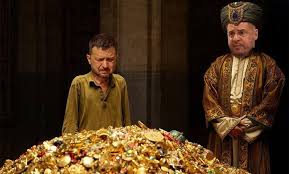
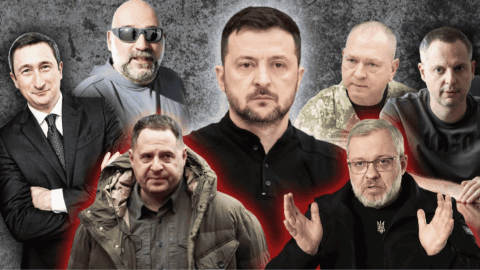
Signals from within the ruling team also led to the conclusion that Yermak should be dismissed. UP sources claim that, over the past two weeks, a similar position was expressed by several key figures: technocrat Mykhailo Fedorov, Verkhovna Rada Speaker Ruslan Stefanchuk, Defense Minister Denys Shmyhal, and even Yermak’s former associate Oleg Tatarov, to whom Ali Baba (one of Yermak’s code names) also set tasks regarding anti-corruption officials.
Last week, the president seemed to have heard their arguments, but at the last moment everything changed again. Yermak even headed a delegation for negotiations with American partners in Switzerland.
After an hour-long discussion in Zelenskyy’s office, the heads of NABU and SAPO left the government quarter without declaring suspicion to the head of the OP. And the president took a break to consider the situation.
There was no contact with Yermak at that time.
Eventually, a few hours later, the president made his final decision to dismiss Yermak. The head of state called Mykhailo Fedorov to help prepare a video appeal to the nation announcing the resignation of the OP head.
“We realized that it was inevitable. And that everyone supported this – from MPs, security forces, society to key international partners. That this is a state-building decision, necessary for the country to reboot many key institutions and critical processes in the country,” one of the participants in these processes says off the record.
American partners could also agree with him. The UP knows that, over the past six months, the Americans were unsuccessfully trying to hint to Zelenskyy about replacing Yermak as the key negotiator.
They used public tools, as well as harsh anonymous comments for Western media, such as in a large analytical article in Politico, and even non-public searches for alternative channels of communication with Ukraine, for example, through the Head of the Main Intelligence Directorate, Kyrylo Budanov.
The first days of government without Yermak
“Nothing is as pleasing in the Saturday photos from the President’s office as the empty chair to his right.”
A top government official wrote this comment about the meetings on the fourth floor of the President’s Office without Andriy Yermak.
However, inquisitive readers are unlikely to find this comment online. It was written in a secret ‘revolutionary’ chatroom. In it, influential members of the ruling team, risking exposure by the all-powerful head of the Presidential Office, coordinated their actions to remove Yermak from office.
Ukrayinska Pravda has not identified all participants in this secret ‘revolutionary committee’ yet. But we can confidently claim that this is about the top government echelons.
“Yermak’s resignation was an inevitable reality. He simply united everyone against him,” one of the “revolutionaries” explains in a conversation with the UP, citing indirect evidence. He jokes that the post about the “empty chair next to the president” received the most likes in the history of their chatroom.
Of course, there is a grain of light-hearted humour in these words, but there is also something very symbolic in them.
Throughout his tenure as head of the Presidential Office, Andriy Yermak was focused, not to say obsessed, with appointing ‘his’ people to as many positions as possible. The latest composition of the Cabinet of Ministers and almost all important personnel changes in recent years illustrate this perfectly.
However, at a critical moment for Yermak, none of his appointees and protégés, even those whose careers would never have happened if not for him, came to the defence of the head of the OP. A man who had been served by hundreds of people was left completely alone in an instant.
Even the person whose name and will Yermak had used to effectively co-govern the state in recent years turned his back on him.
However, the former head of the OP himself contributed to Zelenskyy getting rid of his doubts about the correctness of the decision to dismiss Yermak. According to UP’s interlocutors in the president’s team, when asked to write a letter of resignation, the head of the Office threw a half-hour tantrum at the president, hurling insults, reproaches and accusations.
“Yermak did not believe until the very last moment that the First (Zelenskyy – UP) would dismiss him. And in this way – presenting him with a fait accompli. They say that what upset him the most was that the president had abandoned him,” explains a person close to Yermak, describing the drama of the situation.
After all, this experience of parting was clearly easier for Zelenskyy, albeit unpleasant. This is not the first friend the president has had to remove from his team. There have already been Andriy Bohdan, Ivan Bakanov, and even his older brother Serhiy Shefir. For Yermak, this was his first experience, which is probably why his reaction was so violent.
“The breakup was terrible. But it’s cool that the president finally saw who he had taken in and now understands everything. Like Kai after The Snow Queen,” one of UP’s interlocutors among high-ranking officials sums up.
Most of the members of the president’s team who were interviewed agree that after Yermak’s resignation, Zelenskyy seems to have returned to his former version.
“He is energetic again now. He is like a president from February 24, 2022. And all of us are with him. We had some very good meetings on Saturday. There is real motivation and determination,” says one of Zelenskyy’s team members off the record.
How stable the system of power is and how capable it is of making decisions without Yermak will become clear this week.
The government is now facing several important tasks that will have practical political consequences and send certain signals to the entire system and Ukraine’s partners.
First of all, the president must decide on the next head of his Office. Depending on who is chosen for this position, it will become clear whether the break with Yermak was simply a cosmetic change in the OP or preparation for a major restructuring of the system of power.
As of the beginning of the week, UP’s interlocutors have named several candidates for the position of head of the Office. Minister of Digital Transformation Mykhailo Fedorov, Minister of Defence Denys Shmyhal, and Deputy Head of the Office of the President for Military Affairs Pavlo Palisa appear to be the most likely candidates.
In addition, there is a possibility that the first deputy foreign minister, Serhiy Kyslytsya, who is currently involved in negotiations with the United States, may be offered the position of head of the OP. Such an appointment could shift the focus of the Office’s leadership from scandals and infightings to major international work, which could somewhat calm the political situation.
The transition of Prime Minister Svyrydenko to the OP is impossible. Firstly, because Yulia Anatoliivna herself views such a move as a downgrade, and secondly, it would require too much effort to restart the entire Cabinet.
And the Rada, let us remind you, still has to gather votes for the budget, which was supposed to be voted on during the last session week, but they were afraid to bring it to the floor. As of the beginning of the week, there are no confirmed votes for the budget. The budget committee meeting is scheduled for Monday immediately after the meeting of the mono-majority faction, so we can assume that the vote on the budget will take place.
In addition, parliament is preparing to fill vacant positions in the government. As the UP knows, Zelenskyy has already chosen a candidate for Minister of Justice. Instead of scandalous Halushchenko, the Ministry of Justice will be headed by the current head of the Verkhovna Rada’s legal committee from Servant of the People, Denys Maslov.
However, there is still no candidate for the position of Minister of Energy. The previous main candidates, Serhiy Koretsky from Naftogaz and Andriy Gerus from the Servant of the People faction, did not want to head the Ministry of Energy. Therefore, Artem Nekrasov will continue to serve as acting minister. In the meantime, a major recruitment process will take place to find a new minister.
* * *
“The situation is still uncertain. It’s like when you have a bad tooth that starts hurting. It hurts so much that you can’t chew with any of your teeth. Now that tooth has been extracted, but no one knows for sure whether it infected the others and whether they can still function,” said one of UP’s interlocutors in the Rada, describing the situation in the government.
The system quickly accepted Andriy Yermak’s dismissal. But in order for real qualitative changes to take place, Zelenskyy needs not only to change the name, but to rethink the role of the Office of the President as a whole.
First of all, the OP must abandon the shameful practice of selective pressure on anyone who is disliked by someone. One of the first tasks that the new team in the Office must tackle is to bring the law enforcement agencies back to their senses so that they cease to be “cashiers” and become guardians of the law again.
It is also necessary to analyse how it happened that the president was driven into open conflict with most of the leading independent media outlets. Perhaps when media advisors can only offer war and brutal pressure on inconvenient editorial offices, they are simply bad advisors?
And most importantly, it is necessary to understand that what the president himself rightly asks of society – unity – is not a constant, but a daily task.
Tags: analysis Andriy Yermak Corruption investigation Political Scandal Power Struggle presidential office Ukraine 2025 Ukrainian Politics
![The Kyiv Instytutska Street massacre during the Maidan Revolution of Dignity, where Berkut’s “Black Company” shot and killed unarmed protesters. :contentReference[oaicite:2]{index=2}](https://empr.media/wp-content/uploads/2026/02/photo-1-480x270.png)


![Visitors at the “Thank You With All My Heart” Ukrainian exhibition at the Council of Europe, featuring the Great Amber Heart and powerful war art. :contentReference[oaicite:2]{index=2}](https://empr.media/wp-content/uploads/2026/02/heart-300x171.png)