
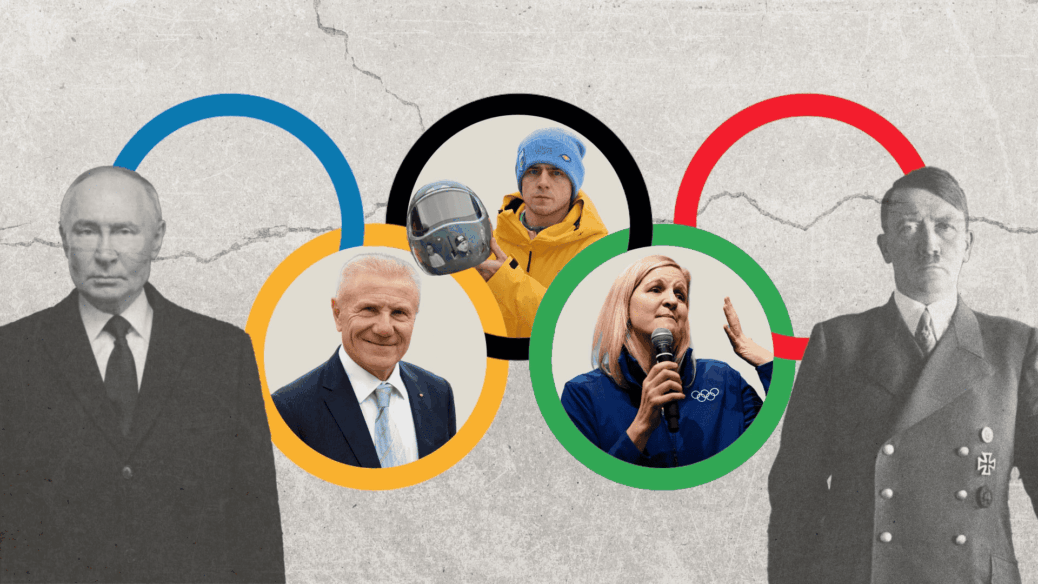
Ukrainian skeleton racer Vladyslav Heraskevych has drawn global attention to Russia’s aggression, but at the cost of his Olympic career. His memorial helmet sparked harsh IOC sanctions, echoing historical double standards — from the 1968 Black Power salute to overlooked tragedies like the 1972 Munich attack. Experts note the IOC’s long-standing pattern of silencing athletes, influenced by political pressures and internal power plays, including figures like Serhiy Bubka. Heraskevych’s protest reminds the world that sports are never truly separate from politics, and that standing up for one’s country can demand immense personal sacrifice, honoring both the fallen and the spirit of Olympism.
Italy’s Milan and Cortina d’Ampezzo are currently hosting the Winter Olympic Games. And although there is still plenty of time before the competitions end, it can already be said that the climax has taken place. It came in the form of the disqualification of Ukrainian athlete and national team flag bearer, skeleton racer Vladyslav Heraskevych, who decided to honor athletes who became victims of Russian aggression with a unique helmet.
The International Olympic Committee, citing “Rule 50” of the Olympic Charter, which bans political actions, harshly punished the Ukrainian athlete by stripping him of his chance to win an Olympic medal. Officials justified the decision by claiming a desire to keep sport out of politics. At a time when silence itself has already become a political stance, such a move sparked outrage and fierce criticism.
Vladyslav Heraskevych is now receiving words of support from across the civilized world, while the IOC is facing disgrace and well-deserved criticism. 24 Kanal, together with well-known sports journalist Ivan Verbytskyi, analyzes the situation, points out the silence of Ukrainian sports legends, and recalls other cases of “politics” at the Olympic Games.
Sport outside politics?
The scandal involving Vladyslav Heraskevych and his memorial helmet is loud, but it is far from the only such case in Olympic history.
One of the most famous examples is the gesture made by African American athletes at the 1968 Summer Olympics in Mexico City.
At that time, Tommie Smith and John Carlos, during the medal ceremony (they won gold and bronze in the 200 meters), put on black boxing gloves and raised their fists during the U.S. national anthem. They performed the so-called Black Power salute to show solidarity with the struggle for equal civil rights for Black Americans and to draw attention to segregation in the United States.
The American athletes were supported by the silver medalist, Australian runner Peter Norman, who wore a civil rights badge as a sign of solidarity.
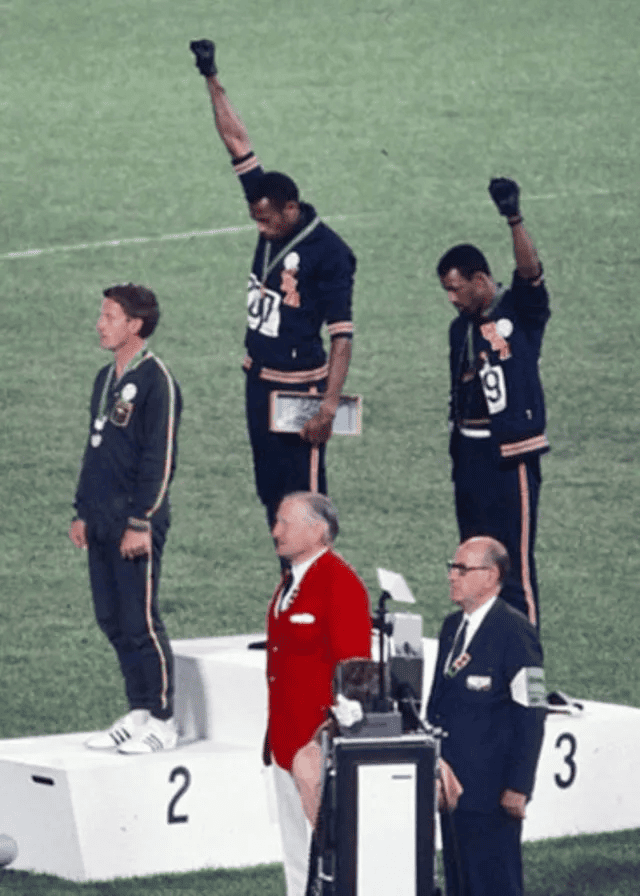
Let us recall that 1968 marked the peak of protest movements: just a few months before the Olympics, Martin Luther King Jr. was assassinated, and in Chicago the authorities violently cracked down on activists.
The International Olympic Committee at the time showed no understanding of humanitarian impulses or expressions of solidarity and punished the athletes harshly. The Americans received lifetime bans, while Norman was excluded from Australia’s team for the 1972 Summer Olympics.
These punishments, incidentally, removed key competitors for Ukrainian sprinter Valeriy Borzov in Munich, as Tommie Smith, for example, had set a world record in Mexico City. He would never compete in the Olympics again: the careers of all three athletes were effectively destroyed.
The International Olympic Committee has still never apologized to the athletes, though it later appeared to grant a kind of retroactive forgiveness. Peter Norman was invited to the opening ceremony of the 2000 Summer Olympics, while John Carlos worked for the U.S. Olympic Committee and was part of the organizing committee of the 1984 Summer Olympics.
In 2021, Carlos confirmed in an interview with The Guardian that the IOC had never apologized to them for those events, despite the fact that they endured death threats and social ostracism.
At the time, explaining the disqualifications, the IOC stated that the anti-racist gesture allegedly “did not conform to the fundamental principles of the Olympic Games.”
Notably, the IOC president at the time was the American Avery Brundage, who was known for opposing a boycott of the 1936 Summer Olympics — the very Games associated with Hitler, Nazi salutes, Leni Riefenstahl, and all that entailed.
As head of the U.S. Olympic movement, Brundage did everything possible to ensure the American team attended the Nazi-hosted Games. In particular, he publicly claimed that he had received written guarantees from the Nazis that there would be no discrimination against Jews at the Olympics.
He never condemned the Nazis or criticized them. Instead, in 1968, he harshly punished his own compatriots. According to media reports of the time, the disqualifications were carried out on his direct order.
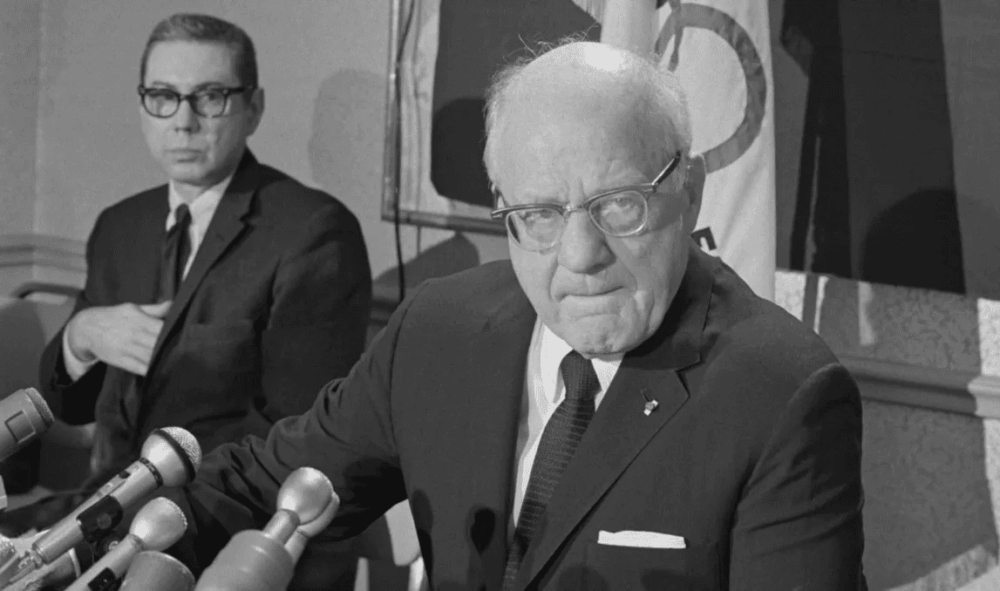
In 1972, history repeated itself, and Brundage again became an antihero. That year, a horrific terrorist attack occurred in Munich: German security forces failed to stop Palestinian terrorists, who attacked and took Israeli athletes hostage in the Olympic Village.
Despite the tragedy, which claimed the lives of 11 members of the Olympic family, the Games were not halted. There was only a daytime pause and a memorial service, which was ignored by Arab countries and the USSR. In the eyes of the world, this made them appear to side with the terrorists.
Olympic bureaucrats, even after Brundage retired, continued for a long time to refuse to honor the victims of the attack with a moment of silence, granting approval only recently. A minute of silence in memory of the 11 Israeli Olympic team members killed was observed only at the post-COVID Tokyo Olympics in 2021 — nearly half a century after the tragedy.
Sports journalist Ivan Verbytskyi notes that the current scandal is a continuation of the IOC’s long-standing policy of silencing athletes and turning a blind eye to crimes.
“Unfortunately, this has been standard IOC practice, established by the founder of the modern Olympic movement, Baron Pierre de Coubertin, who embraced Hitler at the 1936 Winter Olympics in Garmisch-Partenkirchen. At the time, no one seemed concerned — well, concerned in the way people are upset now. But the so-called Olympians weren’t bothered, as always, wearing their rose-colored glasses. They spoke of the spirit of Olympism, the spirit of modern competition, ignoring what was happening around them. And when events began to unfold around them, it was already too late — Europe was already in bloodshed (as in the 1930s). Today, for now, only Ukraine is in blood.
Remember Juan Antonio Samaranch, IOC president from 1980 to 2001, and the 1980 Moscow Games with all the sickles, hammers, and Lenin overseeing the entire stands in Luzhniki. At that time, the IOC officials were also not concerned when over 60 countries boycotted the Games — just as usual, no one cared.
The International Olympic Committee has always been as it is today, under every leadership. Perhaps Kirsty Coventry, due to her inexperience, immediately tried to push things through so bluntly. If she were more experienced, like her predecessor Thomas Bach, maybe she would have acted a bit more flexibly.” — Ivan Verbytskyi
Ukrainian Prometheus – Vladyslav Heraskevych
Ivan Verbytskyi says that Vladyslav Heraskevych truly succeeded in drawing the world’s attention to the victims of Russian aggression, but in doing so, he effectively sacrificed his own career.
“I think Vladyslav, like all of us, is concerned that the world hasn’t been hearing Ukraine’s voice lately. Vlad wanted to draw the world’s attention to Ukraine. Perhaps he and his father didn’t expect that the cost would be so high: it seems they still hoped there would be publicity and that the IOC could be persuaded not to make such a harsh decision. But what happened, happened. Unfortunately, we may have lost a potential medalist, because Vlad was showing very strong results in all five or six qualification runs. He was first, second, and third at different times. As this Olympics has shown, training runs are very serious. For example, in ski jumping, the German who had never won (Philipp Raimund) was first in two training runs, and in the end, he became the Olympic champion. This track suited Vlad, and it’s very unfortunate that he lost that chance.
Unfortunately, the IOC in its current form carries out the mission that was probably intended when Kirsty Coventry was elected president in March 2025 — to prevent Sebastian Coe (the British athlete, supporter of a strict ban on Russians) from taking control. After Coventry became president, there were immediate statements about possibly allowing Russians back, then they slowly began returning, and all of her actions seemed aimed at appeasing Russia and, accordingly, “slightly” undermining us.
I think she has some humanity (that’s why she was crying during media comments about the disqualification)… Vlad himself has repeatedly said at evening press conferences that their conversation was very humane. I think she does have compassion; it was truly difficult for her to make such a decision, but it had to be made. She may have tried to find a compromise, to convince him otherwise, but when that failed, she probably felt genuine pity. At the opening ceremony, she constantly emphasized how difficult it is to reach the Olympics, how emotional the moment is. She may have been projecting her own experiences onto the situation. And now, understandably, she is taking away the dream of a person who was realistically competing for a medal. So, on a human level, she felt pity, but the mission… that’s something else.” — Ivan Verbytskyi
The expert also speaks about the double standards and the weakening of the IOC’s stance.
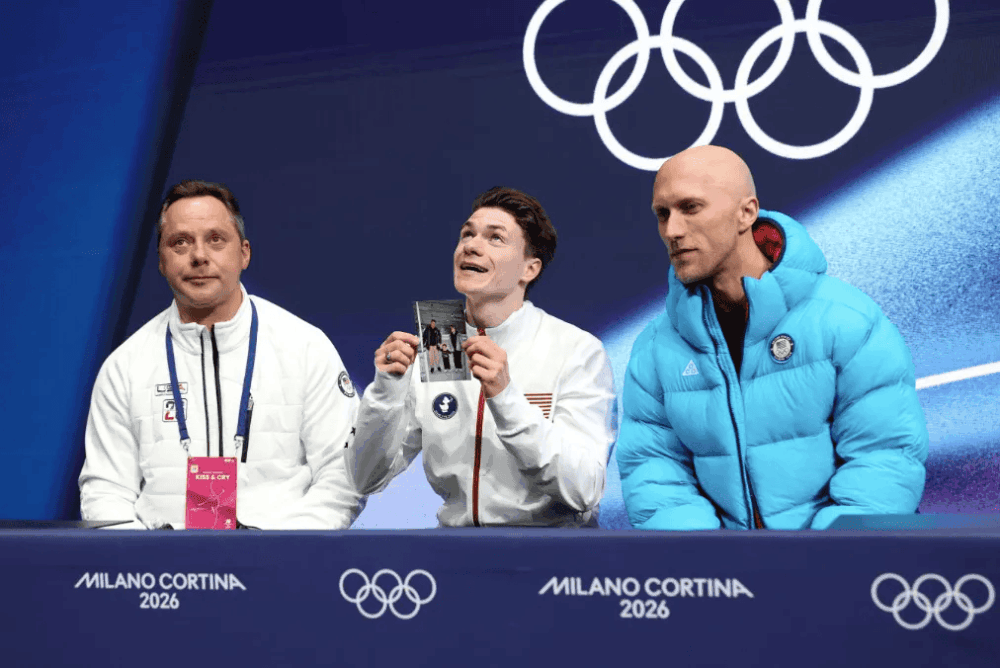
“Right now, Heraskevych and his team are appealing to the fact that, for example, an Israeli athlete once appeared wearing a kippah with the names of the victims of the 1972 terrorist attack. Also, American figure skater Naumov displayed a photo of his father, who died in a plane crash. These were victims of terror, everyday personal tragedies.
Of course, that’s a bit different. On this helmet, we have, among others, soldiers who fought for Ukraine. Here, I think diplomat Valeriy Chalyy said something very important: the original idea of the Olympics was actually connected to honoring fallen soldiers, and somehow that has been forgotten.
It seems to me that this is what should be emphasized: Heraskevych did nothing wrong. We are a country defending itself. And it’s clear that, for example, biathlete Yevhen Malyshev, who was 19… he could very well have earned a place on the Olympic team if Russia hadn’t killed him.
Moreover, what equality can we even talk about when, for example, our only full biathlon facility (aside from the Carpathians) is the biathlon base in Chernihiv. It was completely destroyed literally on the first or second day of the war. So, what kind of equal conditions, what kind of fairness can we even speak of!”
The Hand of Moscow and the Silence of Legends
The expert notes that today the spirit of Olympism is heavily influenced by the spirit of Anchorage — that is, a hybrid Russian influence. Unfortunately, one of its conduits, besides the usual Russians, is now the ethnic Ukrainian and legendary Olympian Serhiy Bubka.
At present, he remains silent and does not comment on the attack against his fellow countryman. According to Verbytskyi, Bubka may, in fact, not limit himself to passive aggression.
“The hand of Moscow in IOC politics is obvious, since last year the Russians pushed for Kirsty Coventry over Sebastian Coe. But it’s also important to note the role of Serhiy Bubka (former head of the National Olympic Committee of Ukraine and current IOC executive board member). Vladyslav Heraskevych was a vocal critic of Bubka and his pro-Russian policies, especially after the investigative film by Denys Bihus, ‘Olympic Hope of the Occupiers.’
Vlad spoke about this at a meeting of the National Olympic Committee. When he suggested that sanctions be applied to Bubka, he faced obstruction from his NOC colleagues (Heorhiy Zantaraia, Nina Umanets, and others). Everyone was outraged, saying who he was to allow himself to speak, where he was, and where Bubka was. Serhiy Nazarovych, like many of these people, is quite vindictive.
I, for one, wouldn’t be surprised if he didn’t just stay out of it but actively influenced the decision, perhaps even ordered it. Given Bubka’s influence in the International Olympic Committee, this is entirely plausible. It’s also worth noting the silence of another Ukrainian IOC member, Valeriy Borzov (distinguished Olympian, first Minister of Sport of independent Ukraine, and former NOC head).”
It can be said that Vladyslav Heraskevych sacrificed his career to draw the world’s attention to the events in Ukraine. Similarly, 50 years ago at the Montreal Olympics, Canadian Ukrainian Danylo Myhal ran onto the field with a Ukrainian flag during a match of the USSR national team and performed the hopak dance.
At that time, most spectators simply didn’t understand what was happening or which flag the man was carrying. Today, however, the world clearly recognizes these colors. Perhaps one day even Olympic officials will come to respect them.
Tags: Athlete Expression empr.media Opinion Heraskevych story historical parallels IOC Controversy Olympic protests sports politics
![The Kyiv Instytutska Street massacre during the Maidan Revolution of Dignity, where Berkut’s “Black Company” shot and killed unarmed protesters. :contentReference[oaicite:2]{index=2}](https://empr.media/wp-content/uploads/2026/02/photo-1-480x270.png)

![Visitors at the “Thank You With All My Heart” Ukrainian exhibition at the Council of Europe, featuring the Great Amber Heart and powerful war art. :contentReference[oaicite:2]{index=2}](https://empr.media/wp-content/uploads/2026/02/heart-300x171.png)
![Ukrainian Roboneers and Latvian partners at the signing of a defence robotics and underwater technology cooperation memorandum. :contentReference[oaicite:2]{index=2}](https://empr.media/wp-content/uploads/2026/02/oboronka-300x168.png)