
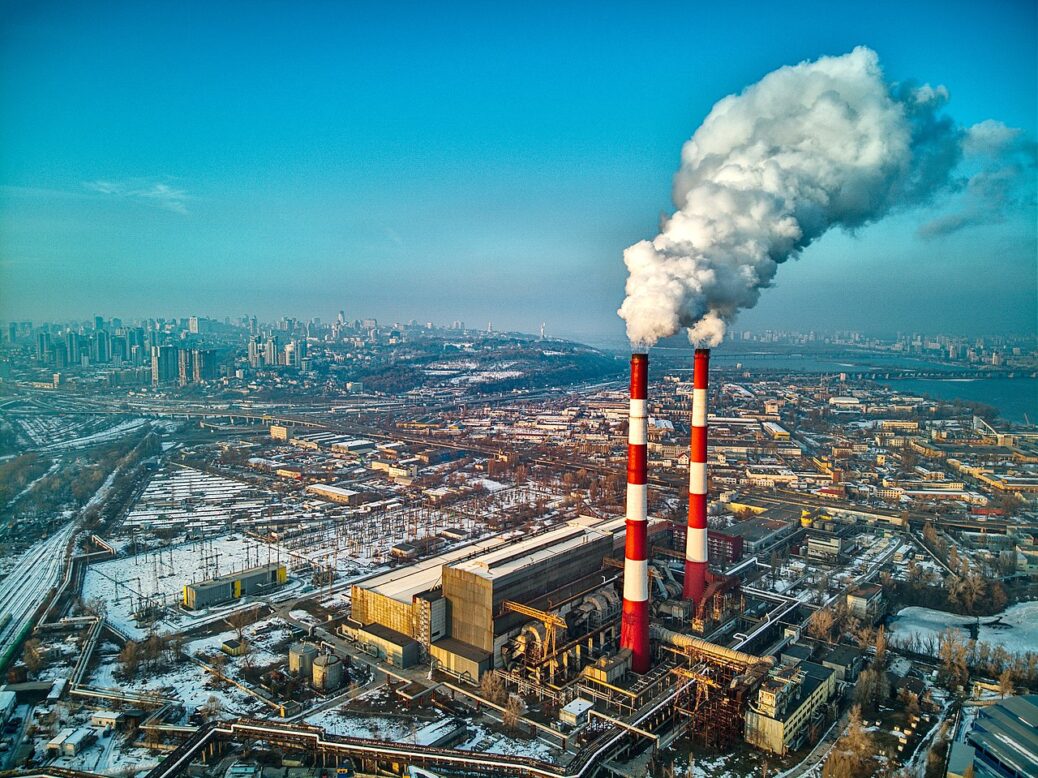
Cause of the Collapse: Three Massive Strikes
The collapse was caused by three large-scale Russian attacks: December 25–27, January 9, and January 13, 2026. These strikes destroyed Kyiv’s “large generation ring.”
The main targets were CHP-5 and CHP-6. After the January 9 attack, around 6,000 apartment buildings were left without heating simultaneously.
The most difficult situation is on the Left Bank of Kyiv — the Darnytskyi, Dniprovskyi, and Desnianskyi districts. Due to network topology and strikes on local CHP facilities, these areas receive electricity for only a few hours per day and, during emergency outages, may be without power for 10–14 consecutive hours.
Instead of conventional strikes on open switchgear and transformers — which are relatively easy to replace — the enemy shifted focus in December 2025–January 2026 to machine halls and boiler equipment. After attacks in late December and on January 9, CHP-5 (the most powerful in Ukraine) was completely shut down for a period of time.
Infrastructure facilities belonging to Naftogaz that supply fuel to CHP plants were also hit, creating fuel shortages for heat generation during peak cold periods.
In previous years, CHP plants had significant reserve capacity. However, each prior strike weakened structures. In past winters, Ukraine benefited from relatively mild temperatures (+2°C to –5°C). Under current морозs, a CHP shutdown of 6–12 hours becomes critical: if water is not drained in time, systems freeze and pipes burst — the so-called “Alchevsk effect.”
Left Bank: CHP-6
The Desnianskyi and Dniprovskyi districts were hit hardest. Partial shutdown of CHP-6 led to the longest periods without heating.
Due to temperatures dropping to –20°C and power loss affecting pumps, operators faced a critical risk of water freezing inside pipes. As a result, they were forced to drain heating systems in thousands of buildings.
Even when CHP-6 is partially restarted, restoring heat to individual buildings takes days: systems must be refilled, air bled out, and ruptures repaired after pressure shocks.
Many components at CHP-6 had been operating on temporary solutions since 2023–2024. January strikes simply finished off elements that had been holding the system together.
As soon as repairs begin, facilities are targeted again within days by drones or ballistic missiles, forcing evacuations and repeated damage assessments.
As of now, CHP-6 is operating at only 30% capacity — enough to keep pipes from bursting, but insufficient for full heating. Most consumers in Desnianskyi and Dniprovskyi districts are connected to backup boiler houses not designed for such loads.
A Structural Vulnerability
Kyiv’s heating system was once among the largest in the world. What was once its strength — efficiency and low cost — became its Achilles’ heel in 2026.
Unlike cities that rely on dozens of boiler houses, Kyiv depends primarily on two mega-facilities:
- CHP-5 (south-west)
- CHP-6 (north-east)
A single hit to CHP-6 instantly cut heat to Troieshchyna, Lisovyi Masyv, Obolon, and parts of Podil. If these areas were served by 50 separate boiler houses, Russia would need hundreds of missiles to achieve the same effect.
Restarting a small boiler house takes hours. Restarting a CHP plant — a complex steam-power cycle — takes days. Shutdowns cause pressure drops in main pipelines over 1 meter in diameter, triggering cascading failures.
The extreme concentration of capacity at just two facilities is the core reason Kyiv is freezing today. Designing heat supply for a 3-million-person city from only two points proved to be a strategic error of the past.
Historical Context
CHP-5 was commissioned between 1971–1978 and expanded even in the 1990s. CHP-6 began operation in the early 1980s, with later modernization in the 2000s. These facilities were designed for efficiency, not survivability.
Soviet engineers assumed large stations were more economical than dozens of boiler houses. In 2026, disabling a single facility built in 1981 can leave half a million people without heat.
Ukraine’s cities were not designed for years of high-precision energy terror.
The Way Forward
Kyiv, Kharkiv, and Dnipro are now forced to do urgently what should have been done 20 years ago: deploy hundreds of small, decentralized units — modular boiler houses, gas-piston generators, and small turbines — to fragment the system into missile-resistant pieces.
A key counterexample is Zhytomyr, which began decentralizing after 2014 by building networks of biomass boiler houses and gas-piston installations.
Tags: CHP plants EMPR.media energy war heating crisis kyiv Russian Strikes Ukraine infrastructure winter emergency














![Visitors at the “Thank You With All My Heart” Ukrainian exhibition at the Council of Europe, featuring the Great Amber Heart and powerful war art. :contentReference[oaicite:2]{index=2}](https://empr.media/wp-content/uploads/2026/02/heart-300x171.png)


![Ukrainian Roboneers and Latvian partners at the signing of a defence robotics and underwater technology cooperation memorandum. :contentReference[oaicite:2]{index=2}](https://empr.media/wp-content/uploads/2026/02/oboronka-300x168.png)