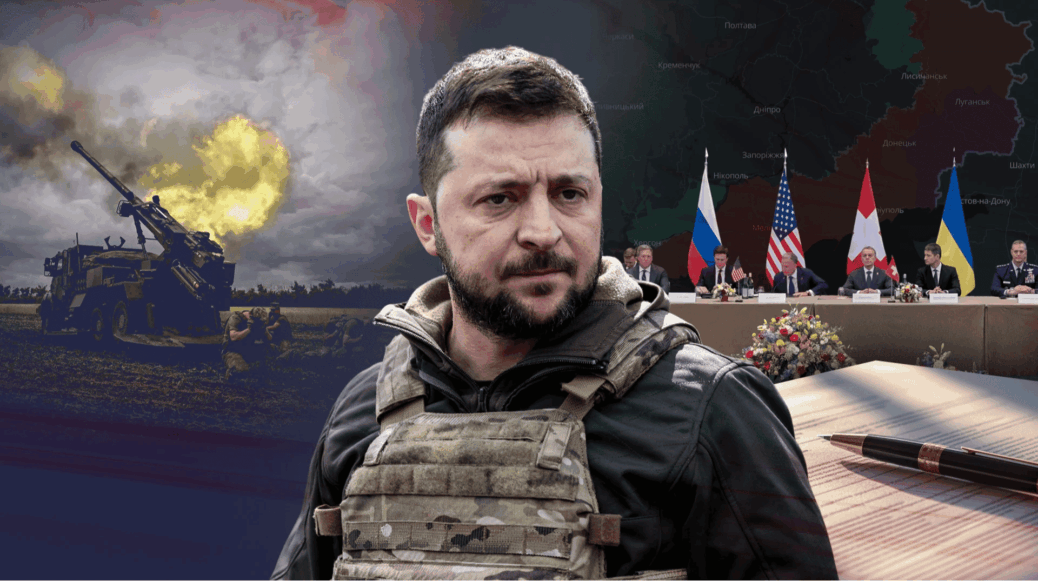
Trilateral Geneva talks advance Ukraine-US-Russia negotiations, including prisoner releases, energy ceasefires, and territorial discussions. Trump, Kushner, and European allies influence outcomes, while ultimate peace depends on Zelenskyy’s leadership decisions.
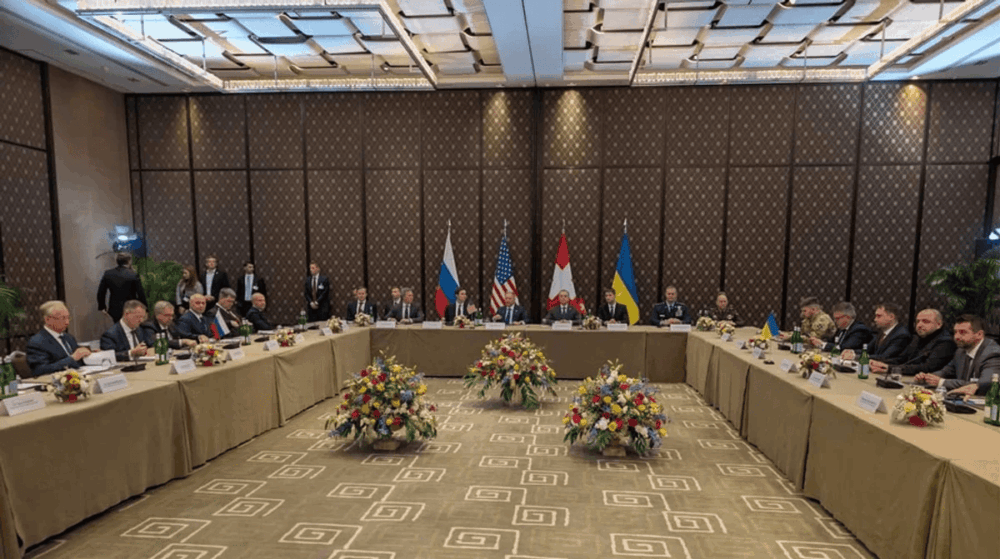
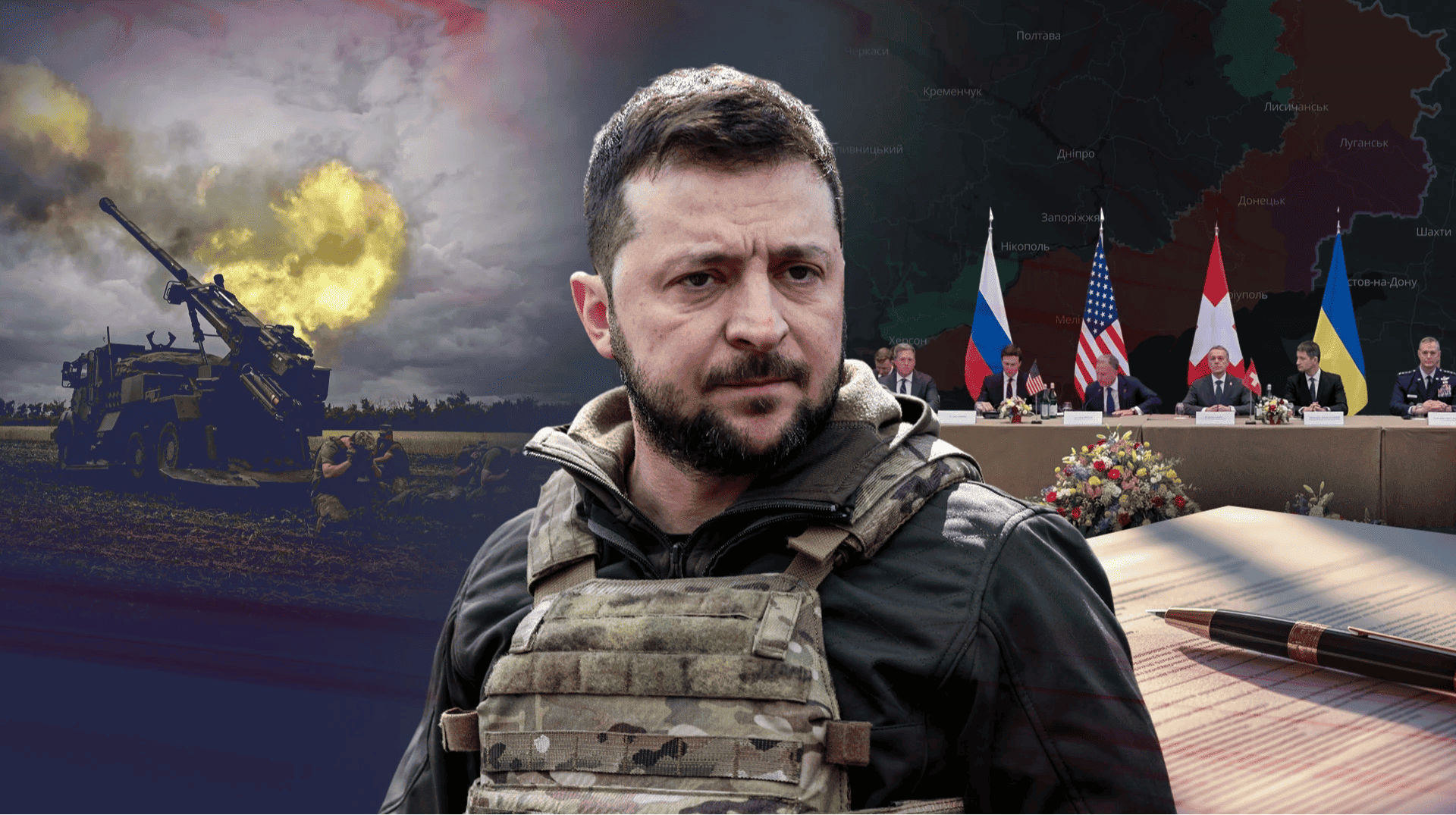
On February 17, 2026, negotiating teams from Ukraine, the United States, and Russia gathered in Geneva. This was already the third round since the renewal of the Ukrainian and Russian delegations, yet many aspects of this meeting happened for the first time.
For example, the Russian delegation was, for the first time, taken out of its familiar and comfortable Asian–Turkish circuit and received for a trilateral meeting in Europe.
For the first time as well, advisers on national security to the leaders of leading European democracies were present at the talks, albeit in the role of observers.
It was also the first time after a long pause that representing the Russian side was once again entrusted to Putin’s aide, Vladimir Medynsky.
His appearance at times created a sense of déjà vu. After all, it was Medynsky who had confronted the head of the Servant of the People parliamentary faction, Davyd Arakhamia — who himself has recently returned to the negotiation process — during the 2022 talks in Belarus and later in Istanbul.
But the key “for the first time” that became starkly apparent at the Geneva meeting was the limited authority of the negotiating teams. The talks have come right up to the point where the issues under discussion are going beyond the boundaries set by the leaders’ directives.
And therefore, very soon the talks will either move up to the level of those who draft these directives, or the entire process risks repeating the fate of the 2022 “Istanbul agreements”: they could be discussed, but they could not be agreed upon.
The US president’s representative, Steve Witkoff, who represents America in the talks together with Trump’s son-in-law Jared Kushner, essentially voiced the same idea in an interview with Fox News, when speaking about the possibility of a swift summit of the leaders of Ukraine, Russia, and the United States.
Thus, the negotiation process is rapidly approaching the point at which Ukrainian President Volodymyr Zelenskyy will face a difficult choice. Should Ukraine enter an irreversible process of a real “peace deal,” one that would sharply contrast with the now largely forgotten “Peace Formula”? Or would it be better for the country to seek new assistance from its partners and continue the war, hoping for Russia’s collapse?
This is a choice the president will have to make. Ukrainska Pravda explains why there is not much time left to make this decision.
The Old-New Group
On the evening of November 20, 2025, US media published a 28-point US “peace plan” for Ukraine. Zelenskyy had to urgently convene his negotiating team to discuss the overseas proposals with allies.
The team was led by the then head of the Presidential Office and an advocate of the “victory plans,” Andriy Yermak. Responsibility for consultations with partners was assigned to the Secretary of the National Security and Defense Council, Rustem Umerov.
The delegation also included Deputy Secretary of the NSDC Yevhenii Ostryanskyi, Head of the Main Intelligence Directorate Kyrylo Budanov, Chief of the General Staff Andrii Hnatov, Head of the Foreign Intelligence Service Oleh Ivashchenko, First Deputy Foreign Minister Serhii Kyslytsia, Deputy Head of the Security Service of Ukraine Oleksandr Poklad, and Adviser to the Head of the Presidential Office Oleksandr Bevz.
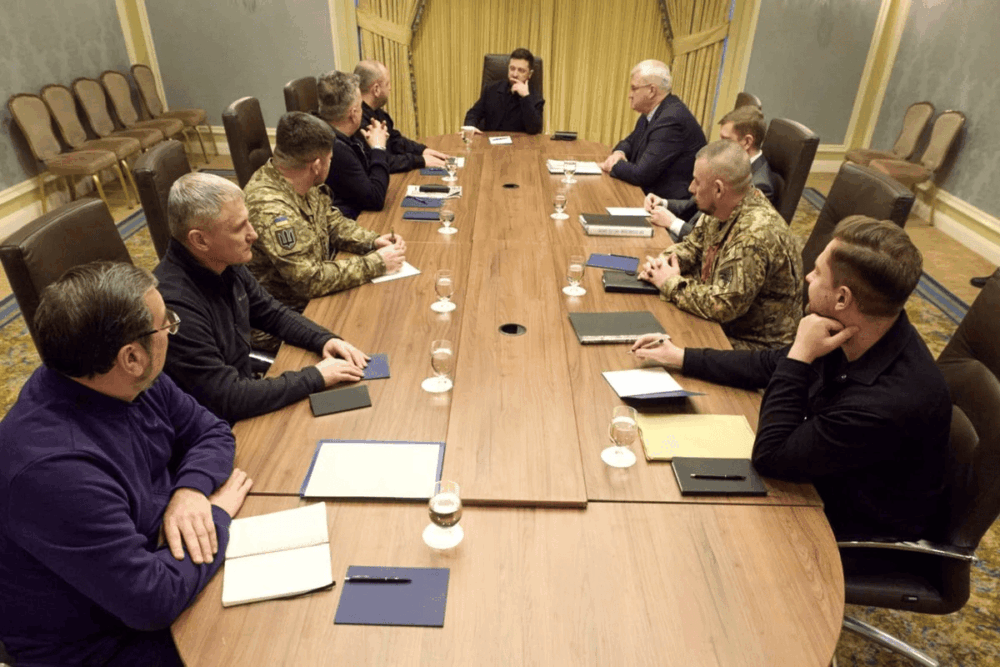
The main task of the negotiations led by Yermak and Umerov was to prevent the US president from abandoning support for Ukraine by accusing it of a “lack of desire for peace.” Trump was kept on board, but the meetings between the delegation and its partners did not produce more substantive results.
At the same time, as the negotiation track was opening up, the “Mindichgate” scandal was gaining momentum in Ukraine. Yermak and Umerov were increasingly mentioned in the media as potential figures in an investigation into large-scale corruption in the energy sector. Eventually, on November 28, 2025, it was precisely because of Operation “Midas” that the head of the Presidential Office lost his position — and with it, his role as Ukraine’s chief negotiator.
Meanwhile, Umerov was “traveling” around the world, discussing the details of a potential peace agreement with allies in Europe and the United States. However, fundamental changes in the peace process occurred only after Lieutenant General Kyrylo Budanov became head of the Presidential Office.
De jure, the negotiating delegation continues to be headed by Umerov, but de facto the initiative in the process has been taken over by the new head of the Presidential Office.
Budanov is in contact with both the Americans and the Russians. The head of the presidential mono-majority, Arakhamia, also contributes through his connections. He has contacts among representatives of Trump’s “young team” and, since the 2022 talks, has been acquainted with Russian oligarch Roman Abramovich and Kremlin leader’s aide Vladimir Medynsky.
Despite this redistribution of influence, the new negotiating team formed on January 23, 2026, consists almost entirely of the “old” members. The only additions to the “Yermak-era” delegation were Budanov’s close associates Davyd Arakhamia and Vadym Skibitskyi, Deputy Head of the Main Intelligence Directorate.
Zelenskyy brought together the “new” and the “old” in a single team, which, incidentally, also allowed him to establish “cross-checking” control over what is really happening on the peace track. After the revolt against Yermak, the president views the Budanov-Arakhamia alliance as “his own” — but ones that still need to be closely watched.
The first round of trilateral negotiations between Ukraine, the United States, and Russia took place in Abu Dhabi on January 23–24. At the time, media reported that the teams had “made progress on military issues,” and Zelenskyy described the meetings in the UAE as “constructive.”
The parties met for a second time in Abu Dhabi on February 4–5. Following the first day of talks, US Secretary of State Marco Rubio said that the good news was that the “list of unresolved issues” that had existed between Ukraine and Russia had “significantly narrowed.”
The third and, so far, final round of negotiations took place in Geneva on February 17–18. Following these meetings, US presidential press secretary Karoline Leavitt stated that “significant progress” had been achieved.
Fewer than 35% of Ukrainians believe that the Ukrainian authorities are successfully conducting negotiations with the aggressor and with partners. However, despite the skepticism of the majority, the new stage of the negotiating process has begun to deliver concrete results.
First, thanks to the efforts of the negotiating teams, a brief “energy ceasefire” was achieved, even though Trump considers it solely his own accomplishment. This was a temporary but tangible relief for Ukraine, which has been facing its most difficult situation in the energy sector amid the harshest frosts.
Most importantly, however, the short pause in strikes on critical infrastructure demonstrated that Ukraine and Russia, despite mutual distrust and hostility, are in principle capable of ensuring the implementation of security arrangements.
Second, it proved possible to unblock prisoner exchanges. On February 5, 2026, Ukraine was able, for the first time in five months, to bring home 157 captives held by the Kremlin. Even if the current negotiation process does not end with a peace agreement, the release of prisoners is an excellent outcome for hundreds of Ukrainian families.
According to Ukrainska Pravda’s sources in diplomatic circles, the exchanges are expected to continue in the near future. They could involve hundreds of freed captives.
Third, the Americans agreed to monitor the ceasefire regime in the event that political agreements are reached.
Despite certain gains, the negotiation process remains extremely fragile. For example, according to Ukrainska Pravda, an attempted assassination of Vladimir Alexeyev, deputy head of Russia’s Main Directorate of the General Staff (formerly the GRU), in Moscow nearly derailed the talks. At the time, the Russian delegation was led by GRU chief Igor Kostyukov. Russian authorities immediately accused Ukraine of involvement in the incident, but Kyiv denies any connection.
Be that as it may, the attempt on the life of the deputy head of the Main Directorate of the Russian General Staff stalled the negotiation process for weeks, although it was later possible to unblock it.
Trump’s Son-in-Law, Putin’s Aide, and the New Talks
One of the key changes on the negotiation track was the appearance of Trump’s son-in-law, Kushner, alongside the “forgetful” Witkoff, whose activities had caused political irritation both in Kyiv and in European capitals.
The first impulse for the current phase of talks came from the 28-point Witkoff–Dmitriev plan at the end of last year. But Kushner’s arrival brought a sense of Trump’s direct involvement into the negotiation process. It also shifted the focus of the discussions away from lengthy pseudo-historical debates toward concrete issues of governing territories, forces, and resources — especially resources.
As Ukrainska Pravda’s interlocutors who know Kushner describe him, “Jared may not fully grasp the historical essence of this war, but he understands the nature of commercial interest very well.”
In simple terms, Kushner’s task is to identify economic incentives that could entice Russia and make it genuinely, rather than superficially, engage in the process of ending the war.
Symptomatic in this regard was Russia’s behavior, which sent a delegation led by military officials — particularly GRU chief Igor Kostyukov — to the first two meetings this year. As a result, the military were able to agree on the general outlines, but even sensitive issues, such as the mechanism for monitoring the ceasefire, could not be fully settled.
Once the military had agreed on their part of the overall framework, politicians — represented by Medynsky — returned to the talks to seek a formula for resolving the most difficult issue: territorial questions.
And interestingly, even Medynsky — who usually enjoys historical digressions — feels the futility of lengthy quotations in the presence of Trump’s son-in-law. He is content with brief references and allusions to “matters of long ago” and is more focused on the realities of the war.
Neither side is disclosing exact details or nuances of the negotiations.
However, according to Ukrainska Pravda, the last meeting in Geneva included discussions on the possibility of troop disengagement and the creation of a free economic zone in a buffer area.
Sources in European political circles tell the editorial team that during a meeting with the leaders of the Coalition of the Determined at the Munich Security Conference, Zelenskyy presented various options for troop withdrawal in Donbas, including a synchronized retreat of up to 40 kilometers from the line of contact. Although for now, it is difficult even to imagine how such a scenario could be implemented.
As well as the idea that the project of the economic zone (FTZ) could be overseen by the so-called Donald Trump Peace Council, which the American leader presented with much pomp last week. At least, such ideas were also raised during the negotiations.
In essence, the idea of a US-managed FTZ somewhat resembles a mix of solutions that the current American administration has already applied in the Azerbaijani-Armenian and Israeli-Palestinian settlements.
At the next meeting of the groups, confirmed by President Zelenskyy, energy specialists may also be brought into the negotiations. This may indicate that the discussions will touch on the sensitive issue of who and in what format should manage the Zaporizhzhia Nuclear Power Plant.
If this indeed happens, and if an acceptable mechanism can be found on this issue, it would effectively mean that the work of the negotiating groups will have run its course.
The trilateral meeting in Geneva added yet another event in the negotiation process for the first time.
Even from the very beginning of talks at the end of February 2022, Ukraine and Russia had direct contact. However, after the mass killings in Bucha and other crimes committed by the Russian army — which, among other things, made the signing of the Istanbul agreements impossible — official bilateral communication between the Ukrainian and Russian sides was almost non-existent. The exception was the interaction of security services for prisoner exchanges and certain other security issues.
And just recently in Geneva, arguably the first meetings without intermediaries took place. Publicly, at least, a fairly long conversation between Medynsky, Umerov, and Arakhamia is known.
But talks between advisers do not end wars. The fate of the war will be decided by their political superiors.
Of course, one can rearrange commas in draft documents and debate the sequence of implementing agreements, as participants in the Minsk process did for years. But, from a strategic perspective, the discussions now need to move up to the level of heads of state.
“Now I see that only at the level of leaders can we attempt to end this war. At the level of three leaders, we can truly try to resolve the territorial issues, which are very sensitive, painful, and complex,” said the President of Ukraine in an interview with British journalist Piers Morgan, published after the third round of negotiations.
Interestingly, at times the position of the Ukrainian leader somewhat contrasts with the optimism of the negotiators. While members of the Ukrainian delegation report constructiveness, concreteness, and the importance of the trilateral meetings, Zelenskyy speaks of insufficient results, a lack of progress on political issues, and an unwillingness to compromise.
“We are standing where we stand – this is a major compromise. They (the Russians) have seized almost 20% of our territory. And we are ready to talk about peace now based on the principle of ‘standing where we stand.’ This is a major compromise,” emphasized the Ukrainian president in an interview with the Japanese news agency Kyodo News, following the meeting of the negotiating teams in Geneva.
Meanwhile, the Russians understand that the chance to legitimize the territories of Ukraine they have seized in some form and to implement large-scale economic projects with the US is possible only if Trump agrees. The American leader has the opportunity to strike a “big deal” with Russia before May 2026, because that is when the political process in the US will intensify — the preparations for the midterm Congressional elections.
Ukraine is interested in peace, but the dynamics of its relationship with Trump show that, as of now, the spring window is almost the last opportunity for any negotiations involving the Americans. Due to the upcoming elections, this issue could become toxic for the White House, and the Americans may simply pass the responsibility onto someone else.
European allies, on the one hand, insist that Ukraine must continue fighting, and that they will provide financial and material support. A source from the German government, for example, assures that Europe “must be ready to support Ukraine for another 1.5–2 years and has earmarked roughly 90 billion euros for this purpose.”
On the other hand, those same friends of Ukraine in the EU still cannot secure the disbursement of the loan approved by the European Parliament, while anti-Ukrainian forces, such as the government of Hungarian Prime Minister Viktor Orbán, continue to block this decision with complete impunity.
It seems that Ukraine and its leaders do not have much time to deliberate. The very logic of the process will require Zelenskyy to make a fundamental decision: to enter preparations for a “peace deal” or to continue the war. And the answer to this question will have to be given — at least to himself — quite soon.
Tags: EMPR.media Geneva negotiations global peace efforts peace plan russia ukraine war Trump Putin summit Ukraine peace talks Zelenskyy diplomacy


![Visitors at the “Thank You With All My Heart” Ukrainian exhibition at the Council of Europe, featuring the Great Amber Heart and powerful war art. :contentReference[oaicite:2]{index=2}](https://empr.media/wp-content/uploads/2026/02/heart-300x171.png)