Top Ukrainian officials secretly united to remove Yermak, triggering a power shift. Budget approval tested multipolar governance, strengthening Svyrydenko, Arahamiya, and parliamentary influence.
Ukrainska Pravda investigates.
One day in the 20s of November, a very unusual gathering took place in the office of the Verkhovna Rada chairman, Ruslan Stefanchuk.
Under the watchful, even stern eyes of portraits of princes hanging on the walls, several key high-ranking officials of the country came together — some on the couch, others in chairs nearby — for a completely secret conversation. The meeting included Stefanchuk himself, Prime Minister Yulia Svyrydenko, and top members of “Servant of the People.”
In terms of the level of representation of senior state officials, this gathering, if it did not qualify as a National Security and Defense Council meeting, was only notable for the absence of the security bloc, President Volodymyr Zelenskyy, and his Chief of Staff Andriy Yermak.
Although it would be incorrect to say that the latter two were entirely “absent.” After all, the entire high-level secret council gathered solely to figure out how to convince Zelenskyy to get rid of Yermak.
“By that time, Yermak had already fallen out with everyone on the team. At first, it was fine to work with him, until he decided that he was the president and would act as President II. Even Yulia (Svyrydenko – UP), whom he had helped, could not work with him effectively. So, after everyone had talked, they decided that they needed to call the president and tell him directly, all together, that Andriy (Yermak – UP) should be removed,” recalls one of the participants of the meeting in a conversation with UP.
“We called the president, and each of us explained, one by one, why we thought this way. Everyone spoke. And here was the leadership of the parliament, the government, and the majority party leaders. The president could no longer ignore this,” adds the source.
The “revolutionaries,” as they jokingly call themselves, risked everything. Any one of them could have shown weakness and told Yermak himself about the “plot.” In the end, he did find out the truth and tried to counterattack: he demonstratively blocked some people on messengers and ignored messages, while against others — such as majority leader Dmytro Arahamiya or MPs Danylo Hetmantsev and Yaroslav Zheleznyak — he tried to initiate criminal cases and arrests for “treason” or “attempting to overthrow the government.”
Not everyone withstood this pressure. Several members of the “Supreme Revolutionary Council” recall with good-natured smiles that, at moments of greatest tension, the prime minister and some other revolutionaries occasionally disappeared from the radar. Still, overall, everyone managed both secrecy and unity quite well.
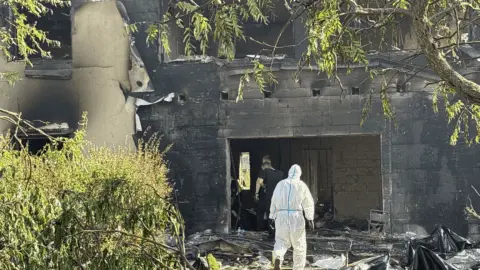
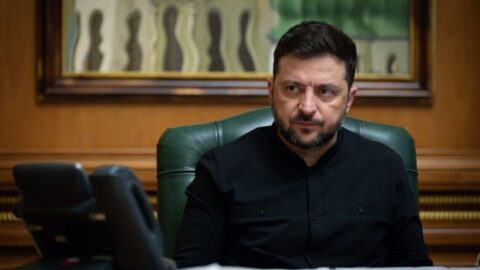
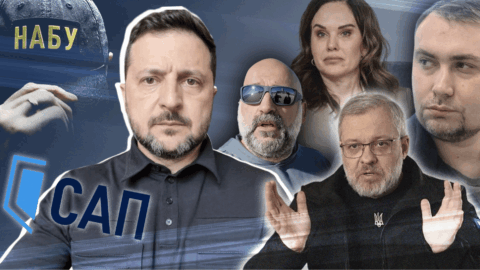
Finally, on the morning of November 28, the NABU and SAPO conducted a search of Yermak’s apartment. Members of the “revolutionary committee,” along with SBU head Vasyl Malyuk and First Deputy Prime Minister Mykhailo Fedorov, moderated the president’s meeting with the heads of the anti-corruption agencies. After several hours of hesitation, Zelenskyy signed the decree dismissing the head of the Office of the President.
The anti-Yermak coup had taken place. But now, the founders of the rebellion face an extremely difficult and crucial task — to prove that they can maintain the vertical of power without Yermak.
Budget Sprint: How the “Revolutionaries” Took Control of the System
The first challenge facing the “revolutionary committee” immediately after the end of the “Yermak era” was the approval of the 2026 state budget. Its vote in the Rada was meant to serve as a test and a demonstration that, without the all-powerful head of the Office of the President, other centers of influence within the government could cooperate and deliver the necessary results.
There were several problems with the fast-track budget vote.
First, the document itself is very mediocre, if not worse. The country’s budget has a significant deficit — approximately 2.4 trillion hryvnias, or 18.5% of GDP. And part of this “gap” has no clear source of coverage.
“From 2022 to 2025, there was an understanding of which funds we were using to finance state budgets, but now that is gone. Even if a miracle happens and Ukraine is granted a reparations loan, it won’t arrive before July. What’s the point of voting for a budget that will have to be revised by January–February, when the reality that there’s no money sets in?” reflects Yulia Sirko (Klymenko), a member of parliament from the “Holos” faction, in a conversation with UP.
MPs from “Holos” (except Tamila Tasheva, who voted in favor), “European Solidarity,” and “Batkivshchyna” did not support the adoption of the 2026 budget.
And this is the second problem — the opposition sensed “blood” and the weakening of the power vertical. After all, if they managed to remove the “immovable” Yermak, why not try, under the cover of distraction, to overthrow the government as well and form a new coalition?
Since November 13, “European Solidarity” has been collecting parliamentary signatures for the dismissal of the current Cabinet — about 100 out of the 150 needed have already been gathered. In revolutionary enthusiasm, some “Servant of the People” deputies also signed the petition. But as soon as Zelenskyy dismissed the “President II,” the protest spirit within the majority sharply declined.
Members of the ruling faction suddenly felt like decision-making actors again, rather than mere “button-pressers.”
As a source among the protesting “Servants” told UP, at the start of the faction meeting with government officials on December 1, Dmytro Arahamiya proudly declared that the parliament’s agency is now increasing.
“We had a businesslike and constructive conversation with the government. The Cabinet understands that things will no longer be as before, when commands came from above. Now, they need to communicate with deputies and find compromises. But MPs must realize this responsibility, because everyone was used to taking the ‘valuable advice’ from above. We will try to start working with greater independence in decision-making,” the source from “Servant of the People” told UP.
On the eve of the budget vote, opposition members even blocked the work of parliament. Deputies from “European Solidarity” went to the podium with “anti-budget” posters: “Money for the Armed Forces, not the President’s whims,” “The front is not in TV studios,” “One solution – a unity coalition.”
One “European Solidarity” MP assured UP that the idea of forming a permanent coalition has good intentions — “for defense and European integration, without ministerial portfolios.”
“So that parliamentary committees finally start overseeing ministries, so that government officials come and report, so that it’s normal work. But no one wants that. For the ‘Servants,’ it’s enough to have ‘POWs’ from OPZZh who will vote for everything: today for the squirrel, tomorrow for the hedgehog — it doesn’t matter,” the source from UP complained.
“European Solidarity” and “Servant of the People” entered parliament in full antagonism, hating each other. How can they unite, and how will they explain this to their voters? Politically, it’s suicide for both,” admits Yulia Sirko (Klymenko) from “Holos.” “I think that for every complex vote, the leadership of the majority will have to form an informal coalition, as they are doing now. In this format, the Rada can still hold on until the elections.”
In the end, Dmytro Arahamiya, head of “Servant of the People,” managed to “negotiate” with the opposition. “European Solidarity” agreed to unblock the podium in exchange for an additional one billion hryvnias for the army — a modest sum considering the Ministry of Defense’s overall budget (2.806 trillion hryvnias). But it was a perfect way for “ES” to publicly save face after lifting the blockade.
Although the opposition agreed to lift the blockade, this did not solve the main problem: gathering enough votes for the budget. For an entire week, members of the parliamentary-government “revolutionary committee” met with all factions and groups, even those who had no intention of voting: sometimes collecting “requests,” sometimes seeking compromises, and sometimes just needing to be “respected.”
“Yulia (Svyrydenko – UP) spent the entire week in the Rada. On Stefanchuk’s couch in his office, it’s almost like she has her own reception. For the first time in a long while, she met with almost all factions and groups. She even visited Yulia (Tymoshenko – UP) and everyone else who requested meetings. The prime minister worked with the Rada in an extremely constructive way,” one of the top “Servant of the People” officials told UP off the record.
But less than a day before the vote in the hall, the required 226 votes still hadn’t been secured. It got to the point of absurdity when, during the voting process, the head of one of the oligarchic groups was still calling the Rada presidium to double-check: “Is it really true that we should vote for this budget?”
The problems weren’t only with external votes but also with internal mobilization within the “Servants.” The longest debates were about increasing teachers’ salaries to 2.5 minimum wages. When the government rejected this proposal, according to “SN,” more than fifty votes for the budget immediately fell away. But after deputies insisted and pressured the government, the votes returned.
“When our side finally secured the teachers’ salary increase, we even stopped blocking all sorts of ‘support payments,’ ‘winter allowances,’ and other populist measures. Let the Office of the President and the government also have some way to distribute something so they are hated less. Compared to the teachers, it wasn’t that important anymore,” explains one influential “Servant” from the Rada’s financial bloc.
The 2026 state budget was approved with 257 votes — an informal coalition of the “Servants,” “POWs” from the remnants of OPZZh, the oligarchic “Dovira” groups, and those from “For the Future” who made it to the Rada.
“For now, it looks like the votes can be gathered. No one will leave ‘Servant of the People’ yet. But it could happen at any moment. Maybe from Bankova it looks like it went through. No, it didn’t just go through. Everyone understood that the budget had to be voted on. Yes, there are foolish programs, programs for conditional elections, but there’s no big ‘profit.’ And we couldn’t enter the new year without a budget. As for other complex laws, we’ll have to negotiate separately with everyone for each vote,” summarizes one of the top officials of the presidential faction.
Three from the Government Quarter: Who Is Now in Charge
In fact, the budget vote became the first test of a model that, by analogy with a popular show, could be called “Everybody Dances.” After Yermak disappeared from the top of the power pyramid, this kind of “group” work is expected to become the working model of the new system of power.
“The prime minister understands that working as constructively as possible with the Rada is her protection — from pressure, from dismissal, and from any future head of the Office of the President trying to undermine her. And Svyrydenko promises to put in maximum effort to make everything work,” insists one participant of the “revolutionary” group.
In fact, the government doesn’t really have many alternatives. Deputies have also tasted the sacred fruit of agency and will do everything to ensure it is not taken from them again. At Bankova, there is currently a “headless” period, which also creates an additional power vacuum, quickly being filled by the leaders of the Rada and the Cabinet.
It is now already clear that the power structure is facing a reconfiguration — from a so-called “dualistic presidential” model, with the president and his all-powerful head of the Office of the President, to some form of multipolarity, with at least three major centers of influence: the head of state, the Cabinet, and the Rada.
This formula is already reflected even in an informal procedure within the “Servant of the People” faction regarding government appointments. Deputies no longer want to meet candidates for positions directly on the floor before voting.
This is how the “three pluses” system emerged: a candidate for a government or other position must, as in another well-known show, simultaneously receive three “yes” votes — or, in MPs’ slang, three “pluses”: from the majority, from the government, and finally from the president.
“We need to balance the different centers. Ideally, we would reach a model where key decisions are made by the president, but in the course of a strategic discussion, with him, the head of the Office of the President, Svyrydenko representing the government and maybe someone else, and Arahamiya and Stefanchuk representing the Rada, maybe even others. This ‘big seven’ or ‘nine.’ You talk, decide, and then everyone goes to execute a single clear task,” describes one of the “mutineers” against Yermak, outlining the expected changes in power.
At the working level, such balancing will be reflected in the revival of so-called “trios.” Ironically, they were invented at the moment when Andriy Yermak replaced Andriy Bohdan in the Office of the President and still pretended to be a democrat.
The idea is simple: all issues important to the government should first be worked through by a “trio” — the relevant leaders from the Office of the President, the Rada, and the Cabinet. Only after decisions are developed and agreed upon within this circle are the issues raised at a higher level and implemented.
It’s possible that these “trios” will extend not only to domestic matters but also to external negotiation processes.
“So that it doesn’t happen like now with the IMF — the government signs a memorandum, and the parliament is shocked that we are taxing individual entrepreneurs. Even the main critic of the simplified tax system, Hetmantsev, says this is nonsense and shouldn’t be voted on. To prevent this from happening again, profile ‘trios’ can also be convened for external negotiations,” explains one of the leaders of “Servant of the People,” describing the essence of the idea.
If everything described above becomes a reality, it would effectively mean the political upscaling of several officials.
First, Prime Minister Svyrydenko, who cut her political umbilical cord with Andriy Yermak and quite astutely and quickly moved into the “president’s people” camp. With a serious group of her own ministers in the government, the prime minister has every chance to become a heavyweight in the political process.
Second, the influence of majority leader Dmytro Arahamiya in the system will certainly increase. There is no one else who can assemble and maintain the tangled system of the “mono-majority” with oligarchic add-ons. After Yermak’s removal and the budget vote, his small “moment of fame” arrives in the Rada.
The entire course of the “revolution,” in which Arahamiya was one of the main coordinators — although at the final stage he even had to leave the country for a while — demonstrated just how wide a range of interests he can serve.
So when Yermak tried to pressure the Prosecutor General or the head of the SBU and demand “charges for the mutineers,” he had no idea that they had already been switched to another camp by the majority leader. The same goes for the head of the HUR, Kyrylo Budanov.
The third key figure will remain the president, meaning that whoever becomes the new head of the Office of the President will automatically lead one of the main centers of decision-making. The president does not plan to excessively give up his power, so Yermak’s successor will not be a mere figurehead.
“De-Yermakization”? What Personnel Changes Are Planned
How the “trio” system will work can be seen in the example of finding new personnel for the Cabinet of Ministers. Previously, the sole center for appointments was located on the second floor of the Office of the President, simply sending ready lists of candidates to the Rada.
Since the end of November, when the main generator of “good people” left Bankova, the function of selecting personnel has shifted to the parliament.
“The president said it himself: you must find and propose people with the government who can handle this work,” an off-the-record source among potential members of the “big seven” told UP.
Now, the shortlists of candidates are to be compiled in the Rada committees. After the “Servants of the People” approve the personnel options at a faction meeting, Arahamiya will forward them to the government and the president.
Following the release of part of the so-called “Mindich tapes,” two positions in the Cabinet have already been vacated — the ministers of justice and energy.
Until recently, the sole candidate for Minister of Justice was “Servant” Denys Maslov, who has headed the Rada’s Legal Committee since July 29, 2022. Before entering politics, he led various law firms, and from 2016 to 2018 he served as a judge in the Dnipro District Court in Kamianske.
When votes began to be gathered in the Rada for Maslov’s appointment as Minister of Justice, it turned out that many deputies were opposed. Then another candidate appeared — Deputy Head of the Office of the President, Iryna Mudra. She joined the Office on March 29, 2024, replacing the dismissed informal overseer of the judicial system, Andriy Smyrnov.
Mudra is responsible for implementing judicial reform, creating a special tribunal for Russia, and establishing an international compensation mechanism for Ukraine. Before her appointment to the Office of the President, she worked for almost two years as Deputy Minister of Justice. Earlier, she held leadership positions in several banks, including the state-owned Oschadbank.
At the start of Mudra’s career in the Office of the President, sources in the government and Rada referred to her as “close to Yermak.” In a recent interview, she cautiously stated: “I am a person of my employer. My employer is the state, so I am a person of the state and serve the interests of the state.”
According to UP sources in the parliament and the Office of the President, until recently Mudra was considering the option of going to Israel as an ambassador rather than joining the government. But after Yermak’s resignation, his deputy found the additional strength to serve the state in the Ministry of Justice.
For the position of Minister of Energy, two candidates were considered within “Servant of the People” — Andriy Herus, head of the Rada’s Energy Committee (responsible for energy in Zelenskyy’s team since the pre-election campaign), and Serhiy Koretskyy, head of NAK Naftogaz. Both have firmly declined the ministerial portfolio.
The only one willing to lead the Ministry of Energy is the controversial “Servant,” Yuriy Kamelchuk. But his candidacy is seen in the presidential faction purely as a joke.
“What is the Ministry of Energy? If you want to steal something quickly, maybe it makes sense to lead it. But if you don’t steal, the scale of problems and responsibility there is enormous! Everyone knows that it will only get worse. That’s why no one wants to be minister — there are no fools,” complains a senior “Servant” to UP, who wished to remain anonymous.
Soon, a few more vacant positions may appear in the government.
Deputies might call for the dismissal of Minister of Education and Science, Oksen Lisovyi. Due to the challenging reform of consolidating educational institutions, he has long been in conflict with parliamentarians and some educators. Plans to remove Lisovyi were already made during the “big cabinet reboot” in mid-July 2025, but he managed to stay in office.
However, after the recent battle over teachers’ salaries, members of the committee again began demanding Lisovyi’s replacement.
Within the framework of “de-Yermakization,” the leadership of the presidential faction is considering dismissing Oleksiy Kuleba, who under the patronage of the former head of the Office of the President rose in five years from director of the Kyiv City State Administration’s Department of Urban Development to Deputy Prime Minister for Ukraine’s Recovery — Minister for Communities and Territories Development.
The “Servants” fear that Kuleba might appear in the so-called “Mindich tapes.” For this reason, the Deputy Prime Minister for Recovery could be dismissed as a precaution.
“There is a large group in the Rada that is actively advocating for a ‘purge.’ The reasonable part of ‘Servant of the People’ understands that the government must be ‘cleansed’ of those brought in by Yermak. Besides Kuleba, Yermak’s ally — Mahomedov (referring to Ruslan Mahomedov, head of the National Securities and Stock Market Commission) — could be removed. Heads of regional administrations directly associated with Yermak also need to be fired — in Poltava, in Odesa, it’s total chaos,” an off-the-record source from the revolutionary wing of ‘Servant of the People’ told UP.
Separately stands the issue of appointing a new head of the third center of influence — the Office of the President. Until recently, the main candidate for this position was the long-serving government official and reform-minded visionary, First Deputy Prime Minister Mykhailo Fedorov. However, his radical views on personnel purges in the Office and an overly long “list of reforms” made the president hesitate. Thus, Zelenskyy continues to conduct interviews with potential candidates for the head of the Office of the President.
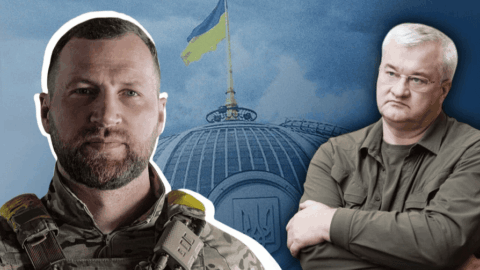
Fedorov’s main competitors in government circles are often named as the head of the HUR, Kyrylo Budanov, and former prime minister and current Minister of Defense, Denys Shmyhal.
But the latter option seems unlikely. Denys Anatoliyovych has only recently “landed” in the Ministry of Defense and just begun to bring order to the chaos there. Moreover, changing the Minister of Defense during preparations for 2026 weapons contracts is clearly not the best idea.
It is possible that, when choosing between the two, Zelenskyy will opt for a third option — perhaps First Deputy Minister of Foreign Affairs and member of Ukraine’s negotiating team with the U.S., Serhiy Kyslytsia.
Zelenskyy is most likely to announce his final decision this week. There is no need to rush, especially since if Yermak’s successor comes from the current ministers, the deputies will first have to vote for his dismissal.
According to UP sources in the Rada, the next plenary week, December 16–19, will begin with personnel rotations. Deputies also plan to review the Ukraine Facility bills during that week.
The further from the day of Yermak’s dismissal as head of the Office of the President, the lighter the atmosphere seems to become on the fourth floor of the Bankova building. The president holds numerous meetings with the leadership of the Rada, government officials, and law enforcement, while also communicating with international partners. The doors to his office are once again freely open to people like Arahamiya or Fedorov.
“Yermak created an atmosphere of betrayal around the chief — convincing him that everyone wanted to throw him out and take away his powers. Now the president has returned to the state he was in at the start of the full-scale war. It’s hard to believe the switch can flip so quickly,” one senior ‘Servant’ told UP with a smile.
It seems the same switch flipped simultaneously in other top government offices, where the reincarnation of a parliamentary-presidential republic is visibly beginning.
However, it is still difficult to predict how long this enthusiasm and unified momentum will last. At some point, a return to the paradigm of constitutional power distribution will inevitably strengthen the institutional competition embedded within it.
But this is certainly far more positive than the “personal fiefdoms” of individual officials being elevated to the level of state policy. The search for balance and the confrontation between different branches of power is, after all, nothing other than the foundation of democracy.
Tags: 2025 crisis Anti-Corruption Hold the Vertical Power Struggle Ukraine Politics Ukrainian government yermak Zelensky administration