Ukraine, Russia and the United States resume talks in Abu Dhabi, with Donbas central, Europe seeking inclusion, Washington reshuffling delegates, and Kyiv rejecting territorial concessions.
On February 1, Ukrainian, Russian, and U.S. delegations will meet again in the capital of the United Arab Emirates, Abu Dhabi, for talks on ending the war.
This was announced on January 28 by Kremlin spokesperson Dmytro Peskov. Ukrainian President Volodymyr Zelenskyy had previously also spoken about such a possibility. This was reported by BBC News Ukraine.
What arguments and in what mood are the participants ready to return to the negotiating table after a week-long break?
The U.S. changes its delegation, Europe also seeks a seat at the negotiating table
U.S. President’s special envoy Steve Witkoff and son-in-law Jared Kushner will not take part in the next round of negotiations between Ukraine and Russia. This was announced on January 28 by U.S. Secretary of State Marco Rubio.
At the same time, he added that the presence of U.S. representatives in this round of talks remains possible. However, Rubio did not specify which Americans would travel to Abu Dhabi to speak with Ukrainian and Russian representatives.
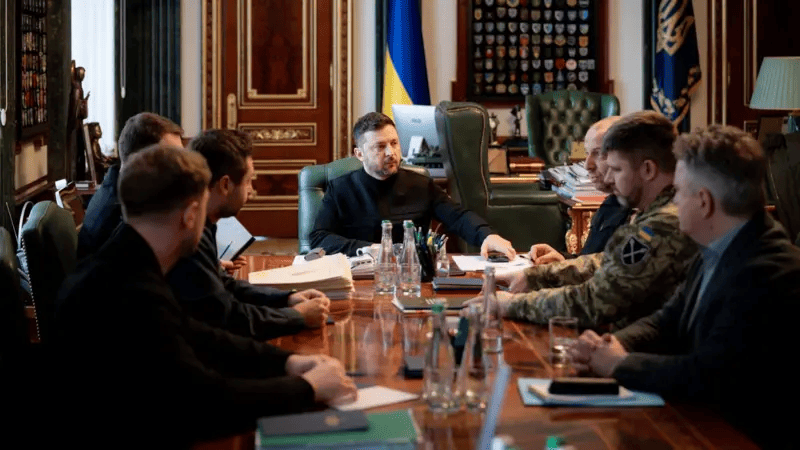
Meanwhile, Zelenskyy met with the Ukrainian negotiating team to sum up the results of the first round of talks in a trilateral format.
“At the meetings, we discussed a range of significant issues, primarily military ones needed to end the war. We also talked about complex political issues that remain unresolved. We analyzed the key positions of the parties and defined the framework for further diplomatic work,” the president said.
In Russia, the trilateral talks in Abu Dhabi are being described as “sensitive and very complex.” According to Kremlin spokesperson Dmytro Peskov, a “significant amount of work” still lies ahead for all sides.
EU chief diplomat Kaja Kallas believes that the composition of the Russian delegation at the talks in Abu Dhabi on January 23 and 24 demonstrated Moscow’s lack of serious intent to achieve peace.
“On the Russian side, only military representatives were present, who do not have a mandate to negotiate anything. This means they are clearly not serious about peace,” she said.
Kallas stresses that the EU must increase pressure on Russia to force it to move toward genuine negotiations.
“Right now, they are only pretending to negotiate. We see that they are intensifying attacks on Ukraine because they cannot advance on the battlefield, so they target civilians,” the EU’s top diplomat noted.
French President Emmanuel Macron said he had held a conversation with Volodymyr Zelenskyy, during which they reached a “shared conclusion that Europeans must be fully involved in discussions that directly concern them.”
Donbas as the key issue
“There are fewer problematic issues now,” Volodymyr Zelenskyy said after the first round of talks in Abu Dhabi concluded.
According to Marco Rubio, the central and only unresolved issue in the negotiations at this stage remains the territorial one — specifically, who will ultimately control Donetsk Oblast.
“There is active work underway to try to determine whether the views of both sides can be aligned on this. This is a bridge we have not yet crossed. It is a gap. But at least we have managed to narrow the problem down to one central issue,” Rubio emphasized on January 28.
The Financial Times, citing eight sources familiar with the course of the negotiations, reported that the U.S. administration had allegedly made it clear to Kyiv that the provision of security guarantees would depend on Ukraine’s consent to a peace deal involving the relinquishment of Donbas to Russia.
According to FT sources, if Ukrainian forces withdraw from areas of Donetsk Oblast currently under Kyiv’s control, Washington would be preliminarily ready to increase arms supplies to the Ukrainian Armed Forces in peacetime.
At the same time, the publication notes that it remains unclear whether the United States would assume any formal commitments.
The White House denied this information.
“Absolutely not. The only role of the United States in the peace process is to bring both sides closer together to reach an agreement. It is unfortunate that the Financial Times allows malicious actors to lie anonymously,” said White House Deputy Press Secretary Anna Kelly.
Ukraine has stated that Zelenskyy is ready to personally discuss with Putin the issue of territorial control and the operation of the Zaporizhzhia Nuclear Power Plant.
Putin’s aide Yuriy Ushakov said that if Zelenskyy wants to meet with Putin, he can come to Moscow.
The Ukrainian president himself emphasized that he is unlikely to agree to concessions on territorial issues.
“Our position on our territory, on Ukraine’s territorial integrity, which must be respected — I will not repeat it,” he stressed.
Zelenskyy added that Ukraine is fighting “for its own state, for what is ours,” and not on foreign territory.
“We are engaging in communication in a trilateral format. These are the first steps toward finding that very compromise. But all sides need to be ready for compromise — including, by the way, the American side as well,” Zelenskyy emphasized.
Tags: Abu Dhabi peace talks EMPR.media Territorial integrity Ukraine Russia US War Negotiations