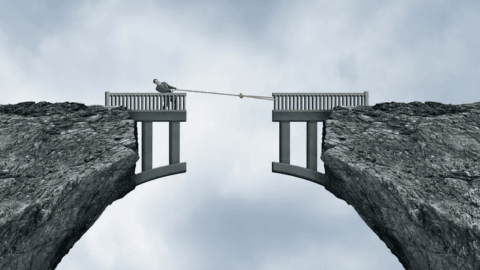

Polish – Ukrainian relations and tensions over historical memory are being politicized amid domestic and propaganda pressures, yet both societies maintain cooperation and shared security interests against Russia.
“However, I believe that Ukrainians have the right to choose their own heroes, even if those heroes are Stepan Bandera or Roman Shukhevych. Poles will not choose the patrons of Ukrainian streets.”
— Karol Nawrocki, head of the Polish Institute of National Remembrance, July 11, 2023.
Today, it is worth recalling these words in order to return the Polish-Ukrainian debate to its true scale. In 2023, he articulated a simple and mature principle: Poles have the right to their own assessment of Ukrainian history, but Ukrainians alone determine their national pantheon. Poland does not choose the names of Ukrainian streets, just as Ukraine does not choose the names of Polish streets, Polish military units, or Polish national holidays. This was reported by Bohdan Krotevych.
Since then, nothing fundamentally new has occurred in the historical reality itself. Ukraine did not begin honoring figures of the Ukrainian liberation movement in 2026. Roman Shukhevych was awarded the title of Hero of Ukraine as early as 2007, and Stepan Bandera in 2010. In Kyiv, an avenue was named after Bandera in 2016, while Shukhevych’s name was given to another avenue in 2017. For many years, the names of figures associated with the Ukrainian liberation movement have been assigned to streets, military units, and state institutions. Poland has responded to these decisions — sometimes sharply, sometimes diplomatically — but they did not lead to a rupture in relations or bring an end to the strategic cooperation between our countries.
This is precisely why the current controversy surrounding the decision to name a Ukrainian military unit after the Heroes of the UPA appears to be a political choice to assign new significance to a long-familiar issue.
For Ukrainians, the UPA is part of the tradition of the struggle to restore their own statehood and resist Soviet rule. In contemporary Ukraine, this memory is perceived primarily through the experience of resisting Moscow, Soviet repressive institutions, and the return of Russian control over Ukrainian lands. During the current war, this meaning has become even more pronounced: the Ukrainian army is once again confronting a state that denies Ukraine’s very right to exist as an independent nation.
It is in this context that the Ukrainian state uses the names and symbols of the liberation movement. These decisions are addressed to Ukrainian society and the Ukrainian military. They signify the continuity of the struggle for independence and are not intended as a statement against modern-day Poland. Polish politicians may view such decisions negatively, but portraying every Ukrainian historical symbol as a deliberate anti-Polish provocation is a political interpretation rather than an established fact.
At the same time, Poland itself honors figures and military formations whose activities, for many Ukrainians, symbolized the denial of Ukrainian statehood, the loss of territories, repression, and the deaths of Ukrainians. Roman Dmowski, one of the central figures in the Polish national pantheon, did not recognize the prospects of an independent Ukraine. His political program envisaged the incorporation of Ukrainian lands into the Polish state and the assimilation of a significant portion of the Ukrainian population. For Poland, he is a founding father of independence. For Ukraine, he remains an influential opponent of the Ukrainian statehood project.
Józef Haller is honored as one of the founders of the Polish military. At the same time, his army was employed in the war against the West Ukrainian People’s Republic, took part in offensives against Ukrainian positions, and helped establish Polish control over Eastern Galicia. As a result of that war, the Ukrainian statehood project in Galicia was defeated, and Ukrainian soldiers and civilians lost their lives in the struggle for territory that Ukrainians regarded as part of their own state.
The so-called Lwów Eaglets are, for Poles, a symbol of youth, courage, and the defense of Lviv. For Ukrainians, however, they were participants in an armed struggle against the Ukrainian army and against the establishment of Ukrainian authority in the city. The Polish heroic narrative of the “Defense of Lviv” is simultaneously a Ukrainian narrative about the suppression of an attempt to create an independent state.
The interwar Polish state pursued policies of Polonization toward Ukrainians, restricting Ukrainian education and public life while employing collective repressive measures. During the Pacification of 1930, Polish police and military forces carried out punitive operations in Ukrainian villages, conducting searches, beatings, arrests, and the destruction of property. In Ukrainian historical memory, this remains an experience of state violence.
In 1947, during Operation Vistula, the Polish communist authorities forcibly displaced around 140,000 Ukrainians and Lemkos from lands where their families had lived for generations. People were stripped of their homes, dispersed across the western and northern regions of Poland, and deliberately deprived of the ability to maintain compact communities.
Despite this, Ukraine does not demand that Poland renounce Dmowski, Haller, or the Lwów Eaglets. It does not make the dismantling of their monuments a condition for political cooperation. It does not demand the renaming of Polish streets, nor does it threaten to reassess strategic relations every time Poland honors a figure who fought against Ukrainian statehood or denied its legitimacy.
Ukraine may have its own assessment of Polish historical figures and may speak openly about the harm they caused, but it does not attempt to establish a list of “approved” heroes for Poland. It does not seek to dictate Polish memory politics.
It is precisely this principle that Karol Nawrocki, head of the Polish Institute of National Remembrance, formulated in 2023 regarding Ukraine: Ukrainians have the right to choose their own heroes.
Since then, however, the political utility of Ukrainian history has changed.
For this reason, the current situation is primarily political. A long-known historical disagreement is now being used to achieve a specific domestic political outcome.
Anti-Ukrainian sentiments have become a noticeable part of Polish politics. This is partly a consequence of accumulated public fatigue with the war, economic tensions, social costs, and the large number of refugees. It is also partly the result of systematic Russian propaganda, which for many years has been convincing both Poles and Ukrainians that they are natural enemies and can never cooperate.
Hostile propaganda is skilled at identifying problems, amplifying them, stripping them of context, and turning them into a general atmosphere of hostility between societies.
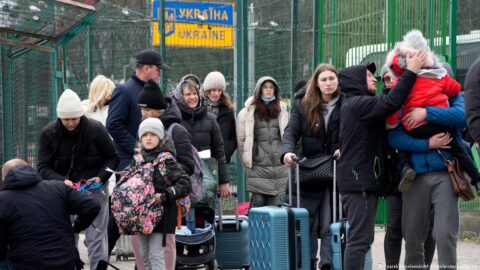
Sometimes this is also reinforced by Ukrainians themselves, when certain individuals (“useful idiots”) demonstratively violate Polish laws, behave arrogantly, or show a lack of respect for the state that has received them. It takes only one such case for that person’s behavior to become a label for the entire Ukrainian community. One individual can overshadow thousands of ordinary Ukrainian families who work, pay taxes, raise children, learn the Polish language, and comply with Polish law.
These families left because Russia launched a full-scale war, occupied their cities, destroyed their homes, and created a life-threatening situation for their children. They should not bear collective responsibility for every Ukrainian who breaks the law, just as Poles should not be held responsible for every Polish radical or criminal.
However, politics operates with striking cases, fears, emotions, and simplified explanations, taking a complex reality and turning it into a set of slogans that can be used in electoral competition.
Anti-Ukrainian rhetoric provides some Polish politicians with a simple way to increase their ratings. It allows them to demonstrate the defense of national dignity without explaining complex economic or security issues. It is far easier to wage a symbolic battle over Ukrainian street names than to address questions about the demographic crisis, the state of public finances, economic competitiveness, or the readiness of the Polish army for a potential war.
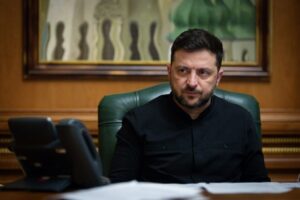
Today, President Karol Nawrocki announced the deprivation of the Order of the White Eagle from the President of Ukraine Volodymyr Zelenskyy. This is the highest Polish state decoration, and Poland, of course, has the sovereign right to decide independently whom to award it and from whom to withdraw it. Ukraine should not dictate to the Polish state how to manage its own honors.
However, this decision is difficult to present purely as a principled moral assessment without noticing an obvious historical contrast. Benito Mussolini received the Order of the White Eagle in 1923. He later became a fascist dictator, an ally of Hitler, and the leader of a state that participated in World War II on the side of Nazi Germany. Despite this, the Polish state never stripped Mussolini of the order.
Thus, the president of a country that is currently defending Europe against Russian aggression is being deprived of Poland’s highest state decoration over a dispute related to Ukrainian historical memory, while a fascist dictator remains a recipient of that same award.
Clearly, this contrast does not mean that modern Poland endorses Mussolini or considers him worthy of state honor. However, it illustrates the selectivity of the current decision. If the procedure is applied to Volodymyr Zelenskyy but not to Mussolini, then this is not a universal moral principle but an act of contemporary political signaling.
In reality, there is no catastrophe for Ukraine in this decision. Volodymyr Zelenskyy leads a state that is fighting the largest war in Europe since the Second World War. For him, far more important issues are the situation on the front line, the defense of Ukrainian cities, supplying the army, the return of prisoners of war, international support, and victory over Russia.
If depriving him of the order helps reduce internal political tension in Poland, allows its leadership to demonstrate to voters the protection of Polish historical memory, and makes it possible to return afterward to normal interstate relations, then this is arguably a relatively small price. Ukraine will certainly endure the loss of this award.
However, it should not be presented as a consistent and universally applied policy toward all recipients of the order. This is not a historical “cleansing” of the Order of the White Eagle, but a symbolic decision primarily addressed to the Polish electorate.
Therefore, I would not recommend that Ukrainians react to this excessively emotionally. It is not worth responding with insults, threats, or demonstrative devaluation of Polish historical memory. This is precisely the kind of reaction Russian propaganda is hoping for, as it seeks to turn a political episode into long-term hostility between two societies.
At the same time, Polish political elites should recognize the limits of this strategy. Anti-Ukrainian rhetoric may bring short-term gains in approval ratings, but it does not provide Poland with strategic security. Russia remains the main military threat to all of Europe. The Ukrainian army is currently holding back this threat at the cost of the lives of Ukrainian soldiers and civilians.
It is important to remember that there is a fundamental difference between criticizing a specific Ukrainian decision and politically constructing an image of Ukraine as an enemy. Polish politicians should therefore look for other ways to compete for voters’ support.
The vast majority of Poles, after February 24, 2022, helped Ukrainians: they opened their homes, met refugees at train stations, collected humanitarian aid, treated the wounded, and supported the Ukrainian army. This cannot be erased by a single political conflict. Nothing irreversible has happened.
Poland has made a political gesture that its authorities consider necessary for their domestic audience. Ukraine will continue fighting against Russia. Poles and Ukrainians will continue to live side by side, work together, and share common security interests.
Tags: Eastern Europe historical memory International Security Poland Ukraine Polish-Ukrainian relations UPA controversy